Daily Lesson for Monday 5th of January 2026
Some years ago, there was a pastor who talked about prayers that revolve around me, me, me, and my needs or desires. He aptly characterized them as “selfish little prayers,” because God has bigger things in mind.
Read Paul’s prayer in Philippians 1:9-11. What is its focus, and what big requests does he make? What does it tell you about prayer?
This prayer is only forty-three words in Greek, but it encapsulates all of Paul’s concerns, which he will expand on in the rest of the epistle: love, knowledge, discernment, being sincere, not causing offense, and the righteousness we have through Jesus Christ. Underlying this prayer, as well as Paul’s previous expressions of thanksgiving, is an emphasis on the church as a whole. Paul’s prayer is completely others-focused, on behalf of the whole church and for its well-being. Let’s look more closely at some of the individual elements of the prayer:
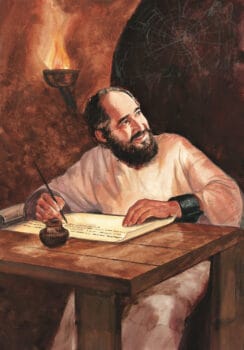
Image © Lifeway Collection at Goodsalt.com
Love to abound more and more. Paul doesn’t just pray for more love but for love guided in a specific direction: “in knowledge and all discernment” (Philippians 1:9, NKJV). The reference to knowledge is not to merely intellectual knowledge but implies a knowledge of spiritual things that can be gained only by fellowship with God and study of His Word (see Ephesians 1:17, Ephesians 4:13, 1 Timothy 2:4).
Discernment. This is explained by Paul as being able to “approve what is excellent” (distinguishing it from what is morally harmful) “and so be pure and blameless” (Philippians 1:10, ESV).
Being sincere. The word in Greek means “judged by the sunlight” and refers to an untainted purity of action: “Everything that Christians do should be as transparent as the sunlight.”—Ellen G. White, Reflecting Christ, p. 71.
Not causing offense. This means not being a stumbling block, not saying or doing anything that would make it more difficult for a person to believe.
Righteousness through Christ. Paul dwells at length on this in the epistles of Romans and Galatians and will expand on it also in Philippians 3:1-21. We have no righteousness of our own but only what we receive through Christ.
|
Whatever else we do, how can our love “abound still more and more” (Philippians 1:9, NKJV)? Why is that so important for the Christian life? (See also 1 Corinthians 13:1-8.) |