Daily Lesson for Monday 27th of July 2026
Read 1 Corinthians 9:1-6. How does this passage provide a practical example of what it means to practice self-denial motivated by love?
At first sight, it looks as though Paul’s defense of his apostleship, in 1 Corinthians 9:1-27, has nothing to do with the previous discussion on knowledge versus love. One cannot forget, though, that the Bible was not originally written in chapters. What Paul teaches in 1 Corinthians 9:1-27 is not disconnected from the preceding material. Indeed, 1 Corinthians 9:1-27 offers a practical example of selfless love for Christ and for the brethren. For the sake of love, Paul relinquishes a few rights.
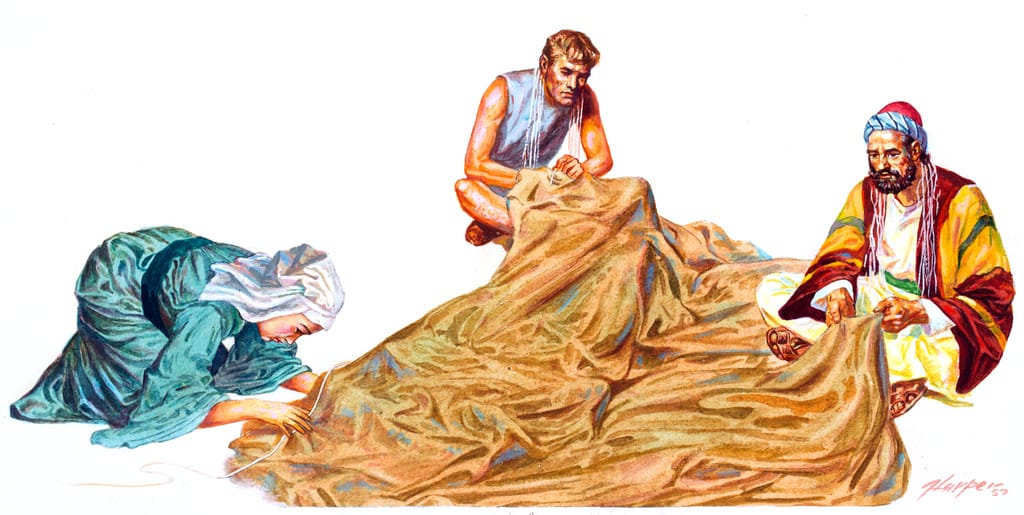
Image © Review & Herald Publishing at Goodsalt.com
“To eat and drink” (1 Corinthians 9:4, NKJV). Here food and drink represent financial assistance in general. As an apostle, Paul had the right to receive material support from those to whom he ministered. Other religious leaders in his time used to do just that. But he didn’t; instead, he supported himself by making tents (Acts 18:3).
“To take along a believing wife” (1 Corinthians 9:5, NKJV). A married apostle was allowed to make a missionary journey with his wife at the church’s expense. Examples of missionary couples include Priscilla and Aquila (Romans 16:3) and Andronicus and Junia (Romans 16:7). But Paul was unmarried (1 Corinthians 7:8). He could get married and then benefit from the right of being accompanied by a wife, with financial support for both.
“To refrain from working” for a living (1 Corinthians 9:6, NKJV). Paul and Barnabas had the right to earn wages for their missionary work (1 Corinthians 9:4-6). Paul made tents for a living (Acts 18:3), but we don’t know what Barnabas’s occupation was. We know that he was very generous (Acts 4:36-37), and thus, he was willing to support himself.
In 1 Corinthians 9:7-11, Paul develops the idea of 1 Corinthians 9:6 in order to show that it is fair for him and Barnabas to earn a living from the church (1 Corinthians 9:11-12). The Lord Himself commanded, “Those who preach the gospel should live from the gospel” (1 Corinthians 9:14, NKJV; compare with 1 Timothy 5:18). Nevertheless, Paul says, “We have not made use of this right” (1 Corinthians 9:12, ESV). Thus, Paul presents himself as an example of self-denial (1 Corinthians 9:1-18) and argues that this benefits the preaching of the gospel in Corinth (1 Corinthians 9:19-23).
|
What are things that, though they perhaps are due you, you might still be better off relinquishing in order to be a more effective witness for the Lord? |