Daily Lesson for Monday 9th of February 2026
Read Philippians 3:20-21. How does Paul vividly describe what Christian “citizenship” looks like?
Unlike the enemies of the Cross, who “set their mind on earthly things” and have no greater god than their bellies (Philippians 3:19), Christian citizenship is in heaven, and our ruler is Jesus Christ Himself.
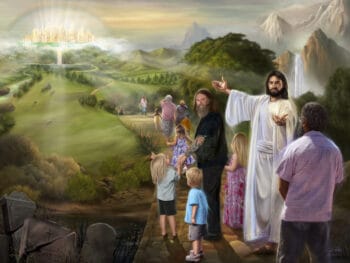
Image © Phil McKay at Goodsalt.com
To underscore the point, Paul highlights the need for “these humble bodies of ours” (Philippians 3:21, NET), subject to disease, deterioration, and death, to be transformed to be like Christ’s glorious resurrection body.
How do the following passages describe the glorified state?
• Job 19:25-27
• Luke 24:39
• 1 Corinthians 15:42-44
• 1 Corinthians 15:50-54
• Colossians 3:4
In the end, through Jesus, death, “the last enemy,” will be destroyed (1 Corinthians 15:26). And that is our greatest hope, the ultimate promise that we have been given in Jesus—not only the end of death but a whole new body, even a “glorious body” (Philippians 3:21, ESV).
In a book about how to find “salvation” without God, which argued, rather foolishly, that overcoming the fear of death is “salvation,” author Luc Ferry does admit that Christianity “enables us not only to transcend the fear of death, but also to beat death itself. And by doing so in terms of individual identity, rather than anonymity or abstraction, it seems to be the only version that offers a truly definitive victory of personal immortality over our condition as mortals.”—Ferry, A Brief History of Thought (New York: HarperCollins, 2011, Kindle edition), p. 90. Quite an admission, coming from an atheist.
Thus, for Paul, our heavenly citizenship includes the promise of the resurrection and eternal life in a whole new existence that we can barely imagine now.
|
Why is the promise of eternal life so crucial to all that we believe? What could this world possibly offer that’s worth forfeiting what Christ offers us? |