Daily Lesson for Monday 31st of August 2026
Read 2 Corinthians 4:7-18. Make a list of Paul’s sufferings. How did he endure his sufferings?
John Huss, the great reformer of the old Bohemia, once said about Jesus, “He is Master of the world, and we are contemptible mortals—yet He suffered! Why, then, should we not suffer also, particularly when suffering is for us a purification?”—Ellen G. White, The Great Controversy, p. 105.
GoodSalt.com-rhpas1858
The apostle Paul manifested centuries earlier the same willingness to suffer for Christ. He knew that he was nothing more than a fragile pot made of clay (2 Corinthians 4:7). He constantly felt hard-pressed, perplexed, persecuted, and struck down, and yet he was not crushed, in despair, forsaken, or destroyed (2 Corinthians 4:8-9). He was willing to carry “in the body the death of Jesus, so that the life of Jesus” would be manifested in him (2 Corinthians 4:10-11, ESV).
By “death of Jesus,” Paul probably meant the sufferings that he mentioned in the previous verses. In turn, in an immediate sense, the phrase “life of Jesus” likely refers to the deliverances from death or the spiritual power for the present life. But, ultimately, this is a reference to the resurrection (2 Corinthians 4:12).
Interestingly, the phrase “death and life” occurs three times in 2 Corinthians 4:10-12. This is a reminder that, in the present age, life is mingled with death. However, in the future glory, we will experience life in the absence of death (Revelation 20:14, Revelation 21:4).
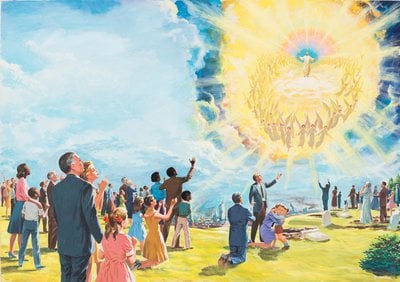
Most important, 2 Corinthians 4:7-18 shows that the gospel is preached through fragile human beings so that the glory goes to God alone (2 Corinthians 4:15). Not infrequently, missionaries suffer in the course of their missionary work. However, our affliction here is light and momentary when compared to that eternal weight of glory waiting for us (2 Corinthians 4:17). The believer lives by faith, not by sight (2 Corinthians 4:18, 2 Corinthians 5:7).
This hope in the future life captured the mind of Paul so much that he keeps talking about it in the flow of the passage (2 Corinthians 5:1-10). He refers to his mortal body by the metaphor of an earthly house. Conversely, the “building from God” is a metaphor for the resurrected body (2 Corinthians 5:1), the great hope for believers of all ages.
|
Why is it so important that, amid whatever we are going through now, we always keep the hope of the resurrection, our resurrection (1 Corinthians 15:52), before us? |