Daily Lesson for Thursday 13th of November 2025
Read Joshua 18:1-2. What was the activity for which Joshua interrupted the process of allotting the land?
After the description of the territories allotted to the two greatest tribes on the west side of the Jordan and to the half-tribe of Manasseh, this passage portrays an assembly of the congregation at Shiloh, where the land is apportioned to the remaining seven smaller tribes.
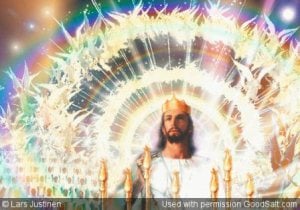
Image © Lars Justinen at Goodsalt.com
The establishment of the sanctuary, “My Tabernacle,” represents the fulfillment of God’s promise to live among His people (Exodus 25:8; Leviticus 26:11-12) and reveals the central theme of the book: God’s presence in the middle of Israel has made possible the possession of the land and is going to be a continual source of blessing for Israel and, through it, to all the earth (Genesis 12:3). The worship of God takes center stage and preeminence, even over conquest and allotment of the land! The presence of the sanctuary, and later the temple, should have always helped the people realize the presence of God among them and their obligations to follow the covenant.
Read Hebrews 6:19-20; Hebrews 9:11-12; and Hebrews 10:19-23. What can we as Christians, who do not have an earthly sanctuary enshrining the physical presence of God among us, learn from Joshua?
The appearance of the sanctuary should not come as a sudden surprise, because the theme of the sanctuary has been present in the Joshua narrative through the ark of the covenant. This was the central piece of furniture in the Most Holy Place, and it marked the first two sections of the book: the crossing and the conquest. Now, by placing the erection of the tabernacle in the focal point of the land distribution, Joshua shows that all the life of Israel revolved around the sanctuary, the earthly headquarters of Yahweh.
It is even more important for us, as Christians living in the antitypical Day of Atonement, to focus our eyes on the heavenly sanctuary as we continue our struggle with the modern (or postmodern) giants that challenge our faith, hope, and spiritual inheritance. As we constantly rely on the work that Christ accomplished on the cross and in the heavenly sanctuary, we can look forward in faith to the time when God once again will dwell among His people, but this time it will be forever. (Compare with Revelation 21:3.)
 (0)
(0)