Daily Lesson for Tuesday 10th of March 2026
Read Colossians 3:6-11. How does Paul continue with this train of thought?
The initial words of Colossians 3:8 signal the dramatic and decisive change from death to life: “But now.” The word “now” in Greek is emphatic. Now, that is, because you are risen with Christ and seek those things that are above, your present life is to show a marked contrast with your former life. Having put to death “what is earthly in you” (Colossians 3:5, ESV), “now you must get rid of all such things—anger, wrath, malice, slander, and abusive language from your mouth” (Colossians 3:8, NRSV).
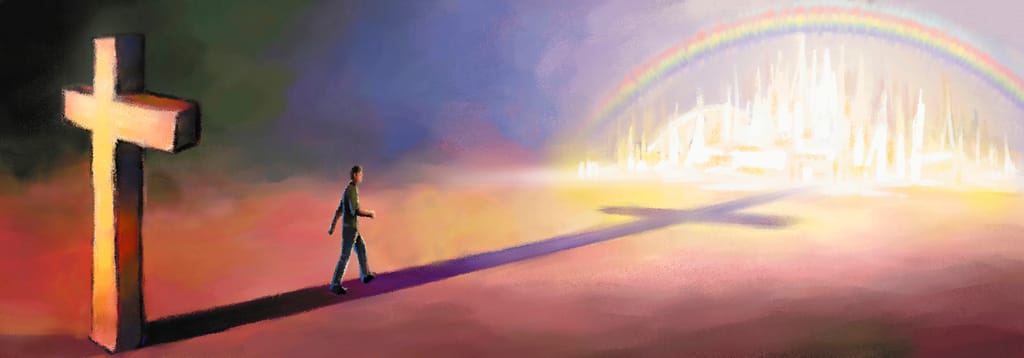
Image © Lars Justinen at Goodsalt.com
Both anger and wrath can describe God’s righteous response to sin (touched on yesterday) as it can for Jesus (Mark 3:5, Revelation 6:16). By contrast, we are urged to “be swift to hear, slow to speak, slow to wrath; for the wrath of man does not produce the righteousness of God” (James 1:19-20, NKJV). Malice wishes misfortune on another. Slander is designed to defame. Paul also condemns language that is abusive and obscene. Finally, lying to one another is forbidden (compare Leviticus 19:11,18), “since you have put off the old man with his deeds” (Colossians 3:9, NKJV).
What does Paul mean by the “old man” in contrast with the “new man”? See Romans 6:6 and Ephesians 4:22-24.
The verbs Paul employs for this transformation from the old to the new allude to clothing, as if one took off old filthy garments and was clothed with new white garments (compare Zechariah 3:4). A similar old/new distinction is made in regard to the old and new covenants, which are characterized respectively by the external letter of the law and by the law inscribed by the Spirit in the heart (2 Corinthians 3:4-18).
These metaphors describe conversion and its effects, which Paul calls a “new creation” (2 Corinthians 5:17, NKJV). We are “renewed in knowledge according to the image of Him [Christ]” (Colossians 3:10, NKJV), who is the image of the invisible God (Colossians 1:15). Gaining a knowledge of Christ through His Word transforms us “into the same image from glory to glory” (2 Corinthians 3:18). This places us above all ethnic, geographical, and social boundaries (Colossians 3:11), because we are citizens of a higher kingdom.