Daily Lesson for Wednesday 8th of July 2026
Paul wrote that the “Jews demand signs and Greeks seek wisdom” (1 Corinthians 1:22, ESV). The Cross—the idea of God, the Messiah, being crucified—was not a sign that the Jews had expected. Nor was it the kind of wisdom that the Greeks wanted. It went against everyone’s expectations.
In fact, all one has to do is read how the disciples reacted to the idea of Jesus being crucified (see Mark 8:31-32; Mark 9:30-32; and Mark 10:32-34) to begin to see how alien, and repulsive, the whole notion was, especially to the Jews. As said before, the Jews expected the Messiah to conquer the Romans; that is not what happened, at least not in the worldly military sense of “conquer.”
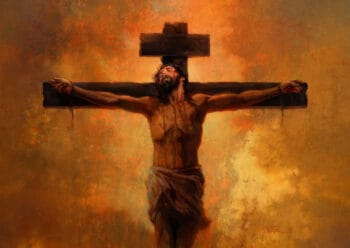
Image © Lars Justinen at Goodsalt.com
For centuries, the cross has been, for Christians, a symbol of faith. It is hard for twenty-first-century Christians to understand how crazy the idea of a crucified God was for the first-century mindset.
However, it is precisely because this was such a shocking message that makes it worthy of our most profound reflections. The portrait of a crucified Messiah makes it entirely clear to the whole universe how far God was willing to go to complete the plan of redemption. The idea of the cross itself, and of the Lord’s dying on the cross, is astonishing enough to us, sinners here on earth. (Imagine, though, what it must have meant to the sinless beings who knew, and worshiped, the Lord Jesus in heaven!)
Read Acts 13:16-47 (especially verses 26, 38, and 47). What does this passage teach us about the meaning of the Cross?
Paul says Christ sent him to preach the gospel. And so Paul preaches the message of a crucified Messiah (1 Corinthians 1:23). He resumes these ideas in 1 Corinthians 2:1-5. The apostle was faithful to Christ’s commission. In proclaiming the gospel, he didn’t employ “lofty speech or wisdom” (1 Corinthians 2:1, ESV); instead, he focused only on “Jesus Christ and him crucified” (1 Corinthians 2:2, ESV). His speech and message “were not in plausible words of wisdom, but in demonstration of the Spirit and of power” (1 Corinthians 2:4, ESV) because, in fact, “the wisdom of men” stands in visible contrast with “the power of God” (2 Corinthians 2:5, ESV).
|
A crucified Messiah was something completely unexpected by the Jews and the Greeks. What does this tell us about the fact that God does not always act the way we expect? Why is this an important concept to grasp, especially when things don’t go as we have expected? |