Daily Lesson for Wednesday 21st of January 2026
Muhammad Ali once said, “I am the greatest.” In August 1963, six months before winning the world heavyweight boxing championship, he even released a record album titled “I Am the Greatest.” Ali, no doubt, was a great athlete, but he was not an example to follow if one wants the mind of Christ.
In contrast, Jesus was perfectly sinless. Though He was tempted “in all points . . . as we are” (Hebrews 4:15), He never sinned, not even by a thought. Nevertheless, Hebrews 5:8 indicates, “though He was a Son, yet He learned obedience by the things which He suffered” (NKJV). Jesus’ submission to the Father’s will was always perfect. There was never a moment He refused to submit, though no doubt many times it was not easy.
Read Philippians 2:5-8, which some consider the most powerful and beautiful texts in Scripture. What is Paul saying to us here? What are the implications of these words? Most important, how do we apply to our own lives the principle expressed here?
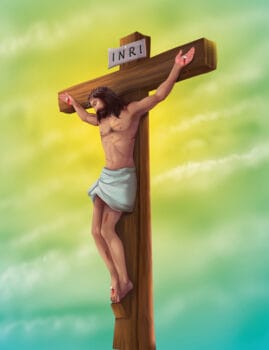
Image © Amit John at Goodsalt.com
Jesus, who is equal with God, who is God, not only took upon Himself human flesh but became a “bondservant” (doulou, a servant, a slave) and then offered Himself as a sacrifice for our sins! In another place, Paul says that He became “a curse for us” (Galatians 3:13). God, our Creator, died on the cross in order to be our Redeemer as well, and that required Him to become a curse for us.
How do we begin to wrap our minds around what this is saying? Even more so, how do we do what the texts tell us to do, and that is to have the same kind of willingness to humble oneself and to sacrifice oneself for the good of others?
In another place, Jesus said: “But he who is greatest among you shall be your servant. And whoever exalts himself will be humbled, and he who humbles himself will be exalted” (Matthew 23:11-12, NKJV). This, in many ways, reflects what Paul was telling us, in Philippians 2:5-8, to do as well.
In more powerfully graphic terms, Paul was saying here what he said earlier about not doing anything “through selfish ambition or conceit” (Philippians 2:3, NKJV).
|
How should we respond to what Christ has done for us, as depicted in Philippines 2:5–8? What response could possibly be “adequate” or worthy of what Christ has done for us, perhaps other than to fall on our knees and worship? Why is it so wrong to think that our works can add to what Christ has already done for us? |