What sets Adventists apart from other religious and spiritual traditions? It's the Word of God. In this final video of the series, Frank Hasel and guests delve into the distinction between the Word of God and human tradition. For the full video, paste this link into your browser: LINK Source: https://www.youtube.com/watch?v=oKSRGFRn25g
Archives for 2023
Tuesday: In Tyre and Sidon
Daily Lesson for Tuesday 12th of December 2023
Bible scholars believe that the Gospel of Matthew had been written specifically for a Jewish audience, and that Mark was written with primarily a Gentile audience in mind. It is helpful to keep this distinction before us as we study the Gospels.
Read Matthew 15:1-39:22-28 and Mark 7:1-37:24-30. What differences do you see in how the woman was depicted?
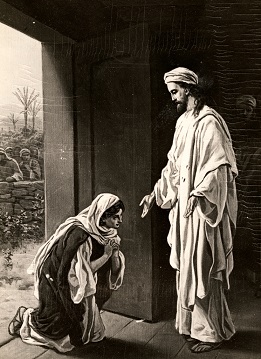
Notice how Matthew describes this mother using her nationality or race: Canaanite. Mark is led by the Holy Spirit to use additional terms to describe this mother as “a Greek” or “a Gentile” and then gives additional information: “a Syro-Phoenician by birth” or “a Syrian of Phoenicia”—the only time that this term is used in the Bible.
Consider how this story in Matthew 15:1-39 would impact the intended primary audience with their background and worldview. Matthew’s audience would see this mother as a despised heathen. This comes from the Jewish people’s historical experience with the Canaanites as an idol-worshiping people group whose evil lifestyle and practices had long been a stumbling block to their nation. Even Christ’s disciples did not consider the possibility that this woman had faith and was part of the kingdom of God!
In Mark 7:1-37, Mark’s audience of Gentiles would have a different response from that of Matthew’s. The Gentiles did not have the same experience as the Jews did with the Canaanites. Instead, the Gentiles would identify with this woman, “a Greek, a Syro-Phoenician by birth” (NKJV). Jesus healed one of their own! For the Gentiles, this woman would be regarded as a beloved mother who was concerned about the fate of her daughter and wanted the Master to heal her, regardless of this mother’s ethnic and national background.
“Christ did not immediately reply to the woman’s request. He received this representative of a despised race as the Jews would have done. In this He designed that His disciples should be impressed with the cold and heartless manner in which the Jews would treat such a case, as evinced by His reception of the woman, and the compassionate manner in which He would have them deal with such distress, as manifested by His subsequent granting of her petition.”—Ellen G. White, The Desire of Ages, p. 400.
Read 1 John 2:2. What should this text tell us about how we are all the same before God?
 (0)
(0)The post Tuesday: In Tyre and Sidon appeared first on Sabbath School Net.
God First Your Daily Prayer Meeting – December 11, 2023
Matthew 21:22 – "If you believe, you will receive whatever you ask for in prayer." Tag someone in need of prayer and kindly share your prayer requests here. https://bit.ly/3GdFXpR Source: https://www.youtube.com/watch?v=O-5wLJjCcO4
Salmo 30:5 – Lunedì 11 dicembre 2023
“Poiché l’ira sua è solo per un momento, ma la sua benevolenza è per tutta una vita. La sera ci accompagna il pianto; ma la mattina viene la gioia”, Salmo 30:5. Meditazione giornaliera Apri la porta del tuo cuore, autori vari, Jakov Asan. Source: https://www.youtube.com/watch?v=QDUFLAbzcwE
Lesson 11: Mission to the Unreached – Part 2 | 11.2 Seeking the Multitudes
The mission among the crowds, as described in Matthew 9:35–38, reveals Jesus’ compassionate attitude toward the “faceless masses” in the cities. Jesus had deep compassion for the crowds, even leading him to weep over Jerusalem in Luke 19:41. This highlights Jesus’ extraordinary love for all people, even those in the bustling and often anonymous environments of the cities.
The call to prayer in Matthew 9:38 indicates that our motives and hearts should align with those of Jesus when engaging in urban mission. This underscores the importance of a deep spiritual connection to reflect Christ’s love and compassion for the masses in the cities.
Matthew 4:23–25 reveals the geographic diversity of people that Jesus attracted to his ministry. They came from various regions, including Galilee, Decapolis, Jerusalem, and Judea. Jesus’ intentional journey to the region of Tyre and Sidon, as mentioned in Matthew 4:25, emphasizes the cross-cultural nature of his mission travels. By looking at the cities of Tyre and Sidon on the coast of Phoenicia, Jesus opened up the possibility of mission in culturally diverse and pagan areas to his disciples.
The account of Jesus leaving the city of Capernaum and going into the hilly land bordering Phoenicia vividly portrays Jesus’ deliberate decision to face the challenges and opportunities of urban mission. His journey to this region was more than geographically motivated – it was a conscious engagement with the cultural diversity and spiritual needs of people in the cities. This serves as an encouraging example of how we can actively participate in urban mission today by sharing Jesus’ love and compassion for the masses in the cities.
How can we help people recognize the emptiness of “their magnificent palaces” and “great markets” in and of themselves and why they need Jesus?
The challenge of helping people who consider the apparent splendor and wealth of their circumstances as the essential elements of life is a crucial aspect of evangelism. Here are some approaches to help people recognize the emptiness of material prosperity without Jesus:
-
Share Testimony: Share how your life has been enriched through your relationship with Jesus Christ. Emphasize how this relationship has brought deeper meaning and purpose to your life beyond material possessions.
-
Biblical Perspective: Use biblical stories and teachings to emphasize the transience of worldly riches. Examples like the rich fool in the story of the “Rich Fool” (Luke 12:16–21) can illustrate that true fulfillment is not achieved through material possession alone.
-
Emphasize Community: Highlight that true joy and fulfillment are often found through interpersonal relationships and community. Jesus emphasized the importance of love, compassion, and caring for one another.
-
Highlight the Common Good: Point out that the pursuit of personal wealth does not necessarily lead to a fulfilled life. Engaging in charitable activities and helping others can bring a deeper sense of purpose and satisfaction.
-
Emphasize God’s Love: Emphasize God’s unconditional love and how this love offers a deeper, lasting fulfillment than material goods. Show that true fulfillment lies in the relationship with God.
-
Explore the Meaning of Life: Invite people to explore the meaning of life together. Discuss philosophical questions and emphasize how faith in Jesus Christ can provide answers to existential questions.
-
Respect the Search for Meaning: Respect each individual’s search for meaning and purpose. Ensure that conversations are conducted with empathy and without judgment.
-
Prayer: Pray for people, asking God to open their hearts to recognize the emptiness of material prosperity without a relationship with Jesus.
Through these approaches, people can be encouraged to look beyond the superficial splendor of material wealth and discover the deeper meaning and fulfillment found in a relationship with Jesus Christ.
Source: https://fulfilleddesire.net/lesson-11-mission-to-the-unreached-part-2-11-2-seeking-the-multitudes/
- « Previous Page
- 1
- …
- 59
- 60
- 61
- 62
- 63
- …
- 1147
- Next Page »

