“Dio è il nostro rifugio e la nostra forza, il nostro pronto aiuto nelle difficoltà. Perciò non temeremo, anche se la terra sarà rimossa.” (Salmo 46:1,2) Meditazione giornaliera “Apri la porta del tuo cuore”. Rubrica a cura di Anna Cupertino. Speaker: Abigail Grace Miguel. Source: https://www.youtube.com/watch?v=rh7zNKBPGKk
Winning the Great Controversy in Every-day Life
Back in my literature evangelism days, I was sitting in the Oklahoma Adventist conference president’s office along with 4 or 5 other literature evangelists. We were discussing what one book, in addition to the Bible, we should be promoting for these last days. One person said we should be promoting books warning people about the mark of the beast. I suggested if we promoted books like The Desire of Ages, and encouraged people to fall in love with Jesus, then when the mark of the beast becomes an issue, people will make the obvious choice and follow Jesus. A few of them agreed.

The Great Controversy
Several years later I was in a vespers service at my church, where the group doing the presentations were telling us that instead of preaching the three angels’ message, we should be preaching the gospel. Apparently they did not understand the three angels message is the gospel. The first angel has the everlasting gospel which prepares us for judgment. The second angel warns us against choosing man-made religions instead of God. The third angel warns us against trusting in our own works to save us instead of resting on God’s Sabbath and letting Him save us.
Over the years I have heard people say Seventh-day Adventists should not be preaching about every-day living but should be warning people about last day events. I hope those of you who have been following my contributions to Sabbath School Net the last 13 years have found my articles to be balanced. I have done my best to stay Jesus-focused, and present our Bible teachings and crucial themes like the great controversy and the three angels’ message in the light of the cross. Here is why I believe we need to have a balanced blend of the cross in all our teachings, especially about last day events.
Or do you despise the riches of His goodness, forbearance, and longsuffering, not knowing that the goodness of God leads you to repentance? Romans 2:4 NKJV
Notice first, our repentance does not lead to God’s goodness. God’s goodness leads us to repentance. Therefore, if we want the world to repent and prepare for the judgment, shouldn’t we be preaching about God’s grace and goodness? The Conflict of the Ages series, which covers the great controversy from start to finish, begins Volume 1 (Patriarchs and Prophets) of that series with one sentence. That same sentence is the very last sentence in the last book of the series. That one sentence is not “Sunday is the false Sabbath.” The author of this series well knew Sunday was not the Sabbath, but that is not the main focus of her Conflict of the Ages series. That one sentence is not, “The Ten Commandments can be obeyed.” Again she well knew that, by God’s grace, we can live in harmony with God’s law. These are important aspects to consider in the great controversy, but the opening and closing sentences in the entire Conflict of the Ages series is, “God is love.” The number one reason the Seventh-day Adventist church was brought into existence is to proclaim the unadulterated truth about Jesus. Jesus came to show us the true character of the Father.
God is love!
- The first angel has the everlasting gospel. Jesus is the everlasting Gospel. John 3:14-17. John 19:17-36.
- The first angel reminds us about the creation Sabbath. Jesus came to give us rest and gave us an example of Sabbath-keeping, demonstrating God’s love and mercy. Matthew 11:28-30. Matthew 12:1-8.
- The first angel also tells us about the judgment. Jesus showed us how to prepare for the judgment by loving God first and others second. Matthew 5:17-19, Matthew 22:34-40, Matthew 25:34-40, 1 John 4:17.
- The second angel warns us not to follow man-made religions instead of God. Jesus showed us how to trust God instead of man-made systems of worship. Matthew 4:8-10, Matthew 15:3-9. John 3:14-17.
- The third angel assures us that only God’s grace can save us. If we trust our own works and ability to do work, – doing business buying and selling in order to put bread on our family’s table – then we have rejected what Jesus did for us on the cross, and we will thus have to drink the bitter cup ourselves that Jesus already drank for us in Gethsemane. (See Luke 22:41-44.) Jesus teaches us that we can trust God’s grace instead of our own work to put bread on our family’s table. Matthew 6:25-33
When we properly share the three angels’ message and great controversy themes with our friends and neighbors, we are sharing the gospel. The seventh-day Adventist Church was brought into existence to help others see the gospel more clearly. Our Bible teachings about the Sabbath, judgment, the great controversy and the three angels’ messages help us to see God’s love more clearly in a world full of deceptions and lies about God’s loving character.
This is why I believe that, if people see the love of God in all His glory, they will be so in love with Jesus that when the test of the mark of the beast comes, they will not take that mark. Maybe they knew it was coming, maybe they didn’t, but either way, they will love Jesus so much they will not fall for it. After all, throughout earth’s history, people have been tested in various ways. The Sabbath is not always the test that is given. Perhaps on the Titanic people passed the test by putting others first and giving up their place on a lifeboat for someone else. Isn’t that what the gospel is all about?
Knowing that it is God’s goodness that leads us to repentance (Romans 2:4), how important it must be to show God’s goodness in everyday life. After all, consider this,
“When the Son of Man comes in His glory, and all the holy angels with Him, then He will sit on the throne of His glory. All the nations will be gathered before Him, and He will separate them one from another, as a shepherd divides his sheep from the goats. And He will set the sheep on His right hand, but the goats on the left. Then the King will say to those on His right hand, ‘Come, you blessed of My Father, inherit the kingdom prepared for you from the foundation of the world: for I was hungry and you gave Me food; I was thirsty and you gave Me drink; I was a stranger and you took Me in; I was naked and you clothed Me; I was sick and you visited Me; I was in prison and you came to Me.’ “Then the righteous will answer Him, saying, ‘Lord, when did we see You hungry and feed You, or thirsty and give You drink? When did we see You a stranger and take You in, or naked and clothe You? Or when did we see You sick, or in prison, and come to You?’ And the King will answer and say to them, ‘Assuredly, I say to you, inasmuch as you did it to one of the least of these My brethren, you did it to Me.’ Matthew 25:31-40 NKJV
Consider that in the judgment Jesus did not reward people for what they preached but by what they did to show His love for others. The most crucial theme in the great controversy is if God is love or not. While Satan is busy telling all kinds of lies about God’s character, the Seventh-day Adventist church is to be showing the mercy and goodness of God with those in need. This goodness will lead people to repent from believing Satan’s lies about God’s character. This goodness will also keep people from believing Satan’s lies about Seventh-day Adventists themselves. The great controversy won’t be won by preaching behind the pulpit. It will be won by everyday Adventists loving their neighbors in everyday life.
 (0)
(0)The post Winning the Great Controversy in Every-day Life appeared first on Sabbath School Net.
Source: https://ssnet.org/blog/winning-the-great-controversy-in-every-day-life/
Lesson 2.The Central Issue: Love or Selfishness? | 2.2 Christians Providentially Preserved

2.2 Christians Providentially Preserved
God’s Sovereign Guidance: Protection and Preservation of His Church
The section “Christians Preserved by Providence” sheds light on an impressive example of God’s mercy and care towards His people. In the dramatic events surrounding the siege and destruction of Jerusalem, God’s providence is clearly evident, demonstrating how He protects His children.
The sudden decision of Cestius Gallus and the Roman troops to retreat was more than just a strategic mistake; it was a divine intervention. This unexpected maneuver provided the Christians in Jerusalem with an opportunity to flee, saving them from the terrible fate that awaited the city. This “promised sign” given to the Christians is a powerful testament to God’s love and care for His followers.
The pivotal moment when the Christians fled from Jerusalem to Pella reminds us that God often finds ways to protect us from dangers and guide us in the right direction, even in the darkest times. It is comforting to know that even amidst chaos and uncertainty, God’s providence is effective, and He always finds ways to lead and protect us.
This historical event should encourage us to trust in God’s guidance during difficult times and seek His will in our lives. It reminds us that God’s mercy and grace are not just abstract concepts but real and tangible in our lives. Like the Christians in Jerusalem, we too should heed God’s warnings, follow His path, and be aware of His constant care.
Read Psalm 46:2 and Isaiah 41:10. What do these verses tell us about God’s providence?
The mentioned Bible verses offer profound insights into God’s character and His sovereignty over the events of the world.
Psalm 46:2 (KJV): “God is our refuge and strength, a very present help in trouble.”
Isaiah 41:10 (KJV): “Fear thou not; for I am with thee: be not dismayed; for I am thy God: I will strengthen thee; yea, I will help thee; yea, I will uphold thee with the right hand of my righteousness.”
Both verses emphasize God’s unwavering presence and care for His people, even in times of distress and suffering. Psalm 46:2 speaks of God as a refuge and strength in times of great trouble. This verse reminds us that God is our safe haven to turn to when faced with challenges and difficulties.
Isaiah 41:10 goes further, assuring us that we should not be afraid because God is with us. He promises to strengthen, help, and uphold us through His righteousness. This verse is a powerful testimony to God’s faithfulness and His ability to guide and protect us through all the storms of life.
In summary, these verses show us that God’s providence and care are unshakable. He is always by our side, ready to strengthen, protect, and guide us through any situation. Even when we go through times of distress, persecution, or suffering, we can trust that God will not leave us alone and will fulfill His plan for us and for this world. It is an encouraging thought that amidst all the uncertainties of life, we have a sovereign and loving God whom we can rely on.
Read Hebrews 11:35–38 and Revelation 2:10. What reality do these texts reveal about our struggle with the powers of evil? How do these verses harmonize with the notion of God’s protection in the previous question? Is there a contradiction between the idea of God’s protection and the fact that God allows some believers to face painful suffering and even martyrdom for the sake of Christ?
Hebrews 11:35–38 (KJV) reads: “Women received their dead raised to life again: and others were tortured, not accepting deliverance; that they might obtain a better resurrection: And others had trial of cruel mockings and scourgings, yea, moreover of bonds and imprisonment: They were stoned, they were sawn asunder, were tempted, were slain with the sword: they wandered about in sheepskins and goatskins; being destitute, afflicted, tormented; (Of whom the world was not worthy:) they wandered in deserts, and in mountains, and in dens and caves of the earth.”
Revelation 2:10 (KJV) says: “Fear none of those things which thou shalt suffer: behold, the devil shall cast some of you into prison, that ye may be tried; and ye shall have tribulation ten days: be thou faithful unto death, and I will give thee a crown of life.”
These verses reveal the reality of an intense spiritual battle that believers face against the forces of evil. They describe how some believers had to endure martyrdom, persecution, and suffering, while others experienced miracles and divine interventions.
In relation to the notion of God’s protection, as discussed in the previous questions, these verses show that God’s protection does not always mean that believers are physically preserved from suffering or death. Instead, it speaks of a deeper, spiritual protection and support that God provides, even when believers go through hardships and sufferings. In Revelation 2:10, believers are even told that some of them will be thrown into prison and will face ten days of tribulation. But they are encouraged to remain faithful unto death, as God will give them the crown of life.
There is no contradiction between the idea of God’s protection and the fact that some believers face painful suffering and even martyrdom for the sake of Christ. God’s protection does not mean that we are shielded from all difficulties and sufferings, but that He is with us, strengthens us, encourages us, and guides us through all situations. As mentioned in the cited text from VSL 41, God’s work continues steadily even when His workers suffer or die. Through their defeat, they remain victorious in truth through Christ.
Overall, these verses and the cited text show that the spiritual battle and the sufferings that believers experience are part of the Christian life. But amidst these trials and difficulties, believers can rely on God’s unwavering presence, care, and promises.
What should it mean for us that the authors of the Bible, who undoubtedly knew pain and suffering, could still write repeatedly about the reality of God’s love? How can we experience this love for ourselves?
The fact that the authors of the Bible, despite their own experiences of pain, suffering, and human difficulties, continued to write about the reality of God’s love is a powerful testament to the unwavering and transcendent nature of divine love. These authors found comfort, hope, and encouragement in the certainty that even amidst suffering and darkness, God’s love remains constant.
For us, this means that God’s love can be a constant and reliable source of comfort, strength, and peace in our lives. It is an invitation to place our own experiences, uncertainties, and fears against the backdrop of God’s all-encompassing and eternal love. God’s love is not just a concept or theory but a real, tangible force that can transform our lives.
To experience this love for ourselves, there are several steps we can take:
-
Biblical Meditation and Study: Regularly reading and studying the Bible allows us to delve deeper into understanding and experiencing God’s love. The stories, teachings, and promises of the Bible can encourage and comfort us, reminding us of God’s steadfast love.
-
Prayer: Prayer is a direct line of communication with God. Through prayer, we can share our hearts, concerns, and joys with God and ask for a personal experience of His love.
-
Fellowship with other believers: Connecting with other Christians can help us see and experience God’s love in action. Together, we can encourage, comfort, and remind each other of God’s love, especially in times of difficulty.
-
Practicing Love for Others: Jesus taught us to love one another as God has loved us. By reflecting God’s love in our daily lives through acts of kindness, goodness, and care for others, we can experience more of this love ourselves.
-
Openness and Surrender: To truly experience God’s love, we must be open and willing to fully surrender to Him. This means letting go of our fears, uncertainties, and doubts and allowing ourselves to be embraced by God’s love.
Ultimately, experiencing God’s love is a personal journey that requires time, patience, and dedication. But when we embark on this journey, we can experience a transformative and life-changing relationship with the Creator of the universe, who deeply loves us and accompanies us in every phase of our lives.

The connection between these profound biblical teachings and our everyday life is immediate and life-changing. Here are some key points that illustrate how these teachings can be applied in daily life:
-
Trusting in God’s Providence: Amidst life’s challenges and uncertainties, we can rely on God’s sovereign guidance and providence. This gives us peace and assurance that, no matter what circumstances we go through, God has a plan and will guide us through every situation.
-
Strengthening through God’s Word: Regular reading and meditation on God’s Word can strengthen, comfort, and guide us in daily life. The biblical promises and teachings are like a lighthouse showing us the way in times of darkness.
-
Community and Support: Fellowship with other believers can encourage and strengthen us. Together, we can see God’s love in action and support and encourage each other in our faith journeys.
-
Steadfast Dedication and Faithfulness: As emphasized in Hebrews 11:35-38 and Revelation 2:10, our faith and loyalty to God can carry us through the toughest times. It is important to remain steadfast and faithful, even when faced with challenges, suffering, or persecution.
-
Experience of God’s Love: God’s love is not just a concept but a tangible reality. By embracing and practicing God’s love in our daily lives, we can experience deep joy, peace, and fulfillment.
In summary, these teachings and principles can help us lead a life full of trust, hope, love, and peace, even amidst difficulties and challenges. It reminds us that God is always with us, loves us, strengthens us, and guides us through all the highs and lows of life. It challenges us to live out our faith in everyday life, deepen our relationship with God, and recognize and appreciate His love and care in every moment of our lives.

God’s providence preserves us, even in the darkest times, reminding us of His unwavering love and care.
The names Yahweh & Jehovah
Yahweh & Jehovah Have you ever asked yourself, how many names or descriptions of God are in the Bible? Starting this Sabbath we’ll begin a new small group…Source: https://vimeo.com/931797940
Monday: Christians Providentially Preserved
Daily Lesson for Monday 8th of April 2024
God’s mercy, grace, providence, and foreknowledge are clearly revealed in the events leading up to the destruction of Jerusalem. Cestius Gallus and the Roman armies surrounded the city. In an unexpected move, when their attack seemed imminent, they withdrew. The Jewish armies pursued them and won a great victory.
With the Romans fleeing and the Jews pursuing, the Christians in Jerusalem fled to Pella in Perea, beyond the Jordan River. “The promised sign had been given to the waiting Christians, and now an opportunity was offered for all who would, to obey the Saviour’s warning. Events were so overruled that neither Jews nor Romans should hinder the flight of the Christians.”—Ellen G. White, The Great Controversy, p. 30.
Read Psalms 46:1 and Isaiah 41:10. What do these passages tell us about God’s providential care?
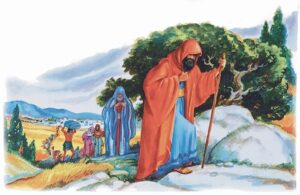
Image © Review & Herald Publishing at Goodsalt.com
God is sovereign and overrules events on earth for the ultimate accomplishment of His divine purposes. Although at times God alters His original plans based on our human choices, His ultimate plan for this planet will be fulfilled. There will be times when the people of God experience hardship, persecution, imprisonment, and death itself for the cause of Christ. But even in the most challenging of times with Satan’s most vicious attacks, God sustains and preserves His church.
Read Hebrews 11:35-38 and Revelation 2:10. What reality do these texts reveal about our battle with the forces of evil? How do these passages harmonize with the idea of God’s protection in the previous question? Is there a contradiction in the idea of God’s protection and God allowing some to face painful suffering and even a martyr’s death for the cause of Christ?
“In vain were Satan’s efforts to destroy the church of Christ by violence. The great controversy in which the disciples of Jesus yielded up their lives did not cease when these faithful standard-bearers fell at their post. By defeat they conquered. God’s workmen were slain, but His work went steadily forward.”—Ellen G. White, The Great Controversy, p. 41.
What should it mean to us that the Bible writers, who certainly knew pain and suffering, could nevertheless, again and again, write about the reality of God’s love? How can we experience that same love for ourselves?
(0)The post Monday: Christians Providentially Preserved appeared first on Sabbath School Net.
Source: https://ssnet.org/blog/24b-02-christians-providentially-preserved/
God First Your Daily Prayer Meeting – April 7, 2024
Matthew 21:22 – "If you believe, you will receive whatever you ask for in prayer." Tag someone in need of prayer and kindly share your prayer requests here. https://bit.ly/3GdFXpR Source: https://www.youtube.com/watch?v=B1LoVBr1tBs
Proverbi 14:10 – Domenica 7 aprile 2024
“Il cuore conosce la propria amarezza, e alla sua gioia non partecipa un estraneo.” (Proverbi 14:10) Meditazione giornaliera “Apri la porta del tuo cuore”. Rubrica a cura di Anna Cupertino. Speaker: Daniele Magliulo. Source: https://www.youtube.com/watch?v=01319tF5LdA
Lesson 2.The Central Issue: Love or Selfishness? | 2.1 A Brokenhearted Savior

Lesson 2.The Central Issue: Love or Selfishness?
The Heart of Christianity: Love, Resistance, and Community in the Early Church
Warm welcome to the second lesson of our comprehensive thematic cycle “From Shadow to Light.” In this lesson, we will delve deeply into an essential question that touches the heart of our spiritual journey: Love or Egoism? This fundamental choice, which each of us makes daily, influences not only our personal lives but also our relationships, our community, and ultimately our entire worldview.
In this lesson, we will explore the profound significance of love in the Christian context and how it acts as an antidote to egoism and darkness. We will bring together biblical concepts, inspiring stories, and practical applications to gain a deeper understanding of the transformative power of unconditional love. Additionally, we will shed light on the themes of providence, fidelity, caring for the community, and the enduring legacy of love.
Let us dive together into this lesson to recognize how we can personally and collectively tread the path from the shadow of egoism towards the light of love. Prepare to be inspired, challenged, and encouraged as we explore these profound principles of the Christian faith together.


Misplaced Love
He sent Moses his servant; and Aaron whom he had chosen. Psalm 105:26.
Aaron was a man of amiable disposition, whom God selected to stand with Moses and speak for him…. God might have chosen Aaron as leader; but He who is acquainted with hearts, who understands character, knew that Aaron was yielding and lacked moral courage to stand in defense of the right under all circumstances, irrespective of consequences. Aaron’s desire to have the good will of the people sometimes led him to commit great wrongs…. The same lack of firmness for the right in his family resulted in the death of two of his sons…. Nadab and Abihu failed to reverence the command of God to offer sacred fire upon their censers with the incense before Him….
Here is seen the result of loose discipline. As these sons of Aaron had not been educated to respect and reverence the commands of their father, as they disregarded parental authority, they did not realize the necessity of explicitly following the requirements of God…. Contrary to God’s express direction, they dishonored Him by offering common instead of sacred fire. God visited them with His wrath; fire went forth from His presence and destroyed them.
Aaron bore his severe affliction with patience and humble submission. Sorrow and keen agony wrung his soul. He was convicted of his neglect of duty. He was priest of the most high God, to make atonement for the sins of the people. He was priest of his household, yet he had been inclined to pass over the folly of his children. He had neglected his duty to train and educate them to obedience, self-denial, and reverence for parental authority. Through feelings of misplaced indulgence, he failed to mold their characters with high reverence for eternal things. Aaron did not see, any more than many Christian parents now see, that his misplaced love and the indulgence of his children in wrong was preparing them for the certain displeasure of God…. His gentle remonstrance, without a firm exercise of parental restraint, and his imprudent tenderness toward his sons were cruelty in the extreme.7Testimonies for the Church 3:293-295.
Courage and Conflict p. 102
~~~~~~~~~~~~~~~~~~~~~~~~~~~~~~
Prayer Requests
—-Please pray for our family. Buck
—-Please pray that the advertising done for our special Sabbath program will bring people into our church and lead people to Jesus. Kathy
—-Please pray to GOD for my complete healing and recovery from Parkinson’s disease. Myke
—-I would also like to have prayers for a friend of mine who is still struggling with the death of her husband and son. Name is Reta. A couple months or so ago he went to work and literally fell dead and a month later the son died. Maryanne
~~~~~~~~~~~~~~~~~~~~~~~~~~~~~
Dear Friends,
A week or so ago, I was looking at some old photos and videos of when Ronnie Jay and Esther were in college. I was reminded of something that happened after Esther’s recital. All of the attendees were invited to the main level for refreshments. I asked Ronnie Jay if he would take pictures since I had left my camera at home. He handed me his camera, so I could click away at my heart’s content.
After I had taken quite a few pictures, I decided that I’d have a few tortilla chips and a glass of punch. I hung the camera around my neck (a big mistake for someone as klutzy as I) and balanced them on my lap. Esther’s professor came over to talk to me. This made me nervous as I’m a little shy and I also knew all of the troubles he had given Esther that year, but here he was praising her profusely. Suddenly, as I turned my head to look at him (he was behind the chair that was beside me) the nearly full cup of juice became airborne and overturned all over Ronnie Jay’s camera as well as all down the front of me.
I didn’t even think of my pale blue suit that was now wet and sticky. I had only one concern. I grabbed Ronnie Jay’s camera and looked around for some way to dry it. The professor rushed to get some paper towels. I followed. After drying it carefully, I found my son to tell him what had happened. I knew how much that camera meant to him as he loved to go out into the fields and woods and take pictures of various wild animals. He was very sweet about it and assured me that it was ok. He knew it was an accident. Then, after looking it over carefully, he took a picture of me (I looked very distressed) and put the camera in its case.
On the way home, he was assessing the damage. All seemed to work except the zoom was slower than normal. I offered to see if it could be fixed, but he thought it would be alright after using it for a while. How thankful I was that Ronnie Jay understood and forgave me!
How often we fall into sin just as easily as I overturned the sticky fruit punch. Soon we are covered with our sin just as surely as the camera and I was wet with sticky juice. Soon we are in the condition Isaiah described, “the whole head is sick, and the whole heart faint. From the sole of the foot even unto the head there is no soundness in it; but wounds, and bruises, and putrifying sores: they have not been closed, neither bound up, neither mollified with ointment.” Isa 1:5, 6 We become alarmed and attempt to clean ourselves up, but we soon find we are unable to do so. As Jeremiah says, “Can the Ethiopian change his skin, or the leopard his spots? then may ye also do good, that are accustomed to do evil.” Jer 13:23
Praise God! There is Someone Who can clean us up! He, Who gave His Life for us, not only forgives us, but He helps us to follow His example. “If we confess our sins, he is faithful and just to forgive us our sins, and to cleanse us from all unrighteousness. If we say that we have not sinned, we make him a liar, and his word is not in us. My little children, these things write I unto you, that ye sin not. And if any man sin, we have an advocate with the Father, Jesus Christ the righteous: And he is the propitiation for our sins: and not for ours only, but also for the sins of the whole world. And hereby we do know that we know him, if we keep his commandments. He that saith, I know him, and keepeth not his commandments, is a liar, and the truth is not in him. But whoso keepeth his word, in him verily is the love of God perfected: hereby know we that we are in him. He that saith he abideth in him ought himself also so to walk, even as he walked.” 1 John 1:9-2:6
Yet, although Our Loving God forgives, He does not always take away the consequences. Often the scars remain just as surely as the zoom on Ronnie Jay’s camera did not respond as quickly as it did before the sticky bath I gave it. They are reminders so we may not want to do wrong again and desire always to do the right. May we do those things that are pleasing in His sight is my prayer.
Rose
The Great Controversy – Lesson 2.The Central Issue: Love or Selfishness? | Sabbath School with Pastor Mark Finley