
Based on Matthew 2 of Holy Writ There came from the East wise men. Balthazar, the youngest, in his 20s, came from the north of Africa. Dark-skinned, like unto an Ethiopian, he bore myrrh. Melchior, in his 40s, was from Arabia. He carried frankincense. Caspar, in his 60s, came from Tarsus, on the west coast […] Source: https://atoday.org/another-take-on-the-magi/
Thursday: Humility and Perseverance
Read Ezra 8:21-23, Ezra 8:31-32. Would you consider Ezra’s decision not to speak to the king as foolish or brave? How did Ezra and the people show humility?
Sometime later, Nehemiah accepted the king’s entourage for protection.
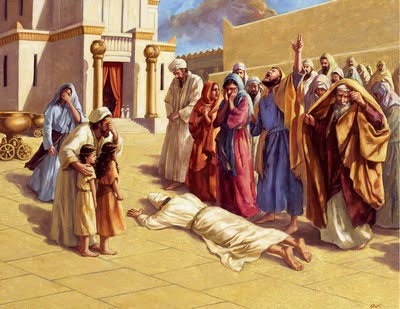
Image © Lifeway Colletion at Goodsalt.com
But in Ezra’s instance, he believed that God could show Himself best if they did not ask anything of the king. Thus, when they reached Judah without harm, it was attributed to their God. Perhaps in certain situations, we may rely too much on other people and not enough on letting God show Himself. Ezra chose to let God do the work in this situation and proved to the king that indeed God was a powerful God.
However, Ezra didn’t act with presumption. He called the people together, and they fasted and prayed over the situation. They didn’t engage in their journey until they had spent serious time with God. They came before God humbly, requesting that His protection become a sign of His power, and God answered.
Read Nehemiah 5:14-19. How did Nehemiah display humility?
True leaders must be willing to humble themselves and be servants. Competent leaders do not require or need a “title” to gain honor. Nehemiah had his doors open and generously gave to the people. He demonstrated his faith in God, and his incredible dedication to God was an example to the people. He had a strong personality and a no-nonsense temperament, but He didn’t put himself above anyone else as superior. He had the highest position in the Jewish nation at that time, and yet he was unstinting. In this way, He reflected the life and teachings of Jesus, who taught us that the best way to lead is to serve others. Jesus did it, and thus we, regardless of our position, are to do the same.
| “And He sat down, called the twelve, and said to them, ‘If anyone desires to be first, he shall be last of all and servant of all’ ”. (Mark 9:35, NKJV). What do Jesus’ words here teach us about what it means to be a true leader in God’s sight? |
Amen! (0)
(0)
(0) Source: http://feedproxy.google.com/~r/SabbathSchoolNet/~3/x3ECvMQd5UU/
Attitudes about Christmas among Adventists in Africa
By Tyson Jacob, 25 December 2019 | Christmas is celebrated in Africa as it is celebrated in other parts of the world with the purpose of remembering the birth of Jesus and family holidays, homecoming, etc. People cook their favorite food, buy new clothes, and plan for outings just after morning worship in their respective […] Source: https://atoday.org/attitudes-about-christmas-among-adventists-in-africa/
The Gift of Jesus Christ
As we come to the close of another year, I would like to invite you for a moment to consider the most amazing gift of Jesus Christ. While we do not know exactly when He was born, the important thing is that we know for certain He was born, and that He came to this Earth on a very special mission.
Foretold by prophecy and announced by a heavenly being more than 2,000 years ago, we read in Matthew 1:21—“And she [Mary] will bring forth a Son, and you shall call His name Jesus, for He will save His… Source: http://feedproxy.google.com/~r/ann-en/~3/b1gybtRk_HQ/
13.5 Humility and Perseverance – LEADERS IN ISRAEL | Pastor Kurt Piesslinger, M.A.
Series EZRA AND NEHEMIAH with Pastor Kurt Piesslinger, M.A. |
13.LEADERS IN ISRAEL |
Love towards God moved people to work with God in total commitment. Therefore they were able to be able servants for the Lord.
13.5 Humility and Perseverance
Ezra as well as Nehemia trust in a humble way the Almighty which is the key factor for success.
My God bless you today and always.
Download
[soundcloud url=”https://api.soundcloud.com/tracks/733073773″ params=”color=#ff5500&auto_play=false&hide_related=false&show_comments=false&show_user=true&show_reposts=false&show_teaser=true” width=”100%” height=”166″ iframe=”true” /]
Mercoledi 25 dicembre 2019
Proverbi 3:29 Non tramare il male contro il tuo prossimo, mentre egli abita fiducioso con te. Testo tratto dal "Dizionario biblico Claudiana" di G. Miegge e da "Il Commentario del discepolo A. T.", elaborato da Salvatore Matricano. In studio da Sara Durante. Meditazione giornaliera, serie "Apri la porta del tuo cuore". https://hopemedia.it Source: https://www.youtube.com/watch?v=ipZcwyk64hQ
Missouri Adventist Church Gives Away 150 Bikes for Christmas
24 December 2019 | An Adventist congregation in the town of Moberly, Missouri, gave away 150 bikes to its community this year for Christmas. Moberly Seventh-day Adventist Church partnered with the North American Division (NAD) of the denomination for the congregation’s first-ever giveaway of this kind. “We just want to make Christmas extra-special,” said Moberly […] Source: https://atoday.org/missouri-adventist-church-gives-away-150-bikes-for-christmas/
Sharing Scripture for December 22 – 28
This is a tool for you to use if you lead a Sabbath School (SS) class or small group. It is keyed to the Bible texts used in the current week’s Adult SS Lesson and includes a brief story from current news you can use to introduce the discussion and then a series of discussion […] Source: https://atoday.org/sharing-scripture-for-december-22-28/
13: Leaders In Israel – Teaching Plan
Key Thought: Central to the stories of leaders in Israel is the word of God. It transformed their lives and thinking and resulted in the whole program of revival and reformation.
December 28, 2019
1. Have a volunteer read Nehemiah 4:7-23.
- Ask class members to share a thought on what the most important point in this text is.
- In what ways did Nehemiah show courage? What gave him this courage?
- Personal Application: How does one show their faith by their works? What kind of works show our faith? Share your thoughts.

- Case Study: One of your relatives states: “Where do you draw the line between faith and presumption? When do we let go and let God handle things, and when do we move forward in faith believing that God will support and strengthen us?” How would you respond to your relative?
2. Have a volunteer read Nehemiah 2:1-10.
- Ask class members to share a short thought on what the most important point is in this passage
- What do these texts tell us about the focus of the life of Nehemiah?
- Personal Application: What does this tell us about the importance and effectiveness of prayer? Share your thoughts.
- Case Study: One of your friends states, “Why did Nehemiah ask for and accept all the extra help the king gave him in helping rebuild the city and temple of Jerusalem? How would you respond to your friend?
3. Have a volunteer read Ezra 7:8-10.
- Ask class members to share a short thought on what the main idea of this text is.
- What did Ezra do that set his aside among all the Israelites in Medo-Persia?
- Personal Application: How important is it to you to know the Scriptures so you can teach others about them? Share your thoughts.
- Case Study: One of your neighbors states, “It’s up to the pastors to teach and give Bible studies. Allowing the church members to do it will just result in failure. It has to be done right by trained leaders.” How would you respond to your neighbor?
4. Have a volunteer read Ezra 8:21-23, 31,32.
- Ask class members to share a short thought on what the main idea of this text is.
- Was Ezra’s decision not to speak to the king a brave one or foolish one? How did he and his people exhibit humility?
- Personal Application: Why must we do all we can to support our leaders? Share your thoughts.
- Case Study: Think of one person who needs to hear a message from this week’s lesson. Tell the class what you plan to do this week to share with them.
(Truth that is not lived, that is not imparted, loses its life-giving power, its healing virtue. Its blessings can be retained only as it is shared.”Ministry of Healing, p. 148).
Amen!(0)
(0) Source: http://feedproxy.google.com/~r/SabbathSchoolNet/~3/PbxSQIbCQl0/
Wednesday: Purpose and Passion
What do the following texts teach us about the driving force in the lives of both Ezra and Nehemiah? (Neh. 2:1-10, Ezra 7:8-10).
In all that they did, Ezra and Nehemiah were seeking to see God’s will done in the lives of His people. Yes, the people had messed up; yes, they were punished for it. But God, faithful to His promises of restoration, opened the way for His people to return to the Promised Land and, if faithful, to fulfill the goals that He had set for them.
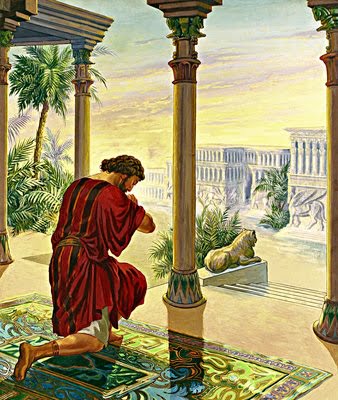
Image © Classic Bible Art Coll. Goodsalt.com
And the Lord, in His wisdom, chose two very dedicated men, men somewhat in the likeness of Moses, to play a central role in this restoration, just as He had used Moses generations earlier for a special task, as well.
Great leaders like these two men have a goal. They have a purpose for living that drives their every action. It could be said that both Ezra and Nehemiah had a purpose in life. They had a vision of where they wanted the people of God to be, and then they put everything into accomplishing the goal.
Ezra did this through studying the Scriptures and teaching the people the Word. Nehemiah encouraged the people to do what was right and to stand up boldly for God. Both men wanted to see a restored Jerusalem, but not just a material restoration. They also wanted to see a revival and reformation in the spiritual lives of its inhabitants. That is why they corrected, reproved, and sometimes demanded a certain course of action. Great leaders believe in something greater than the ordinary and the mediocre. Ezra and Nehemiah believed in a loving, powerful God, a God who could do miracles — and they wanted everyone to have a deep connection with Him.
Beginning with the first chapter of Nehemiah, the reader is impressed by Nehemiah’s dedication to God’s cause and also his distress over the plight of his people. In chapter 1, he weeps when he is told of the hardships of the Israelites in Judah. He gets on his knees and pledges to do whatever God calls him to do. Nehemiah appears to be driven by the idea of making a difference in the world. He was a man of action, action for God. It was not by making the highest salary or having the preeminent position that Nehemiah chose to make a difference (although he had both in Persia), but by going to Judah, to a not-so-prosperous nation, with opposition at every step. He stepped out in faith, regardless of the obstacles before him.
Amen!(0)
(0) Source: http://feedproxy.google.com/~r/SabbathSchoolNet/~3/pb2tFijlllc/

