
On Sabbath, June 8, Jefferson City mayor Carrie Tergin stopped by the 2019 Iowa-Missouri Camp Meeting in Centralia, Missouri, to express her thanks for recent disaster relief efforts Adventists have undertaken in and around the city.
“On behalf of Jefferson City, we appreciate each and every one of you,” she said. “We will rebuild. We will be stronger.”
Joining her were Jody Dickhaut, the Iowa-Missouri Conference’s Adventist Community Services Disaster Response (ACS DR) coordinator for… Source: http://feedproxy.google.com/~r/ann-en/~3/y7ivRxKTMHI/
AT Editor to Speak in Canada
Dr. Loren Seibold, the executive editor of Adventist Today, will be a featured speaker at the Maritime Conference camp meeting, Tuesday, July 30, through Friday, August 2, at Camp Pugwash. He will speak each day on “Bible Principles for a Happy Home.” For additional information, email a request to atoday@atoday.org. He will be delighted to […] Source: https://atoday.org/at-editor-to-speak-in-canada/
Single mother presented with a renovated house
Nilda Santos da Silva, 51, is a single mother of five children. For 13 years she has lived in a small house with two rooms—a kitchen and bedroom—in Jardim Colombo on the west side of São Paulo.
She often dreamed of having a comfortable home for her children, but knew it was impossible since she earns less than minimum wage as a day laborer. “It’s a struggle to make ends meet, even more alone. When you have work, we do not refuse at all,” explains Santos da Silva.
Jardim Colombo is part of the… Source: http://feedproxy.google.com/~r/ann-en/~3/jOr8cI9HqbA/
Adventist University of the Philippines celebrates first commencement of College of Medicine
Referred to as the “Prima Lux” or “First Light,” sixteen aspiring physicians celebrated their historic achievement June 21-23, 2019, as the first graduates from the Adventist University of the Philippines College of Medicine (AUP COM). During Baccalaureate, the highly esteemed pioneer batch testified of the Master Physician’s power and their unique experiences throughout their four-year training in the COM and clinical internships at Batangas Medical Center.
Several representatives from the… Source: http://feedproxy.google.com/~r/ann-en/~3/a5O2rtasgrU/
Tuesday: A King’s Promises
Read Psalm 101:1-8. Though written for leaders, what important counsel can we take from it for ourselves, whatever our position in life?
Psalm 101:1-8 is a text for leaders. It is thought that these verses were composed by David in the early days of his reign as king of Israel. They may even have been adapted from vows that he made at the time of becoming king.
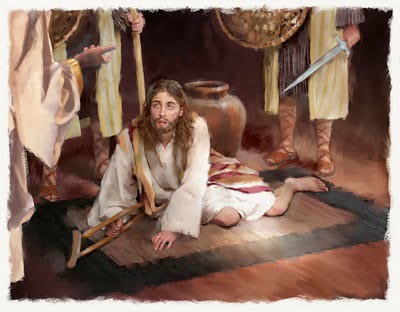
Mercy
In his experiences as a warrior for Saul and then a fugitive from him, he had witnessed for himself how a king who loses his way could damage the nation and his family. David determined that he was going to be a different kind of leader.
Few of us might be political or national leaders, but we all have roles in life in which we have the opportunity to influence and encourage others. These might be in our working life, community involvement, family, or church. As Ellen G. White comments on one of these settings of leadership, “the vows of David, recorded in the 101st psalm, should be the vows of all upon whom rest the responsibilities of guarding the influences of the home”. – Counsels to Parents, Teachers, and Students, p. 119.
As we have opportunity, we should be prepared to suggest and uphold these principles to those who fill positions of leadership over us. And all of us, in our leadership and places of influence, have the opportunity to apply David’s leadership principles in order to help us be a blessing to others.
The starting point for David is honoring God for His mercy and justice (Ps. 101:1), which became the foundation for everything David sought to uphold by his leadership. He sought to learn and practice these same characteristics in his life and work. To do this, he must resist the temptations toward wrongdoing, corruption, and dishonesty, all of which are particular traps for those in positions of power and leadership.
Knowing how important good counselors were to help him to do right, David pledges to seek out trustworthy advisers and to appoint honest officials. Justice and mercy were to mark his leadership, even among those who worked with and for him.
We might not be in a position to have advisers and officials, but how can we fill our lives with influences that help us to live and to lead (where we can) with justice and mercy for those who need it?
Amen! (0)
(0)
(0) Source: http://feedproxy.google.com/~r/SabbathSchoolNet/~3/LVg8305I-nA/
When Truth is an Abiding Principle
That ye might walk worthy of the Lord unto all pleasing, being fruitful in every good work, and increasing in the knowledge of God. Colossians 1:10.
The truth of God revealed in His Word is to be a living, abiding principle. It is not to be looked upon as an influence among many but that which is set over all others. It will exercise a power over the life and conduct until the whole being is assimilated to the image of the Perfect Pattern, and the human agent is complete in Jesus Christ. “As ye have therefore received Christ Jesus the Lord, so walk ye in him: rooted and built up,” not in self, not after men’s ideas, but “in him, and stablished in the faith, as ye have been taught, abounding therein with thanksgiving. Beware lest any man spoil you through philosophy and vain deceit, after the tradition of men, after the rudiments of the world, and not after Christ” (Colossians 2:6-8).
Your greatest danger will be that you will not see the need of contemplating the character of Christ with a set purpose to imitate His life and conform your character to His character. You are to show a marked difference between your character and that of the world. “For in him dwelleth all the fulness of the Godhead bodily. And ye are complete in him, which is the head of all principality and power” (Colossians 2:9, 10).
The grand truths of the Bible are for us individually, to rule, to guide, to control our life, for this is the only way in which Christ can be properly represented to our world in grace and loveliness in the characters of all who profess to be His disciples. Nothing less than heart service will be acceptable with God. God requires the sanctification of the entire man, body, soul, and spirit. The Holy Spirit implants a new nature, and molds through the grace of Christ the human character, until the image of Christ is perfected. This is true holiness….
The spirit and word and influence you carry are making impressions upon the minds of others. The atmosphere which surrounds the soul, if it is evil, will be like a spiritual malaria, which will be poisonous to those around. But it is profitable for the soul to have an atmosphere that will be as a savor of life unto life to others. When the soul is weighted with the truth which works by love and purifies the soul, a heavenly atmosphere will pervade the soul. “He that walketh with wise men shall be wise: but a companion of fools shall be destroyed” (Proverbs 13:20). Every soul that claims to believe the truth, should manifest uprightness of character, devotion to God, steadfastness of purpose, and represent the character of Christ in a well-ordered life and godly conversation.—Letter 70, January 13, 1894, to “Brethren in Responsible Positions in the Review and Herald Office.”
The Upward Look p. 27
~~~~~~~~~~~~~~~~~~~~~~
Prayer Requests
—-Please pray for S who is being controlled by a mentally ill husband. Pray that God opens her eyes and gives her an opportunity to escape. R
—-I have an unspoken prayer request. M
—-Please pray for a friend and family. Husband (nephew) shot his wife and then killed himself. Debra
—-Please keep my daughter in your prayers. She has been diagnosed with cancer at the age of 29 and we ask God to heal her completely. Vicki
~~~~~~~~~~~~~~~~~~~~~
Dear Friends,
When my grandfather was a young man, he joined the National Guard. While there, he, along with the others, was taught fancy drills with his rifle. Over and over they practiced until they were in perfect harmony. If even one person was out of step or put his rifle on the opposite shoulder, the whole effect was ruined. (He never forgot how to do those drills and when I was still a very little girl, taught me how to do them on the little toy rifle, that the man next door had made for me in his wood shop.)
Just so, our Great Creator longs for His followers to be united as were those drilling soldiers. We are commanded to strive for this unity. “Behold, how good and how pleasant it is for brethren to dwell together in unity!” Ps 134:1 We are soldiers in a battle—the battle between good and evil. Nothing is more important than being on the right side of this battle. Paul’s words to Timothy apply to us today. “Thou therefore endure hardness, as a good soldier of Jesus Christ. No man that warreth entangleth himself with the affairs of this life; that he may please him who hath chosen him to be a soldier. And if a man also strive for masteries, yet is he not crowned, except he strive lawfully.” 2 Tim 2:3-6
Our Loving Redeemer’s great prayer recorded in the seventeenth chapter of John speaks of this unity that His followers are to have. “I pray for them: I pray not for the world, but for them which thou hast given me; for they are thine…. Holy Father, keep through thine own name those whom thou hast given me, that they may be one, as we are…. And now come I to thee; and these things I speak in the world, that they might have my joy fulfilled in themselves. I have given them thy word; and the world hath hated them, because they are not of the world, even as I am not of the world. I pray not that thou shouldest take them out of the world, but that thou shouldest keep them from the evil. They are not of the world, even as I am not of the world. Sanctify them through thy truth: thy word is truth. As thou hast sent me into the world, even so have I also sent them into the world. And for their sakes I sanctify myself, that they also might be sanctified through the truth. Neither pray I for these alone, but for them also which shall believe on me through their word; That they all may be one; as thou, Father, art in me, and I in thee, that they also may be one in us: that the world may believe that thou hast sent me. And the glory which thou gavest me I have given them; that they may be one, even as we are one: I in them, and thou in me, that they may be made perfect in one; and that the world may know that thou hast sent me, and hast loved them, as thou hast loved me. Father, I will that they also, whom thou hast given me, be with me where I am; that they may behold my glory, which thou hast given me: for thou lovedst me before the foundation of the world. O righteous Father, the world hath not known thee: but I have known thee, and these have known that thou hast sent me. And I have declared unto them thy name, and will declare it: that the love wherewith thou hast loved me may be in them, and I in them.”
In this great prayer for unity, our Dear Saviour gives the key. Through the study of His Holy Word and through having the love that comes from the heart for our brothers and sisters in Christ, we become united into one body. This unity must be centered in the truths of the Scriptures yet never compromise one Biblical truth for the sake of unity, “He that abideth in the doctrine of Christ, he hath both the Father and the Son. If there come any unto you, and bring not this doctrine, receive him not into your house, neither bid him God speed: For he that biddeth him God speed is partaker of his evil deeds.” 2 John 9-11 There cannot be compromise with false doctrine for “what fellowship hath righteousness with unrighteousness? and what communion hath light with darkness? And what concord hath Christ with Belial? or what part hath he that believeth with an infidel? And what agreement hath the temple of God with idols? for ye are the temple of the living God; as God hath said, I will dwell in them, and walk in them; and I will be their God, and they shall be my people. Wherefore come out from among them, and be ye separate, saith the Lord, and touch not the unclean thing; and I will receive you, And will be a Father unto you, and ye shall be my sons and daughters, saith the Lord Almighty. Having therefore these promises, dearly beloved, let us cleanse ourselves from all filthiness of the flesh and spirit, perfecting holiness in the fear of God.” 2 Cor 6:14-7:1
Yet, holding to the truth without having love for others will do us no good. “Though I speak with the tongues of men and of angels, and have not charity (love), I am become as sounding brass, or a tinkling cymbal. And though I have the gift of prophecy, and understand all mysteries, and all knowledge; and though I have all faith, so that I could remove mountains, and have not charity, I am nothing. And though I bestow all my goods to feed the poor, and though I give my body to be burned, and have not charity, it profiteth me nothing….And now abideth faith, hope, charity, these three; but the greatest of these is charity.” 1 Cor 13 He, Who left the glories of Heaven, He, Who counted all the adoration of all of the Heavenly Universe as nothing without our love and fellowship, He, Who gave His life to bring us back into harmony with all of His other created beings for all eternity yearns for us to have this same love, the love that only He can give, for those around us. “Let this mind be in you, which was also in Christ Jesus: Who, being in the form of God, thought it not robbery to be equal with God: But made himself of no reputation, and took upon him the form of a servant, and was made in the likeness of men: And being found in fashion as a man, he humbled himself, and became obedient unto death, even the death of the cross.” Phil 2:5-8
May we have this great love for one another. May we ” walk worthy of the vocation wherewith [we] are called, With all lowliness and meekness, with longsuffering, forbearing one another in love; Endeavouring to keep the unity of the Spirit in the bond of peace. May “we all come in the unity of the faith, and of the knowledge of the Son of God, unto a perfect man, unto the measure of the stature of the fulness of Christ” Eph 4:1-3,13 Amen.
Rose
 Source:
 President of Zambia: Adventist Church Doesn’t Belong to Opposition Party
21 July 2019 | Yesterday, the president of Zambia spoke out against the perception that the Adventist Church in the country belonged to the United Party for National Development (UPND). “We are one Zambia, one nation, one church, the church of Jesus Christ. So whether you are Catholic, Adventist, Pentecostal or whatever denomination, we are […] Source: https://atoday.org/president-of-zambia-adventist-church-doesnt-belong-to-opposition-party/
Lunedi 22 Luglio 2019
*Matteo 24:3 Mentre egli era seduto sul monte degli Ulivi, i discepoli gli si avvicinarono in disparte, dicendo: «Dicci, quando avverranno queste cose e quale sarà il segno della tua venuta e della fine dell'età presente?» Testo di Henri JM Nouwen elaborato e presentato in studio da Elvira Franzoni.
Meditazione giornaliera, serie "Apri la porta del tuo cuore". https://hopechannel.it Source: https://www.youtube.com/watch?v=-kY4RyJ0K2A
HopeSS: Mercy and Justice in the Psalms and Proverbs (July 27, 2019)
You can view an in-depth discussion of “Sabbath: Mercy and Justice in the Psalms and Proverbs” in the Hope Sabbath School class led by Pastor Derek Morris. You may download an MP4 video file, and audio file or a PDF lesson outline from the HopeSS site.
With thanks to Hope Channel – Television that will change your life.
Amen!(0)
(0) Source: http://feedproxy.google.com/~r/SabbathSchoolNet/~3/cQMEOWTKrcg/
4: Mercy and Justice in Psalms and Proverbs – Singing with Inspiration
The most-loved and well-known Psalm is in Hymn 546 or 552, “The Lord’s My Shepherd”.
The Psalms are songs of hope (Sunday) as is
Hymn 214, “We Have This Hope”, as is
Hymn 5, “All My Hope on God Is Founded”, Hymn 440,
“How Cheering Is the Christian’s Hope” and
Hymn 522, “My Hope Is Built on Nothing Less”.
At the end of Sunday’s study, judgment is given –
Hymn 418, “Day of Judgment, Day of Wonders!”
The theme of judgment continues on Monday –
Hymn 416, “The Judgment Has Set” as does
Hymn 647, “Mine Eyes Have Seen the Glory”.
Psalm 101 (Tuesday) commences with “I will sing of mercy and justice….” –
Hymn 110, “God’s Free Mercy Streameth” and
Hymn 521, “Depth of Mercy”. Our pledge at the end of the days’ study should be
“O Brother, Be Faithful” – Hymn 602.
Walking With the Lord (Wednesday) give us
Hymn 590, “Trust and Obey”,
Hymn 574, “O Master, Let Me Walk With Thee”, and
Hymn 554, O Let Me Walk With Thee”.
We are all needing the mercy of God (Thursday) and can sing again
Hymn 110, “God’s Free Mercy Streameth” and
Hymn 521, “Depth of Mercy”.
2 Timothy 2:15 KJV – “Study to shew thyself approved unto God, a workman that needeth not to be ashamed, rightly dividing the word of truth.”
Amen!(0)
(0) Source: http://feedproxy.google.com/~r/SabbathSchoolNet/~3/No8sVMoiKos/

