
"If you believe, you will receive whatever you ask for in prayer" (Matthew 21:22, NIV).
Tag someone in need of prayer, and kindly share your prayer requests here:
https://wkf.ms/3DBuapQ Source: https://www.youtube.com/watch?v=yXBL_pPEoQU
Preserved Through The Plagues Pr. Michael Pedrin
Preserved Through The Plagues — Pr. Michael Pedrin THANK YOU for your continued financial support of our Media Ministries. Please donate by visiting "https://adventistgiving.org/#/org/ANB4RC/envelope/start" and select “Media Ministries”. Connect With Us
X: RemnantSDA
Facebook: RemnantSDAchurch.org
Instagram: RemnantSDAchurch Source: https://www.youtube.com/watch?v=jtLGbbwKlzs
John Bradshaw on the Promise of the Harvest
You may not always see God's work in someone's life, but that doesn't mean He isn't. Be patient. Be loving. Be watchful. Soon, you will see it! Share this good news. Source: https://www.youtube.com/shorts/eUvan5OCWVY
“I Surrender All” by Gissela Kroll (feat. Fernando Menezes)
There’s a peace that only comes when we lay everything at Jesus’ feet. "I Surrender All" is a timeless hymn of trust and devotion, reminding us that true freedom is found in giving every part of our lives to Him. 🎶 This moving performance from the General Conference Session invites you to pause, reflect, and whisper the words of surrender to the One who gave it all for you. Press play and worship with us today. SUBSCRIBE to the official Seventh-day Adventist Church channel: https://www.youtube.com/@AdventistOrgChurch 🌐 Visit: https://adventist.org Find us on social media by following the links below:
Facebook: https://www.facebook.com/TheAdventistChurch
Twitter: https://x.com/adventistchurch
Instagram: https://www.instagram.com/adventistchurch Source: https://www.youtube.com/watch?v=fYI933DxBQ8
Exodus – Lesson 10.The Covenant and the Blueprint | Sabbath School with Pastor Mark Finley
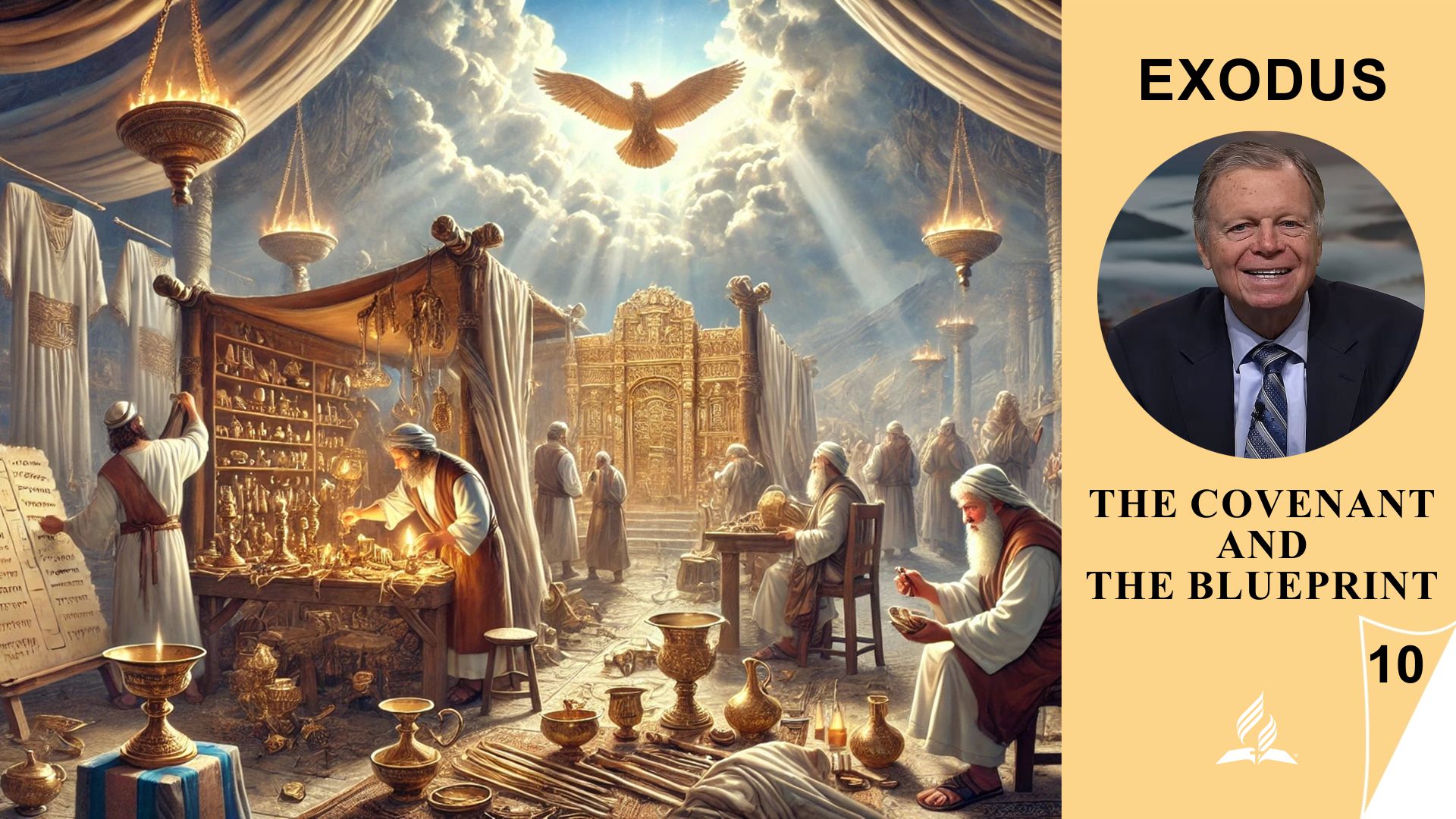
Series EXODUS with Pastor Mark Finley
Lesson 10.The Covenant and the Blueprint
A God Who Connects, Dwells, and Transforms
God never makes a covenant without purpose – His desire has always been to dwell among His people and draw them into fellowship with Himself. In Lesson 10, we discover how the covenant at Sinai was confirmed not only through words and blood, but through a living relationship. The sanctuary that God commanded was to be a visible sign of His nearness – a place where His holiness, grace, and redemption could be experienced. Yet this blueprint was more than symbolic: it pointed to Christ – the true sacrifice and the source of true communion. Even today, God equips people with His Spirit to serve Him – in obedience, beauty, and love. The covenant remains an invitation to a genuine, deep relationship with a holy and gracious God.
Content:
10.1 The Book and the Blood
Covenant of Grace – Relationship, Not Just Obedience
The covenant at Sinai was not a mere legal contract but the expression of a profound relationship between God and His people. The reading of the law reminded Israel of God’s will, while the blood symbolized the grace that made obedience possible. Israel sincerely promised to obey, yet without fully understanding its own weakness. Only through Jesus’ sacrifice – foreshadowed by that blood – can true obedience grow from grace. The covenant shows that God seeks not perfection, but relationship. Even today, we depend on that same grace to live what our lips confess.
10.2 Seeing God
Encountering God – and Yet Falling?
The elders of Israel experienced something astonishing: they saw God and ate in His presence – a symbol of intimate fellowship. Yet, even such closeness did not protect them from later failure. This reveals that sacred experiences or spiritual privileges cannot replace genuine heart transformation. God invites us into relationship, not merely awe. Those who commune with Him are also called to repentance and faithfulness. For believers today, this stands as a warning: light without humility can lead to darkness if it does not result in change.
10.3 Power to Obey
Obedience – God’s Work Within Us
True obedience does not arise from human effort but from God’s work within. Ezekiel describes how God removes the heart of stone and gives a living heart – able to hear, love, and obey. Our role is to surrender daily and accept His leading. Obedience is therefore not a human achievement but a gift of grace made effective by the Holy Spirit. When God commands, He also empowers. The greatest challenge remains: to die to self so that Christ may live and act within us.
10.4 In the Midst of His People
A God Who Dwells – Not Just Reigns
God desired more than obedience – He wanted to dwell among His people. The sanctuary was the expression of that nearness: a place where His presence could be seen and felt. Every aspect of the sanctuary pointed to Jesus and the plan of salvation to come. Though He fills heaven, God humbles Himself to be present with us – a profound act of grace. The sanctuary’s construction from freewill offerings showed that God’s nearness depends on relationship and dedication. Today, He desires to dwell not in buildings but in hearts that make room for Him.
10.5 Filled With the Spirit of God
The Holy Spirit – Power for Service, Beauty, and Holiness
For the construction of the sanctuary, God not only empowered Moses but filled Bezalel, Oholiab, and others with His Spirit – giving them wisdom, artistry, and understanding. This shows that the Spirit works not only in preaching but also in creative, practical service for God. At the same time, the Sabbath remained a central sign of sanctification – not as human effort, but as a testimony of divine transformation. The highest expression of God’s gift was the law, written on stone by His own hand and placed beneath the mercy seat. This arrangement reveals a profound truth: God’s grace stands above His law – not in opposition, but as hope for all who struggle with weakness. The Spirit works in us so that we may honor God in all things – with heart, hands, and life.
10.6 Summary
God’s Nearness – Grace, Law, and Presence
Lesson 10 shows that God’s covenant is not just about words but about relationship, nearness, and transformation. Through the shed blood and the written word, the covenant with Israel was confirmed – yet its true power lies in God’s grace. The tabernacle was a sign that God longed to dwell among His people. He even filled craftsmen with His Spirit so His presence could be made visible and tangible. Obedience, sanctification, and creativity are not human works but expressions of divine activity within us. Above all stands His law – protected beneath the mercy seat – showing that God’s justice is always upheld by His mercy.
Haiti Adventist Museum Marks 120 Years of Church Presence
Under the theme “Passing on the Testimony to the Next Generation,” the Museum of Adventism in Haiti marked more than 120 years of Adventist presence with two special programs and conferences, culminating in the inauguration of the 120th Memorial C… Source: https://adventist.news/news/haiti-adventist-museum-marks-120-years-of-church-presence
Sunday: The Book and the Blood
Daily Lesson for Sunday 31st of August 2025
Read Exodus 24:1-8. What roles do the reading of the Word of God and the sprinkling of blood play in the ratification of the covenant between God and His people?
The living God of the Bible is the God of relationships.
Image © Review & Herald Publishing at Goodsalt.com
The important element for our Lord is not a thing or an agenda but the person. Thus, God pays close attention to people, and the primary purpose of His activities is to build a personal relationship with humans. After all, a God who “is love” would have to be a God who did care about relationships, for how can there be love without relationships?
Jesus said: “ ‘And I, when I am lifted up from the earth, will draw all people to myself’ ” (John 12:32, ESV). God is interested not only in our ethical behavior, right doctrine, or in a set of proper actions, but, above all, in a personal, intimate relationship with us. Both Creation institutions (Genesis 1:1-31; Genesis 2:1-25) are about relationship: the first about the vertical relationship with God (the Sabbath) and the second about the horizontal relationship between humans (marriage).
The ratification of the covenant at Sinai was to reinforce the special relationship that God wanted to have with His people. In the ceremony, the people twice shouted that they would obey God in everything that He required. “Everything the Lord has said we will do,” they proclaimed (Exodus 24:3, NIV). They meant it, too, but they did not know their brokenness, fragility, and lack of power. The blood of the covenant was sprinkled on the people, indicating that only by Christ’s merits was Israel able to follow God’s instructions.
We do not want to accept that our human nature is fragile, weak, and thoroughly sinful. We have an inherent tendency toward evil. To be able to do good, we must have help from outside ourselves. This help comes only from above, from the power of God’s grace, from His Word, and from the Holy Spirit. And even with all this at our disposal, evil still comes so easily to us, does it not?
That’s why a close personal relationship with God was as essential to the people then, at Sinai, as it is to us today.
|
“Everything the Lord has said we will do” (Exodus 24:3, NIV). How many times have you said the same thing, only to fail? What is the only solution? |
 (0)
(0)Source: https://ssnet.org/blog/25c-10-the-book-and-the-blood/
God First: Your Daily Prayer Meeting #1100
"If you believe, you will receive whatever you ask for in prayer" (Matthew 21:22, NIV).
Tag someone in need of prayer, and kindly share your prayer requests here:
https://wkf.ms/3DBuapQ Source: https://www.youtube.com/watch?v=v-sVByJ37nw
SdS – Il libro dell’Esodo – Lezione 10
IL PATTO E IL PROGETTO. Approfondimento della lezione 10 del 3° trimestre 2025 a cura di Mariarosa Cavalieri, Roberta Vittori e Nino Plano. 📩 Trovi i materiali utili qui:
🔗 uicca.org/3-trimestre-2025-lezione-10
🔗 https://uicca.org/nocciolo-3-trimestre-2025
🔗 https://uicca.org/edizioni-adv-3-trimestre-2025
🔗 https://ottopermilleavventisti.it/ Source: https://www.youtube.com/watch?v=qtT-1mhDtzM
Enditnow Emphasis Day in Nigeria Highlights Dignity of the Elderly
On August 23, 2025, Seventh-day Adventists around the world observed enditnow Emphasis Day , this year focusing on the abuse of the elderly. The annual event, led by the Women’s Ministries department of the General Conference of the Seventh-day A… Source: https://adventist.news/news/enditnow-emphasis-day-in-nigeria-highlights-dignity-of-the-elderly
- « Previous Page
- 1
- …
- 480
- 481
- 482
- 483
- 484
- …
- 5095
- Next Page »

