
In the hush of early morning, long before most delegates file into the cavernous America’s Center for the General Conference Session, Ken Logan is already seated at the organ. He begins most days at 7:15 a.m., offering a prelude that acts as a bri… Source: https://adventist.news/news/the-weight-of-every-note
Is Elder Wilson Sending a Message to His Successor?

by Loren Seibold | 16 July 2025 | Implicit in the two back-to-back interviews Elder Ted Wilson sat for after being replaced at the 2025 General Conference (GC) session was that he wasn’t about to go silent, to retreat to his garage and build birdhouses for the grandchildren. Many wondered: how will his influential—and very […] Source: https://atoday.org/is-elder-wilson-sending-a-message-to-his-successor/
L’amore cambia tutto #passidisperanza #hopemediaitalia
C’è un filo invisibile che ci lega gli uni agli altri. A volte è forte e chiaro, altre volte si assottiglia tra silenzi e distanze.
Ma quel filo c’è sempre. Perché non siamo stati creati per stare da soli. Source: https://www.youtube.com/shorts/Dn2kGygKUAo
Rough Start – Hit the Mark Sabbath School
Join the Hit the Mark panel as they discuss Sabbath School Lesson 3 – Rough Start. It’s the fastest hour of the week!

 (0)
(0)Source: https://ssnet.org/blog/rough-start-hit-the-mark-sabbath-school/
Thursday: Like God to Pharaoh
Daily Lesson for Thursday 17th of July 2025
Read Exodus 6:28-30; Exodus 7:1-7. How does the Lord deal with Moses’ objection?
God presents Himself to Moses as Yahweh, which means that He is the personal and close God, the God of His people, and the God who entered a covenantal relationship with them.
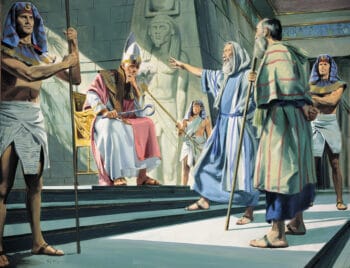
Image © Lifeway Collection at Goodsalt.com
This immanent God again commands Moses to go and speak with Pharaoh. With a lack of self-confidence, Moses again objects: “Why would Pharaoh listen to me?” Here again we can see not just Moses’ humility but, again, his desire to get out of the task, which so far has not gone too well.
“When God ordered Moses to go back to Pharaoh, Moses showed self-distrust. The term ‘aral sepatayim—literally ‘uncircumcised lips,’ which is used here to express Moses’ lack of speaking ability (6:12, 30)—is similar to that found in Exodus 4:10: ‘slow of speech.’ ”—Andrews Bible Commentary: Old Testament, “Exodus” (Berrien Springs, MI: Andrews University Press, 2020), p. 205.
God in His mercy gives Aaron to help Moses. Moses will speak to Aaron, who will then speak publicly to Pharaoh; thus, Moses will play the role of God before the Egyptian king, and Aaron will be his prophet.
This account provides an excellent definition for the role of a prophet. A prophet is a spokesperson for God; he or she is His mouthpiece to transmit and to interpret God’s word to the people. As Moses spoke to Aaron, and then Aaron announced it to Pharaoh, so God communicates with a prophet, who then proclaims God’s teaching to the people. This can happen verbally, in person; or, as was most commonly done, the prophet received the message from God and then wrote it down.
God also explains to Moses what he can expect from the encounters with Pharaoh. He warns him that the confrontation will be tense and long. For the second time God stresses to Moses that Pharaoh will be very stubborn and that He will harden his heart (Exodus 4:21, Exodus 7:3). The result, however, will end in something good, for “ ‘the Egyptians will know that I am the Lord’ ” (Exodus 7:5, NIV). That is, even amid the chaos that follows, God will be glorified.
|
Moses ran out of excuses for not following what God had called him to do. What excuses might we use to try to get out of what we know God wants us to do? |
(0)God First: Your Daily Prayer Meeting #1055
"If you believe, you will receive whatever you ask for in prayer" (Matthew 21:22, NIV).
Tag someone in need of prayer, and kindly share your prayer requests here:
https://wkf.ms/3DBuapQ Source: https://www.youtube.com/watch?v=rlg3IbRxv_g
3: Rough Start — It is Written: Discussions with the Author

Join It Is Written Sabbath School host Eric Flickinger and this quarter’s author, Dr. Jiří Moskala, as they provide additional insights into this week’s Sabbath School lesson.”
(0)Source: https://ssnet.org/blog/3-rough-start-it-is-written-discussions-with-the-author/
3: Rough Start — Hope Sabbath School Video Discussion
View an in-depth discussion of Rough Start in the Hope Sabbath School class led by Pastor Derek Morris.
Click on the image below to view the video:
With thanks to Hope Channel – Television that will change your life.
(1)Source: https://ssnet.org/blog/3-rough-start-hope-sabbath-school-video-discussion/
Lesson 3.Rough Start | 3.4 Uncircumcised Lips | EXODUS | LIVING FAITH
 Lesson 3: Rough Start
 3.4 Uncircumcised Lips
 When discouragement closes ears – God’s promise still stands
………………………………………………………………….
1. Introduction
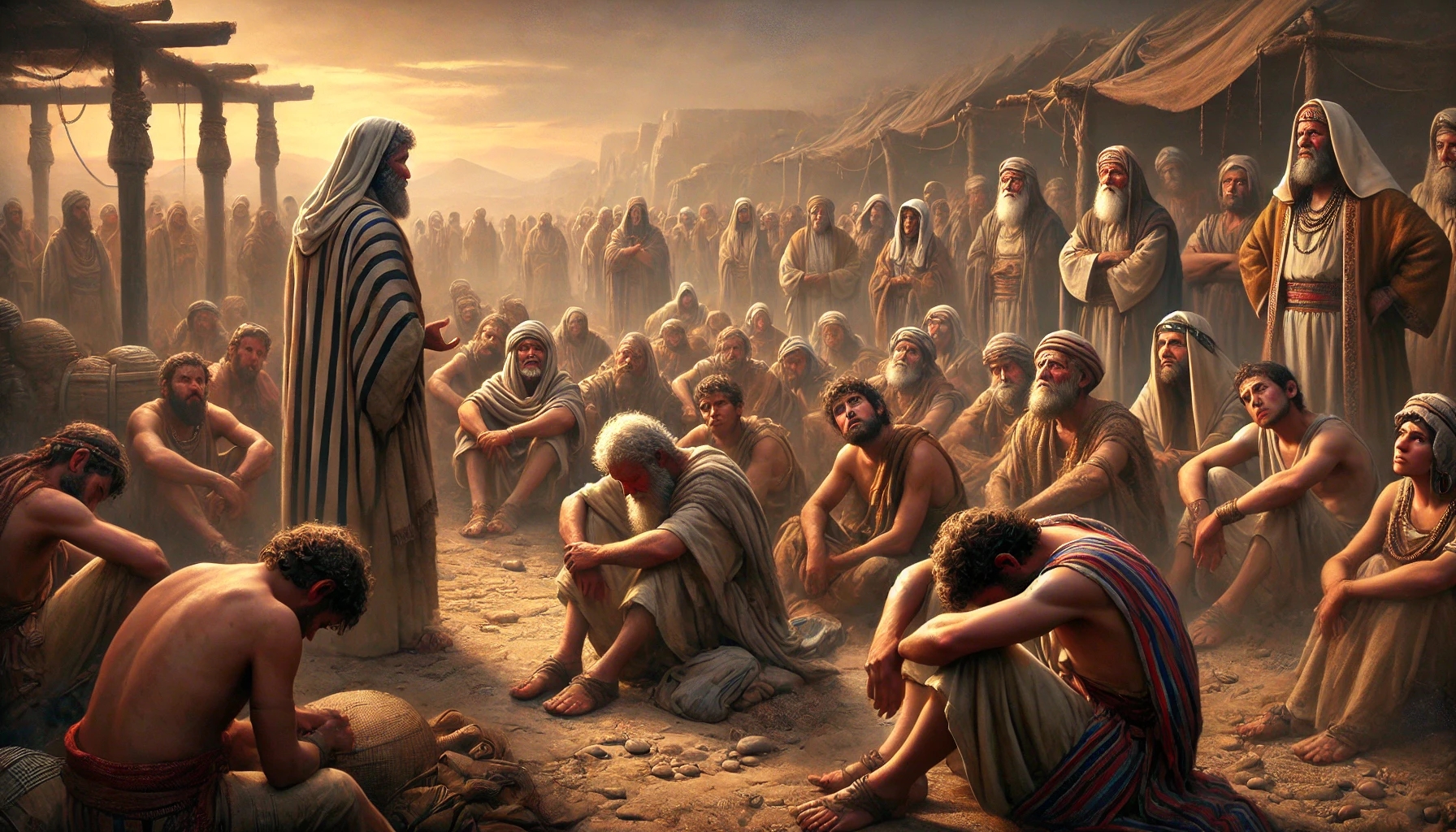
Discouragement is a familiar companion in the life of a believer – especially when prayers go unanswered, hopes are shattered, or God’s promises seem unfulfilled. Moses had received a clear calling from God: to proclaim Israel’s deliverance from Egyptian slavery. And yet, his words were rejected – not only by Pharaoh, but also by his own people.
The people were too tired, too disappointed, too bitter to hold on to hope. And Moses himself – the prophet of God – called himself “uncircumcised in lips” (Exodus 6:12).
What should we do when we know God is faithful – but nothing around us looks like it?
………………………………………………………………….
2. Bible Study – Exodus 6:9–13
Theme: When calling meets resistance – faithfulness in the valley of disappointment
 1. Context: Moses at a low point
Moses had spoken with God at the burning bush, returned to Egypt, and confronted Pharaoh – and everything got worse. Instead of deliverance came more slave labor, more suffering, more frustration.
Now, in chapter 6, God speaks again to Moses – with powerful promises:
“I will redeem you… I will take you as my people… I will be your God” (vv. 6–7).
But the people’s reaction? Rejection.
Verse 9: Hope meets disappointment
“But they did not listen to him because of their discouragement and harsh labor.”
The Israelites couldn’t believe Moses – not because his message was false, but because their suffering was too loud. Hopelessness can be so deep that even God’s promises fail to break through.
 Important Point:
Discouraged people are often not unbelievers – they are simply exhausted.
Verses 10–11: God’s command remains
“Then the Lord said to Moses: ‘Go, tell Pharaoh…’”
God does not change His command – even when Moses feels like a failure. God speaks directly again. Calling is not defined by how people react, but by God’s will.
Verse 12: Moses’ self-doubt
“‘If the Israelites will not listen to me, why would Pharaoh listen to me, since I speak with faltering lips?’”
Moses doubts himself – again, a pattern already seen in Exodus 4. He uses his supposed lack of eloquence as an excuse.
“Uncircumcised lips” means: unworthy, unclean, inadequate to speak. A feeling of unfitness – as if saying: “I’m not the right person.”
But here lies the contrast:
-
Moses looks at his inability,
-
God looks at His calling.
Verse 13: God’s authority stands
“Now the Lord spoke to Moses and Aaron and gave them a command…”
God confirms His mission – not through discussion, but through command. He calls Moses and Aaron – not because they are perfect, but because He chose them.
 Deepening & Parallels
 Job
Job
Job lost everything – family, possessions, health. His friends were no help. And yet: he stayed connected to God – through struggle, silence, and suffering.
Asaph (Psalm 73)
Asaph saw injustice around him – and nearly lost his faith. But he found stability in God’s presence:
“Yet I am always with you…” (v. 23)
Jesus in Gethsemane
Even Jesus, in the garden of Gethsemane, felt abandoned, overwhelmed, and weak – yet He prayed:
“Not my will, but Yours be done.”
 Spiritual Principles from this passage
-
God’s promises are true – even when we don’t feel them.
-
Discouragement is not a sign of God’s absence.
-
Faithfulness is more important than immediate success.
-
Our weakness does not disqualify us – God works through it.
-
God’s calling remains – regardless of others’ reactions or our emotions.
 Application in Life
-
If you pray and nothing seems to happen – hold on.
-
If your words seem to fall flat – trust anyway.
-
If you feel unqualified – God can work through “uncircumcised lips.”
-
If disappointment numbs your hope – remember God’s promise:
“I will be your God, and you will be My people.”
God doesn’t always answer with explanations – but with presence.
Exodus 6 shows:
God is not passive when His people suffer. And He does not wait for perfection to call someone.
His actions are guided by promise, patience, and grace.
3. Answers to the Questions
Question 1: What happened next, and what can we learn for times of discouragement?
Moses wasn’t rejected because he spoke poorly, but because the people were broken. Their long oppression had buried hope. We know the feeling: prayers go unanswered, dreams collapse, trust fades.
But God didn’t give up on Moses – and Moses didn’t give up on his people.
In times when people don’t hear us – or when even our own hearts hesitate – we must remember:
God’s mission continues – even when no one responds.
Example: Job and Asaph
Both knew darkness, doubt, grief – and yet remained with God.
Asaph’s words in Psalm 73 say it best:
“Yet I am always with you…”
Faith is not blind – it’s loyal in the dark.
Question 2: “I will take you as My people…” – What does this mean personally?
“I will take you as My people and I will be your God.”
– Exodus 6:7
This promise wasn’t only for Israel – it reflects the covenant relationship God offers every believer. Paul echoes this in 2 Corinthians 6:16:
“I will be their God, and they will be My people.”
Personally, this means:
-
I am not alone – God identifies with me.
-
God sees me as belonging, even when I feel unworthy.
-
This relationship should be lived out in trust, obedience, and closeness – even in uncertainty.
………………………………………………………………….
4. Spiritual Principles
-
God’s faithfulness remains even when we doubt.
-
Faith means obedience – even without immediate results.
-
Our calling depends on God’s power, not our skill.
-
Disappointment does not mean God is absent.
-
Words carry weight – even if fruit comes later.
………………………………………………………………….
5. Practical Application
-
If your prayers seem unanswered – hold fast.
-
If others don’t share your hope – stand firm.
-
If you feel “uncircumcised in lips” – trust that God can use you.
-
You might be someone’s Moses – even if they don’t listen yet.
………………………………………………………………….
6. Conclusion
Moses was not chosen for eloquence – but for his heart.
Israel didn’t believe because their pain was too great – but God acted anyway.
Our calling is not rooted in our strength, but in God’s promise.
Even in silence, rejection, and struggle – God is near.
………………………………………………………………….
7. Thought of the Day
“When my heart is silent and my mouth stutters, God’s Word still speaks.”
………………………………………………………………….
8. Illustration – “The Silence After the Call”
It was a grey, misty morning in Manchester. The streets shimmered with light rain, and the air smelled of wet pavement and warm toast. In a small Victorian townhouse in Longsight, Elijah Morgan sat at his kitchen table, hands wrapped around a half-full teacup, forehead resting on his arms.
Elijah was thirty-three. A quiet man, a social worker in a rough neighborhood. For the past two years, he’d also been a volunteer preacher in a small multicultural church. His faith was sincere, his heart open – but for months now, everything felt wrong.
He had once felt God’s call – powerfully, like lightning through the soul.
It was at a youth congress in London. The sermon had pierced his heart:
“Go, I am sending you. Speak hope through Me.”
And he went. He prayed, preached, started small groups, built community projects – wholeheartedly.
But today? Empty.
Last Sunday, only a handful came to church.
The youth group had fizzled out.
The families he tried to help no longer answered.
And worst of all, his theology school application – his dream – had been rejected for the third time.
“Uncircumcised lips,” he thought.
“I can’t speak. I reach no one. I’m in the wrong place.”
On the living room floor lay his notes for last week’s sermon – Exodus 6:9–13.
“But they did not listen to him… I am of uncircumcised lips…”
The words hit like a mirror.
Moses had felt the same.
He was sent – but no one listened.
And Moses felt inadequate, unworthy, powerless. Just like Elijah.
He opened his Bible to Psalm 73 – he knew it by heart, but wanted to see it again:
“Yet I am always with you; you hold me by my right hand…”
Something stirred in him. No angel, no voice – just a quiet reminder:
God hadn’t called him because he was perfect – but because God had a purpose.
His calling didn’t depend on applause, but on the heartbeat of heaven.
That afternoon, Elijah still went to the church – though he had planned to cancel. Maybe no one would come. Maybe it would be awkward.
But when he unlocked the door, five teenagers were already in the side room.
One of them – quiet Abdul – stood and said:
“Hey, Mr. Morgan. We wanted to pray. Could you share something from the Bible?”
Elijah’s voice was low, almost trembling, as he pulled out a chair:
“I’ll try… but you’ll have to help me.”
And so began a new, quiet, unnoticed story.
No stage, no applause. Just faithfulness in the small, carried by an unseen hand – just like Moses.
Final Thought:
God doesn’t use the loudest – but the faithful.
Even if you feel “uncircumcised in lips” – your voice matters in the kingdom of God.
Source: https://fulfilleddesire.net/lesson-3-rough-start-3-4-uncircumcised-lips-exodus-living-faith/
16.07.2025 – Leviticus Chapter 1 | BELIEVE HIS PROPHETS
 The Message of Leviticus (3rd Book of Moses)
Theme: Holiness, closeness to God, and lived-out faith in everyday life
══════════════════════════════════════════════
 Central Message
God is holy – and He calls His people to live holy lives as well.
Leviticus shows how people can relate to a holy God – despite their guilt.
It’s not just about sacrifices, rules, or rituals, but about a heart attitude: purity, obedience, community, and devotion.
══════════════════════════════════════════════
 What is the Book of Leviticus about?
1.Sacrificial Laws (Ch. 1–7):
How sin is forgiven and how people can thank God.
The sacrifices point to Jesus, the perfect sacrifice.
2.Priestly Service (Ch. 8–10):
Aaron and his sons are appointed as priests – a picture of Jesus as our High Priest.
3,Purity Laws (Ch. 11–15):
External purity as a symbol of inner purity. God wants us to live intentionally in all areas of life.
4.The Day of Atonement (Ch. 16):
The central day of the year – forgiveness of sins for the whole nation. A prophetic reference to Jesus’ sacrifice on the cross.
5.Holy Living (Ch. 17–27):
God shows what holiness in everyday life looks like: honesty, mercy, justice, purity, social responsibility, and true worship.
══════════════════════════════════════════════
 Why is Leviticus still important today?
It shows how serious sin is – but also how great God’s grace is.
It helps us understand Jesus better, as many sacrifices and rituals point to Him.
It challenges us to dedicate our whole lives to God – not just on the Sabbath, but every day.
It reminds us that holiness is not a burden but an expression of love for God.
══════════════════════════════════════════════
 What does Leviticus say to you personally?
“God wants to live with me – right in the middle of my everyday life.”
“He invites me to live differently – not perfectly, but wholeheartedly.”
“Holiness means aligning my thoughts, feelings, and actions with God’s heart.”
~~~~~  ~~~~~
~~~~~
 July 16, 2025
DAILY BIBLE READING
 Leviticus 1 – An Offering Pleasing to God
The Burnt Offering – A Symbol of Total Devotion
══════════════════════════════════════════════
 Bible Text – Leviticus 1 (KJV)
1 And the Lord called unto Moses, and spake unto him out of the tabernacle of the congregation, saying,
2 Speak unto the children of Israel, and say unto them, If any man of you bring an offering unto the Lord, ye shall bring your offering of the cattle, even of the herd, and of the flock.
3 If his offering be a burnt sacrifice of the herd, let him offer a male without blemish: he shall offer it of his own voluntary will at the door of the tabernacle of the congregation before the Lord.
4 And he shall put his hand upon the head of the burnt offering; and it shall be accepted for him to make atonement for him.
5 And he shall kill the bullock before the Lord: and the priests, Aaron’s sons, shall bring the blood, and sprinkle the blood round about upon the altar that is by the door of the tabernacle of the congregation.
6 And he shall flay the burnt offering, and cut it into his pieces.
7 And the sons of Aaron the priest shall put fire upon the altar, and lay the wood in order upon the fire:
8 And the priests, Aaron’s sons, shall lay the parts, the head, and the fat, in order upon the wood that is on the fire which is upon the altar:
9 But his inwards and his legs shall he wash in water: and the priest shall burn all on the altar, to be a burnt sacrifice, an offering made by fire, of a sweet savour unto the Lord.
10 And if his offering be of the flocks, namely, of the sheep, or of the goats, for a burnt sacrifice; he shall bring it a male without blemish.
11 And he shall kill it on the side of the altar northward before the Lord: and the priests, Aaron’s sons, shall sprinkle his blood round about upon the altar.
12 And he shall cut it into his pieces, with his head and his fat: and the priest shall lay them in order on the wood that is on the fire which is upon the altar:
13 But he shall wash the inwards and the legs with water: and the priest shall bring it all, and burn it upon the altar: it is a burnt sacrifice, an offering made by fire, of a sweet savour unto the Lord.
14 And if the burnt sacrifice for his offering to the Lord be of fowls, then he shall bring his offering of turtledoves, or of young pigeons.
15 And the priest shall bring it unto the altar, and wring off his head, and burn it on the altar; and the blood thereof shall be wrung out at the side of the altar:
16 And he shall pluck away his crop with his feathers, and cast it beside the altar on the east part, by the place of the ashes:
17 And he shall cleave it with the wings thereof, but shall not divide it asunder: and the priest shall burn it upon the altar, upon the wood that is upon the fire: it is a burnt sacrifice, an offering made by fire, of a sweet savour unto the Lord.
══════════════════════════════════════════════
 Introduction
The Book of Leviticus begins with a powerful scene: God calls Moses from the Tent of Meeting – the place where He dwells among His people. He then gives precise instructions regarding the offerings.
Today, this might seem strange to us – sacrificing animals? Blood? Fire?
But these rituals are not empty or cruel; they are deep spiritual images.
They show how sinful people can approach a holy God.
And above all, they point to Jesus Christ – the perfect sacrifice.
══════════════════════════════════════════════
 Commentary
-
 Place of Encounter: The Tent of Meeting (Verse 1)
God speaks from the sanctuary – He invites us to meet Him.
The relationship with Him begins with His initiative. -
 The Voluntary Offering (Verses 2–3)
God forces no one. “Whoever wants to bring an offering to the Lord…”
The burnt offering is voluntary, yet complete.
The animal had to be without defect – a reference to Jesus (cf. 1 Peter 1:19). -
 Laying the Hand on the Offering (Verse 4)
The person identifies with the animal – a symbol of transferring guilt.
Through the offering, atonement is made. -
The Fire on the Altar (Verses 5–9)
The animal is burned completely – nothing is left.
The burnt offering symbolizes total devotion.
It is a sweet aroma to the Lord – not because of the smoke, but because of the heart behind it. -
 Other Animals: Sheep, Goats, Birds (Verses 10–17)
God makes it accessible to everyone, even the poor (e.g., doves).
Everyone can bring an offering to God – it’s not about the value, but the intent of the heart.
Whether rich or poor – all are invited to dedicate themselves to God. -
 Order and Purity
The priests are to wash, arrange, and burn the offering – God is a God of order and purity.
Nothing is random. Holiness is never accidental.
══════════════════════════════════════════════
 Summary
The burnt offering represents total devotion to God.
It prophetically points to Jesus, who gave Himself fully for us.
Everyone was allowed to offer – it was accessible to all.
The offering should be voluntary, wholehearted, and done out of love.
══════════════════════════════════════════════
 Message for Us Today
Even though we no longer offer animals, God still calls us to give ourselves: Am I willing to offer myself as a living sacrifice? Do I live with a heart that is a “sweet aroma” to God?
Romans 12:1 says:
“Offer your lives to God – as a living, holy, and pleasing sacrifice.
This is your true and proper worship.”
══════════════════════════════════════════════
Reflection Questions
What would it mean for me today to give my whole life to God?
Not just on Sundays or when it’s convenient – but in my thinking, speaking, acting, and planning? Maybe it’s time to give the Lord not just a part, but everything.
~~~~~ ~~~~~

 July 13 – 19, 2025
WEEKLY SPIRIT OF PROPHECY READING
Ellen G. White │ Patriarchs and Prophets – Chapter 17
Jacob’s Flight and Exile
Read online here
══════════════════════════════════════════════
Introduction
Jacob does not leave his home as a hero, but as a fugitive—not because of external enemies, but because of inner guilt. And yet, on this very path—full of fear, uncertainty, and self-doubt—God’s faithfulness is revealed in a remarkable way. Chapter 17 of Patriarchs and Prophets vividly describes how God, despite guilt and flight, not only forgives His servant but uses him to fulfill His promises.
══════════════════════════════════════════════
Commentary
 1. Jacob flees – alone, afraid, and broken
Jacob leaves his parents’ home out of fear of Esau’s wrath.
He is filled with guilt and remorse, feeling abandoned—by his family and perhaps even by God.
In this solitude, he begins to pray honestly. His prayer is not prideful, but marked by humility and desperation.
2. Heaven opens – the ladder from heaven (Genesis 28)
In a dream, Jacob sees a ladder connecting heaven and earth.
Angels ascend and descend—a picture of God’s service to us.
God Himself stands above the ladder and repeats the promise made to Abraham—now it applies to Jacob!
Jacob not only receives assurance but also a promise: “I am with you… I will not leave you.”
3. Jacob awakens – from sinner to worshiper
Jacob realizes: “Surely the Lord is in this place, and I did not know it!”
He sets up a stone pillar, names the place Bethel (“House of God”), and makes a vow—not as a bargain, but out of gratitude.
He vows to remain faithful, to give a tenth, and to follow God.
4. Jacob in Haran – faithful despite disappointment
In Haran, Jacob meets his future wife Rachel.
He serves seven years—out of love, faithfully and patiently.
But Laban deceives him. Instead of Rachel, he is given Leah.
Jacob is betrayed—yet he stays.
In total, he serves 20 years, is cheated multiple times, but God blesses him despite all human injustice.
5. The return – decision in distress
Jacob realizes it’s time to return home.
He prays again—remembering God’s promise at Bethel.
God answers: “Return… I am with you.”
Laban pursues him—but God protects Jacob.
A peace covenant is made, marked with the name Mizpah – “The Lord watch between you and me.”
══════════════════════════════════════════════
Summary
Jacob begins his journey as a fugitive burdened by guilt, fear, and uncertainty. But God meets him—not with punishment, but with grace. On the difficult road into exile, Jacob grows spiritually, is shaped through trials, and ultimately remains faithful to God. A deceiver becomes a shepherd, a father, and a bearer of the promise.
══════════════════════════════════════════════
Message for Us Today
We too experience times of guilt, loneliness, and uncertainty. We may feel like failures, misunderstood, or taken advantage of. But God does not abandon us.
It is often in the deepest valleys that He reveals His faithfulness.
Jacob’s story shows us:
-
God starts new journeys with broken people.
-
Your past does not determine your calling.
-
God is faithful to His promises—even when we fail.
══════════════════════════════════════════════
 Reflection Question
-
Have I ever encountered God like Jacob—in the midst of crisis?
-
What is my “Bethel”? Where has God shown me His presence?
-
Am I ready, like Jacob, to entrust God with my life, my gifts, and my tithe?
-
What do I need to let go of today in order to follow God’s call to return?
Source: https://fulfilleddesire.net/16-07-2025-leviticus-chapter-1-believe-his-prophets/
- « Previous Page
- 1
- …
- 546
- 547
- 548
- 549
- 550
- …
- 5095
- Next Page »

