
L’ORA DELLA GLORIA: LA CROCE E LA RISURREZIONE.
Testi di Mariarosa Cavalieri, speaker Daniella Escobar. 📩 Risorse per il IV trimestre 2024:
🔗 https://uicca.org/4-trimestre-2024-lez-12
🔗 https://uicca.org/nocciolo-quarto-trimestre-2024
🔗 https://vocedellasperanza.it
🔗 https://www.edizioniadvshop.it/lezionario-sds-adulti-2-2024.html
🔗 https://ottopermilleavventisti.it/chiesa-avventista/ Source: https://www.youtube.com/watch?v=dZ2xYOjqa-0
This Is How Warriors Are Learning About God’s Word
The Maasai Moran warriors in Tanzania are experiencing a life-changing shift through the introduction of GodPods. These innovative devices are teaching God’s Word and empowering literacy within their culture. Discover how this groundbreaking initiative is shaping a brighter future for the Maasai people. #Godpods #TransformingLives #MaasaiWarriors #awr #adventistworldradio #short Source: https://www.youtube.com/watch?v=qgtTELyxaVo
How One Sabbath Can Transform Your Life
Each Sabbath is an opportunity to grow closer to God, just as Christ demonstrated in Luke 4:16. Which Sabbath this year was the most meaningful for you? Was it a special moment with family, a prayer with a friend, or a service that inspired you? Share your favorite Sabbath experience with us in the comments below. We’re excited to hear how the Sabbath has blessed you. Like, comment, and subscribe for more uplifting content. #SabbathReflection #SpiritualGrowth #GodsBlessings #awr #adventistworldradio #short Source: https://www.youtube.com/watch?v=taxoLGC0_IA
Vespers Dec 13, 2024 | Inside Out — Sherin Gift
Inside Out — Sherin Gift THANK YOU for your continued financial support of our Media Ministries. Please donate by visiting "https://adventistgiving.org/#/org/ANB4RC/envelope/start" and select “Media Ministries”. Connect With Us
X: RemnantSDA
Facebook: RemnantSDAchurch.org
Instagram: RemnantSDAchurch Source: https://www.youtube.com/watch?v=usVqtuJmQqo
Artificial Intelligence for Artificial Lives. Real Wisdom for Real Lives

by David Geelan | 13 December 2024 | Recently I attended a professional learning session at my Catholic university, entitled “AI: Promise or Threat?” The presentations were engaging and interesting, and they got me thinking. If you’re involved in education, you’ll know that the advent of ChatGPT in late 2022 and the avalanche of chatbots […] Source: https://atoday.org/artificial-intelligence-for-artificial-lives-real-wisdom-for-real-lives/
Lesson 11.The Father, the Son, and the Spirit | 11.7 Questions | THEMES IN THE GOSPEL OF JOHN | LIVING FAITH

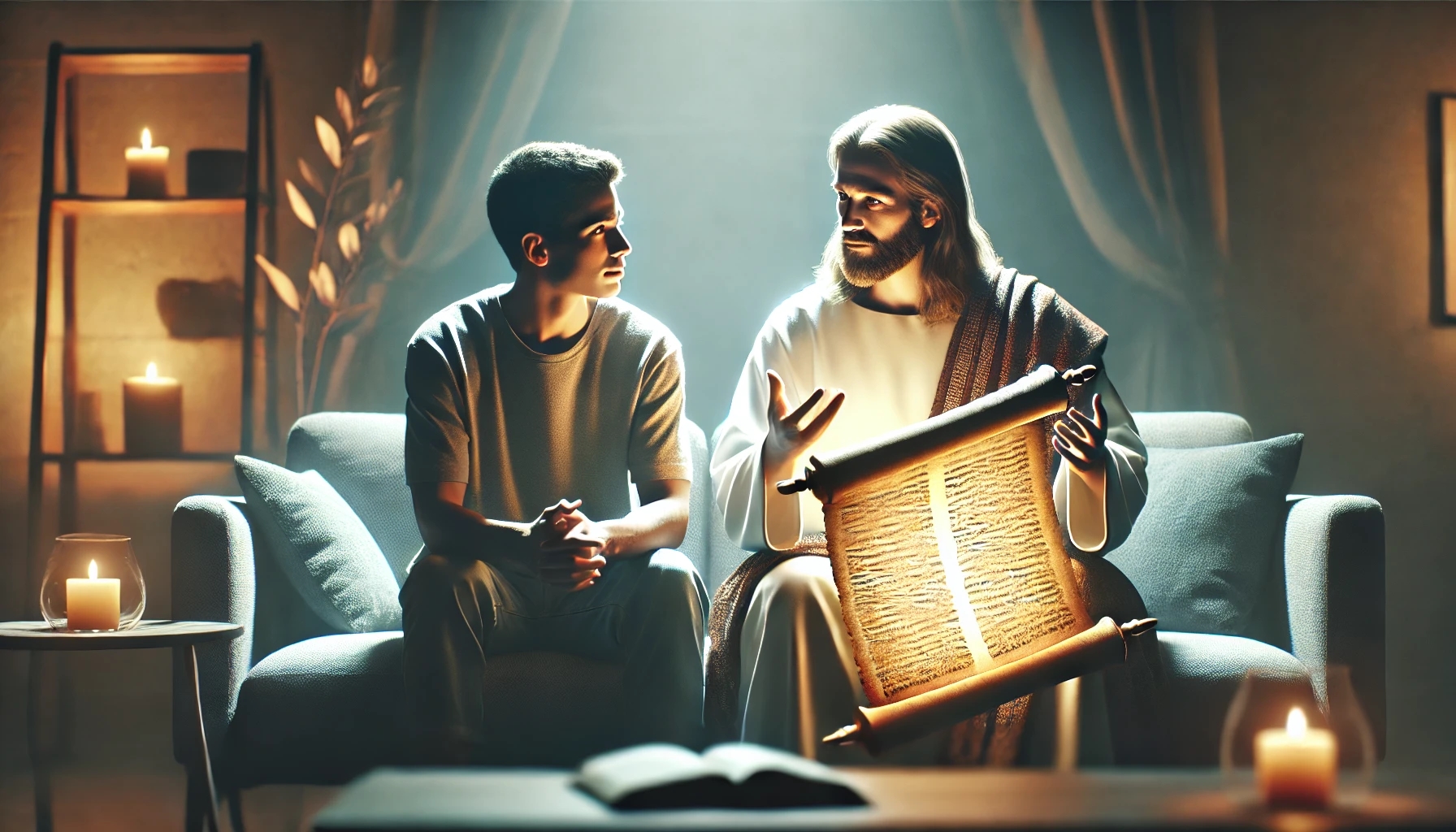

14.11.2024 – 1 Corinthians Chapter 4 | BELIEVE HIS PROPHETS
December 14, 2024
DAILY BIBLE READING – 1 Corinthians Chapter 4
1 Let a man so account of us, as of the ministers of Christ, and stewards of the mysteries of God.
2 Moreover it is required in stewards, that a man be found faithful.
3 But with me it is a very small thing that I should be judged of you, or of man’s judgment: yea, I judge not mine own self.
4 For I know nothing by myself; yet am I not hereby justified: but he that judgeth me is the Lord.
5 Therefore judge nothing before the time, until the Lord come, who both will bring to light the hidden things of darkness, and will make manifest the counsels of the hearts: and then shall every man have praise of God.
6 And these things, brethren, I have in a figure transferred to myself and to Apollos for your sakes; that ye might learn in us not to think of men above that which is written, that no one of you be puffed up for one against another.
7 For who maketh thee to differ from another? and what hast thou that thou didst not receive? now if thou didst receive it, why dost thou glory, as if thou hadst not received it?
8 Now ye are full, now ye are rich, ye have reigned as kings without us: and I would to God ye did reign, that we also might reign with you.
9 For I think that God hath set forth us the apostles last, as it were appointed to death: for we are made a spectacle unto the world, and to angels, and to men.
10 We are fools for Christ’s sake, but ye are wise in Christ; we are weak, but ye are strong; ye are honourable, but we are despised.
11 Even unto this present hour we both hunger, and thirst, and are naked, and are buffeted, and have no certain dwellingplace;
12 And labour, working with our own hands: being reviled, we bless; being persecuted, we suffer it:
13 Being defamed, we intreat: we are made as the filth of the world, and are the offscouring of all things unto this day.
14 I write not these things to shame you, but as my beloved sons I warn you.
15 For though ye have ten thousand instructers in Christ, yet have ye not many fathers: for in Christ Jesus I have begotten you through the gospel.
16 Wherefore I beseech you, be ye followers of me.
17 For this cause have I sent unto you Timotheus, who is my beloved son, and faithful in the Lord, who shall bring you into remembrance of my ways which be in Christ, as I teach every where in every church.
18 Now some are puffed up, as though I would not come to you.
19 But I will come to you shortly, if the Lord will, and will know, not the speech of them which are puffed up, but the power.
20 For the kingdom of God is not in word, but in power.
21 What will ye? shall I come unto you with a rod, or in love, and in the spirit of meekness?
King James Version. Public Domain
Commentary
Introduction:
The fourth chapter of Paul’s first letter to the Corinthians is addressed to the church in Corinth and deals with central themes such as humility, service, and the proper attitude towards spiritual leaders. Paul responds to the arrogance and rivalry within the community that had developed in the Corinthian church. He emphasizes his role as a servant of Christ and appeals to the believers to focus on the true foundation of their faith, rather than being guided by human pride and competition. This chapter offers valuable insights into the dynamics of leadership roles within the church and the necessity of humility and willingness to serve among the believers.
Commentary:
1. No Right to Judge (Verses 1-5)
Paul begins this chapter by stating that all believers are regarded as servants of Christ and stewards of the mysteries of God. However, he emphasizes that it is not his task to judge the members of the church. Instead, he leaves judgment to God, who will ultimately uncover all hidden things. This attitude underscores the need for humility and the avoidance of self-righteousness within the church. Paul warns against making hasty judgments and reminds the Corinthians that only God knows the true heart and motives of each individual.
2. Against the Arrogance of the Corinthians (Verses 6-13)
In this section, Paul criticizes the arrogance of the Corinthians who are elevating themselves above the apostles and their authority. He presents himself and Apollos as examples of humility to teach the Corinthians that no one should exalt themselves above another. Paul emphasizes that all blessings and gifts come from God and that there is no reason for self-praise. He describes his own sufferings and those of the other apostles to remind the believers that true service often comes with hardships. This portrayal serves to admonish the Corinthians to reconsider their attitude and focus on serving Christ, rather than relying on human recognition.
3. Paul, the Father of the Church in Corinth (Verses 14-21)
Paul refers to himself as the spiritual father of the Corinthians, who has begotten them in the gospel. He urges the church to follow him and adhere to his teachings. By sending Timothy, Paul underscores the importance of holding to his ways, which are rooted in faith. He warns against those who are inflating themselves and questioning his authority. Paul emphasizes the power of the kingdom of God, which is not in words, but in power. Finally, he poses the question of whether he should come to them with a rod or with love and a gentle spirit, highlighting the balance between discipline and affection in spiritual leadership.
Summary:
In 1 Corinthians chapter 4, Paul appeals to the church in Corinth to practice humility and readiness to serve while avoiding arrogance and rivalry. He reminds the believers that all are servants of Christ and that judgment is ultimately reserved for God. By depicting his own sufferings and those of the other apostles, Paul encourages the Corinthians to focus on true service for the kingdom of God, rather than seeking human recognition. Finally, he emphasizes the importance of following and accepting his teachings, urging the church to live in power, not just in words. This chapter underscores the values of humility, dedication, and genuine spiritual leadership within the Christian community.


WEEKLY SPIRIT OF PROPHECY READING – Ellen White | The Desire of Ages
Chapter 79—“It is Finished”
Read online here
Commentary
Introduction
The chapter “It Is Finished!” describes the climax of Christ’s work of redemption, completed with His final breath on the cross. This victory over sin and death deeply impacted not only humanity but also heaven and the unfallen worlds. Jesus’ cry, “It is finished!” proclaimed the triumph over Satan and his rebellion. This chapter highlights how Christ perfectly revealed God’s love, justice, and mercy and how the cross established the foundation for the eternal security of the universe.
Commentary
The chapter emphasizes the universal significance of Jesus’ victory on the cross. His declaration, “It is finished!” signals that the work of redemption is complete and that God’s love and justice have triumphed.
Satan, once a highly exalted angel, was finally exposed at the cross. Through his betrayal and the execution of Christ, his true character was revealed to heaven and the unfallen worlds. God allowed Satan to fully develop his principles to make the nature of sin visible. This revelation was necessary to affirm the inviolability of God’s law and the inseparability of grace and justice.
Jesus’ sacrifice demonstrated that grace does not nullify justice but fulfills it completely. His life was the ultimate example of obedience, and through His death, Christ proved that God’s law is righteous and can be upheld. Satan claimed that justice and mercy were incompatible. However, the cross showed that both principles are harmoniously united in God.
The chapter also illustrates how Christ remained steadfast despite Satan’s relentless attacks from His birth to His crucifixion. His faithfulness and obedience to God surpassed all attempts by the enemy to overcome Him. In doing so, He refuted Satan’s claims and secured humanity’s redemption.
Summary
Chapter 79: “It Is Finished!” reveals the depth and completeness of Christ’s victory on the cross. His sacrifice fully displayed God’s love, justice, and mercy, refuting all of Satan’s accusations. The cross demonstrated that sin and rebellion inevitably lead to destruction, while God’s law and principles provide the foundation for eternal security. Through His obedience and triumph over death, Christ brought salvation to humanity and the assurance that sin and Satan will be defeated once and for all. This chapter reminds us that redemption in Christ is the central event in the history of creation and conveys an eternal message of hope and love.
Source: https://fulfilleddesire.net/14-11-2024-1-corinthians-chapter-4-believe-his-prophets/
Adventist News Network – December 13, 2024: GAiN Europe 2024 & More Global News

Adventist News Network – December 13, 2024: GAiN Europe 2024 & More Global News |
This week on ANN: |
· GAiN Europe 2024 connects nations in Montenegro, advancing gospel-sharing strategies.
· Fadminas College in Brazil launches an educational innovation startup, while the Adventist University of Africa trains leaders in faith and mission.
· Plus, from Thailand to Moldova, Adventists celebrate milestones and mobilize with prayer and action for revival in Africa with Impact 2025.
· Stay tuned as ANN brings everything you have to know about what is happening in the church worldwide.
Worship Dec 14, 2024 | Into The Unknown With God — Pr. Pratap Gopala Rao
Into The Unknown With God — Pr. Pratap Gopala Rao
Study: Lesson 11, The Father, the Son, and the Spirit — Hudson Kubbuka THANK YOU for your continued financial support of our Media Ministries. Please donate by visiting "https://adventistgiving.org/#/org/ANB4RC/envelope/start" and select “Media Ministries”. Connect With Us
X: RemnantSDA
Facebook: RemnantSDAchurch.org
Instagram: RemnantSDAchurch Source: https://www.youtube.com/watch?v=VEtXb18jbz0
Praise/Prayer | Dec 14, 2024
Your Interactive Live Praise & Prayer Service
Please also join us on Zoom THANK YOU for your continued financial support of our Media Ministries. Please donate by visiting "https://adventistgiving.org/#/org/ANB4RC/envelope/start" and select “Media Ministries”. Connect With Us
X (Twitter): remnantsda
Facebook: remnantsdachurch.org
Instagram: remnantsdachurch Source: https://www.youtube.com/watch?v=iHymvkRIetk
- « Previous Page
- 1
- …
- 865
- 866
- 867
- 868
- 869
- …
- 5106
- Next Page »

