
"Morning by Morning" | Adriana Santana Source: https://www.youtube.com/watch?v=JA6HvcWLnuI
“Build my Life”
"Build my Life" | Adriana Santana THANK YOU for your continued financial support of our Media Ministries. To donate visit: "https://adventistgiving.org/#/org/ANB4RC/envelope/start" and select “Media Ministries”. Connect With Us
X (Twitter): remnantsda
Facebook: remnantsdachurch.org
Instagram: remnantsdachurch Source: https://www.youtube.com/watch?v=wpFcXFVCkis
🧒📚 Bible Stories to Marvel At | 07.25.2026 | 🌿 Job | 🌅 Chap.29 – Job Remembers Earlier Days
 Bible Stories to Marvel At
Where God’s miracles become great – for little and big children
 Job Chapter 29 – Job Remembers Earlier Days
 When Memories Shine Like Warm Light
Introduction
In the previous chapter, Job had spoken about true wisdom. He had shown that people can dig deep into the earth to find silver, gold, and precious stones. They can bring hidden treasures to light and bravely enter places unknown even to animals.
But then Job had asked: Where can wisdom be found? It does not simply lie in a mountain, in the sea, or in a treasure chamber. It cannot be bought with gold or paid for with precious stones. True wisdom comes from God. It begins with fearing the Lord and turning away from evil.
Now Job’s voice becomes quieter and more sorrowful. He does not look forward first, but backward. He remembers earlier days when his life was bright. At that time, he felt God’s nearness like a light over his path. His home was full of life, his children were around him, and people respected him.
Job also remembers how he helped others. He was not merely a wealthy man who lived for himself. He helped the poor, the orphans, the widows, and the weak. People listened to his words because they recognized that he wanted to act justly and mercifully.
This chapter tells how memories can be both warm and painful. For Job, the earlier days shine like a lamp in the night. Yet that very light also reveals how much he has lost. His memory becomes a window into his former life—and we understand even more deeply why Job’s pain is so great.
 The Biblical Story
 Job Longs for the Days of God’s Nearness
Job begins his remembrance with a deep longing. He says that he yearns for the former months, for the days when God watched over him. At that time, his life did not feel dark and heavy, but supported and protected.
He remembers that God’s light shone above his head. It was as though a lamp illuminated his path. Even when there were dark places, Job could continue walking because God’s presence gave him direction.
Children can imagine it this way: When you walk at night with a lantern, you can see the next step. You do not feel quite so alone because the light is there. That is how Job once experienced God’s nearness.
But now Job sits in suffering. The lamp seems hidden from him. That is why his memory is so painful. He still knows what it was like when God’s presence seemed bright to him. And for that very reason, the darkness now feels even heavier.
 Job Remembers His Full Home
Job looks back on the time when his life was still rich and filled with warmth. He speaks of the days of his maturity, when God’s friendship rested over his tent. This is a beautiful image: To Job, God was not merely a distant ruler, but like a close friend watching over his home.
At that time, the Almighty was visibly with him, and his children were around him. This is one of the saddest thoughts in the chapter. Job remembers his children—their voices, their footsteps, their nearness, and the life that filled the house.
Perhaps in his memory he saw a table where people gathered. Perhaps he heard the laughter of his children. Perhaps he thought of days when everything felt familiar and safe.
But now those children are no longer with him. His home has become silent. That is why his memories are like warm light and, at the same time, like a stab in the heart. They show how precious the things were that he lost.
 Earlier Days Filled with Blessing
Job describes the former abundance of his life with vivid images. He says that his steps were bathed in milk and that the rock beside him poured out streams of oil. This means that his life was rich in blessing, provision, and joy.
Milk and oil were signs of abundance. They pointed to food, prosperity, and a good life. Job had experienced success in many things and had enough both for himself and to help others.
For children, we might say: It was as though Job’s path was not dry and hard, but filled with good gifts. Like a garden receiving water, that is how his former life felt.
But Job does not tell this story in order to sound proud. He remembers it because his present life has become so different. Once there was abundance. Now he experiences loss. Once his path was bright. Now he feels as though he is walking in darkness.
 Job Was Honored at the City Gate
Job also remembers how he used to go to the city gate. In those days, the city gate was an important place. Decisions were made there, disputes were discussed, and justice was administered. Those who sat there held responsibility and respect.
When Job arrived, young men stepped back, and older men rose to their feet. This shows how deeply people respected him. Even distinguished men paused when he appeared.
But this honor did not come only from wealth. People respected Job because they knew he wanted to act justly. He was someone worth listening to. His words carried weight.
This memory must have been deeply moving for Job. Now his friends hardly listened to him properly. But in earlier days, even important men fell silent because they respected his wisdom.
 People Listened to Job’s Words
Job describes how princes held back their words and placed their hands over their mouths. Voices became silent when Job spoke. His words were not simply ignored, but heard attentively.
This was very different from his present situation. Now his friends repeatedly spoke over him. They believed they had to instruct him. They no longer treated him as a wise man, but as someone who finally needed to recognize his guilt.
In former days, people had sensed that Job’s words were helpful. They respected his decisions. His voice brought clarity to difficult situations.
Job remembers this not merely because he longs for honor. He also wants to show: I was not a hard-hearted man, as my friends claim. My former life was marked by justice, service, and responsibility.
 Those Who Heard Job Called Him Blessed
Job says that the ear that heard him called him blessed, and the eye that saw him testified on his behalf. People who knew him could confirm that he did good.
This means that Job’s life was not secretly filled with cruelty. Others had seen how he acted. They had witnessed that he did not overlook people in need.
Here it becomes especially clear how false the accusations of his friends were. Eliphaz had accused Job of turning away the hungry and oppressing the weak. But Job remembers the opposite: People saw his help and could bear witness to it.
Job does not defend himself with empty words. He looks back on a life in which others could recognize his just conduct.
 Job Helped the Poor and the Orphans
Then Job explains why people respected him. He rescued the poor who cried for help and the orphan who had no helper. He noticed people who were otherwise easily overlooked.
An orphan was especially vulnerable in those days because the father, who normally offered protection, was absent. A poor person often had no one to speak on his behalf. But Job listened to their cry.
Children can imagine it this way: When someone stands alone in the schoolyard and everyone else looks away, that person needs someone who will go over and say, “I will help you.” Job had been that kind of helper to people in need.
This reveals Job’s heart. He did not merely want to be respected. He wanted to practice justice. His greatness was shown in the way he bent down to help the lowly.
 Job Brought Joy to Those Who Had No Hope
Job says that the blessing of the one who was perishing came upon him. By this he means people who had reached the end of their strength, people who hardly expected help anymore. When Job stood beside them, their hearts became lighter.
He also caused the widow’s heart to sing for joy. A widow in those days could be very lonely and defenseless. When Job secured justice for her, brought help, or protected her from wrongdoing, her sadness became a small song of joy again.
This is a beautiful image. Job was not merely someone who knew laws. He was someone whose justice allowed people to breathe freely again. His help brought not only order, but also comfort.
That is why it is so painful that his friends later accused him of oppressing those very people. Job knew: That is not true. I tried to stand up for the weak.
 Righteousness Was Like Job’s Clothing
Job says that he put on righteousness, and it clothed him. Justice was like a robe and a turban to him. This image means that righteousness belonged to his life just as clothing belongs to a person.
Clothing is visible. It accompanies a person throughout the day. It protects and reveals something about the one wearing it. That is how Job’s just conduct was. It was not one isolated good deed. It shaped his life.
Job wanted to do what was right. He did not want the strong to crush the weak. He did not want to look away when someone needed help. For him, justice was not decoration for special occasions, but a daily responsibility.
For hearts young and old, this is a powerful message: Justice should not remain merely a word. It should accompany us like clothing we truly wear.
 Job Was Eyes to the Blind
Job describes his help with tender images. He says that he was eyes to the blind. A blind person in those days could easily face danger because paths were uneven and assistance was not always available.
When Job says he was “eyes” to the blind, he means that he helped them find their way. He made sure they were not left alone and helpless. In a sense, he lent them his own strength and sight.
This is a beautiful image of genuine help. We do not merely give someone a quick sentence, but accompany them where they cannot move forward on their own.
Job had once been a person who saw the needs of others and then became a helper himself. He was not blind to people’s pain.
 Job Was Feet to the Lame
Job also says that he was feet to the lame. A paralyzed or mobility-impaired person could not do many things alone. Roads were difficult, work was hard, and help was precious.
Job means that he supported people who could not move forward by their own strength. He helped them as though lending them his own feet.
Children can understand this easily: When someone cannot walk, they need another person to carry them, support them, or help them reach their destination. Job wanted to be that kind of person.
This shows us that mercy is practical. It does not remain only in the heart. It moves hands, feet, time, and strength in order to serve others.
 Job Was a Father to the Needy
Job goes on to say that he was a father to the poor. A good father protects, listens, provides, and stands up for others. That is how Job treated people who had no one.
He also investigated the case of a stranger he did not know. This means that Job did not help only his friends or relatives. He also wanted an unknown person to receive justice.
This is very important. It is easier to be kind to people we like. But true justice asks: What is right? Who needs help? Who is being overlooked?
Job shows that his former life was not marked by hardness of heart, but by responsibility. He did not want the weak to remain without a voice.
 Job Stood Against the Unjust
Job says that he broke the jaws of the wicked and snatched the prey from their teeth. This is a powerful image. It does not mean that Job wanted to be cruel, but that he stopped people who exploited others.
We can imagine a wild predator holding something tightly between its teeth. Job intervenes and takes the prey away so that the victim can be set free.
That is how genuine justice acts. It does not merely say, “That is sad.” It rises and protects the one who is threatened. Job had once been a man who did not simply allow injustice to continue.
This memory is therefore also an answer to his friends. They treated him like an offender. But Job remembers: I stood against offenders and helped the weak.
 Job Hoped for a Peaceful Old Age
After these memories, Job speaks about his former hope. He thought he would die in his nest and multiply his days like the sand. He expected a long and peaceful life.
The image of a nest is warm. A nest is a place of security. It contains protection, nearness, and rest. Job once thought his life would end that way—not in terror, but in peace.
He pictured his roots spreading toward the water and dew resting on his branches. This is the image of a healthy tree receiving enough water and remaining fresh.
But now everything is different. Job is not sitting in a warm nest, but in suffering. His hope for a peaceful old age has been shattered. This memory makes his pain even deeper.
 Job Once Felt Strong and Honored
Job remembers that his honor remained fresh and that his bow was continually renewed in his hand. The bow represents strength and ability. Job had once felt neither weak nor helpless, but strong and prepared.
People listened to him, waited for his counsel, and remained silent when he spoke. His words were precious to them, something worth waiting for.
Job says that people waited for his speech as they waited for rain. In a dry land, rain was a great blessing. When rain came, the earth came alive. In the same way, Job’s words could once refresh people.
This is a wonderful image. A wise word spoken at the right time can be like rain. It can revive a weary heart and bring new hope to a dry life.
 Job’s Smile Gave Courage
Job says that people could hardly believe it when he smiled at them and that they did not cast down the light of his face. This means that his kindness was valuable to others. His expression could encourage them.
A friendly face can mean a great deal. When someone looks at us kindly, we feel seen and accepted. Job had once been not only a strict judge, but also a person whose presence did others good.
Perhaps people came to him with difficult questions. Perhaps they felt uncertain or sad. And when Job met them kindly, their hearts became calmer.
This shows that justice and kindness belong together. Job did not merely want to give righteous judgments. He also wanted to treat people with dignity.
 Job Was Like a King Among the People
At the end, Job says that he chose the way for the people and sat as their chief. He was like a king among his troops and like one who comforts mourners.
This means that Job once held an important position. But his greatness did not consist merely in being honored. His true greatness was shown in the way he comforted, helped, and accepted responsibility.
A good leader is not someone who merely gives orders. A good leader sees the weak, listens to the sorrowful, and protects those who need help. That is how Job remembers his former life.
This memory is beautiful and painful at the same time. Job knows who he was. He knows how he lived. And that is precisely why it hurts so much that his friends now see him so falsely.
 Memory as Light and Pain
At the end of the chapter, Job remains surrounded by his memories. He thinks of God’s nearness, his home, his children, the honor he received at the city gate, and the people he was able to help.
These memories are like warm light. They show that Job’s life had once been filled with blessing, responsibility, and kindness. They also show that Job was not the hard-hearted person his friends claimed he was.
But the warm light does not immediately make the present easier. On the contrary, when we remember beautiful days, we sometimes feel even more strongly what has been lost. Job’s reflection is therefore filled with longing.
This chapter helps us understand Job better. He does not lament only because he is in pain. He also laments because he misses an entire former life—a life filled with God’s nearness, family, dignity, and the joy of doing good for others.
What This Chapter Shows
This chapter shows how Job remembers his former days. At that time, he felt God’s nearness, lived in a full and joyful home, was respected by others, and was able to help many people.
The chapter also shows that Job had once been a just and merciful man. He helped the poor, orphans, widows, the blind, the lame, and strangers. In this way, his life contradicts the false accusations of his friends.
 Summary
In chapter 29, Job remembers his earlier days. He thinks back to the time when God watched over him, God’s light shone upon his path, and his children were around him. Job was once honored at the city gate, and important men listened to his words. He helped the poor, rescued orphans, brought joy to widows, was eyes to the blind and feet to the lame. He stood against the unjust and hoped for a long, peaceful life. His memories reveal how deeply blessing, responsibility, and kindness had shaped his former life—and how great his loss is now.
 Message for Children Today
Job shows us that a good life is not measured only by how much we possess or how respected we are. What truly matters is whether we help others, act justly, and do not overlook people in need.
We also learn that memories can be beautiful and sad at the same time. When we think about good times, we can thank God for them. And when those memories make us sad, we may bring that pain to God as well.
 Reflection Questions
 Why did Job long for his former days?
How did Job help the poor, orphans, widows, and the weak?
How can we be a source of light, help, or comfort to others today?


 Invitation to Job Chapter 30
 Job Experiences Mockery and Deep Humiliation
Job has looked back on his former bright days. He remembered God’s nearness, the honor he received from people, and the help he was able to give to the poor and the weak.
But now his attention turns again to the present. Job sees how greatly everything has changed. People who once would not even have been respected by him now mock him.
What does it feel like when someone goes from being a respected helper to becoming a mocked sufferer?
Come along and discover the next chapter!
 Preview of Job Chapter 30
 When Honor Turns into Mockery
Job faces a painful contrast. He was once respected, but now he is mocked. He once comforted others, but now he himself finds almost no comfort.
 Why does the mockery hurt Job so deeply?
How does Job describe his present distress?
And why is it important not to despise people who are suffering?
 In the next chapter, we will hear Job’s heartbreaking account of his present condition and learn how deeply words and mockery can wound.
Pastor Chad Stuart on Self-Absorption versus Presence
Are you present or are you distracted? If you find yourself absorbed in your own thoughts, worries, or interests instead of really listening, you may be distracted! It may be worth considering how this distractibility affects your time with Christ. Let's talk about it! Source: https://www.youtube.com/shorts/eNn74Ma0NhU
Sunday: Knowledge Versus Love
Daily Lesson for Sunday 26th of July 2026
Read 1 Corinthians 8:1-13. Why does Paul contrast knowledge with love, and what is the context here? What point is he making?
Paul uses the theme of food offered to idols in order to address a deeper issue: the lack of love for others (1 Corinthians 8:1-13). The matter of food offered to idols split the church of Corinth into two groups. Some believed that their knowledge about the nonexistence of other gods gave them the right to eat anything (1 Corinthians 8:4). These are referred to as the “strong” (1 Corinthians 4:10). Those who opposed this behavior are called the “weak” (1 Corinthians 8:9-12). Paul uses such a label because they did not overcome some superstitious beliefs that marked their previous pagan experience. When seeing the “strong” eating food offered to idols, they might conclude that Christianity and idolatry were compatible. So, Paul did not want the “strong” to become a stumbling block to the weak.
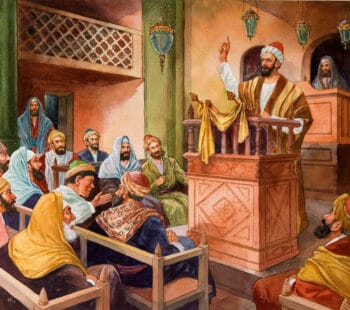
Image © Review & Herald Publishing at Goodsalt.com
The Bible sees the act of eating food offered to idols very negatively (Acts 15:20,29; Acts 21:25; compare with Revelation 2:14,20). However, Paul does not utter as radical statements as one sees in these passages. This is because his primary concern regards the lack of unity that the misuse of knowledge could cause. Paul is not criticizing knowledge as evil in itself; instead, he’s against the kind of knowledge that leads to arrogance and division in the church. Knowledge without love is not true knowledge at all (1 Corinthians 8:2). True knowledge arises only when one loves God and is known by Him (1 Corinthians 8:3).
Quoting Deuteronomy 6:4, Paul shows that believers must know that there is only one God (1 Corinthians 8:4-6). Interestingly, he follows the same idea one sees in Deuteronomy 6:4-5, where the statement that our God is one is followed by the command “You shall love the Lord your God” (NKJV). For both Paul and Moses, knowledge without love is worthless.
Confident in their knowledge, the “strong” believed that eating food sacrificed to idols was harmless. As we will see on Wednesday and Thursday, Paul conceded to them that right under certain conditions. However, if that became a stumbling block for the “weak” (1 Corinthians 8:9), it should be avoided. Christians are supposed to practice self-denial out of love for Christ and others.
|
Paul argues that, without love, knowledge may become a bad thing (1 Corinthians 8:1-13). In what situations can knowledge without love indeed be bad? |
God First: Your Daily Prayer Meeting #1440
Bible verse of the day: "Never will I leave you; never will I forsake you." — Hebrews 13:5b (NIV) Welcome to our Daily Prayer Meeting! This is a safe space where you are seen, heard, and prayed for. Start your day in God's presence—every day at 8AM ET, we share a short devotional from God's Word and lift your prayer requests to Him. You're not alone! Our prayer team is here to intercede with you and for you. Whether you need prayer, celebrate a breakthrough, or start your day with Jesus, you're in the right place. Share your prayer requests or testimonies of praise here: https://wkf.ms/3DBuapQ Engage with us in the comments:
• How can we pray for you today?
• Where are you watching from?
• What are you thankful for? How has God answered your prayers?
Let’s grow together in faith, hope, and love—one prayer at a time. Don’t forget to subscribe and turn on notifications so you never miss a prayer. 🔔
Share this video with someone who needs hope or tag a loved one who needs encouragement today. Today’s Message: Pr Wentworth Sewell The Seventh-day Adventist Church has been an established denomination since 1863. It is a global Christian family with over 21 million members who hold the Bible as the ultimate authority. We are believers committed to helping people understand the Bible to find freedom, healing, and hope in Jesus. Want to learn more about the Seventh-day Adventist Church?
Visit our website at: https://www.adventist.org/ Find us on social media by following the links below:
Facebook:https://www.facebook.com/theadventistchurch
Instagram:https://www.instagram.com/adventistchurch
Twitter/X: https://twitter.com/adventistchurch 👉 Want more prayer moments?
Watch our full playlist of daily prayer videos here: https://youtube.com/playlist?list=PL-k2Gb-DBYo–V8axD7iFUL6TFEckrhxv&si=vIljgfwrSZN6iJR2 God First, Daily Prayer, Prayer Meeting, Christian Prayer, Morning Devotional, Hope In Jesus, Bible Verse Of The Day, Prayer Request, Faith Community, Seventh-day Adventist Source: https://www.youtube.com/watch?v=i83dMEwyWdY
Teachable Heart, Guided Feet #teachable #godloves #renereflections #transform #transformedinchrist
Sometimes we ask God to change our situation, but He wants to change our heart first.
A teachable heart is a transformable heart.
“If you’re teachable, you’re fixable.” #teachable #godloves #renereflections #transform #transformedinchrist Source: https://www.youtube.com/shorts/WnYekqcs3RI
Friday July 24 7PM – Pr Erton Köhler “The Five Certainties of Mission” (BC Camp Meeting 2026)
🤔 Tommaso è passato alla storia per un dubbio, ma quel dubbio non ha definito tutta la sua vita.
Dio non si ferma ai nostri errori: continua a scrivere nuove pagine della nostra storia. 🙏 Source: https://www.youtube.com/shorts/FxIpFpxtVLs
Saturday July 25 6:30AM – Morning Manna – Pr Zlatan Ljuljdjurovic (BC Camp Meeting 2026)
- « Previous Page
- 1
- …
- 87
- 88
- 89
- 90
- 91
- …
- 5121
- Next Page »

