
I grew up on a dairy farm in Oklahoma, and through the years heard many stories and learned some interesting facts about ranching. One is the timing for calving. Ranchers want their cows to give birth in the spring so the calves can grow and strengthen during the warm months. For that to happen, the bull must be isolated from the herd once the optimal breeding season is over. But it’s very difficult to pull the animal away from the herd, so some ranchers use an innovative approach. They tie the bull to a donkey, knowing the smaller animal will stubbornly insist on returning home—and will eventually wear down the bull! I thought of this recently during a trip to Oregon for our first-ever Adventist World Radio camp meeting. We’re a little like the donkey—setting our single-minded focus toward home. Through God’s grace and His strength, we move forward, “forgetting what is behind and straining toward what is ahead, we press on toward the goal to win the prize for what God has called us heavenward in Christ Jesus.” (Philippians 3:13, 14) Here is a short video where I share this example and some of the recent AWR highlights of what God is doing around the world. Jesus is coming soon! And we must keep pressing forward, compelling others to join us in this journey toward home. Once we’ve led others to Jesus, we’ll never be the same, because there’s no greater joy than seeing lives changed for the kingdom of heaven. Yours in the Blessed Hope, Duane McKey
President MB01JSI4KAKREQU Source: https://www.youtube.com/watch?v=CyxToM9RGFU
Be Restored: The Story of Zacchaeus | Bibe Study | Alex Karras | September 25, 2024
The story of Zacchaeus is our story! In the beautiful Bible study, you will get new insights into the life and experience of Zacchaes! Source: https://www.youtube.com/watch?v=1Xvy0Hkv0eE
Salmo 104:31 – Giovedì 26 settembre 2024
“Duri per sempre la gloria del Signore, gioisca il Signore delle sue opere!”. (Salmo 104:31) Meditazione giornaliera “Apri la porta del tuo cuore”. Rubrica a cura di Anna Cupertino. Speaker: Alessia Calvagno Source: https://www.youtube.com/watch?v=oamPSdTsK7U
Poco ortodoxo, resiliente y creativo: John Matteson, misionero pionero en Escandinavia
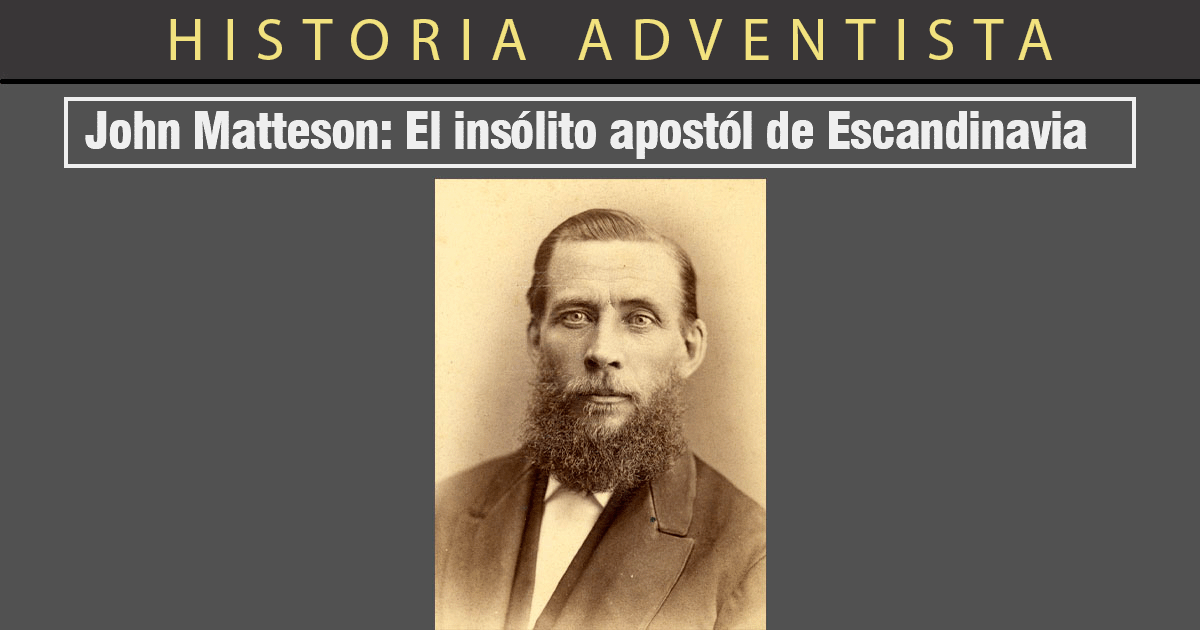
Kristiania, Noruega, julio de 1879 «La noche que estuvimos esperando, mi esposa y yo no pudimos acostarnos. Hacia las 12 bajamos al puerto para ver si habían llegado».[1] La pareja paseó de un lado a otro del muelle durante seis horas. «… y luego tuvimos el alegre reencuentro. Nos conmovió el corazón ver a nuestros […] Source: https://atoday.org/poco-ortodoxo-resiliente-y-creativo-john-matteson-misionero-pionero-en-escandinavia/
Lesson 13.The Risen Lord | 13.5 Go into All the World | THE BOOK OF MARK | LIVING FAITH


13.5 Go into All the World
The Mission to Proclaim: Jesus’ Message to All Nations
Read Mark 16:14–20. What did Jesus say to His disciples when He appeared to them, and what do these words mean for us today?
In Mark 16:14–20, Jesus appears to His disciples and initially rebukes them for their unbelief and “hardness of heart” because they did not immediately believe the reports of others about His resurrection. This shows that the struggle with faith is not a new problem but something that even the disciples, who personally experienced Jesus, went through. However, through His presence and the signs of His resurrection, Jesus provides them with the solid foundation upon which their future faith should rest.
Afterward, Jesus gives the disciples the command to carry the gospel to the entire world and proclaim the good news to all of creation. This command also applies to us today: As followers of Jesus, we are called to spread His message of salvation and hope everywhere. It is a universal mission that knows no boundaries.
Jesus also speaks of the signs that will accompany the disciples’ work, such as casting out demons, speaking in new languages, and healing the sick. These signs are evidence of the divine power working through the proclamation of the gospel. However, they are not guarantees that Christians will always be kept safe from danger. Rather, they serve to make God’s power visible in certain moments, as was the case with Paul (Acts 28:3–6). Additionally, the patient perseverance of Christians in difficult times can be a powerful testimony of faith.
After giving the disciples this mission, Jesus ascends into heaven to sit at the right hand of God, the place of highest authority. His ascension marks the final victory over evil, and from there, He continues to work through His followers on earth.
The last verse of Mark 16 is particularly encouraging: “And the Lord worked with them and confirmed his word by the signs that accompanied it” (Mark 16:20). This is a promise for us today—we are not alone when we proclaim the gospel. Jesus works with us and confirms His message through signs, both in visible miracles and through the transformed lives of people who respond to His message.
“I am with you always, to the very end of the age” (Matthew 28:20 ESV). What comfort can and should we draw from this promise as we also strive to proclaim the gospel “everywhere”?
Jesus’ promise, “I am with you always, to the very end of the age” (Matthew 28:20 ESV), is a source of deep comfort and strength for all who are committed to the mission of proclaiming the gospel. It reminds us that we are never alone, no matter how challenging the circumstances or how great the tasks may seem. Here are some key aspects from which we can draw comfort:
-
Jesus’ Constant Presence: Jesus promises to always be with us—in every moment of our lives. Whether we are in joyful or difficult times, we can be sure that He does not abandon us. This constant presence gives us peace and the confidence that we are not relying solely on ourselves.
-
Strength in Challenges: When we proclaim the gospel, we often face rejection, doubts, or even persecution. Yet the assurance that Jesus is with us gives us the strength to remain steadfast. His presence empowers us when we feel weak or overwhelmed.
-
Encouragement for the Mission: The command to proclaim the gospel “everywhere” can seem overwhelming. However, Jesus’ promise reminds us that He is with us as we undertake this mission. He leads us, gives us wisdom, and opens doors where we see none. We do not have to rely on our own strength or ability but can trust in His guidance.
-
Comfort in Times of Loneliness: Missionary work or sharing the faith can sometimes feel lonely, especially when facing resistance or misunderstanding. However, Jesus’ promise means that we are never truly alone. He is always with us, even when we feel isolated from others.
-
Trust in the Victory: Jesus’ promise extends beyond the present—it points to the “very end of the age.” This gives us the confidence that God’s plan will ultimately be victorious. Our work for the gospel is not in vain, for Christ Himself brings it to completion.
In summary: This promise is not only an assurance for our daily walk but also a source of courage and perseverance. No matter what challenges we face in proclaiming the gospel, we can live with the confidence that Jesus is always with us and accompanies us—until the end of time.

The connection between Jesus’ mission to proclaim the gospel and our everyday life and faith is deep and crucial. Jesus calls us to carry His message of love and salvation everywhere—not just as a formal mission but as a way of life. Here are some important aspects of how this command should shape our daily lives and faith:
-
Living Testimony: Jesus calls us to proclaim the gospel not only through words but also through our behavior and actions. In our daily lives, we are called as followers of Jesus to make the gospel visible through kindness, compassion, and integrity. Every day offers opportunities to express our faith through practical acts of love and service.
-
Courage to Share: Often, we hesitate to share our faith out of fear of rejection or misunderstanding. Jesus’ promise, “I am with you always,” gives us the courage to speak openly about our faith despite these fears. Whether in conversations with colleagues, neighbors, or friends, we are never alone when we share our hope in Christ.
-
Responsibility for the World: The command to proclaim the gospel “everywhere” reminds us that faith is not just a personal matter. It has global implications. Our faith should lead us to a life of responsibility for others and for the world—whether through prayer, financial support of missions, or engagement in our communities.
-
Divine Guidance in Daily Life: Jesus is with us as we proclaim the gospel, which means He also guides us in our daily lives. Whether making decisions in our careers, families, or social environments, we can trust that God leads us and opens doors to fulfill His will.
-
Living Faith Daily: The mission to proclaim the gospel reminds us that our faith is not confined to the church or special moments. It affects our entire lives—our work, relationships, and everyday interactions. Jesus wants to work through us wherever we are.
In summary: Jesus’ mission to carry the gospel to all the world means that our daily lives are a platform for proclaiming our faith. We are called to bear witness through our lives with courage and trust in Jesus’ constant presence. No matter what challenges we encounter in our daily lives, this mission gives our lives meaning and purpose, and we can rely on Jesus to accompany us in everything.

Jesus’ mission to proclaim the gospel is a daily invitation to make hope, love, and faith visible through our lives.
26.09.2024 – Luke Chapter 14 | BELIEVE HIS PROPHETS
September 26, 2024
DAILY BIBLE READING – Luke Chapter 14
1 And it came to pass, as he went into the house of one of the chief Pharisees to eat bread on the sabbath day, that they watched him.
2 And, behold, there was a certain man before him which had the dropsy.
3 And Jesus answering spake unto the lawyers and Pharisees, saying, Is it lawful to heal on the sabbath day?
4 And they held their peace. And he took him, and healed him, and let him go;
5 And answered them, saying, Which of you shall have an ass or an ox fallen into a pit, and will not straightway pull him out on the sabbath day?
6 And they could not answer him again to these things.
7 And he put forth a parable to those which were bidden, when he marked how they chose out the chief rooms; saying unto them.
8 When thou art bidden of any man to a wedding, sit not down in the highest room; lest a more honourable man than thou be bidden of him;
9 And he that bade thee and him come and say to thee, Give this man place; and thou begin with shame to take the lowest room.
10 But when thou art bidden, go and sit down in the lowest room; that when he that bade thee cometh, he may say unto thee, Friend, go up higher: then shalt thou have worship in the presence of them that sit at meat with thee.
11 For whosoever exalteth himself shall be abased; and he that humbleth himself shall be exalted.
12 Then said he also to him that bade him, When thou makest a dinner or a supper, call not thy friends, nor thy brethren, neither thy kinsmen, nor thy rich neighbours; lest they also bid thee again, and a recompence be made thee.
13 But when thou makest a feast, call the poor, the maimed, the lame, the blind:
14 And thou shalt be blessed; for they cannot recompense thee: for thou shalt be recompensed at the resurrection of the just.
15 And when one of them that sat at meat with him heard these things, he said unto him, Blessed is he that shall eat bread in the kingdom of God.
16 Then said he unto him, A certain man made a great supper, and bade many:
17 And sent his servant at supper time to say to them that were bidden, Come; for all things are now ready.
18 And they all with one consent began to make excuse. The first said unto him, I have bought a piece of ground, and I must needs go and see it: I pray thee have me excused.
19 And another said, I have bought five yoke of oxen, and I go to prove them: I pray thee have me excused.
20 And another said, I have married a wife, and therefore I cannot come.
21 So that servant came, and shewed his lord these things. Then the master of the house being angry said to his servant, Go out quickly into the streets and lanes of the city, and bring in hither the poor, and the maimed, and the halt, and the blind.
22 And the servant said, Lord, it is done as thou hast commanded, and yet there is room.
23 And the lord said unto the servant, Go out into the highways and hedges, and compel them to come in, that my house may be filled.
24 For I say unto you, That none of those men which were bidden shall taste of my supper.
25 And there went great multitudes with him: and he turned, and said unto them,
26 If any man come to me, and hate not his father, and mother, and wife, and children, and brethren, and sisters, yea, and his own life also, he cannot be my disciple.
27 And whosoever doth not bear his cross, and come after me, cannot be my disciple.
28 For which of you, intending to build a tower, sitteth not down first, and counteth the cost, whether he have sufficient to finish it?
29 Lest haply, after he hath laid the foundation, and is not able to finish it, all that behold it begin to mock him,
30 Saying, This man began to build, and was not able to finish.
31 Or what king, going to make war against another king, sitteth not down first, and consulteth whether he be able with ten thousand to meet him that cometh against him with twenty thousand?
32 Or else, while the other is yet a great way off, he sendeth an ambassage, and desireth conditions of peace.
33 So likewise, whosoever he be of you that forsaketh not all that he hath, he cannot be my disciple.
34 Salt is good: but if the salt have lost his savour, wherewith shall it be seasoned?
35 It is neither fit for the land, nor yet for the dunghill; but men cast it out. He that hath ears to hear, let him hear.
King James Version. Public Domain
Commentary
Introduction:
Luke chapter 14 addresses various themes that are crucial for understanding Jesus’ teachings on humility, hospitality, calling, and discipleship. Through healing, parables, and teachings, Jesus reveals the deeper meaning of love, self-denial, and living in the Kingdom of God. Particularly, the challenge of discipleship is emphasized, where Jesus uses clear and sometimes harsh words to highlight to his listeners the costs and sacrifices that come with following him.
Commentary:
The chapter begins with the healing of a man with dropsy on the Sabbath, once again demonstrating that Jesus does not view the sanctity of the Sabbath as a restriction on exercising mercy. He poses a challenging question to the Pharisees about whether it is lawful to heal on the Sabbath. Their silent response reveals their inability to grasp Jesus’ complete perspective on love and the law. Here, Jesus clarifies that the Sabbath should not be an obstacle to doing good but an opportunity to show God’s compassion.
In the following parables, Jesus teaches about humility and true greatness. The parable of the wedding banquet illustrates that those who exalt themselves will be humbled, and those who humble themselves will be exalted. Jesus emphasizes that those who push forward in life to gain honor often end up in shame, while those who humble themselves are ultimately lifted up. This is a profound lesson on the value of modesty in dealing with others and in the presence of God.
The parable of the great banquet addresses the Kingdom of God and shows how many invited guests decline the invitation due to worldly concerns, thereby rejecting the call. Instead, the poor, the crippled, the blind, and the lame are invited, demonstrating that God’s Kingdom is open to those willing to accept the invitation. This highlights the theme of God’s universal invitation but also underscores the danger of rejecting it due to worldly priorities and indifference.
Jesus then speaks about the stringent requirements of discipleship. The strong words “whoever does not hate father and mother, wife and children, brothers and sisters—yes, even their own life—cannot be my disciple” do not advocate literal hatred but emphasize the necessity for Christ to be the foremost priority in a disciple’s life. Discipleship requires sacrifice, self-denial, and the willingness to carry one’s own cross. Those who do not completely relinquish everything they have cannot be Jesus’ disciples. These statements illustrate that discipleship is a radical commitment that affects every aspect of one’s life.
Finally, the chapter underscores the importance of perseverance and wisdom in following Christ by using the examples of a man building a tower and a king going to war. In both cases, thorough preparation and consideration are necessary. This emphasizes that discipleship is a well-thought-out decision and should not be undertaken lightly.
Summary:
Luke chapter 14 illuminates how Jesus conveys the fundamental values of humility, mercy, and discipleship. Through the parable of the wedding banquet and teachings on the Sabbath, Jesus reminds us that God does not judge by external worldly standards but by the humility of the heart. He demonstrates that true discipleship requires sacrifice and that everything else in life, including family and possessions, must take a backseat to Christ. The chapter concludes with a clear admonition: following Christ is not an easy path, but those who are willing to embark on this journey will attain eternal life.

WEEKLY SPIRIT OF PROPHECY READING – Ellen White | The Desire of Ages
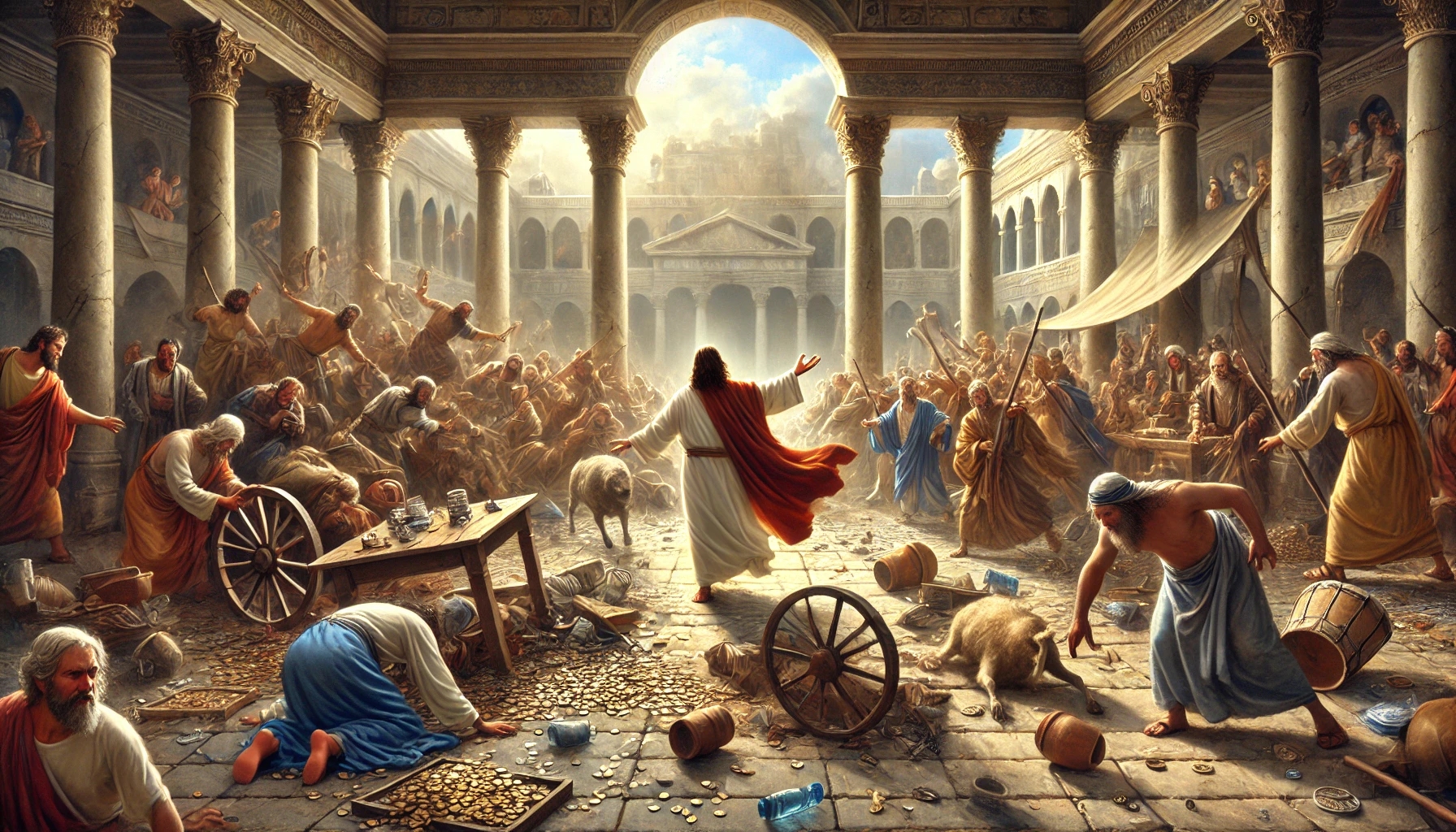
Chapter 65—The Temple Cleansed Again
This chapter is based on Matthew 21:12-16, 23-46; Mark 11:15-19, 27-33; Mark 12:1-12; Luke 19:45-48; Luke 20:1-19.
Read online here
Commentary
Introduction:
In Chapter 65, we witness a pivotal event from the life of Jesus, where He once again cleanses the temple of unholy business dealings. This scene highlights the sanctity of the temple as a place of worship and demonstrates Jesus’ commitment to true worship. At the same time, Jesus reveals Himself as the divine King and Judge, fighting against hypocrisy and corruption in the temple, while the Jewish leaders grow increasingly hostile towards Him.
Commentary:
The cleansing of the temple is a powerful symbol of purity and respect in worship. Jesus demonstrates that true worship is not about outward rituals, but about obedience and a sincere heart. By driving out the merchants and healing the sick within the temple, He reveals the contrast between His mission of healing and the greed of the religious leaders. This act of Jesus serves as a profound warning to all believers not to honor God merely through rituals, but through lives that embody love, justice, and compassion. The hypocrisy of the priests, who rejected Jesus’ authority, is an example of how the religious elite can reject spiritual truths.
Summary:
The second cleansing of the temple underscores Jesus’ role as the divine King and Judge, who purifies the temple of corruption and restores it as a place of true worship. His actions show that God values obedience and a sincere heart over ritual sacrifices. The response of the religious leaders, who opposed Him, symbolizes the rejection of divine truth and serves as a serious warning. Jesus’ parables, such as the one about the cornerstone, call for repentance and illustrate that Christ is the central foundation of our faith—the rock upon which we must build.
Source: https://fulfilleddesire.net/26-09-2024-luke-chapter-14-believe-his-prophets/
ATSS: Sigve Tonstad, “Rereading the Best Gospel”
25 September 2024 | Our topic for this class is “Rereading the Best Gospel.” “And which is the best one?” someone will ask. Many scholars believe that Mark was the first gospel. Ninety percent of Mark reappears in Matthew. Why did the author of Matthew use so much of Mark except for his (or her) […] Source: https://atoday.org/atss-sigve-tonstad-re-reading-the-best-gospel/
The Risen Lord – Hit the Mark Sabbath School
Join the Hit the Mark panel as they discuss Sabbath School Lesson 13 – The Risen Lord. It’s the fastest hour of the week!

 (0)
(0)Source: https://ssnet.org/blog/the-risen-lord-hit-the-mark-sabbath-school/
Thursday: Go Into All the World
Daily Lesson for Thursday 26th of September 2024
Read Mark 16:14-20. What did Jesus say to His disciples when He appeared to them, and what do these words mean to us today?
The first words of Jesus to His disciples are recorded only in indirect discourse in Mark 16:14. He rebukes them for their unbelief and hardheartedness. This question of unbelief is not simply a modern problem. As we already have seen, the original disciples of Jesus struggled with belief (Matthew 28:17, John 20:24-29), and they were with Jesus in the flesh and saw, again and again, the miracles.

Image © Lifeway Collection at Goodsalt.com
But by various proofs, He demonstrated to them the reality of His resurrection. Then their testimony, combined with the evidence summarized in Monday’s study, forms a firm foundation for faith.
Jesus then commissions His disciples to take the gospel to the world. His command is expansive. They are to go to the entire world and proclaim the gospel to all creation. Jesus then explains the outcome of their work for weal and for woe—believers will be saved, unbelievers condemned.
Jesus also describes signs that will accompany the disciples’ work—casting out demons, speaking new languages, protection from harm, and healing the sick. Some people have mistakenly interpreted Mark 16:18 as an affirmation for Christians to show their faith by picking up venomous snakes. No such presumptuous action is authorized here. What Jesus is describing is protection when one is involved in mission, such as Paul’s service for others, as in Acts 28:3-6.
Of course, the Bible does not teach that Christians will always be protected from harm. At times God sees fit to work a miracle to further the gospel cause. But sometimes Christians suffer because of their witness. In that circumstance their patient endurance is another sign to unbelievers of the power of faith.
And then, after doing all He did here, “He was received up into heaven, and sat down at the right hand of God” (Mark 16:19, NKJV). Jesus ascended to sit at the right hand of God, the place of supreme power, for Jesus had defeated all the forces of evil.
Notice the last verse. Though they went “everywhere,” preaching the gospel, they did not go alone. “The Lord working with them and confirming the word through the accompanying signs. Amen” (Mark 16:20, NKJV). He was with them then and promises to be with us now as we continue the work they started.
|
“ ‘I am with you always, even to the end of the age’ ” (Matthew 28:20, NKJV). What comfort can, and should, we take from this promise as we, too, seek to proclaim the gospel “everywhere”? |
(0)Source: https://ssnet.org/blog/24c-13-go-into-all-the-world/
How Johann Survived Against All Odds
Johann’s life was filled with pain and struggle until an infected mosquito changed everything. This video captures his journey from loneliness to battling malaria and finding hope. Don’t miss out—hit that like button, subscribe for more heartfelt content, and let us know what you think in the comments! #FaithInAction #OvercomingAdversity #MalariaSurvivor #awr #adventistworldradio Watch the full video: https://www.youtube.com/watch?v=jJdItUdr5ng #short MB01CACKXWNXRAQ Source: https://www.youtube.com/watch?v=yBaDjU3xi-w
- « Previous Page
- 1
- …
- 944
- 945
- 946
- 947
- 948
- …
- 5060
- Next Page »

