A prayer for every loved one who hasn't received Jesus yet. God loves them even more than we do. Type "AMEN" in the comments. Source: https://www.youtube.com/shorts/ngAyGlDIQU8
Discussion Starters-Paul’s Ministry to Corinth
This week’s lesson introduces us to Paul’s arrival at the cities of Athens and Corinth, and his attempts at evangelization.

- Paul says that when he arrived in Corinth, “I came to you in weakness, with great fear and trembling” (1 Cor 2:3). He had already suffered abuse in other Greco-Roman cities, and now he was entering Corinth—a wealthy, port city infamous for its paganism and immorality. Today, where might you most “hesitate” to speak of Christ? Why?
- When Paul preached in Athens, he commended the Athenians for their reflections on “natural religion” (the evidence for God available to all people). Ellen White praised Paul for his respectful engagement, writing “With a tact born of divine love, he carefully drew their minds away from heathen deities, by revealing to them the true God, who was to them unknown.” (Acts of the Apostles, p 241). Yet she also noted that, by the time Paul left for Corinth, he had learned that he must put Jesus Christ, and Him crucified, at the center of his preaching (Acts of the Apostles, p. 244).
- What problems and errors arise from a mindset that “God can only work within the confines of my church– and everything outside of it is damned?”
- What problems and errors arise from a mindset that “All religions are basically the same, so it doesn’t matter which one you follow?”
- Why do you think Paul had more success preaching the person of Jesus vs. the idea of God? What might this say about the uniqueness of Christianity?
- In your 1:1 witnessing, how do you balance showing genuine respect for the journey a person has already walked with the God who created and loves them, while also sharing greater light?
- Paul almost gave up on Corinth, but then the Lord appeared to him in a vision and said, “Do not be afraid; keep on speaking… because I have many people in this city.” Acts 18:10. The “many people” God had in this city could not have all been formal Christians already, since Paul essentially founded the Corinthian church.
- What might this tell us about how God looks at who “His” people are?
- Who do we assume are good candidates for our witnessing? Why?
- Who do we assume are poor candidates for our witnessing? Why?
- Have you ever been surprised by someone’s openness to the gospel– because you did not think they were a good “candidate?”
- Ellen White says that, upon arrival in Athens, “Paul was not deceived by the grandeur and beauty of that which his eyes rested upon, nor by the material wisdom and philosophy, which encountered him in the great city of learning. He perceived that human art had done its best to deify vice and make falsehood attractive by glorifying the memory of those whose whole lives have been devoted to leading men to deny God” (Sketches from the Life of Paul,90). What kind of people does our current culture “glorify?” In general, do these models lead people closer to God, or farther away? How so?
- Paul felt trepidation upon entering the wealthy, cosmopolitan, urban environment of Corinth.
- What has been your experience of the challenges of growing a vibrant church in a cosmopolitan, big-city environment today?
- What has been your experience of the challenges of growing a vibrant church in a small-town, rural environment today?
- Which is harder? What are some advantages that God can help you to leverage in each of those environments?
- Our Quarterly author invites us to consider how much Paul’s identity and calling fueled his mission activity.
- What are some common elements of discipleship that every follower of Jesus is called to do?
- What unique “callings” do you believe Jesus is addressing specifically to you, in light of in your current life situation and talents? How do you know?
The Illusion of Immunity: Why Church Structures Reject Reconciliation—and Why Silence Costs More Than Justice
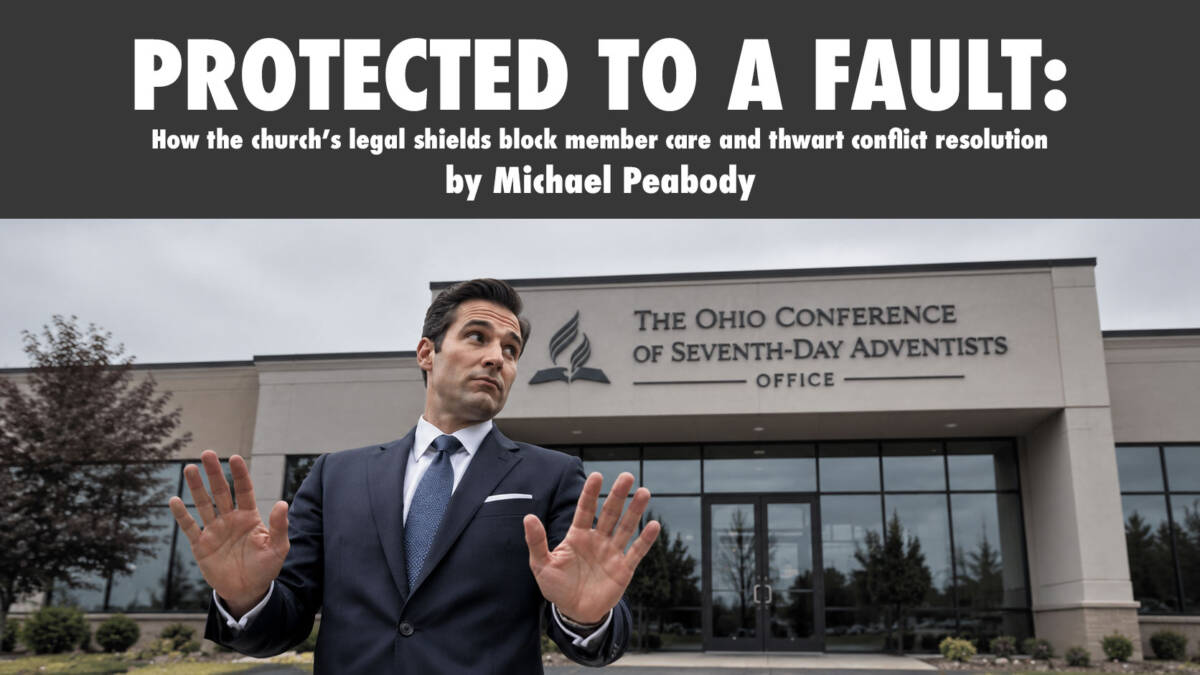
by Michael Peabody | 30 June 2026 | Whenever a crisis strikes an Adventist constituency, such as the recent Ohio incident in which young camp counselors were reportedly abandoned at an urban transit station in the middle of the night, a predictable, exhausting pattern follows. Well-meaning advocates of alternative dispute resolution step forward. Trained in […] Source: https://atoday.org/the-illusion-of-immunity-why-church-structures-reject-reconciliation-and-why-silence-costs-more-than-justice/
Through Jesus’ Eyes
"They're our brothers and sisters …" Earlier this year, G. Alexander Bryant, president of the North American Division traveled to Minneapolis to meet with church members and leaders affected by ICE activities. Watch the full interview at the link in bio. #nadadventist #hopeandwholeness #adventist #adventistchurch #minneapolis Source: https://www.youtube.com/shorts/XswDLXAQeq0
Il movimento può diventare una vera cura per corpo e mente
- « Previous Page
- 1
- …
- 180
- 181
- 182
- 183
- 184
- …
- 10165
- Next Page »

