5.5 A Different Kind of Messiah
A Different Kind of Messiah: Jesus’ Miraculous Feeding of the 5000 and the Revelation of His True Mission
Read Mark 6:34–52. What problem did Jesus and his disciples face, and how was it solved?
In Mark 6:34–52, we witness an episode that contrasts the people’s expectations of the Messiah with Jesus’ actual mission. After the disciples returned from their mission, they withdrew with Jesus to a secluded place. However, a large crowd of 5000 people arrived before them, and Jesus saw their need, comparing them to sheep without a shepherd. This story illustrates the types of problems Jesus and his disciples encountered and how Jesus miraculously solved them.
The Problem and Its Solution:
-
The Large Crowd:
-
The Problem: The disciples and Jesus wanted to rest, but a large crowd followed them. By evening, it became clear that the people were hungry and had no place to buy food. The disciples suggested sending the people away to fend for themselves.
-
The Human Perspective: The disciples thought in human terms and saw no way to feed the crowd. They had only five loaves and two fish, which was obviously not enough.
-
-
The Miraculous Feeding:
-
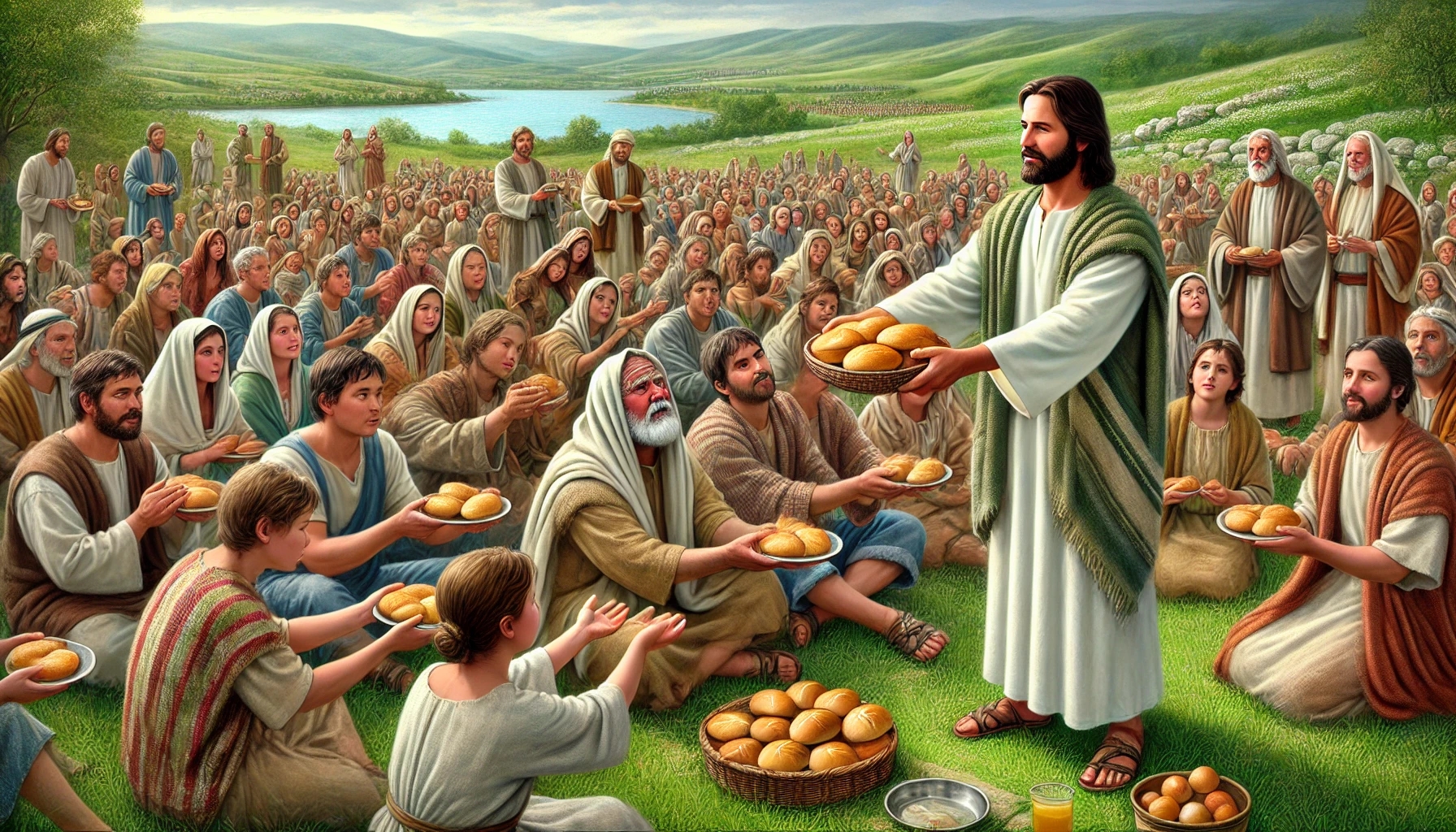
Jesus’ Solution: Jesus instructed the disciples to have the people sit in groups and then divided the little food they had. Through a miracle, the food multiplied, and everyone was satisfied. There were even twelve baskets of leftovers.
-
The Divine Perspective: This feeding demonstrates Jesus’ power over nature and his care for the people. It reminds us of the manna in the wilderness and presents Jesus as the true shepherd who provides for his people.
-
Expectations of the Messiah:
-
Popular Messiah Concept:
-
People’s Expectations: At the time of Jesus, people expected the Messiah to be a political and military leader who would free Israel from its enemies and bring justice and peace. A large number of men in the wilderness could recall a military uprising.
-
Jesus’ True Mission: Jesus intentionally disappointed these expectations. He did not come to rebel against Rome but to free the people from the bondage of sin.
-
-
Symbolism of the Shepherd:
-
Sheep Without a Shepherd: Jesus saw the people as sheep without a shepherd, indicating a deep spiritual need. This phrase refers to the lack of a true leader or king, as in Numbers 27:17 and other Old Testament passages.
-
Jesus as the True Shepherd: Instead of leading a political revolution, Jesus showed through his care and miracles that he was the true shepherd, leading people to God.
-
What should this account tell us about why a correct understanding of prophecy is important? If a misunderstanding of Christ’s first coming led to disaster for some, how much more could a misunderstanding of His second coming have the same impact for some people?
The account in Mark 6:34–52 of the miraculous feeding of the 5000 and the subsequent event of Jesus walking on water provides valuable insights into why a correct understanding of prophecy is so important. During Jesus’ time, many people had a mistaken understanding of the Messiah’s role and mission, leading to misunderstandings and disappointed expectations. These lessons are still relevant today, especially concerning Christ’s second coming.
Importance of a Correct Understanding of Prophecy:
-
Misunderstandings About Christ’s First Coming:
-
False Expectations: Many people during Jesus’ time expected a political and military Messiah who would free Israel from Roman rule. These false expectations led to disappointment and rejection of Jesus when he did not fulfill the role they had envisioned.
-
Consequences: Those who rejected Jesus because of their false notions missed the true message of salvation and spiritual freedom that he brought. This had far-reaching spiritual consequences for them.
-
-
Lessons for the Second Coming of Christ:
-
Dangers of False Notions: A misunderstanding of Christ’s second coming could have similar or even more severe effects. If people have false expectations about the second coming, they could easily be deceived or disappointed.
-
Biblical Prophecy: The Bible provides clear clues and prophecies about the second coming of Christ. A correct understanding of these prophecies helps us to be prepared and to interpret the signs of the times accurately.
-
Why a Correct Understanding of Prophecy Is Important:
-
Preparation and Vigilance:
-
Biblical Foundation: A correct understanding of biblical prophecy helps us to be vigilant and prepared. Jesus himself emphasized the importance of vigilance and proper preparation for his second coming (Matthew 24:42–44).
-
Avoidance of Deception: With a clear understanding of prophecy, we are better able to recognize and avoid false teachers and misleading statements (Matthew 24:24).
-
-
Faith and Hope:
-
Strengthening Faith: Studying the prophecies and recognizing their fulfillment strengthens our faith and gives us confidence in God’s plan and promises.
-
Hope for the Future: A correct understanding of prophecy gives us hope and joy for the second coming of Christ, rather than spreading fear or confusion.
-
-
Conduct and Mission:
-
Holy Living: Knowing about the second coming of Christ motivates us to live holy and godly lives (2 Peter 3:11–12).
-
Evangelism and Service: It also reminds us to share the message of Jesus’ love and salvation, so that as many people as possible have the opportunity to hear the gospel and prepare for it (Matthew 28:19–20).
-
Conclusion:
The story in Mark 6:34–52 and the false expectations about Christ’s first coming teach us the immense importance of a correct understanding of prophecy. A proper understanding protects us from deception, prepares us for Christ’s return, and strengthens our faith and hope. It also motivates us to live holy lives and actively spread the gospel. Considering that a misunderstanding of Christ’s first coming led to misunderstandings and rejection, it is even more crucial that we thoroughly study and understand the biblical prophecies about the second coming to be prepared and vigilant.

The event in Mark 6:34–52 shows us an impressive episode that contrasts the people’s expectations of the Messiah with Jesus’ actual mission. This story has deep connections to our daily lives and faith.
Connection to Our Daily Lives and Faith:
-
Trusting in God’s Provision:
-
Everyday Problems and Divine Solutions: The disciples saw the large crowd and recognized the problem of food scarcity. In their human thinking, they saw no solution, but Jesus showed that God’s possibilities are limitless. This teaches us to trust in God’s supernatural provision in our daily challenges, even when the solutions are not immediately apparent.
-
Divine Care: Jesus demonstrated his care for the people by meeting their physical needs. This reminds us that God cares about every aspect of our lives, whether physical, emotional, or spiritual.
-
-
Dedication and Willingness to Serve:
-
Jesus’ Example: Instead of sending the crowd away, Jesus dedicated himself to them and served them, even though he and his disciples initially sought rest. This teaches us not to relent in our dedication and service to others, even when we are tired or overwhelmed. Serving others is an essential part of the Christian life.
-
Neighborly Love: The miraculous feeding shows us the importance of compassion and active love for others. We are called to help and recognize the needs of others, just as Jesus did.
-
-
Expectations and God’s Plan:
-
Popular Misunderstandings: The people during Jesus’ time expected a political Messiah. Jesus deliberately disappointed these expectations and revealed a deeper, spiritual mission. This reminds us that our own expectations of God’s actions can often be wrong. We should be open to his plan and ways, even if they are different from what we expect.
-
Spiritual Insight: Jesus saw the people as “sheep without a shepherd,” indicating their spiritual need. He came to lead and provide for them spiritually. This encourages us to seek spiritual guidance and renewal in our lives rather than just hoping for material or worldly fulfillment.
-
-
The True Mission of Jesus:
-
Freedom from Sin: Jesus’ true mission was to free people from the bondage of sin, not from political rule. This perspective should shape our faith by prioritizing spiritual freedom and salvation over earthly success or power.
-
Discipleship and Mission: Jesus’ actions and teachings call us to follow him and participate in his mission of love and salvation. This means focusing on spreading the gospel and fulfilling his commandments.
-