Click here for the full article.
Wednesday: What Does the Lord Require?
So much of the writings of the prophets consisted of appeals to faithfulness. And not just faithfulness in general, but in particular, faithfulness to the Israelites’ end of the covenant, which was reaffirmed just before they entered the land. This is what the book of Deuteronomy depicted: the reaffirmation of God’s covenant with Israel. The Lord was now, after the 40-year detour, about to fulfill (or begin to fulfill) more of His covenant promises, His end of the deal. Thus, Moses admonished them to fulfill their end, as well. Indeed, much of the writings of the prophets was basically the same: appeals for the people to uphold their side of the covenant.
Read Micah 6:1-8. What is the Lord telling the people there, and how does it relate to the book of Deuteronomy? (See also Amos 5:24 and Hosea 6:6)
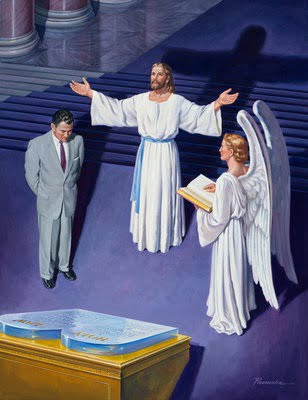
Image © Review & Herald Publishing at Goodsalt.com
Bible scholars have seen in these verses in Micah what is known as a “covenant lawsuit” in which the Lord “sues” or brings a case against His people for violation of the covenant. In this case, Micah says that the Lord “has a complaint against His people” (Micah 6:2), in which the word “complaint” (riv) can mean a legal dispute. That is, the Lord was bringing a legal case against them, imagery that implies the legal (besides the relational) aspect of the covenant. This shouldn’t be surprising because, after all, central to the covenant was law.
Notice, too, how Micah borrows language directly from Deuteronomy: “And now, Israel, what does the LORD your God require of you, but to fear the LORD your God, to walk in all His ways and to love Him, to serve the LORD your God with all your heart and with all your soul, and to keep the commandments of the LORD and His statutes which I command you today for your good?” ( Deuteronomy 10.12-13, NKJV). Instead, though, of quoting it directly, Micah modifies it by exchanging the “letter of the law” of Deuteronomy for the “spirit of the law,” which is about being just and merciful.
| What seems to be happening here is that, whatever the outward appearance of religion and piety (lots of animal sacrifices, i.e., “thousands of rams”), that’s not what constitutes Israel’s covenant relationship with God. What good is all this outward piety if, for example, “they covet fields and take them by violence, also houses, and seize them. So they oppress a man and his house, a man and his inheritance” (Micah 2:2)? Israel was supposed to be a light to the world, about which the nations would say, with wonder: “Surely this great nation is a wise and understanding people” (Deuteronomy 4:6). Hence, they were to act with wisdom and with understanding, which included treating people with justice and mercy. |
Amen! (1)
(1)
(1)The post Wednesday: What Does the Lord Require? appeared first on Sabbath School Net.
Source: https://ssnet.org/blog/wednesday-what-does-lord-require/
Agriculture and Livelihoods | ADRA Insider Podcast
In this episode of the ADRA Insider, Host, Heather Grbic speaks with Frank Spangler, Multimedia Specialist for ADRA Canada about his observations of the amazing work that ADRA is doing in helping people learn ways to better provide for their families. Frank has been filming stories for ADRA for over thirty years. Source: https://www.youtube.com/watch?v=tm-czIAWtXU
Brazilian Businessman Invites More than 100 Friends to a Bible Study
Do we Still Need the Gift or Prophecy to Remind us?
“And it shall come to pass afterward That I will pour out My Spirit on all flesh; Your sons and your daughters shall prophesy, Your old men shall dream dreams, Your young men shall see visions. And also on My menservants and on My maidservants I will pour out My Spirit in those days. “And I will show wonders in the heavens and in the earth: Blood and fire and pillars of smoke. The sun shall be turned into darkness,” Joel 2:28-31 NKJV

I love studying my Bible near the bay or gulf in the beautiful Tampa Bay area.
As I have been studying this week’s Sabbath School lesson on how the book of Deuteronomy is used throughout Scripture a few thoughts came to mind.
- In Jeremiah 7:1-7 and Micah 6:1-8 Jeremiah and Micah seem to be borrowing from Deuteronomy and yet they are not referencing Moses or giving him credit. Of course back then people knew Scripture so well that it went without saying when Moses was being quoted. This was not considered plagiarism. Of course we know great portions of the New Testament quote, reference and borrow from the Old Testament. This leads me to my second thought.
- In Acts 17:11 the people searched the Scriptures, obviously the Old Testament, to see if what Paul was preaching was true. Could it be that Paul and the other New Testament writers were the lesser lights in their day referencing or pointing to the greater light in the Old Testament? Were Jeremiah and Micah the lesser lights in their day pointing to the greater light in the books of Moses? If so, can one be a lesser light in his or her day but still be inspired by the same Holy Spirit who inspired Moses? This leads me to my third thought.
- If God raised up prophets like Jeremiah and Micah to remind people what was written in the books of Moses, could God raise up prophets in the last days to remind people of forgotten truths in Scripture? And if so…
- Then if the book of the law needed to be rediscovered in 2 Kings 22:1-20, what writings of inspiration may need to be rediscovered by the church of today?
And now, your thoughts?
Amen!(2)
(2)The post Do we Still Need the Gift or Prophecy to Remind us? appeared first on Sabbath School Net.
Source: https://ssnet.org/blog/do-we-still-need-the-gift-or-prophecy-to-remind-us/

