• Home
  • Devotionals
  • BiblePhone
  • Blogs
  • TV
  • Prayer
    • Submit Prayer Request
    • Prayer Requests List
  • Contact us
  • Romanian

Intercer Adventist News

Closer To Heaven

  • About us
    • About Adventist Church
    • About Intercer Adventist News
    • About Intercer
    • About Lucian Web Service
    • Latest News
    • Romanian Church News
  • News and Feeds
    • Intercer Adventist News
    • 60 Second SlideShows
    • “Adventist Tweets” Paper
    • Adventists on Twitter
    • Adventists on Google Plus
    • Bible Resources
      • Adventist Universities Daily Bible
      • Answers For Me
        • Dear God
        • Healthy Living
        • Life Notes
        • Spiritual applications
        • Vegetarian recipes
      • Better Sermons
        • Spirit Renew Quotes
      • Daily Bible Promise
      • E-GraceNotes
        • Bible Says
        • City Lights
        • Family First
        • Staying Young
      • Story Harvest
        • Personal Stories
      • SSNet.org
    • Churches & Organizations
      • Adventist News Network
      • Adventist Review
      • Adventist World Radio
      • Avondale College
      • Babcock University Nigeria
      • BC Alive
      • British Union Conference
      • Canadian Adventist Messenger
      • Canadian Union
      • North American Division News
      • Outlook Magazine
      • PM Church – Pastor’s Blog
      • Potomac Conference
      • Record Magazine – Australia
      • Review and Herald
      • Trans-European Division
      • Washington Conference
    • Health
      • Dr.Gily.com
      • Vegetarian-Nutrition.info
    • Ministries
      • 7 Miracle (Youth)
      • A Sabbath Blog
      • Adventist Blogs
      • Adventist Today
      • ADvindicate
      • Creative Ministry
      • Grace Roots
      • Romanian Church News
      • Rose’s Devotional
      • UNashamed
    • Personal
      • Alexandra Yeboah
      • Iasmin Balaj
      • Jennifer LaMountain
      • McQue’s View
      • Refresh with Tia
      • Shawn Boonstra
  • Sermons & Video Clips
    • Churches
      • Downey Adventist Church
      • Fresno Central SDA Church
      • Hillsboro Adventist Church
      • Mississauga SDA Church
      • New Perceptions Television (PM Church)
      • Normandie Ave SDA Church
      • Remnant Adventist Church
    • Organizations
      • Adventist News Network (ANN)
      • ADRA Canada
      • Adventists About Life
      • Adventist Education
      • Adventist Mission
      • Amazing Facts
      • Adventist Church Connect
      • BC Adventist
      • Church Support Services
      • In Focus (South Pacific)
      • IIW Canada
      • NAD Adventist
      • NAD Church Resource Center (Vervent)
      • NARLA
      • Newbold
      • Review & Herald
      • SECMedia
      • Video Avventista (Italy)
    • Ministries
      • 3AngelsTube.com
      • Answered.TV
      • AudioVerse.org
      • AYO Connect
      • Christian Documentaries
      • GAiN #AdventistGeeks
      • GYC
      • Intercer Websites
      • Josue Sanchez
      • LightChannel
      • Pan de Vida
      • Revival and Reformation
      • Stories of Faith
      • SAU Journalism/Communication
      • Spirit Flash
      • The Preaching Place (UK)
      • Toronto East Youth Nation
    • Personal
      • Esther-Marie Hartwell
      • McQuesView
      • Pastor Manny Cruz
    • Sabbath School
      • Ecole du Sabbat Adventiste
      • Sabbath School Audio Podast
      • Sabbath School daily
  • Resources
    • Bible and Bible Studies
    • Health
    • Music
  • All articles
  • G+ News & Marketplace
    • G+ News & Marketplace Group
    • G+ Page
You are here: Home / Archives for Adventist Sermons & Video Clips / Fulfilled Desire

Lesson 10.Rules of Engagement | 10.2 The Dragon of Revelation | THE GOD OF LOVE AND JUSTICE | LIVING FAITH

March 2, 2025 By admin

10.2 The Dragon of Revelation
The Limited Triumph of Evil
Read Revelation 13:1–8. What does the text say about the extent of the dragon’s power?
Revelation portrays Satan as the great dragon who not only challenges God and His heavenly armies (Rev 12:7–9) but also actively fights against the believers on earth. In particular, Revelation 13:1–8 makes it clear that he passes on his power to a “beast from the sea” – a political and religious institution that rises against God. This illustrates that Satan’s strategy is not solely based on open defiance of God but also on the manipulation of worldly powers to divert people from true worship.
The Bible warns that this beast speaks “great things and blasphemies” against God and uses its power to persecute the believers. It is permitted to operate with seemingly unrestricted authority for a limited time – 42 months. This shows that while Satan wields significant influence in the world, his power is not absolute. God sets clear limits on his activity.
A key aspect of Revelation is that Satan “knows he has little time” (Rev 12:12). His anger is immense because his downfall is inevitable. This explains why his actions in the world become increasingly intense – he tries to wreak as much destruction as possible in the time remaining. Yet, this time is limited, and his apparent triumph is only temporary.
For us as believers, this means that we should not be discouraged by the current power of evil. Even though Satan and his agents are active in the world, their time is limited. God remains in control, and the final word belongs to Him. Revelation concludes with a magnificent promise: the ultimate victory belongs to God, and a time will come when “there will be no more death, nor mourning, nor crying, nor pain” (Rev 21:4).
Conclusion:
Revelation shows that while the dragon does have power, he can exercise it only for a certain time. Satan’s greatest goal is to deceive people and lead them away from the true worship of God. Yet God sets clear limits and has already achieved victory in Christ. As believers, we can live in the assurance that evil does not have the final word – in the end, God’s kingdom of peace and justice will endure forever.

As difficult as it may be to see now – in the end, good will triumph over evil eternally. Why is it so important that we never forget this wonderful promise?
It is absolutely essential that we never forget the promise of the final victory of good over evil because it gives us hope, strength, and endurance, especially in times of darkness and suffering. In a world often marked by injustice, pain, and temptation, it is easy to lose faith in God’s plan. Yet Revelation reminds us that evil only has a limited time, and that God will ultimately triumph over everything.
This promise provides us with an eternal perspective: our current struggles are not the end of the story. They help us face challenges with firm trust in God’s sovereignty. When we understand that although evil rages, it is already defeated, we can live with confidence and faith instead of being ruled by fear or despair.
Moreover, this promise encourages us to remain steadfast in our faith. Precisely because Satan “knows he has little time” (Rev 12:12), he intensifies his attacks. But if we cling to God’s promises, we will not be discouraged; we will remain faithful – confident that justice, truth, and love will ultimately prevail.
This wonderful promise also reminds us that our life here is not everything. God is preparing an eternal home for us where “there will be no more death, no more mourning, no more crying, no more pain” (Rev 21:4). This gives us the courage to view our daily trials in the light of eternity and to move forward in faith, knowing that the best is yet to come.

The vision of the dragon in Revelation is not only a prophetic message about the end times but also a reality that we experience in our everyday lives. The spiritual battle between good and evil manifests in various ways – in our personal faith, in societal developments, and in global crises.
  1. The Struggle for Our Faith in Daily Life
    Satan attempts to keep people away from God through deception, distraction, and doubt. This often happens subtly: through the temptations of the world, through fear, uncertainty, and even the overload of daily life. We see many people losing their faith because they become dependent on material things, success, or recognition. Yet it is precisely here that Revelation calls us to stand firm. It reminds us that although evil has influence, it does not possess ultimate power.
  2. Deception in Society and the Media World
    The Bible tells us that Satan exercises his power through worldly systems. In our time, we witness how misinformation, manipulation, and moral decay lead people astray. Values once taken for granted are questioned, and often evil is portrayed as good while good is depicted as evil. But as believers, we are called to be spiritually vigilant and not to be swept away by the general tide.
  3. Suffering and Injustice – Signs of Evil’s Temporary Triumph
    When we look at the world, it often seems that evil is triumphing: wars, oppression, suffering, and injustice are on the rise. Many wonder where God is in all of this. Yet Revelation 13 shows us that while evil holds power for a time, that time is limited. The Bible assures us that God has everything under control and that in the end His kingdom of peace will prevail.
  4. The Importance of Steadfastness and Prayer
    Precisely because we know that Satan “has little time” (Rev 12:12), his attacks are more intense. This is evident in the increasing persecution of believers, as well as in the temptations that try to pull us away from a faithful life with God. It becomes clear how important it is to strengthen our prayer life and remain rooted in Scripture. Prayer is not only a personal matter – it is a spiritual battle that helps us discern the truth and stand firm in difficult times.
  5. Hope for the Final Victory
    When we understand that evil reigns only temporarily, we can live with a different perspective. Our daily challenges, fears, and sufferings are not the end – they are just part of a larger plan. This understanding gives us the courage to preserve our faith despite all difficulties.
Conclusion
Revelation is not just a vision of the future but also an encouragement for our everyday lives. It shows us that we should not be disheartened when evil appears to triumph. God has already secured the ultimate victory, and our task is to remain faithful, live in truth, and not be swayed by the deceptions of this world. Our faith is our shield, and our hope in God’s kingdom gives us the strength to stand firm in this world – until the day comes when evil is finally defeated.


God’s victory is assured – even though evil still rages, its time is limited.

Source: https://fulfilleddesire.net/lesson-10-rules-of-engagement-10-2-the-dragon-of-revelation-the-god-of-love-and-justice-living-faith/

Share this:

  • Share on Facebook (Opens in new window) Facebook
  • Share on LinkedIn (Opens in new window) LinkedIn
  • Share on X (Opens in new window) X
  • Share on Pinterest (Opens in new window) Pinterest

Like this:

Like Loading…

Filed Under: Adventist Sermons & Video Clips, Fulfilled Desire

3.03.2025 – Hebrews Chapter 12 | BELIEVE HIS PROPHETS

March 2, 2025 By admin

March 3, 2024
DAILY BIBLE READING – Hebrews Chapter 12
1 Wherefore seeing we also are compassed about with so great a cloud of witnesses, let us lay aside every weight, and the sin which doth so easily beset us, and let us run with patience the race that is set before us,
2 Looking unto Jesus the author and finisher of our faith; who for the joy that was set before him endured the cross, despising the shame, and is set down at the right hand of the throne of God.
3 For consider him that endured such contradiction of sinners against himself, lest ye be wearied and faint in your minds.
4 Ye have not yet resisted unto blood, striving against sin.
5 And ye have forgotten the exhortation which speaketh unto you as unto children, My son, despise not thou the chastening of the Lord, nor faint when thou art rebuked of him:
6 For whom the Lord loveth he chasteneth, and scourgeth every son whom he receiveth.
7 If ye endure chastening, God dealeth with you as with sons; for what son is he whom the father chasteneth not?
8 But if ye be without chastisement, whereof all are partakers, then are ye bastards, and not sons.
9 Furthermore we have had fathers of our flesh which corrected us, and we gave them reverence: shall we not much rather be in subjection unto the Father of spirits, and live?
10 For they verily for a few days chastened us after their own pleasure; but he for our profit, that we might be partakers of his holiness.
11 Now no chastening for the present seemeth to be joyous, but grievous: nevertheless afterward it yieldeth the peaceable fruit of righteousness unto them which are exercised thereby.
12 Wherefore lift up the hands which hang down, and the feeble knees;
13 And make straight paths for your feet, lest that which is lame be turned out of the way; but let it rather be healed.
14 Follow peace with all men, and holiness, without which no man shall see the Lord:
15 Looking diligently lest any man fail of the grace of God; lest any root of bitterness springing up trouble you, and thereby many be defiled;
16 Lest there be any fornicator, or profane person, as Esau, who for one morsel of meat sold his birthright.
17 For ye know how that afterward, when he would have inherited the blessing, he was rejected: for he found no place of repentance, though he sought it carefully with tears.
18 For ye are not come unto the mount that might be touched, and that burned with fire, nor unto blackness, and darkness, and tempest,
19 And the sound of a trumpet, and the voice of words; which voice they that heard intreated that the word should not be spoken to them any more:
20 (For they could not endure that which was commanded, And if so much as a beast touch the mountain, it shall be stoned, or thrust through with a dart:
21 And so terrible was the sight, that Moses said, I exceedingly fear and quake:)
22 But ye are come unto mount Sion, and unto the city of the living God, the heavenly Jerusalem, and to an innumerable company of angels,
23 To the general assembly and church of the firstborn, which are written in heaven, and to God the Judge of all, and to the spirits of just men made perfect,
24 And to Jesus the mediator of the new covenant, and to the blood of sprinkling, that speaketh better things than that of Abel.
25 See that ye refuse not him that speaketh. For if they escaped not who refused him that spake on earth, much more shall not we escape, if we turn away from him that speaketh from heaven:
26 Whose voice then shook the earth: but now he hath promised, saying, Yet once more I shake not the earth only, but also heaven.
27 And this word, Yet once more, signifieth the removing of those things that are shaken, as of things that are made, that those things which cannot be shaken may remain.
28 Wherefore we receiving a kingdom which cannot be moved, let us have grace, whereby we may serve God acceptably with reverence and godly fear:
29 For our God is a consuming fire.
King James Version. Public Domain


Commentary
Introduction
Hebrews 12 is a powerful chapter that describes the Christian journey of faith. It encourages us to view our lives as a spiritual race in which we must lay aside sin, endure with patience, and keep our eyes fixed on Jesus. The author reminds us of God’s disciplining love, which serves to sanctify us. At the same time, he warns of the danger of missing God’s grace and emphasizes the unshakable glory of the heavenly kingdom. This chapter calls us to live in holiness and serve God with reverence.
Commentary
1.The Race of Faith and the Focus on Jesus (vv. 1–3)
The chapter begins with the metaphor of the Christian life as a race. The “cloud of witnesses” refers to the heroes of faith in Hebrews 11, who serve as examples for us. To run successfully, we must lay aside sin and hindrances and persevere with patience. The key is to keep our eyes on Jesus—the author and perfecter of our faith. His suffering on the cross and His triumph over shame encourage us to remain steadfast.
2.The Meaning of Divine Discipline (vv. 4–11)
Christians are called to understand suffering and trials not as punishment but as God’s discipline. Discipline is a sign of His love and a means of sanctification. Just as a father disciplines his children to shape them, God disciplines His children for their ultimate good. Although discipline may seem painful at first, it produces the “peaceful fruit of righteousness.”
3.Call to Steadfastness and Holiness (vv. 12–17)
Believers are urged to strengthen their “weak hands” and “feeble knees” and walk a straight path. This means actively pursuing peace and holiness, for without holiness, no one will see God. A warning follows using Esau as an example: He lost his birthright for temporary satisfaction. Likewise, Christians must be careful not to forfeit spiritual blessings through worldly compromises.
4.The Difference Between the Old and New Covenant (vv. 18–24)
The author contrasts the terrifying experience of Israel at Mount Sinai with the glorious reality of the New Covenant in Christ. While Sinai was a place of fear, Mount Zion represents the heavenly Jerusalem, the assembly of saints, and the redeeming blood of Christ. The New Covenant in Jesus brings not condemnation but grace and access to God.
5.Warning and Conclusion: An Unshakable Kingdom (vv. 25–29)
The final verses contain a serious warning: Those who reject God’s word will not escape judgment. God once shook the earth, but He will do so again to remove all that is perishable. Only the unshakable—the Kingdom of God—will remain. Therefore, we must serve God with reverence and gratitude, for “our God is a consuming fire.”
Summary
Hebrews 12 calls Christians to run their race of faith with patience and focus on Jesus. It emphasizes the importance of divine discipline as a means of sanctification and encourages steadfastness in faith. The chapter contrasts the Old and New Covenant and reminds us that God’s kingdom is unshakable. The concluding warning urges us not to reject God’s voice but to serve Him with reverence and devotion. Our ultimate goal is eternal fellowship with God in His everlasting kingdom.


WEEKLY SPIRIT OF PROPHECY READING – Ellen White | Steps to Christ
Chapter 7—The Test of Discipleship

Read online here


Commentary
Introduction
Chapter 7 addresses the fundamental truth that a genuine conversion is not merely evident in external actions but in an inner, profound change of heart. Faith in Christ brings about a new creation that does not arise from human effort but from the work of the Holy Spirit. While some Christians may be unable to pinpoint the exact time of their conversion, the authenticity of their experience is demonstrated by a new way of life. Love for God, a transformed heart, and growing obedience to His Word are the proofs of being a child of God. This chapter introduces us to the significance of a life truly shaped by Christ and shows that genuine discipleship is not achieved through outward works alone, but through a deep, living relationship with God.
Commentary: Characteristics of Being a Child of God
  1. A New Creation Through Christ (2 Corinthians 5:17)
    Scripture describes rebirth as a complete re-creation of the individual: “Therefore, if anyone is in Christ, he is a new creation; the old has passed away.” This means that true conversion results in a profound change of heart that manifests not only in external forms but in all our thinking, feeling, and actions.
    • The work of the Holy Spirit is not always tangible or visible but can be likened to the wind (John 3:8).
    • This inner transformation reveals itself through a new attitude toward sin, a growing desire for holiness, and a deep love for God.
    • A changed heart produces the fruit of the Spirit: “love, joy, peace, patience, kindness, goodness, faithfulness, gentleness, self-control” (Galatians 5:22).
  2. The True Test of Faith: Where Does Our Heart Stand?
    Merely living a moral life on the outside does not prove genuine rebirth. Pride or social standing can also motivate a person to be “good.” However, true sonship or daughterhood in God is evident in questions like:
    • Who owns our heart?
    • What do we love to talk about most?
    • To whom do our deepest thoughts and feelings belong?
      A true disciple of Christ orders his life according to Him—loving what Christ loves and hating what He hates. Divine love is the driving force behind every action.
  3. The Danger of Misconceptions About Faith and Obedience
    There are two main errors that Christians must guard against:
    • The error of works-righteousness: believing that one can be justified before God by one’s own efforts. Scripture makes it clear: “All works done without Christ are tainted by selfishness and sin.” We are saved by the grace of Christ alone.
    • The error of lawless faith: believing that grace frees a person from observing God’s law. Yet true faith leads to obedience: “For this is the love of God, that we keep His commandments” (1 John 5:3).
      Christ not only grants us forgiveness but also the power to live according to His will. The law is not a means of salvation but an expression of divine love.
  4. The True Foundation of Salvation
    No one can save themselves through their own righteousness. But Christ offers us His righteousness:
    • He lived a perfect life and fulfilled God’s law on our behalf.
    • Through His death, He took our sins upon Himself.
    • Through faith, His righteousness is credited to us.
      This means: “Christ’s nature takes the place of our nature; thus we are accepted by God.” Walking in Christ is a daily process of surrender and renewal.
  5. True Faith Leads to Obedience
    Saving faith is not merely an intellectual assent to truth, but a trust that transforms our lives. “Faith without works is dead” (James 2:17).
    • True children of God are recognized by their deeds of righteousness.
    • Obedience is not the means of salvation but the fruit of a renewed heart.
    • The closer we draw to Christ, the more we recognize our own imperfections—this is a sign of genuine sanctification.
      A Christian does not live in lawlessness but “walks just as He walked” (1 John 2:6).
Summary: The Marks of a True Child of God
Chapter 7 describes the true nature of conversion and shows that being a child of God is not just an external form but a profound transformation of the heart. A renewed person is not defined by occasional good deeds but by a consistent change of character.
  • Rebirth by the Holy Spirit is evident in new priorities, new love for God, and new values.
  • True followers of Christ focus their hearts, minds, and lives on Him.
  • Faith and obedience go hand in hand: faith in Christ produces a new way of life aligned with God’s will.
This chapter calls us to examine our own hearts: Is our life in harmony with Christ? Do we love God with all our heart? Do our thoughts, words, and actions show that we are His children? Only through a deep, daily connection with Jesus can we experience genuine transformation and give evidence of being children of God.

Source: https://fulfilleddesire.net/3-03-2025-hebrews-chapter-12-believe-his-prophets/

Share this:

  • Share on Facebook (Opens in new window) Facebook
  • Share on LinkedIn (Opens in new window) LinkedIn
  • Share on X (Opens in new window) X
  • Share on Pinterest (Opens in new window) Pinterest

Like this:

Like Loading…

Filed Under: Adventist Sermons & Video Clips, Fulfilled Desire

Lesson 10.Rules of Engagement | 10.1 An Angel Delayed | THE GOD OF LOVE AND JUSTICE | LIVING FAITH

March 1, 2025 By admin

10.1 An Angel Delayed
The Invisible Battle: God’s Power and the Limits of Coercion
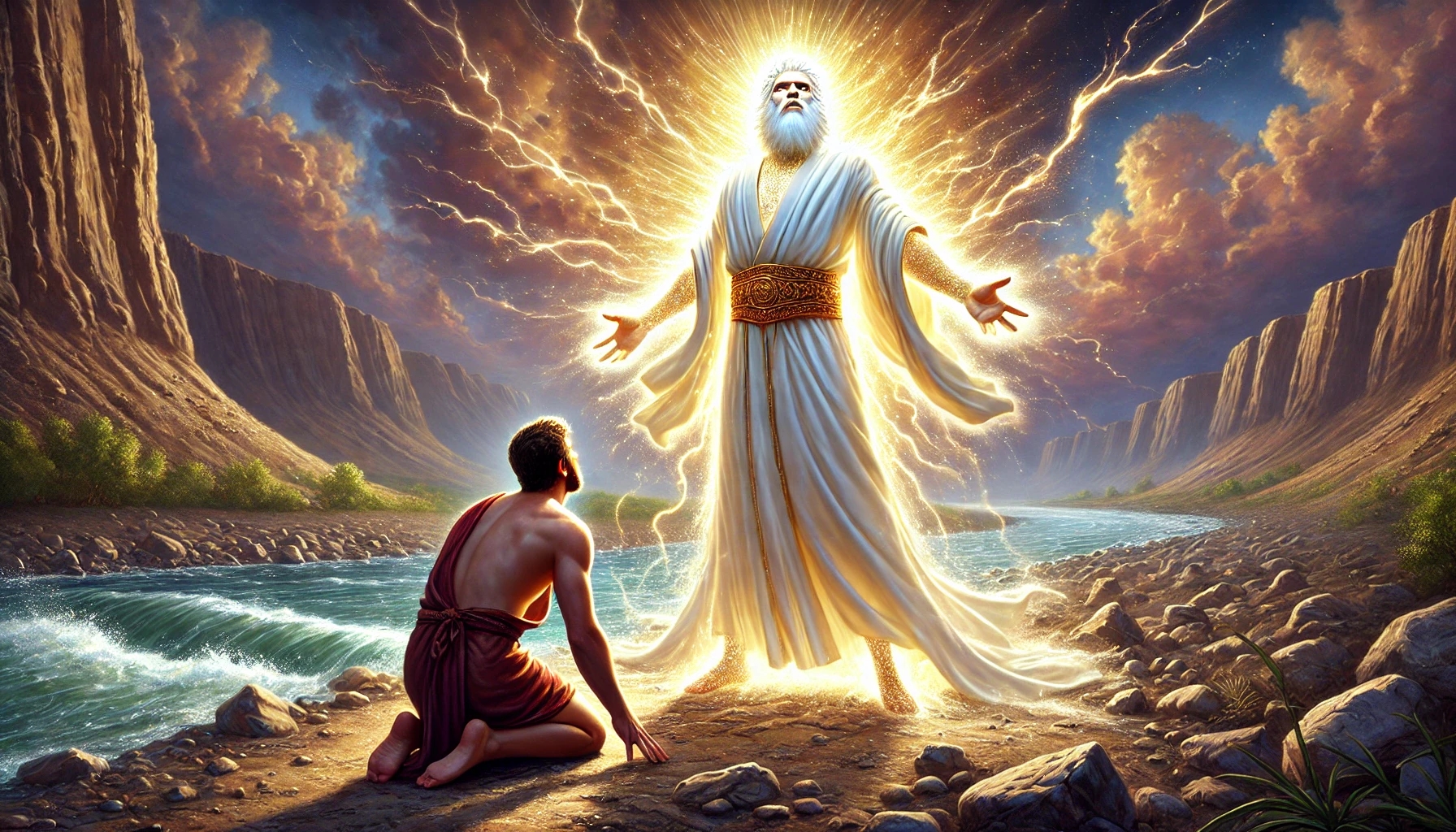
Read Daniel 10:1–14 and pay special attention to verses 12 and 13. What do these verses teach that is relevant to the cosmic conflict? In your opinion, what does it mean that the angel sent by God was “opposed” for 21 days?
The tenth chapter of the Book of Daniel gives us a unique insight into the unseen dimension of the cosmic conflict. Particularly, verses 12 and 13 show that the spiritual battle takes place not only among humans but also among heavenly powers.
The angel sent to Daniel was delayed for 21 days by the “prince of the kingdom of Persia.” This raises a crucial question: Why could an angel sent by God not carry out his mission immediately? Since God is omnipotent, He could have intervened instantly. Yet it is precisely here that a central principle of the cosmic conflict becomes clear: God acts according to certain “rules of the game” that impose limits on both the heavenly and the fallen powers.
The fact that Gabriel had to fight against the dark powers before he could deliver his message shows that the enemy can exercise power and influence within certain limits. This does not happen because God is powerless, but because in His wisdom He respects the free will of His creatures and allows a fair confrontation. The battle that takes place behind the scenes of human history is not merely a direct contest of power; it follows certain rules known to both God and the enemy.
This episode underscores a fundamental principle: God’s reign is not based on coercion but on love and justice. Had He been willing to exercise His power without limits, there would be no real struggle – yet that is exactly what differentiates God’s rule from Satan’s strategy. While Satan relies on deception, manipulation, and coercion, God works solely through truth, patience, and the voluntary devotion of those who trust Him.
This chapter reminds us that our prayers – like Daniel’s – play a role in the cosmic conflict. The delay in the response to Daniel’s prayer was not a sign of God’s negligence, but evidence of the reality of the spiritual battle. It shows us that our prayers matter and that God’s responses are often embedded in a larger struggle that we cannot see with our human eyes.
These “rules of the game” in the great battle help us to understand God’s actions better. They teach us that God does not operate through brute force, but through love and justice. They encourage us to persist in prayer despite delays and to trust that God will ultimately prevail – for in the end, victory will belong to His kingdom.
In what ways have you experienced that actions based on the principle of love, rather than coercion, have their limits? What have you learned about the limits of power?
The principle of love, which is based on voluntariness and respect, naturally sets limits in many areas that differ markedly from coercion. In my own life and in interpersonal relationships, I have experienced that love cannot manipulate or force – it can only invite, persuade, and work when reciprocated voluntarily.
An example of this is education: Parents can instill values in their children and encourage them to do what is right, but they cannot force them to truly internalize these values. Genuine change and heartfelt attitudes do not arise through punishment or pressure, but through role modeling, patience, and an environment in which love can flourish. I have learned that true love is gentle yet possesses great inner strength because it allows space for personal choices and genuine growth.
Likewise, in interpersonal relationships, trust and respect cannot be demanded – they must be given freely. When someone tries to shape a relationship through control or pressure, distance is created instead of closeness. This has taught me that love requires patience and sometimes endures the pain of waiting, rather than manipulating the other.
These experiences reflect the larger principle that is also visible in the cosmic conflict: God forces no one to love Him or to follow His path. He invites, persuades, and works through truth and grace. Yet precisely because He refrains from coercion, there is resistance, delays, and apparent defeats.
I have learned about the limits of power in that raw power does not win true hearts. One can force someone to obey outwardly, but not to love or trust inwardly. True change occurs only where freedom prevails – and therein lies both the challenge and the beauty of divine love.
The story from Daniel 10 is more than a biblical account of angels and spiritual battles – it has direct implications for our daily lives and our journey of faith. The unseen battle that Gabriel fought against the dark powers reflects the challenges we face in our faith and in our relationships.
  1. Patience and Trust in God’s Guidance
    Daniel prayed and fasted for 21 days without receiving an immediate visible answer. Only later was it revealed that his prayers had been heard, but a spiritual battle had delayed the response.
    ➡ In our lives, we too often experience delays in our prayers. Sometimes it seems as if God is silent or does not care about our concerns. Yet this story reminds us that God’s timing does not always align with our wishes – sometimes there are unseen battles that we cannot perceive. Our task is to remain patient in trust and to continue praying.


  2. Faith Means Looking Beyond the Visible
    Daniel could not see what was happening behind the scenes, but he held fast to God. We too often face difficult situations in which we do not understand why things happen.
    ➡ Faith teaches us that not everything we experience reveals the whole picture. We must trust that God is at work, even if we do not immediately recognize it.
  3. Prayer as Active Participation in the Spiritual Battle
    Daniel’s prayer had a real impact on the unseen battle. This shows that prayer is not merely a silent, passive act, but a spiritual weapon in the struggle between good and evil.
    ➡ When we pray for ourselves, for others, or for challenging situations, we actively participate in this battle. Even if we do not see the immediate effect, our prayers effect change in the unseen realm.
  4. Love Instead of Coercion – Also in Our Relationships
    In this story, God could have exercised His omnipotence and intervened immediately, but He allowed the battle to take place because His reign is based on love and justice, not on coercion.
    ➡ In our daily lives, we see that genuine relationships – whether with family, friends, or colleagues – do not function through control or pressure. Trust, respect, and patience are the foundations upon which healthy relationships grow. Those who manipulate or force others ultimately lose their affection.
  5. The Limits of Power and the Free Will of Man
    Satan was able to delay Gabriel for a time, but not defeat him permanently. This shows that evil has limited power – it can hinder, but it cannot achieve final victory.
    ➡ In our lives, this means that we may face challenges, resistance, or temptations, but we must know that God’s power is ultimately greater. Free will plays a central role – both in the cosmic conflict and in our personal lives of faith.
Conclusion: Our Faith Is Part of a Greater Battle
The story from Daniel 10 reminds us that our daily life is more than what meets the eye. Our challenges, our prayers, and our trust in God are part of a larger battle between good and evil. When we trust God, remain patient, and persevere in prayer, we actively participate in this spiritual battle – and we can trust that in the end, God will prevail.

God’s plans are often hidden, but our faith may rest in the knowledge that He is at work, even if we cannot see it.

Source: https://fulfilleddesire.net/lesson-10-rules-of-engagement-10-1-an-angel-delayed-the-god-of-love-and-justice-living-faith/

Share this:

  • Share on Facebook (Opens in new window) Facebook
  • Share on LinkedIn (Opens in new window) LinkedIn
  • Share on X (Opens in new window) X
  • Share on Pinterest (Opens in new window) Pinterest

Like this:

Like Loading…

Filed Under: Adventist Sermons & Video Clips, Fulfilled Desire

2.03.2025 – Hebrews Chapter 11 | BELIEVE HIS PROPHETS

March 1, 2025 By admin

March 2, 2024
DAILY BIBLE READING – Hebrews Chapter 11
1 Now faith is the substance of things hoped for, the evidence of things not seen.
2 For by it the elders obtained a good report.
3 Through faith we understand that the worlds were framed by the word of God, so that things which are seen were not made of things which do appear.
4 By faith Abel offered unto God a more excellent sacrifice than Cain, by which he obtained witness that he was righteous, God testifying of his gifts: and by it he being dead yet speaketh.
5 By faith Enoch was translated that he should not see death; and was not found, because God had translated him: for before his translation he had this testimony, that he pleased God.
6 But without faith it is impossible to please him: for he that cometh to God must believe that he is, and that he is a rewarder of them that diligently seek him.
7 By faith Noah, being warned of God of things not seen as yet, moved with fear, prepared an ark to the saving of his house; by the which he condemned the world, and became heir of the righteousness which is by faith.
8 By faith Abraham, when he was called to go out into a place which he should after receive for an inheritance, obeyed; and he went out, not knowing whither he went.
9 By faith he sojourned in the land of promise, as in a strange country, dwelling in tabernacles with Isaac and Jacob, the heirs with him of the same promise:
10 For he looked for a city which hath foundations, whose builder and maker is God.
11 Through faith also Sara herself received strength to conceive seed, and was delivered of a child when she was past age, because she judged him faithful who had promised.
12 Therefore sprang there even of one, and him as good as dead, so many as the stars of the sky in multitude, and as the sand which is by the sea shore innumerable.
13 These all died in faith, not having received the promises, but having seen them afar off, and were persuaded of them, and embraced them, and confessed that they were strangers and pilgrims on the earth.
14 For they that say such things declare plainly that they seek a country.
15 And truly, if they had been mindful of that country from whence they came out, they might have had opportunity to have returned.
16 But now they desire a better country, that is, an heavenly: wherefore God is not ashamed to be called their God: for he hath prepared for them a city.
17 By faith Abraham, when he was tried, offered up Isaac: and he that had received the promises offered up his only begotten son,
18 Of whom it was said, That in Isaac shall thy seed be called:
19 Accounting that God was able to raise him up, even from the dead; from whence also he received him in a figure.
20 By faith Isaac blessed Jacob and Esau concerning things to come.
21 By faith Jacob, when he was a dying, blessed both the sons of Joseph; and worshipped, leaning upon the top of his staff.
22 By faith Joseph, when he died, made mention of the departing of the children of Israel; and gave commandment concerning his bones.
23 By faith Moses, when he was born, was hid three months of his parents, because they saw he was a proper child; and they were not afraid of the king’s commandment.
24 By faith Moses, when he was come to years, refused to be called the son of Pharaoh’s daughter;
25 Choosing rather to suffer affliction with the people of God, than to enjoy the pleasures of sin for a season;
26 Esteeming the reproach of Christ greater riches than the treasures in Egypt: for he had respect unto the recompence of the reward.
27 By faith he forsook Egypt, not fearing the wrath of the king: for he endured, as seeing him who is invisible.
28 Through faith he kept the passover, and the sprinkling of blood, lest he that destroyed the firstborn should touch them.
29 By faith they passed through the Red sea as by dry land: which the Egyptians assaying to do were drowned.
30 By faith the walls of Jericho fell down, after they were compassed about seven days.
31 By faith the harlot Rahab perished not with them that believed not, when she had received the spies with peace.
32 And what shall I more say? for the time would fail me to tell of Gedeon, and of Barak, and of Samson, and of Jephthae; of David also, and Samuel, and of the prophets:
33 Who through faith subdued kingdoms, wrought righteousness, obtained promises, stopped the mouths of lions.
34 Quenched the violence of fire, escaped the edge of the sword, out of weakness were made strong, waxed valiant in fight, turned to flight the armies of the aliens.
35 Women received their dead raised to life again: and others were tortured, not accepting deliverance; that they might obtain a better resurrection:
36 And others had trial of cruel mockings and scourgings, yea, moreover of bonds and imprisonment:
37 They were stoned, they were sawn asunder, were tempted, were slain with the sword: they wandered about in sheepskins and goatskins; being destitute, afflicted, tormented;
38 (Of whom the world was not worthy:) they wandered in deserts, and in mountains, and in dens and caves of the earth.
39 And these all, having obtained a good report through faith, received not the promise:
40 God having provided some better thing for us, that they without us should not be made perfect.
King James Version. Public Domain


Commentary
Introduction
Hebrews Chapter 11 is often referred to as the “faith chapter” of the Bible because it provides an impressive list of Old Testament heroes of faith. The author shows that faith is not just an abstract belief but is manifested through concrete actions. Through faith, the “ancients” pleased God and held on to His promises, even though they did not always witness their fulfillment. In a world full of uncertainties, this chapter encourages us to trust in God’s assurances, even if we only see their fulfillment in eternity. It illustrates that faith means striving for a heavenly homeland that God has prepared for His children. This chapter calls us to walk our own journey of faith in trust and obedience.
Commentary: Faith as the Foundation of Life
  1. The Definition of Faith (Verses 1–3)
    The chapter begins with a fundamental definition of faith: “Now faith is confidence in what we hope for and assurance about what we do not see.” (v. 1). This shows that faith goes beyond what is visible. It is a certainty based on God’s Word and His promises. Verse 3 emphasizes that faith helps us understand creation and God’s work in the world—everything came into being through His Word.
  2. Heroes of Faith in the Old Testament (Verses 4–31)
    The author lists numerous examples of people who accomplished extraordinary things through faith:
    • Abel offered a better sacrifice than Cain because he trusted God (v. 4).
    • Enoch was taken up because he pleased God (v. 5).
    • Noah built an ark in anticipation of a flood he had not yet seen (v. 7).
    • Abraham left his country without knowing where he was going (vv. 8–10) and was ready to sacrifice his son Isaac because he believed in God’s power (vv. 17–19).
    • Sarah conceived a child despite her old age because she considered God faithful (v. 11).
    • Moses renounced Egypt’s wealth and chose to suffer with God’s people (vv. 23–28).
These individuals did not see the complete fulfillment of God’s promises, but they held fast to them because they hoped for a heavenly homeland (vv. 13–16). Their faith not only led to personal decisions but also brought about far-reaching changes in God’s dealings with His people.
  1. Faith as a Source of Steadfastness (Verses 32–38)
    In addition to these well-known examples, the author mentions others such as Gideon, David, and the prophets, who by faith conquered kingdoms, experienced miracles, and promoted God’s righteousness. Yet not all enjoyed triumphal victories—many suffered, were persecuted, or killed. Hence, faith does not always lead to earthly success but often involves suffering and sacrifice. Nevertheless, God considers these people worthy because they hoped for the better, eternal life.
  2. Completion Through Christ (Verses 39–40)
    The chapter concludes with a crucial point: all these heroes of faith did not receive the final fulfillment of the promise because God had a better plan—that they would only be perfected together with the believers of the New Covenant (v. 40). This points to the work of Christ, who brings faith to its completion and provides the promised eternal life.
Summary
Hebrews 11 offers a striking testimony to the power of faith, demonstrating that genuine trust in God has enabled people throughout centuries to live according to His will. Here, faith is portrayed not as a passive conviction but as an active stance of trust that leads to action. The Old Testament heroes of faith show us that faith is not always immediately rewarded; it often involves waiting, struggling, and suffering. Yet they held on to the hope of a better, heavenly homeland. The climax of this chapter is the realization that all believers—both in the Old and the New Covenant—are ultimately perfected together in Christ. This chapter challenges us to place our trust in God, even when we do not see His promises fulfilled right away—for He is faithful and will carry out His Word.


WEEKLY SPIRIT OF PROPHECY READING – Ellen White | Steps to Christ
Chapter 7—The Test of Discipleship

Read online here


Commentary
Introduction
Chapter 7 addresses the fundamental truth that a genuine conversion is not merely evident in external actions but in an inner, profound change of heart. Faith in Christ brings about a new creation that does not arise from human effort but from the work of the Holy Spirit. While some Christians may be unable to pinpoint the exact time of their conversion, the authenticity of their experience is demonstrated by a new way of life. Love for God, a transformed heart, and growing obedience to His Word are the proofs of being a child of God. This chapter introduces us to the significance of a life truly shaped by Christ and shows that genuine discipleship is not achieved through outward works alone, but through a deep, living relationship with God.
Commentary: Characteristics of Being a Child of God
  1. A New Creation Through Christ (2 Corinthians 5:17)
    Scripture describes rebirth as a complete re-creation of the individual: “Therefore, if anyone is in Christ, he is a new creation; the old has passed away.” This means that true conversion results in a profound change of heart that manifests not only in external forms but in all our thinking, feeling, and actions.
    • The work of the Holy Spirit is not always tangible or visible but can be likened to the wind (John 3:8).
    • This inner transformation reveals itself through a new attitude toward sin, a growing desire for holiness, and a deep love for God.
    • A changed heart produces the fruit of the Spirit: “love, joy, peace, patience, kindness, goodness, faithfulness, gentleness, self-control” (Galatians 5:22).
  2. The True Test of Faith: Where Does Our Heart Stand?
    Merely living a moral life on the outside does not prove genuine rebirth. Pride or social standing can also motivate a person to be “good.” However, true sonship or daughterhood in God is evident in questions like:
    • Who owns our heart?
    • What do we love to talk about most?
    • To whom do our deepest thoughts and feelings belong?
      A true disciple of Christ orders his life according to Him—loving what Christ loves and hating what He hates. Divine love is the driving force behind every action.
  3. The Danger of Misconceptions About Faith and Obedience
    There are two main errors that Christians must guard against:
    • The error of works-righteousness: believing that one can be justified before God by one’s own efforts. Scripture makes it clear: “All works done without Christ are tainted by selfishness and sin.” We are saved by the grace of Christ alone.
    • The error of lawless faith: believing that grace frees a person from observing God’s law. Yet true faith leads to obedience: “For this is the love of God, that we keep His commandments” (1 John 5:3).
      Christ not only grants us forgiveness but also the power to live according to His will. The law is not a means of salvation but an expression of divine love.
  4. The True Foundation of Salvation
    No one can save themselves through their own righteousness. But Christ offers us His righteousness:
    • He lived a perfect life and fulfilled God’s law on our behalf.
    • Through His death, He took our sins upon Himself.
    • Through faith, His righteousness is credited to us.
      This means: “Christ’s nature takes the place of our nature; thus we are accepted by God.” Walking in Christ is a daily process of surrender and renewal.
  5. True Faith Leads to Obedience
    Saving faith is not merely an intellectual assent to truth, but a trust that transforms our lives. “Faith without works is dead” (James 2:17).
    • True children of God are recognized by their deeds of righteousness.
    • Obedience is not the means of salvation but the fruit of a renewed heart.
    • The closer we draw to Christ, the more we recognize our own imperfections—this is a sign of genuine sanctification.
      A Christian does not live in lawlessness but “walks just as He walked” (1 John 2:6).
Summary: The Marks of a True Child of God
Chapter 7 describes the true nature of conversion and shows that being a child of God is not just an external form but a profound transformation of the heart. A renewed person is not defined by occasional good deeds but by a consistent change of character.
  • Rebirth by the Holy Spirit is evident in new priorities, new love for God, and new values.
  • True followers of Christ focus their hearts, minds, and lives on Him.
  • Faith and obedience go hand in hand: faith in Christ produces a new way of life aligned with God’s will.
This chapter calls us to examine our own hearts: Is our life in harmony with Christ? Do we love God with all our heart? Do our thoughts, words, and actions show that we are His children? Only through a deep, daily connection with Jesus can we experience genuine transformation and give evidence of being children of God.

Source: https://fulfilleddesire.net/2-03-2025-hebrews-chapter-11-believe-his-prophets/

Share this:

  • Share on Facebook (Opens in new window) Facebook
  • Share on LinkedIn (Opens in new window) LinkedIn
  • Share on X (Opens in new window) X
  • Share on Pinterest (Opens in new window) Pinterest

Like this:

Like Loading…

Filed Under: Adventist Sermons & Video Clips, Fulfilled Desire

The God of Love and Justice – Lesson 10.Rules of Engagement | Sabbath School with Pastor Mark Finley

March 1, 2025 By admin

Series THE GOD OF LOVE AND JUSTICE with Pastor Mark Finley  |
Lesson 10.Rules of Engagement  |
God’s Rules of the Game in the Cosmic Conflict 
|
The great battle between good and evil is not a chaotic power struggle but follows certain rules that reflect God’s justice and love. God does not force anyone to worship Him; rather, He always acts in harmony with His principles. Even angels and heavenly powers are subject to these established boundaries, as clearly shown in Daniel 10 and Job. Satan is temporarily granted power, but it is not unlimited—God’s plan ultimately leads to the triumph of good. Faith and prayer play a crucial role, enabling divine intervention without violating the rules of the conflict. This lesson helps us better understand God’s actions within the tension between love, freedom, and justice.
Memory Text: 1.John 3,8 – “He who sins is of the devil, for the devil has sinned from the beginning. For this purpose the Son of God was manifested, that He might destroy the works of the devil.” 
Content:
10.1 An Angel Delayed

The Invisible Battle: God’s Power and the Limits of Coercion
The account in Daniel 10 shows that, within the cosmic conflict, there are certain limits even for God’s angels. Though God is all-powerful, He does not always intervene directly or immediately but allows spiritual forces to contend with each other. This underscores that God acts according to principles based on love and freedom rather than coercion. The struggle of the angel Gabriel with the “prince of the kingdom of Persia” demonstrates that evil powers attempt to hinder God’s plans, yet they ultimately cannot prevail. These “rules of the game” in the conflict remind us that divine power is exercised with wisdom and patience. We also learn that our prayers and faith play a part in this invisible battle.
10.2 The Dragon of Revelation
The Limited Triumph of Evil
Revelation depicts Satan as a dragon who tries to undermine God’s rule and deceive the world. He grants authority to an earthly power to persecute God’s people and claim worship for itself. Yet even though his power appears immense, it is not unlimited—God sets clear temporal and spiritual boundaries for him. Satan knows he has only a short time before his final downfall is sealed. These prophecies remind us that evil may triumph for a while, but God’s righteous kingdom will ultimately prevail. The promise of Revelation 21:4 gives us hope: suffering will end, and God’s kingdom of peace will endure forever.
10.3 The Case of Job
A Battle for Trust and Justice
The story of Job provides profound insights into the dynamics of the great conflict. Satan questions Job’s integrity, claiming that his reverence for God stems only from divine protection. God then permits Job to be tested but sets clear boundaries that Satan cannot cross. This episode shows that there are rules of the game in the cosmic conflict that uphold God’s principles of love and justice. Despite his suffering, Job remains faithful to God, thus refuting Satan’s accusations. The heavenly courtroom scene makes it clear that the great conflict is fought not only on earth but also in heaven, with far-reaching consequences for the entire universe.
10.4 The (Temporary) Ruler of This World
The Limited Power of Evil
In the New Testament, Satan is called the “ruler of this world,” but his dominion is neither absolute nor permanent. God allows him to operate only within certain rules of the game, which limit both Satan’s actions and God’s own intervention. These restrictions safeguard human free will and ensure that God’s government is based on justice and love, not coercion. Christ came to break Satan’s power and destroy his dominion—a victory sealed by His death and resurrection. Nevertheless, evil remains for a time, until God ultimately eradicates it. The knowledge that Satan’s rule is only temporary offers hope for a future free from suffering and injustice.
10.5 Limits and Rules
God’s Justice in the Cosmic Conflict
The great conflict is not merely a struggle for power but a dispute over God’s character, His justice, and His sovereignty. Instead of immediately eradicating evil, God allows a fair presentation of evidence so the truth can be revealed. These “rules of the game” set limits within which both God and Satan must operate, preserving free will and divine principles. Faith and prayer seem to play a role in how and when God intervenes, though they are not the only factors. Despite the existing boundaries, evil will ultimately be defeated, and God’s kingdom of love will stand forever. The promise of a new world without suffering assures us that God’s plan is perfectly just and worthy of our trust.
10.6 Summary
Rules of the Game in the Cosmic Conflict
The great conflict between God and Satan follows specific rules of the game that limit both the workings of evil and God’s intervention. God does not act arbitrarily but remains true to His principles of love and justice. Satan may temporarily hold power in this world, yet his reign is constrained and will ultimately end. The story of Job and biblical prophecies show that God does not eliminate evil by mere force, but through a just demonstration of evidence. Faith, prayer, and the rules of the cosmic conflict influence when and how God intervenes. Despite the present suffering, the Bible assures us that God’s kingdom of peace and love will finally triumph.


Source: https://fulfilleddesire.net/the-god-of-love-and-justice-lesson-10-rules-of-engagement-sabbath-school-with-pastor-mark-finley/

Share this:

  • Share on Facebook (Opens in new window) Facebook
  • Share on LinkedIn (Opens in new window) LinkedIn
  • Share on X (Opens in new window) X
  • Share on Pinterest (Opens in new window) Pinterest

Like this:

Like Loading…

Filed Under: Adventist Sermons & Video Clips, Fulfilled Desire, Sabbath School

  • « Previous Page
  • 1
  • …
  • 146
  • 147
  • 148
  • 149
  • 150
  • …
  • 749
  • Next Page »

Hi-D Pure Vitamin D!

Hi-D Mushroom Vitamin D Capsules

Intercer Ministry – Since 1997!

We’re on Pinterest!

Partners


The Seven Thunders Ministry

Recent Posts

  • 11: Stewardship and Mission — Singing with Inspiration
  • UPDATE: ‘A Second Chance at Life’: Leah Stewart Continues Recovery After Shark Attack
  • 🌱 Quando sembra che nulla stia cambiando, può essere difficile continuare a sperare.
  • Want to Understand Yourself? Study the Artist
  • División Interamericana lanza OneVoice27, iniciativa que busca movilizar a toda la iglesia hacia 2027

About Intercer

Intercer is a website with biblical materials in Romanian, English, Hungarian and other languages. We want to bring the light from God's Word to peoples homes. Intercer provides quality Christian resources...[Read More]

Lucian Web Service


Intercer is proudly sponsored by Lucian Web Service - Professional Web Services, Wordpress Websites, Marketing and Affiliate Info. Lucian worked as a subcontractor with Simpleupdates, being one of the programmers for the Adventist Church Connect software. He also presented ACC/ASC workshops... [read more]

Archives

Follow @intercer

Categories

[footer_backtotop]

Website provided by: Intercer Romania · Intercer Canada · Lucian Web Service · Privacy · Log in


%d