• Home
  • Devotionals
  • BiblePhone
  • Blogs
  • TV
  • Prayer
    • Submit Prayer Request
    • Prayer Requests List
  • Contact us
  • Romanian

Intercer Adventist News

Closer To Heaven

  • About us
    • About Adventist Church
    • About Intercer Adventist News
    • About Intercer
    • About Lucian Web Service
    • Latest News
    • Romanian Church News
  • News and Feeds
    • Intercer Adventist News
    • 60 Second SlideShows
    • “Adventist Tweets” Paper
    • Adventists on Twitter
    • Adventists on Google Plus
    • Bible Resources
      • Adventist Universities Daily Bible
      • Answers For Me
        • Dear God
        • Healthy Living
        • Life Notes
        • Spiritual applications
        • Vegetarian recipes
      • Better Sermons
        • Spirit Renew Quotes
      • Daily Bible Promise
      • E-GraceNotes
        • Bible Says
        • City Lights
        • Family First
        • Staying Young
      • Story Harvest
        • Personal Stories
      • SSNet.org
    • Churches & Organizations
      • Adventist News Network
      • Adventist Review
      • Adventist World Radio
      • Avondale College
      • Babcock University Nigeria
      • BC Alive
      • British Union Conference
      • Canadian Adventist Messenger
      • Canadian Union
      • North American Division News
      • Outlook Magazine
      • PM Church – Pastor’s Blog
      • Potomac Conference
      • Record Magazine – Australia
      • Review and Herald
      • Trans-European Division
      • Washington Conference
    • Health
      • Dr.Gily.com
      • Vegetarian-Nutrition.info
    • Ministries
      • 7 Miracle (Youth)
      • A Sabbath Blog
      • Adventist Blogs
      • Adventist Today
      • ADvindicate
      • Creative Ministry
      • Grace Roots
      • Romanian Church News
      • Rose’s Devotional
      • UNashamed
    • Personal
      • Alexandra Yeboah
      • Iasmin Balaj
      • Jennifer LaMountain
      • McQue’s View
      • Refresh with Tia
      • Shawn Boonstra
  • Sermons & Video Clips
    • Churches
      • Downey Adventist Church
      • Fresno Central SDA Church
      • Hillsboro Adventist Church
      • Mississauga SDA Church
      • New Perceptions Television (PM Church)
      • Normandie Ave SDA Church
      • Remnant Adventist Church
    • Organizations
      • Adventist News Network (ANN)
      • ADRA Canada
      • Adventists About Life
      • Adventist Education
      • Adventist Mission
      • Amazing Facts
      • Adventist Church Connect
      • BC Adventist
      • Church Support Services
      • In Focus (South Pacific)
      • IIW Canada
      • NAD Adventist
      • NAD Church Resource Center (Vervent)
      • NARLA
      • Newbold
      • Review & Herald
      • SECMedia
      • Video Avventista (Italy)
    • Ministries
      • 3AngelsTube.com
      • Answered.TV
      • AudioVerse.org
      • AYO Connect
      • Christian Documentaries
      • GAiN #AdventistGeeks
      • GYC
      • Intercer Websites
      • Josue Sanchez
      • LightChannel
      • Pan de Vida
      • Revival and Reformation
      • Stories of Faith
      • SAU Journalism/Communication
      • Spirit Flash
      • The Preaching Place (UK)
      • Toronto East Youth Nation
    • Personal
      • Esther-Marie Hartwell
      • McQuesView
      • Pastor Manny Cruz
    • Sabbath School
      • Ecole du Sabbat Adventiste
      • Sabbath School Audio Podast
      • Sabbath School daily
  • Resources
    • Bible and Bible Studies
    • Health
    • Music
  • All articles
  • G+ News & Marketplace
    • G+ News & Marketplace Group
    • G+ Page
You are here: Home / Archives for Adventist Sermons & Video Clips / Fulfilled Desire

21.08.2024 – Matthew Chapter 22 | BELIEVE HIS PROPHETS

August 20, 2024 By admin

August 21, 2024
DAILY BIBLE READING – Matthew Chapter 22
1 And Jesus answered and spake unto them again by parables, and said,
2 The kingdom of heaven is like unto a certain king, which made a marriage for his son,
3 And sent forth his servants to call them that were bidden to the wedding: and they would not come.
4 Again, he sent forth other servants, saying, Tell them which are bidden, Behold, I have prepared my dinner: my oxen and my fatlings are killed, and all things are ready: come unto the marriage.
5 But they made light of it, and went their ways, one to his farm, another to his merchandise:
6 And the remnant took his servants, and entreated them spitefully, and slew them.
7 But when the king heard thereof, he was wroth: and he sent forth his armies, and destroyed those murderers, and burned up their city.
8 Then saith he to his servants, The wedding is ready, but they which were bidden were not worthy.
9 Go ye therefore into the highways, and as many as ye shall find, bid to the marriage.
10 So those servants went out into the highways, and gathered together all as many as they found, both bad and good: and the wedding was furnished with guests.
11 And when the king came in to see the guests, he saw there a man which had not on a wedding garment:
12 And he saith unto him, Friend, how camest thou in hither not having a wedding garment? And he was speechless.
13 Then said the king to the servants, Bind him hand and foot, and take him away, and cast him into outer darkness, there shall be weeping and gnashing of teeth.
14 For many are called, but few are chosen.
15 Then went the Pharisees, and took counsel how they might entangle him in his talk.
16 And they sent out unto him their disciples with the Herodians, saying, Master, we know that thou art true, and teachest the way of God in truth, neither carest thou for any man: for thou regardest not the person of men.
17 Tell us therefore, What thinkest thou? Is it lawful to give tribute unto Caesar, or not?
18 But Jesus perceived their wickedness, and said, Why tempt ye me, ye hypocrites?
19 Shew me the tribute money. And they brought unto him a penny.
20 And he saith unto them, Whose is this image and superscription?
21 They say unto him, Caesar’s. Then saith he unto them, Render therefore unto Caesar the things which are Caesar’s; and unto God the things that are God’s.
22 When they had heard these words, they marvelled, and left him, and went their way.
23 The same day came to him the Sadducees, which say that there is no resurrection, and asked him,
24 Saying, Master, Moses said, If a man die, having no children, his brother shall marry his wife, and raise up seed unto his brother.
25 Now there were with us seven brethren: and the first, when he had married a wife, deceased, and, having no issue, left his wife unto his brother:
26 Likewise the second also, and the third, unto the seventh.
27 And last of all the woman died also.
28 Therefore in the resurrection whose wife shall she be of the seven? for they all had her.
29 Jesus answered and said unto them, Ye do err, not knowing the scriptures, nor the power of God.
30 For in the resurrection they neither marry, nor are given in marriage, but are as the angels of God in heaven.
31 But as touching the resurrection of the dead, have ye not read that which was spoken unto you by God, saying,
32 I am the God of Abraham, and the God of Isaac, and the God of Jacob? God is not the God of the dead, but of the living.
33 And when the multitude heard this, they were astonished at his doctrine.
34 But when the Pharisees had heard that he had put the Sadducees to silence, they were gathered together.
35 Then one of them, which was a lawyer, asked him a question, tempting him, and saying,
36 Master, which is the great commandment in the law?
37 Jesus said unto him, Thou shalt love the Lord thy God with all thy heart, and with all thy soul, and with all thy mind.
38 This is the first and great commandment.
39 And the second is like unto it, Thou shalt love thy neighbour as thyself.
40 On these two commandments hang all the law and the prophets.
41 While the Pharisees were gathered together, Jesus asked them,
42 Saying, What think ye of Christ? whose son is he? They say unto him, The son of David.
43 He saith unto them, How then doth David in spirit call him Lord, saying,
44 The Lord said unto my Lord, Sit thou on my right hand, till I make thine enemies thy footstool?
45 If David then call him Lord, how is he his son?
46 And no man was able to answer him a word, neither durst any man from that day forth ask him any more questions.
King James Version. Public Domain


Commentary
Introduction:
Matthew Chapter 22 is a central chapter that describes various encounters and discussions between Jesus and the religious leaders of His time. It begins with a parable about the kingdom of heaven and moves on to a series of controversial questions directed at Jesus in an attempt to entrap Him. This chapter offers deep insights into the nature of the kingdom of God, the true meaning of faith, and the identity of Christ.
Commentary:
The chapter begins with the Parable of the Wedding Banquet, in which Jesus symbolizes God’s invitation to humanity to partake in the heavenly feast. The original guests who reject the king’s offer represent those who spurn God’s invitation. The punishment for their rejection and the subsequent call to invite everyone, both good and bad, illustrates the inclusivity of the kingdom of heaven. The guest without wedding clothes serves as an image of those who accept God’s invitation but fail to bring the necessary inner transformation and preparation.
The following question about paying taxes is an attempt to entangle Jesus in a political conflict. Jesus exposes the hypocrisy of His questioners by emphasizing the separation of worldly and divine authority: “Give to Caesar what is Caesar’s, and to God what is God’s.” This response demonstrates Jesus’ deep understanding of justice and establishes a clear distinction between obligations to governmental authority and to God.
In the discussion about the resurrection, Jesus exposes the Sadducees, who deny the resurrection, by revealing their ignorance of the Scriptures and the power of God. He makes it clear that life after death is not comparable to earthly life and that God is a God of the living, thereby reinforcing the hope of resurrection.
When asked about the greatest commandment, Jesus answers that love for God and love for one’s neighbor are the central tenets of all commandments. This response summarizes the entire law and the prophets and emphasizes the fundamental importance of love in faith.
Finally, Jesus challenges the Pharisees with a question about the identity of the Messiah. Their inability to answer reveals their lack of understanding of Christ’s true nature, who is not only the son of David but also his Lord.
Summary:
Matthew 22 is a chapter rich with profound teachings and confrontations that reveal the essence of the kingdom of heaven, true piety, and the identity of Jesus. Through the Parable of the Wedding Banquet, God’s invitation to all people is made clear, along with the necessity of a proper response to this invitation. Jesus answers the questions of the Pharisees and Sadducees with wisdom and revelation, exposing their ignorance and false motives. The emphasis on love for God and one’s neighbor as the greatest commandment highlights the essence of the Christian faith. The chapter concludes with the revelation that Jesus is more than just a descendant of David—He is the Lord Himself.


WEEKLY SPIRIT OF PROPHECY READING – Ellen White | The Desire of Ages Chapter 56—Blessing the Children
This chapter is based on Matthew 19:13-15; Mark 10:13-16; Luke 18:15-17.
Read online here


Commentary
The chapter “Blessing the Children” highlights one of the most touching scenes in Jesus’ life, where He demonstrates His special love and affection for the smallest among us. This event is not only an expression of Jesus’ affection for children but also a powerful symbol of the appreciation and place they hold in the kingdom of God.
In the context of the Jewish society of that time, where children were often viewed as the property of their parents rather than as independent individuals with spiritual significance, Jesus’ actions were revolutionary. The disciples, who attempted to dismiss the mothers with their children, likely believed that Jesus’ mission was too important to be interrupted by such seemingly trivial concerns. However, Jesus made it clear that these “trivial” matters are of utmost importance in the kingdom of God. His words, “Let the little children come to me and do not hinder them; for to such belongs the kingdom of God” (Luke 18:16), reflect a profound truth: Children embody the kind of innocence, openness, and trust that adults should also strive for in their faith.
The incident also underscores the far-reaching significance of Jesus’ blessing. The mothers who brought their children to Him did so in hope of divine grace and protection for their little ones. Jesus did not disappoint these expectations. Instead, He blessed the children not only physically but spiritually, providing the mothers with great comfort and hope. This blessing was not just a simple gesture but a profound affirmation that their children are valuable in God’s eyes and that their efforts to raise them in faith are supported and blessed by God Himself.
The commentary also highlights the responsibility of parents to raise their children in the Christian faith. This responsibility is portrayed not merely as a parental duty but as a sacred calling, where parents act as instruments of God. By leading their children to Christ, they help lay the foundation for a life of faith and grace. Parents are to open their children’s hearts to the truths of the Gospel and teach them in ways that are understandable to them. The image of parents as “gardeners,” nurturing the young plants of their children with love and care, is a powerful metaphor that describes the fragility and potential of the child’s soul.
Jesus’ interaction with the children also shows us how we should approach children today. It is a reminder that children should not only be seen as future members of the church but as current, valuable members of God’s community. Their spiritual education begins not only when they reach adulthood but from their earliest years. Therefore, it is the responsibility of parents, teachers, and the entire Christian community to shape these young hearts, encourage them, and guide them to Christ.
Furthermore, it is comforting to see that Jesus’ care and love for children extend beyond that time. The commentary makes it clear that even today, Jesus knows the concerns and struggles of mothers and supports them in their task of raising their children in faith. His love and understanding for the trials and challenges of parenthood are a comforting thought for all who seek support and encouragement in raising their children.
Overall, this chapter provides a profound reflection on the significance of blessing children in the Christian faith and the central role that children play in the kingdom of God. It is a call to all who bear responsibility for children to raise them with love and with an eye towards their spiritual development, and it serves as a reminder that Jesus still holds the same love and affection for the smallest among us today as He did then.


WEEKLY SPIRIT OF PROPHECY READING – Ellen White | The Desire of Ages Chapter 57—“One Thing Thou Lackest”
This chapter is based on Matthew 19:16-22; Mark 10:17-22; Luke 18:18-23.
Read online here


Commentary
This chapter describes the deeply moving encounter between Jesus and a young man known in the Gospels as the rich young ruler. It is a story that speaks not only to the heart but also to the mind, as it addresses central issues of discipleship, obedience, and devotion to God. The encounter reveals the difficulty Jesus presents to the young man: the call to total self-denial and dedication to God in exchange for eternal life.
The rich young ruler symbolizes many people who earnestly seek spiritual fulfillment and the kingdom of God but are held back by the worldly things they hold dear. His desire to gain eternal life is genuine and profound, as evidenced by his urgent approach to Jesus, kneeling before Him, and asking his pressing question. However, when Jesus reveals the true cost of eternal life, the inner struggle of the young man becomes apparent.
Jesus asks him to sell his wealth and give the money to the poor to gain treasure in heaven. This request is not a general rule Jesus sets for all believers but a specific test for this young man. Jesus recognizes that his heart is attached to his possessions and shows him that true discipleship requires letting go of all worldly securities and attachments. It is not merely about relinquishing material wealth but about the willingness to give up anything that keeps the heart from serving God.
The tragedy of this story lies in the young man’s reaction. He is sad because he is not willing to pay the high price Jesus demands. His wealth is too precious to him, and thus he chooses not to follow Jesus. This decision reveals a profound truth: even the best intentions and the most sincere desire for God can be overwhelmed by love for the things of this world.
Jesus’ call to give up everything and follow Him is an invitation to find true freedom in total devotion to God. It is a call that still reaches out today to anyone who seeks eternal life. The story of the rich young ruler shows that the path to God involves the cross of self-denial, and that true fulfillment and eternal life can only be attained if one is willing to leave all earthly things behind.
This incident serves as a reminder that worldly wealth and earthly securities cannot compare with the treasure of heaven. It is a call to reflect on the things that may be hindering us from true discipleship. Whatever our “one thing that we lack” may be, it stands between us and complete communion with God. The rich young ruler had a choice, and that choice also lies before us: Will we be willing to give up everything for Christ, or will we, like him, leave sadly because the worldly things are too important to us?
Jesus’ behavior in this story is also a lesson for all who are engaged in pastoral care. He meets the young man with love and compassion, even though he conveys a harsh truth. His love is not sentimental but demands the truth and the best for the person, even if it means that the path is painful. This approach should also guide those who accompany others on their journey to God.
Ultimately, the story of the rich young ruler shows that following Jesus requires radical decisions. It is a call to total dedication, the renunciation of all idols, and the acceptance of the cross. However, the reward Jesus promises is incomparable: eternal life and the treasure in heaven that far surpasses any earthly joy and security.

Source: https://fulfilleddesire.net/21-08-2024-matthew-chapter-22-believe-his-prophets/

Share this:

  • Share on Facebook (Opens in new window) Facebook
  • Share on LinkedIn (Opens in new window) LinkedIn
  • Share on X (Opens in new window) X
  • Share on Pinterest (Opens in new window) Pinterest

Like this:

Like Loading…

Filed Under: Adventist Sermons & Video Clips, Fulfilled Desire

Lesson 8.Teaching Disciples, Part 2 | 8.3 The Best Investment | THE BOOK OF MARK | LIVING FAITH

August 19, 2024 By admin

8.3 The Best Investment
The True Cost of Discipleship: Wealth vs. Devotion
Read Mark 10:17–31. What important lessons about faith and the price of discipleship are revealed here for everyone, regardless of wealth or poverty?
In Mark 10:17–31, we encounter a profound teaching about faith, discipleship, and the cost we must be willing to pay to inherit the Kingdom of God. The rich young man approaches Jesus with reverence and sincerity, seeking the way to eternal life. Yet, when Jesus asks him to sell his possessions, it becomes clear that his heart is bound to worldly wealth—his riches have become an idol that prevents him from fully following God’s will.
This passage reveals a central truth: it’s not only about externally keeping the commandments but also about being willing to give up anything that separates us from God. Wealth and material goods are not inherently bad, but they can become stumbling blocks if we give them more importance than our relationship with God.
Jesus takes the opportunity to clarify that the path to the Kingdom of God is not attained through human effort or wealth but through God’s grace. “With man this is impossible, but not with God; all things are possible with God” (Mark 10:27). This statement underscores the fact that salvation and eternal life are possible only through God’s grace and power, not through our own works or possessions.
Peter’s remark that he and the other disciples have left everything to follow Jesus leads to Jesus’ promise that those who give up everything for Him will receive immeasurable rewards—both in this life and in the life to come. This teaches us that while following Jesus requires sacrifice, the rewards and fellowship with God are infinitely more valuable than anything we might give up.
The lesson revealed here is clear: our true security and worth do not lie in worldly wealth or status but in our willingness to give up everything for Christ and follow Him. In this devotion, we find true fulfillment and the assurance of eternal life.
Read Romans 6:1–11. How do these verses reveal the reality of God’s grace in our lives, making us both justified and new creatures in Him?
Romans 6:1–11 is a powerful passage that describes the transformative power of God’s grace in our lives. These verses explain how we are justified by God’s grace and begin a new life in Christ.
  1. Justified by Grace:
    • The initial verses raise the question of whether we should continue in sin so that grace may increase. Paul decisively answers, “By no means!” (Romans 6:2). He clarifies that God’s grace not only frees us from the penalty of sin but also liberates us from its power. Through faith in Jesus Christ, we have died with Him, meaning our old sinful nature was crucified with Him. This act of justification means that God declares us righteous through Christ’s sacrifice, independent of our own works.
  2. A New Life in Christ:
    • The passage continues by describing that we have not only died with Christ but also been raised to a new life with Him. “We too may live a new life” (Romans 6:4). This new life means we are no longer under the dominion of sin. Our identity has fundamentally changed: we are new creations in Christ. The old self has died, and we now live for God in the power of Christ’s resurrection.
  3. Empowered to Live in Obedience:
    • These verses also make it clear that God’s grace is not a one-time act but a continuous power that enables us to live in obedience and holiness. Since we have died with Christ, we should no longer let sin reign over us. Instead, we should consider ourselves alive to God and offer our bodies as instruments of righteousness.
  4. The Reality of Resurrection in Our Lives:
    • Paul emphasizes the reality of the resurrection in our lives. Just as Christ was raised from the dead to die no more, we have the promise of eternal life. This new reality means that death no longer has power over us, just as sin no longer has power over us. We now live in the freedom and power given to us through Christ’s resurrection.
Conclusion: Romans 6:1–11 reveals the deep truth that God’s grace not only frees us from the guilt of sin but also transforms us into new creatures in Christ. This grace transforms our entire lives by justifying us and enabling us to live in new freedom and holiness. In Christ, we are truly made new, and this new identity is key to a life that honors God and breaks the power of sin.
The connection between the lesson on “The Best Investment” and our daily lives and faith is very practical and relevant. Here are some key aspects:
  1. Setting Priorities in Life:
    • The story of the rich young man in Mark 10 challenges us to reassess our priorities. In daily life, this means reflecting on what truly matters to us: Is it material possessions and social status, or is it our relationship with God? This lesson encourages us to not place worldly things above our spiritual life and to recognize that true fulfillment and security are found only in devotion to Christ.
  2. The Importance of Devotion:
    • Following Jesus requires sacrifice and devotion. In everyday life, this is reflected in our willingness to let go of things that may separate us from God—whether they be possessions, certain habits, or even relationships. This devotion also means holding onto our faith in difficult times and trusting that God provides for us now and in eternity.
  3. Trusting in God’s Grace:
    • The verses from Romans 6 emphasize that our salvation and new life in Christ are possible only through God’s grace. In daily life, this means we do not rely on our own efforts to earn God’s love or salvation. Instead, we trust in the grace given through Jesus’ death and resurrection. This trust leads to a life free from guilt and fear, knowing we are justified in God’s eyes.
  4. Living in New Identity:
    • Romans 6 reminds us that we have been made new in Christ. This new identity should be reflected in our daily lives—in how we make decisions, interact with others, and live our lives. We are called to live in the freedom and power given to us through Christ’s resurrection, and this should be visible in our actions.
  5. Maintaining an Eternal Perspective:
    • Jesus’ promise that those who follow Him will be rewarded both in this life and in the life to come encourages us to maintain an eternal perspective. In everyday life, this means viewing our decisions and actions in light of eternity and understanding that what we do for Christ has lasting value.
Overall, this lesson calls us to live our faith practically by setting our priorities right, trusting in God’s grace, and embracing our new identity in Christ. The “best investment” we can make is to wholly dedicate our lives to Christ and live in His grace, which brings us true fulfillment and the assurance of eternal life.

The best investment you can make today is to give your heart and life completely to God—because what you give up for Christ brings immeasurable reward, now and in eternity.

Source: https://fulfilleddesire.net/lesson-8-teaching-disciples-part-2-8-3-the-best-investment-the-book-of-mark-living-faith/

Share this:

  • Share on Facebook (Opens in new window) Facebook
  • Share on LinkedIn (Opens in new window) LinkedIn
  • Share on X (Opens in new window) X
  • Share on Pinterest (Opens in new window) Pinterest

Like this:

Like Loading…

Filed Under: Adventist Sermons & Video Clips, Fulfilled Desire

20.08.2024 – Matthew Chapter 21 | BELIEVE HIS PROPHETS

August 19, 2024 By admin

August 20, 2024
DAILY BIBLE READING – Matthew Chapter 21
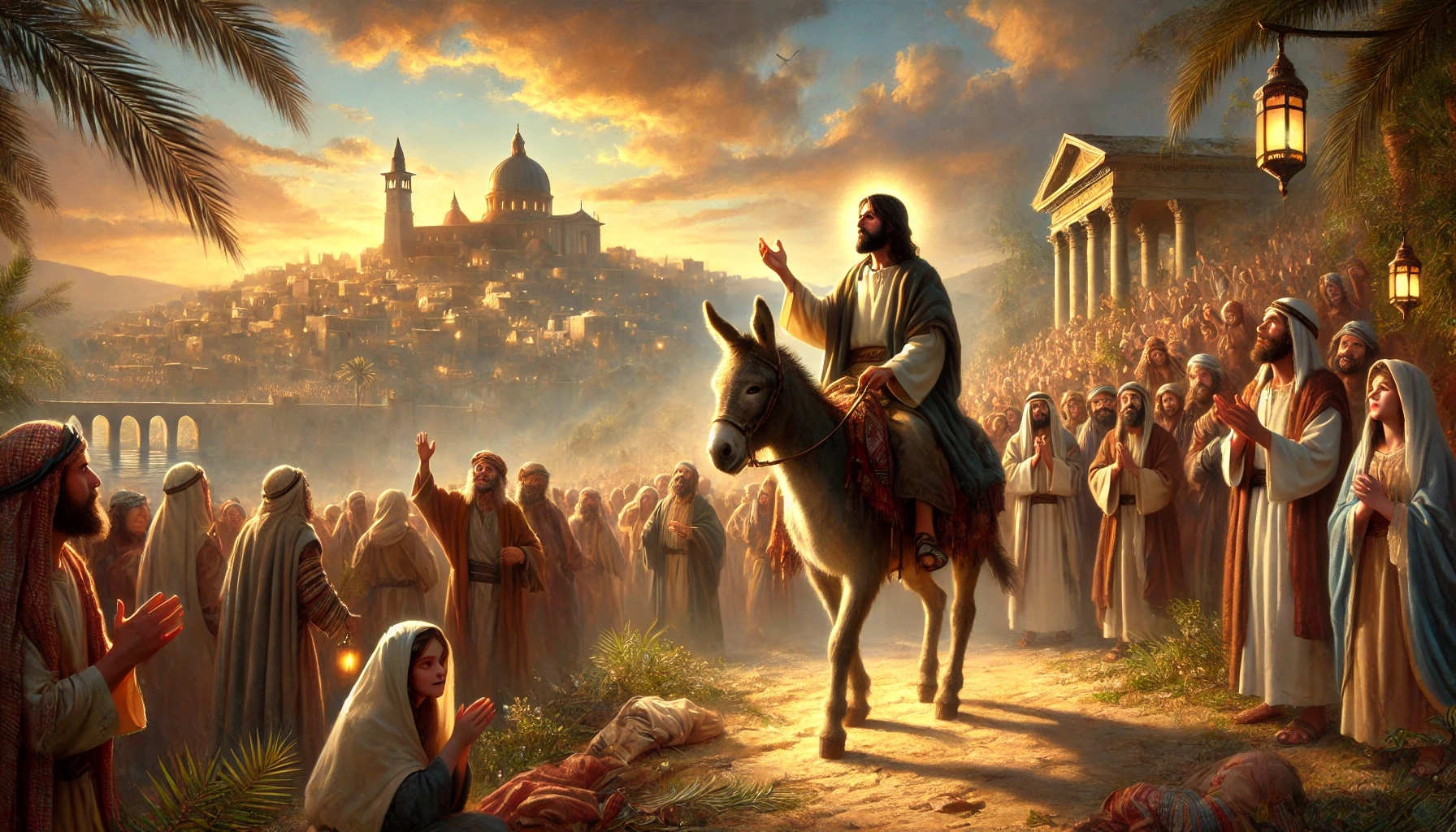
1 And when they drew nigh unto Jerusalem, and were come to Bethphage, unto the mount of Olives, then sent Jesus two disciples,
2 Saying unto them, Go into the village over against you, and straightway ye shall find an ass tied, and a colt with her: loose them, and bring them unto me.
3 And if any man say ought unto you, ye shall say, The Lord hath need of them; and straightway he will send them.
4 All this was done, that it might be fulfilled which was spoken by the prophet, saying,
5 Tell ye the daughter of Sion, Behold, thy King cometh unto thee, meek, and sitting upon an ass, and a colt the foal of an ass.
6 And the disciples went, and did as Jesus commanded them,
7 And brought the ass, and the colt, and put on them their clothes, and they set him thereon.
8 And a very great multitude spread their garments in the way; others cut down branches from the trees, and strawed them in the way.
9 And the multitudes that went before, and that followed, cried, saying, Hosanna to the son of David: Blessed is he that cometh in the name of the Lord; Hosanna in the highest.
10 And when he was come into Jerusalem, all the city was moved, saying, Who is this?
11 And the multitude said, This is Jesus the prophet of Nazareth of Galilee.
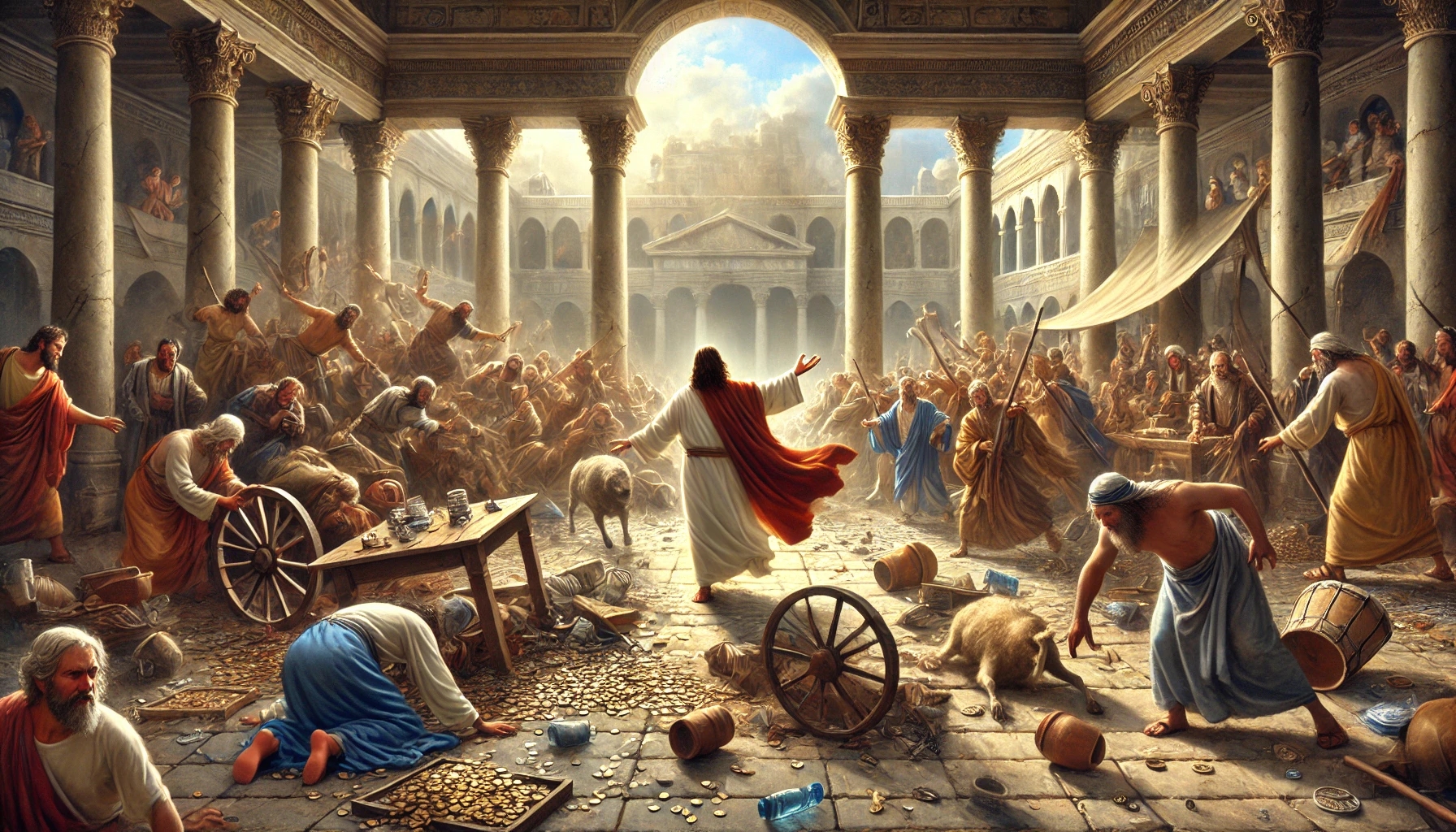
12 And Jesus went into the temple of God, and cast out all them that sold and bought in the temple, and overthrew the tables of the moneychangers, and the seats of them that sold doves,
13 And said unto them, It is written, My house shall be called the house of prayer; but ye have made it a den of thieves.
14 And the blind and the lame came to him in the temple; and he healed them.
15 And when the chief priests and scribes saw the wonderful things that he did, and the children crying in the temple, and saying, Hosanna to the son of David; they were sore displeased,
16 And said unto him, Hearest thou what these say? And Jesus saith unto them, Yea; have ye never read, Out of the mouth of babes and sucklings thou hast perfected praise?
17 And he left them, and went out of the city into Bethany; and he lodged there.
18 Now in the morning as he returned into the city, he hungered.
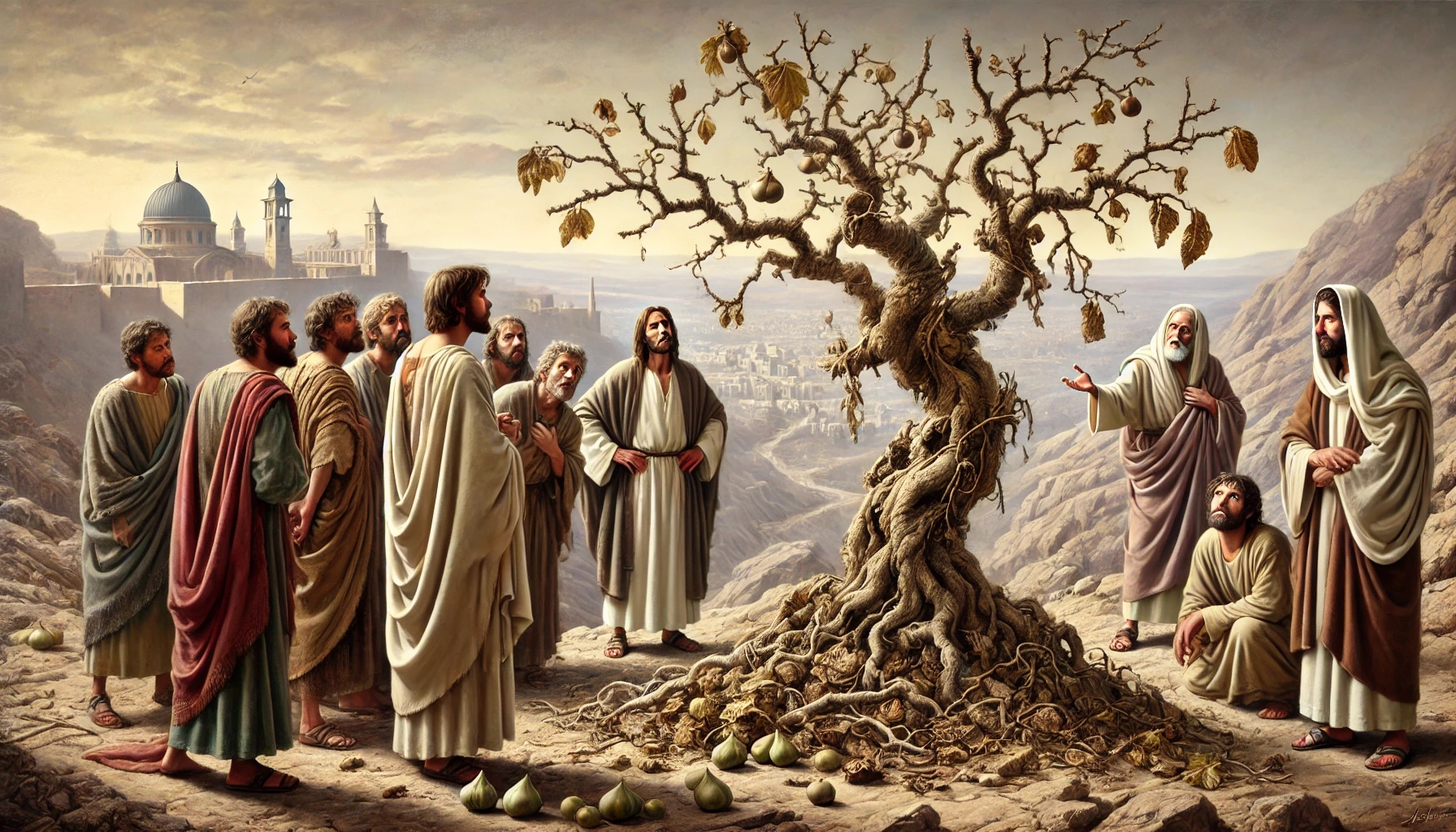
19 And when he saw a fig tree in the way, he came to it, and found nothing thereon, but leaves only, and said unto it, Let no fruit grow on thee henceforward for ever. And presently the fig tree withered away.
20 And when the disciples saw it, they marvelled, saying, How soon is the fig tree withered away!
21 Jesus answered and said unto them, Verily I say unto you, If ye have faith, and doubt not, ye shall not only do this which is done to the fig tree, but also if ye shall say unto this mountain, Be thou removed, and be thou cast into the sea; it shall be done.
22 And all things, whatsoever ye shall ask in prayer, believing, ye shall receive.
23 And when he was come into the temple, the chief priests and the elders of the people came unto him as he was teaching, and said, By what authority doest thou these things? and who gave thee this authority?
24 And Jesus answered and said unto them, I also will ask you one thing, which if ye tell me, I in like wise will tell you by what authority I do these things.
25 The baptism of John, whence was it? from heaven, or of men? And they reasoned with themselves, saying, If we shall say, From heaven; he will say unto us, Why did ye not then believe him?
26 But if we shall say, Of men; we fear the people; for all hold John as a prophet.
27 And they answered Jesus, and said, We cannot tell. And he said unto them, Neither tell I you by what authority I do these things.
28 But what think ye? A certain man had two sons; and he came to the first, and said, Son, go work to day in my vineyard.
29 He answered and said, I will not: but afterward he repented, and went.
30 And he came to the second, and said likewise. And he answered and said, I go, sir: and went not.
31 Whether of them twain did the will of his father? They say unto him, The first. Jesus saith unto them, Verily I say unto you, That the publicans and the harlots go into the kingdom of God before you.
32 For John came unto you in the way of righteousness, and ye believed him not: but the publicans and the harlots believed him: and ye, when ye had seen it, repented not afterward, that ye might believe him.
33 Hear another parable: There was a certain householder, which planted a vineyard, and hedged it round about, and digged a winepress in it, and built a tower, and let it out to husbandmen, and went into a far country:
34 And when the time of the fruit drew near, he sent his servants to the husbandmen, that they might receive the fruits of it.
35 And the husbandmen took his servants, and beat one, and killed another, and stoned another.
36 Again, he sent other servants more than the first: and they did unto them likewise.
37 But last of all he sent unto them his son, saying, They will reverence my son.
38 But when the husbandmen saw the son, they said among themselves, This is the heir; come, let us kill him, and let us seize on his inheritance.
39 And they caught him, and cast him out of the vineyard, and slew him.
40 When the lord therefore of the vineyard cometh, what will he do unto those husbandmen?
41 They say unto him, He will miserably destroy those wicked men, and will let out his vineyard unto other husbandmen, which shall render him the fruits in their seasons.
42 Jesus saith unto them, Did ye never read in the scriptures, The stone which the builders rejected, the same is become the head of the corner: this is the Lord’s doing, and it is marvellous in our eyes?
43 Therefore say I unto you, The kingdom of God shall be taken from you, and given to a nation bringing forth the fruits thereof.
44 And whosoever shall fall on this stone shall be broken: but on whomsoever it shall fall, it will grind him to powder.
45 And when the chief priests and Pharisees had heard his parables, they perceived that he spake of them.
46 But when they sought to lay hands on him, they feared the multitude, because they took him for a prophet.
King James Version. Public Domain


Commentary
Introduction:
Matthew Chapter 21 marks a significant turning point in the life of Jesus and in the narrative of the Gospel. It begins with Jesus’ triumphant entry into Jerusalem, a moment that symbolizes His messianic role and stirs the people’s hopes for the fulfillment of Old Testament prophecies. The chapter also describes the cleansing of the temple, an act that highlights Jesus’ authority and His understanding of true piety. Finally, the chapter concludes with parables that sharply criticize the religious leaders and underscore Jesus’ message about the kingdom of God. This chapter is not only a report of historical events but also contains profound theological statements revealing the nature of Jesus and His mission.
Commentary:
Matthew 21 emphasizes Jesus’ role as the promised Messiah, who comes in peace but also exposes injustice and denounces religious hypocrisy. His entry into Jerusalem on a donkey is a clear reference to the prophecy in Zechariah 9:9, which foretold a humble king. This act demonstrates that Jesus is a king of peace and humility, contrasting with the military leaders that the people might have expected.
The cleansing of the temple is a powerful expression of Jesus’ zeal for the sanctity of God’s house. By driving out the merchants and money changers, Jesus makes a statement against the commercialization of religion, emphasizing that the temple should be a place of prayer, not profit. This act represents a direct challenge to the authority of the religious leaders and marks the beginning of the open confrontation that will eventually lead to His arrest and crucifixion.
The Parable of the Two Sons and the Parable of the Wicked Tenants illustrate the rejection of God’s message by the religious elite, while those despised by society are more willing to accept it. Jesus shows that the kingdom of God does not belong to those who merely appear righteous outwardly but to those who are willing to truly repent and serve God from the heart. The religious leaders recognize that Jesus is speaking directly against them in these parables, further fueling their hostility towards Him.
Summary:
Matthew Chapter 21 is filled with symbolic actions and powerful teachings. It begins with Jesus’ entry into Jerusalem, highlighting His role as the humble Messiah. The cleansing of the temple and the subsequent parables reveal Jesus’ critique of the religious leaders’ hypocrisy and His emphasis on true piety and justice. These events pave the way for Jesus’ impending passion and illustrate His unequivocal message about the kingdom of God, which belongs to those willing to translate their faith into acts of repentance and obedience.


WEEKLY SPIRIT OF PROPHECY READING – Ellen White | The Desire of Ages Chapter 56—Blessing the Children
This chapter is based on Matthew 19:13-15; Mark 10:13-16; Luke 18:15-17.
Read online here


Commentary
The chapter “Blessing the Children” highlights one of the most touching scenes in Jesus’ life, where He demonstrates His special love and affection for the smallest among us. This event is not only an expression of Jesus’ affection for children but also a powerful symbol of the appreciation and place they hold in the kingdom of God.
In the context of the Jewish society of that time, where children were often viewed as the property of their parents rather than as independent individuals with spiritual significance, Jesus’ actions were revolutionary. The disciples, who attempted to dismiss the mothers with their children, likely believed that Jesus’ mission was too important to be interrupted by such seemingly trivial concerns. However, Jesus made it clear that these “trivial” matters are of utmost importance in the kingdom of God. His words, “Let the little children come to me and do not hinder them; for to such belongs the kingdom of God” (Luke 18:16), reflect a profound truth: Children embody the kind of innocence, openness, and trust that adults should also strive for in their faith.
The incident also underscores the far-reaching significance of Jesus’ blessing. The mothers who brought their children to Him did so in hope of divine grace and protection for their little ones. Jesus did not disappoint these expectations. Instead, He blessed the children not only physically but spiritually, providing the mothers with great comfort and hope. This blessing was not just a simple gesture but a profound affirmation that their children are valuable in God’s eyes and that their efforts to raise them in faith are supported and blessed by God Himself.
The commentary also highlights the responsibility of parents to raise their children in the Christian faith. This responsibility is portrayed not merely as a parental duty but as a sacred calling, where parents act as instruments of God. By leading their children to Christ, they help lay the foundation for a life of faith and grace. Parents are to open their children’s hearts to the truths of the Gospel and teach them in ways that are understandable to them. The image of parents as “gardeners,” nurturing the young plants of their children with love and care, is a powerful metaphor that describes the fragility and potential of the child’s soul.
Jesus’ interaction with the children also shows us how we should approach children today. It is a reminder that children should not only be seen as future members of the church but as current, valuable members of God’s community. Their spiritual education begins not only when they reach adulthood but from their earliest years. Therefore, it is the responsibility of parents, teachers, and the entire Christian community to shape these young hearts, encourage them, and guide them to Christ.
Furthermore, it is comforting to see that Jesus’ care and love for children extend beyond that time. The commentary makes it clear that even today, Jesus knows the concerns and struggles of mothers and supports them in their task of raising their children in faith. His love and understanding for the trials and challenges of parenthood are a comforting thought for all who seek support and encouragement in raising their children.
Overall, this chapter provides a profound reflection on the significance of blessing children in the Christian faith and the central role that children play in the kingdom of God. It is a call to all who bear responsibility for children to raise them with love and with an eye towards their spiritual development, and it serves as a reminder that Jesus still holds the same love and affection for the smallest among us today as He did then.


WEEKLY SPIRIT OF PROPHECY READING – Ellen White | The Desire of Ages Chapter 57—“One Thing Thou Lackest”
This chapter is based on Matthew 19:16-22; Mark 10:17-22; Luke 18:18-23.
Read online here


Commentary
This chapter describes the deeply moving encounter between Jesus and a young man known in the Gospels as the rich young ruler. It is a story that speaks not only to the heart but also to the mind, as it addresses central issues of discipleship, obedience, and devotion to God. The encounter reveals the difficulty Jesus presents to the young man: the call to total self-denial and dedication to God in exchange for eternal life.
The rich young ruler symbolizes many people who earnestly seek spiritual fulfillment and the kingdom of God but are held back by the worldly things they hold dear. His desire to gain eternal life is genuine and profound, as evidenced by his urgent approach to Jesus, kneeling before Him, and asking his pressing question. However, when Jesus reveals the true cost of eternal life, the inner struggle of the young man becomes apparent.
Jesus asks him to sell his wealth and give the money to the poor to gain treasure in heaven. This request is not a general rule Jesus sets for all believers but a specific test for this young man. Jesus recognizes that his heart is attached to his possessions and shows him that true discipleship requires letting go of all worldly securities and attachments. It is not merely about relinquishing material wealth but about the willingness to give up anything that keeps the heart from serving God.
The tragedy of this story lies in the young man’s reaction. He is sad because he is not willing to pay the high price Jesus demands. His wealth is too precious to him, and thus he chooses not to follow Jesus. This decision reveals a profound truth: even the best intentions and the most sincere desire for God can be overwhelmed by love for the things of this world.
Jesus’ call to give up everything and follow Him is an invitation to find true freedom in total devotion to God. It is a call that still reaches out today to anyone who seeks eternal life. The story of the rich young ruler shows that the path to God involves the cross of self-denial, and that true fulfillment and eternal life can only be attained if one is willing to leave all earthly things behind.
This incident serves as a reminder that worldly wealth and earthly securities cannot compare with the treasure of heaven. It is a call to reflect on the things that may be hindering us from true discipleship. Whatever our “one thing that we lack” may be, it stands between us and complete communion with God. The rich young ruler had a choice, and that choice also lies before us: Will we be willing to give up everything for Christ, or will we, like him, leave sadly because the worldly things are too important to us?
Jesus’ behavior in this story is also a lesson for all who are engaged in pastoral care. He meets the young man with love and compassion, even though he conveys a harsh truth. His love is not sentimental but demands the truth and the best for the person, even if it means that the path is painful. This approach should also guide those who accompany others on their journey to God.
Ultimately, the story of the rich young ruler shows that following Jesus requires radical decisions. It is a call to total dedication, the renunciation of all idols, and the acceptance of the cross. However, the reward Jesus promises is incomparable: eternal life and the treasure in heaven that far surpasses any earthly joy and security.

Source: https://fulfilleddesire.net/20-08-2024-matthew-chapter-21-believe-his-prophets/

Share this:

  • Share on Facebook (Opens in new window) Facebook
  • Share on LinkedIn (Opens in new window) LinkedIn
  • Share on X (Opens in new window) X
  • Share on Pinterest (Opens in new window) Pinterest

Like this:

Like Loading…

Filed Under: Adventist Sermons & Video Clips, Fulfilled Desire

Lesson 8.Teaching Disciples, Part 2 | 8.2 Jesus and Children | THE BOOK OF MARK | LIVING FAITH

August 18, 2024 By admin

8.2 Jesus and Children
Jesus’ Love and Appreciation for Children
Read Mark 10:13–16. What did Jesus do for those who brought their children to him?
In Mark 10:13–16, Jesus demonstrates profound affection and appreciation for children, who were often overlooked and undervalued in that society. While children were desired in the ancient world, they had a low social status and were frequently treated as property. However, Jesus interacts with them with a love and care that highlights their special place in the Kingdom of God.
When the disciples tried to keep the children away from Jesus, He reacted decisively. He was indignant about their attitude and corrected them by placing the children at the center of his attention. Jesus emphasizes that the Kingdom of God belongs to such as these children and that anyone who wants to receive it must do so with the same attitude and trust as a child.
This event teaches us that we should not be guided by our human prejudices or societal norms but should rather preserve the value and innocence of a child in order to truly understand and receive God’s Kingdom. Jesus’ treatment of the children reminds us of the importance of approaching every person, regardless of their social status or age, with love and respect. He challenges us to set an example that encourages children to come to Him and experience His love, rather than deterring them with our own harshness or indifference.
How can you better show Jesus to the children you interact with?
To better show Jesus to children, we can implement several key approaches in our daily lives:
  1. Live Love and Patience:
    • Show unconditional love and patience to children. Be a role model that reflects Jesus’ love by interacting with them with respect, understanding, and compassion.
  2. Be a Role Model in Faith:
    • Live your faith authentically before children. Demonstrate through your behavior what a life of following Jesus looks like. This means being honest, forgiving, and helpful.
  3. Explain Faith in Child-Friendly Ways:
    • Talk to children about Jesus in ways they can understand. Use stories, simple words, and illustrative examples to make Jesus’ message accessible to them.
  4. Incorporate Prayer and Bible Stories:
    • Invite children to pray together and tell them Bible stories. This can help strengthen their faith and build a relationship with Jesus.
  5. Invest Time:
    • Make a conscious effort to spend time with children. Listen to them, play with them, and answer their questions about God and faith. Your attention shows them how valuable they are—to you and to Jesus.
  6. Encouragement and Appreciation:
    • Encourage children in their talents and strengths. Show them that God has made them unique and that they are loved and valued just as they are.
  7. Serve Together:
    • Involve children in simple service or helping projects. Show them how to help and serve others in Jesus’ name. This teaches them to live out love for others actively.
By following these steps, we can help children get to know Jesus better and develop a relationship with Him that will accompany them throughout their lives.
The connection between the lesson about “Jesus and the Children” and our daily lives and faith is profound and practical:
  1. Childlike Innocence and Trust in Our Faith Life:
    • Jesus shows that we should receive the Kingdom of God like children—with simple, unconditional trust and an innocence unmarred by cynicism or doubt. In daily life, this means living our faith with an open heart and relying on God’s guidance, just as a child trusts their parents.
  2. Appreciation and Respect for All People:
    • Jesus’ acceptance and blessing of children remind us that every person—regardless of age or social status—is valuable. In our daily interactions, this means treating others with respect, listening to them, and taking their needs seriously, rather than overlooking or dismissing them.
  3. Affection and Love in Dealing with Children:
    • Jesus’ interaction with children teaches us to be loving, patient, and caring in our relationships with children—whether in the family, church, or society. This is reflected in actively spending time with children, listening to them, and supporting their development.
  4. Being a Role Model:
    • Jesus calls us to lead lives that encourage children to come to Him. This means that our behavior and attitudes should reflect Jesus’ love and grace. Children learn a lot through imitation, so our lives should be a positive example for them.
  5. Making Faith Visible in Daily Life:
    • By helping children get to know Jesus, we make our faith visible in everyday life. This means not only living out our faith privately but actively sharing it with others, especially the youngest among us who are still growing in their faith.
  6. Promoting Community and Service:
    • Involving children in communal activities and service projects teaches them from a young age about the importance of love for others and Christian community. In daily life, we can create opportunities for children to learn the value of helping others and working together for good.
This lesson calls us to live our faith consciously by taking children and their development seriously and conveying to them the love and acceptance that Jesus extended. Through our example and care, we can help children develop a vibrant relationship with Jesus that shapes their entire lives.

Trust like a child, love like Jesus—let your heart be open and ready to live the simple, unconditional love of God in your daily life.

Source: https://fulfilleddesire.net/lesson-8-teaching-disciples-part-2-8-2-jesus-and-children-the-book-of-mark-living-faith/

Share this:

  • Share on Facebook (Opens in new window) Facebook
  • Share on LinkedIn (Opens in new window) LinkedIn
  • Share on X (Opens in new window) X
  • Share on Pinterest (Opens in new window) Pinterest

Like this:

Like Loading…

Filed Under: Adventist Sermons & Video Clips, Fulfilled Desire

19.08.2024 – Matthew Chapter 20 | BELIEVE HIS PROPHETS

August 18, 2024 By admin

August 19, 2024
DAILY BIBLE READING – Matthew Chapter 20
1 For the kingdom of heaven is like unto a man that is an householder, which went out early in the morning to hire labourers into his vineyard.
2 And when he had agreed with the labourers for a penny a day, he sent them into his vineyard.
3 And he went out about the third hour, and saw others standing idle in the marketplace,
4 And said unto them; Go ye also into the vineyard, and whatsoever is right I will give you. And they went their way.
5 Again he went out about the sixth and ninth hour, and did likewise.
6 And about the eleventh hour he went out, and found others standing idle, and saith unto them, Why stand ye here all the day idle?
7 They say unto him, Because no man hath hired us. He saith unto them, Go ye also into the vineyard; and whatsoever is right, that shall ye receive.
8 So when even was come, the lord of the vineyard saith unto his steward, Call the labourers, and give them their hire, beginning from the last unto the first.
9 And when they came that were hired about the eleventh hour, they received every man a penny.
10 But when the first came, they supposed that they should have received more; and they likewise received every man a penny.
11 And when they had received it, they murmured against the goodman of the house,
12 Saying, These last have wrought but one hour, and thou hast made them equal unto us, which have borne the burden and heat of the day.
13 But he answered one of them, and said, Friend, I do thee no wrong: didst not thou agree with me for a penny?
14 Take that thine is, and go thy way: I will give unto this last, even as unto thee.
15 Is it not lawful for me to do what I will with mine own? Is thine eye evil, because I am good?
16 So the last shall be first, and the first last: for many be called, but few chosen.
17 And Jesus going up to Jerusalem took the twelve disciples apart in the way, and said unto them,
18 Behold, we go up to Jerusalem; and the Son of man shall be betrayed unto the chief priests and unto the scribes, and they shall condemn him to death,
19 And shall deliver him to the Gentiles to mock, and to scourge, and to crucify him: and the third day he shall rise again.
20 Then came to him the mother of Zebedees children with her sons, worshipping him, and desiring a certain thing of him.
21 And he said unto her, What wilt thou? She saith unto him, Grant that these my two sons may sit, the one on thy right hand, and the other on the left, in thy kingdom.
22 But Jesus answered and said, Ye know not what ye ask. Are ye able to drink of the cup that I shall drink of, and to be baptized with the baptism that I am baptized with? They say unto him, We are able.
23 And he saith unto them, Ye shall drink indeed of my cup, and be baptized with the baptism that I am baptized with: but to sit on my right hand, and on my left, is not mine to give, but it shall be given to them for whom it is prepared of my Father.
24 And when the ten heard it, they were moved with indignation against the two brethren.
25 But Jesus called them unto him, and said, Ye know that the princes of the Gentiles exercise dominion over them, and they that are great exercise authority upon them.
26 But it shall not be so among you: but whosoever will be great among you, let him be your minister;
27 And whosoever will be chief among you, let him be your servant:
28 Even as the Son of man came not to be ministered unto, but to minister, and to give his life a ransom for many.
29 And as they departed from Jericho, a great multitude followed him.
30 And, behold, two blind men sitting by the way side, when they heard that Jesus passed by, cried out, saying, Have mercy on us, O Lord, thou son of David.
31 And the multitude rebuked them, because they should hold their peace: but they cried the more, saying, Have mercy on us, O Lord, thou son of David.
32 And Jesus stood still, and called them, and said, What will ye that I shall do unto you?
33 They say unto him, Lord, that our eyes may be opened.
34 So Jesus had compassion on them, and touched their eyes: and immediately their eyes received sight, and they followed him.
King James Version. Public Domain


Commentary
Introduction:
Matthew Chapter 20 contains one of Jesus’ most well-known parables, the Parable of the Workers in the Vineyard, often interpreted as a lesson on justice and grace. Additionally, Jesus announces His suffering, death, and resurrection for the third time, which continues to puzzle the disciples. Finally, He instructs His disciples on the true nature of leadership and service by challenging the worldly understanding of power. The chapter concludes with the poignant healing of two blind men near Jericho, highlighting Jesus’ merciful nature and His willingness to listen to the needs of those who call out to Him.
Commentary:
The Parable of the Workers in the Vineyard (Matthew 20:1-16) turns our conventional notions of justice and reward upside down. The landowner in the parable represents God, who acts according to His own sense of justice and gives each worker the same wage, regardless of how long they worked. This illustrates that God’s grace is not determined by human standards and that rewards in the kingdom of heaven are not distributed according to worldly principles. The lesson that “the last will be first, and the first last” challenges earthly thinking and reminds us that God’s kingdom operates on different rules.
In the announcement of His suffering (Matthew 20:17-19), Jesus prepares His disciples for the forthcoming events in Jerusalem. This prediction reveals Jesus’ awareness of His impending sacrifice and His willingness to endure suffering to redeem humanity.
The request of the sons of Zebedee (Matthew 20:20-28) leads to a crucial teaching on leadership in the kingdom of God. Jesus makes it clear that true greatness lies in serving others, not in dominating them. He presents Himself as the ultimate example by giving His life as a ransom for many. This lesson is a core aspect of Christian ethics and shows that the pursuit of power and status contrasts with the values of the kingdom of heaven.
The healing of the blind men (Matthew 20:29-34) again emphasizes Jesus’ compassion and His readiness to respond to those in need. Despite the crowd’s attempts to silence the blind men, Jesus hears their call and heals them, underscoring His merciful nature and His willingness to care for even the least among us.
Summary:
Matthew Chapter 20 provides profound teaching on grace, justice, and true greatness in the kingdom of God. The Parable of the Workers in the Vineyard illustrates that God’s rewards are not distributed based on human standards but according to His infinite grace. Jesus again announces His suffering and death, clarifying the path of sacrifice Christ must take. The request of the sons of Zebedee leads to a clear lesson on true leadership, which consists in serving rather than ruling. The healing of the blind men demonstrates Jesus’ boundless compassion and His readiness to address the needs of those who call out to Him. Overall, this chapter highlights the radically different values of the kingdom of God compared to worldly values.


WEEKLY SPIRIT OF PROPHECY READING – Ellen White | The Desire of Ages Chapter 56—Blessing the Children
This chapter is based on Matthew 19:13-15; Mark 10:13-16; Luke 18:15-17.
Read online here


Commentary
The chapter “Blessing the Children” highlights one of the most touching scenes in Jesus’ life, where He demonstrates His special love and affection for the smallest among us. This event is not only an expression of Jesus’ affection for children but also a powerful symbol of the appreciation and place they hold in the kingdom of God.
In the context of the Jewish society of that time, where children were often viewed as the property of their parents rather than as independent individuals with spiritual significance, Jesus’ actions were revolutionary. The disciples, who attempted to dismiss the mothers with their children, likely believed that Jesus’ mission was too important to be interrupted by such seemingly trivial concerns. However, Jesus made it clear that these “trivial” matters are of utmost importance in the kingdom of God. His words, “Let the little children come to me and do not hinder them; for to such belongs the kingdom of God” (Luke 18:16), reflect a profound truth: Children embody the kind of innocence, openness, and trust that adults should also strive for in their faith.
The incident also underscores the far-reaching significance of Jesus’ blessing. The mothers who brought their children to Him did so in hope of divine grace and protection for their little ones. Jesus did not disappoint these expectations. Instead, He blessed the children not only physically but spiritually, providing the mothers with great comfort and hope. This blessing was not just a simple gesture but a profound affirmation that their children are valuable in God’s eyes and that their efforts to raise them in faith are supported and blessed by God Himself.
The commentary also highlights the responsibility of parents to raise their children in the Christian faith. This responsibility is portrayed not merely as a parental duty but as a sacred calling, where parents act as instruments of God. By leading their children to Christ, they help lay the foundation for a life of faith and grace. Parents are to open their children’s hearts to the truths of the Gospel and teach them in ways that are understandable to them. The image of parents as “gardeners,” nurturing the young plants of their children with love and care, is a powerful metaphor that describes the fragility and potential of the child’s soul.
Jesus’ interaction with the children also shows us how we should approach children today. It is a reminder that children should not only be seen as future members of the church but as current, valuable members of God’s community. Their spiritual education begins not only when they reach adulthood but from their earliest years. Therefore, it is the responsibility of parents, teachers, and the entire Christian community to shape these young hearts, encourage them, and guide them to Christ.
Furthermore, it is comforting to see that Jesus’ care and love for children extend beyond that time. The commentary makes it clear that even today, Jesus knows the concerns and struggles of mothers and supports them in their task of raising their children in faith. His love and understanding for the trials and challenges of parenthood are a comforting thought for all who seek support and encouragement in raising their children.
Overall, this chapter provides a profound reflection on the significance of blessing children in the Christian faith and the central role that children play in the kingdom of God. It is a call to all who bear responsibility for children to raise them with love and with an eye towards their spiritual development, and it serves as a reminder that Jesus still holds the same love and affection for the smallest among us today as He did then.


WEEKLY SPIRIT OF PROPHECY READING – Ellen White | The Desire of Ages Chapter 57—“One Thing Thou Lackest”
This chapter is based on Matthew 19:16-22; Mark 10:17-22; Luke 18:18-23.
Read online here


Commentary
This chapter describes the deeply moving encounter between Jesus and a young man known in the Gospels as the rich young ruler. It is a story that speaks not only to the heart but also to the mind, as it addresses central issues of discipleship, obedience, and devotion to God. The encounter reveals the difficulty Jesus presents to the young man: the call to total self-denial and dedication to God in exchange for eternal life.
The rich young ruler symbolizes many people who earnestly seek spiritual fulfillment and the kingdom of God but are held back by the worldly things they hold dear. His desire to gain eternal life is genuine and profound, as evidenced by his urgent approach to Jesus, kneeling before Him, and asking his pressing question. However, when Jesus reveals the true cost of eternal life, the inner struggle of the young man becomes apparent.
Jesus asks him to sell his wealth and give the money to the poor to gain treasure in heaven. This request is not a general rule Jesus sets for all believers but a specific test for this young man. Jesus recognizes that his heart is attached to his possessions and shows him that true discipleship requires letting go of all worldly securities and attachments. It is not merely about relinquishing material wealth but about the willingness to give up anything that keeps the heart from serving God.
The tragedy of this story lies in the young man’s reaction. He is sad because he is not willing to pay the high price Jesus demands. His wealth is too precious to him, and thus he chooses not to follow Jesus. This decision reveals a profound truth: even the best intentions and the most sincere desire for God can be overwhelmed by love for the things of this world.
Jesus’ call to give up everything and follow Him is an invitation to find true freedom in total devotion to God. It is a call that still reaches out today to anyone who seeks eternal life. The story of the rich young ruler shows that the path to God involves the cross of self-denial, and that true fulfillment and eternal life can only be attained if one is willing to leave all earthly things behind.
This incident serves as a reminder that worldly wealth and earthly securities cannot compare with the treasure of heaven. It is a call to reflect on the things that may be hindering us from true discipleship. Whatever our “one thing that we lack” may be, it stands between us and complete communion with God. The rich young ruler had a choice, and that choice also lies before us: Will we be willing to give up everything for Christ, or will we, like him, leave sadly because the worldly things are too important to us?
Jesus’ behavior in this story is also a lesson for all who are engaged in pastoral care. He meets the young man with love and compassion, even though he conveys a harsh truth. His love is not sentimental but demands the truth and the best for the person, even if it means that the path is painful. This approach should also guide those who accompany others on their journey to God.
Ultimately, the story of the rich young ruler shows that following Jesus requires radical decisions. It is a call to total dedication, the renunciation of all idols, and the acceptance of the cross. However, the reward Jesus promises is incomparable: eternal life and the treasure in heaven that far surpasses any earthly joy and security.

Source: https://fulfilleddesire.net/19-08-2024-matthew-chapter-20-believe-his-prophets/

Share this:

  • Share on Facebook (Opens in new window) Facebook
  • Share on LinkedIn (Opens in new window) LinkedIn
  • Share on X (Opens in new window) X
  • Share on Pinterest (Opens in new window) Pinterest

Like this:

Like Loading…

Filed Under: Adventist Sermons & Video Clips, Fulfilled Desire

  • « Previous Page
  • 1
  • …
  • 214
  • 215
  • 216
  • 217
  • 218
  • …
  • 733
  • Next Page »

SkyScraper

Intercer Ministry – Since 1997!

We’re on Pinterest!

Partners


The Seven Thunders Ministry

Recent Posts

  • 8: The Power of Christ’s Resurrection – Sabbath School Lesson – Teaching Outline
  • Dos personas mueren en accidente de transito mientras regresaban de una actividad de la Iglesia Adventista del Séptimo Día
  • Tuesday: Christ, the Firstfruits
  • This Earth Is My Home
  • Southern Students Capture Top Honors in 2026 Sonscreen Film Competition 

About Intercer

Intercer is a website with biblical materials in Romanian, English, Hungarian and other languages. We want to bring the light from God's Word to peoples homes. Intercer provides quality Christian resources...[Read More]

Lucian Web Service


Intercer is proudly sponsored by Lucian Web Service - Professional Web Services, Wordpress Websites, Marketing and Affiliate Info. Lucian worked as a subcontractor with Simpleupdates, being one of the programmers for the Adventist Church Connect software. He also presented ACC/ASC workshops... [read more]

Archives

Follow @intercer

Categories

[footer_backtotop]

Website provided by: Intercer Romania · Intercer Canada · Lucian Web Service · Privacy · Log in


%d