Does God still bless His people with visions and wonders?
Listen to the incredible true story of Farida, a woman who experienced a powerful vision from God, and how she found hope even though she faced challenges, doubts, and opposition.
Farida’s journey is a powerful testimony of faith, redemption, and divine guidance in some of the darkest and most dangerous circumstances. 👉 Be inspired—and share this story with a friend!
💬 Have you experienced a miracle through prayer? Tell us in the comments below! For 30 days, we will be praying for 30 cities—asking God to give people dreams and visions that lead to lasting peace. Whether your knees are already calloused from daily intercession or you’re just learning to bend them, we invite you to join us. Let’s kneel together and ask God to pour out His Spirit, touch hearts, heal relationships, and open the windows of heaven over every soul searching for Him. 👉 Join us here: www.prayforcities.org Source: https://www.youtube.com/watch?v=ovH5oe0ke4Q
The God of Love and Justice – Lesson 12.Love and Justice: The Two Greatest Commandments | Sabbath School with Pastor Mark Finley
Series THE GOD OF LOVE AND JUSTICE with Pastor Mark Finley |
Lesson 12.Love and Justice: The Two Greatest Commandments |
Love and Justice – God’s Highest Calling |
Lesson 12 focuses on the two greatest commandments: love for God and love for one’s neighbor. Jesus teaches that all other commandments are based on these two principles. Justice is not an abstract idea but an expression of lived-out love, especially for the weak and oppressed. At the same time, the Bible warns against the greatest sins—idolatry and lovelessness—which go against God’s will. Through the Parable of the Good Samaritan, Jesus demonstrates that true neighborly love knows no boundaries. This lesson challenges us to make our faith visible through concrete acts of love and justice.
Memory Text: 1.John 4:20 – “If someone says, ‘I love God,’ and hates his brother, he is a liar; for he who does not love his brother whom he has seen, how can he love God whom he has not seen?”
Content:
12.1 The Two Greatest Commandments
Love for God and People as the Foundation of Our Lives
Jesus summarizes the entire law in two commandments: love for God and love for one’s neighbor. These two principles are inseparable—true love for God is reflected in genuine love for others. The rich young man sought eternal life, but his heart was attached to worldly possessions. Jesus called him to let go and find true fulfillment in God. This encounter reminds us that our greatest treasure is not material wealth but a living relationship with God. What holds us back from following this divine love with an undivided heart?
12.2 The Two Greatest Sins
Idolatry and Lovelessness – The Two Greatest Sins
If love for God and one’s neighbor are the highest commandments, then their opposites—idolatry and lovelessness—are the gravest sins. Idolatry means putting something else above God, which destroys our relationship with Him. Lovelessness toward others directly contradicts God’s nature and His will for human relationships. Zechariah emphasizes that injustice and hardness of heart toward others are as serious as breaking the first commandment. These two greatest sins separate us from God’s love and from one another. True discipleship means recognizing these obstacles and intentionally choosing to live in love.
12.3 God Loves Justice
God’s Heart Beats for Justice
God loves justice and calls His followers to actively support the oppressed. Psalm 82 shows that true justice is not just an ideal but a divine mandate, which must be made visible in our treatment of the weak. The Bible makes it clear that injustice is not just a social issue but also a spiritual one. Those who love God cannot remain indifferent to suffering and wrongdoing. Micah 6:8 reminds us that true piety is expressed through mercy and humility. Our faith comes alive when we make God’s justice visible in our daily lives.
12.4 Called to Establish Justice
Justice as a Lived-Out Faith
God continuously calls His people to actively pursue justice rather than merely fulfilling outward religious duties. The prophets Isaiah and Jeremiah strongly emphasize that true knowledge of God is inseparable from standing up for the weak. Jesus reaffirms this call by rebuking the Pharisees for focusing on minor details while neglecting what truly matters—justice, mercy, and faith. Even today, the question remains: Are we putting our faith into action by striving for justice, or are we caught up in outward forms? True discipleship means actively making God’s justice visible in our lives. Only then does our faith become authentic and alive.
12.5 Who Is My Neighbor?
True Neighborly Love in Action
The Parable of the Good Samaritan illustrates that true neighborly love knows no boundaries—our neighbor is anyone in need, regardless of origin or status. Jesus makes it clear that mercy is not just a commandment but a heart attitude that must be actively lived out. His own life serves as an example—He came to bring justice and stand with the oppressed. The Psalms testify that God cares for the needy and calls us to do the same. While our help may not be miraculous like Jesus’, it can still be a sign of God’s love and care for others. Every act of justice and kindness makes God’s kingdom more visible in this world.
12.6 Summary
Love and Justice – The Heart of God’s Commandments
Lesson 12 emphasizes that love for God and one’s neighbor is at the core of all commandments. Jesus shows that true justice flows from lived-out love rather than from mere religious obligations. Idolatry and lovelessness are the greatest sins because they separate people from God and from each other. God calls us to actively seek justice, especially for the weak and oppressed. The Parable of the Good Samaritan reminds us that neighborly love has no boundaries. Those who truly receive God’s love will reflect it through acts of mercy and justice in everyday life.
Sunday: The Two Greatest Commandments
Daily Lesson for Sunday 16th of March 2025
To reflect on what we might do, individually and corporately, to advance God’s love and justice in our world, it is appropriate to begin by focusing on what God has commanded us.
Read Matthew 22:34-40. How did Jesus answer the lawyer’s question?
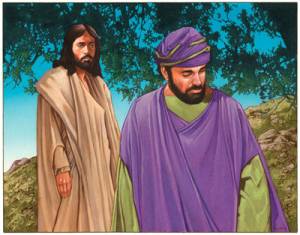
Image © Jeff Preston from GoodSalt.com
According to Jesus Himself, the “ ‘first and great commandment’ ” is “ ‘ “You shall love the Lord your God with all your heart, with all your soul, and with all your mind.” ’ ” And, Jesus adds, “ ‘the second is like it: “You shall love your neighbor as yourself.” ’ ” These commandments do not stand alone, however. Jesus further instructs: “ ‘On these two commandments hang all the Law and the Prophets’ ” (Matthew 22:37-40, NKJV). Indeed, they are themselves quoted from the Old Testament.
Read Matthew 19:16-23. How do Jesus’ answers to the rich young ruler’s questions relate to His answers to the lawyer’s question in Matthew 22:1-46?
What was going on here? Why did Jesus answer this man as He did? And what should these encounters say to us all, regardless of our position or station in life?
“Christ made the only terms which could place the ruler where he would perfect a Christian character. His words were words of wisdom, though they appeared severe and exacting. In accepting and obeying them was the ruler’s only hope of salvation. His exalted position and his possessions were exerting a subtle influence for evil upon his character. If cherished, they would supplant God in his affections. To keep back little or much from God was to retain that which would lessen his moral strength and efficiency; for if the things of this world are cherished, however uncertain and unworthy they may be, they will become all-absorbing.”—Ellen G. White, The Desire of Ages, p. 520.
|
Though we might not all be called to sell all that we have, as was this rich young ruler, what might you, personally, be clinging to that, if you don’t give up, could lead to your eternal ruin? |
 (1)
(1)Source: https://ssnet.org/blog/25a-12-the-two-greatest-commandments/
Editorial: Poetry & Prayer

I am not built for unprecedented times. Not many of us are giddy at the idea of a collapsing democracy or rising cultural tensions. But sometimes I fall into frantic anxiety. The usual platitudes about how it’s all in God’s plan and how we are living in the end times don’t provide comfort; they only […] Source: https://atoday.org/editorial-poetry-prayer/
God First: Your Daily Prayer Meeting #943
"If you believe, you will receive whatever you ask for in prayer" (Matthew 21:22, NIV). Tag someone in need of prayer, and kindly share your prayer requests here:
https://wkf.ms/3DBuapQ Source: https://www.youtube.com/watch?v=rL0xaxjP13s

