• Home
  • Devotionals
  • BiblePhone
  • Blogs
  • TV
  • Prayer
    • Submit Prayer Request
    • Prayer Requests List
  • Contact us
  • Romanian

Intercer Adventist News

Closer To Heaven

  • About us
    • About Adventist Church
    • About Intercer Adventist News
    • About Intercer
    • About Lucian Web Service
    • Latest News
    • Romanian Church News
  • News and Feeds
    • Intercer Adventist News
    • 60 Second SlideShows
    • “Adventist Tweets” Paper
    • Adventists on Twitter
    • Adventists on Google Plus
    • Bible Resources
      • Adventist Universities Daily Bible
      • Answers For Me
        • Dear God
        • Healthy Living
        • Life Notes
        • Spiritual applications
        • Vegetarian recipes
      • Better Sermons
        • Spirit Renew Quotes
      • Daily Bible Promise
      • E-GraceNotes
        • Bible Says
        • City Lights
        • Family First
        • Staying Young
      • Story Harvest
        • Personal Stories
      • SSNet.org
    • Churches & Organizations
      • Adventist News Network
      • Adventist Review
      • Adventist World Radio
      • Avondale College
      • Babcock University Nigeria
      • BC Alive
      • British Union Conference
      • Canadian Adventist Messenger
      • Canadian Union
      • North American Division News
      • Outlook Magazine
      • PM Church – Pastor’s Blog
      • Potomac Conference
      • Record Magazine – Australia
      • Review and Herald
      • Trans-European Division
      • Washington Conference
    • Health
      • Dr.Gily.com
      • Vegetarian-Nutrition.info
    • Ministries
      • 7 Miracle (Youth)
      • A Sabbath Blog
      • Adventist Blogs
      • Adventist Today
      • ADvindicate
      • Creative Ministry
      • Grace Roots
      • Romanian Church News
      • Rose’s Devotional
      • UNashamed
    • Personal
      • Alexandra Yeboah
      • Iasmin Balaj
      • Jennifer LaMountain
      • McQue’s View
      • Refresh with Tia
      • Shawn Boonstra
  • Sermons & Video Clips
    • Churches
      • Downey Adventist Church
      • Fresno Central SDA Church
      • Hillsboro Adventist Church
      • Mississauga SDA Church
      • New Perceptions Television (PM Church)
      • Normandie Ave SDA Church
      • Remnant Adventist Church
    • Organizations
      • Adventist News Network (ANN)
      • ADRA Canada
      • Adventists About Life
      • Adventist Education
      • Adventist Mission
      • Amazing Facts
      • Adventist Church Connect
      • BC Adventist
      • Church Support Services
      • In Focus (South Pacific)
      • IIW Canada
      • NAD Adventist
      • NAD Church Resource Center (Vervent)
      • NARLA
      • Newbold
      • Review & Herald
      • SECMedia
      • Video Avventista (Italy)
    • Ministries
      • 3AngelsTube.com
      • Answered.TV
      • AudioVerse.org
      • AYO Connect
      • Christian Documentaries
      • GAiN #AdventistGeeks
      • GYC
      • Intercer Websites
      • Josue Sanchez
      • LightChannel
      • Pan de Vida
      • Revival and Reformation
      • Stories of Faith
      • SAU Journalism/Communication
      • Spirit Flash
      • The Preaching Place (UK)
      • Toronto East Youth Nation
    • Personal
      • Esther-Marie Hartwell
      • McQuesView
      • Pastor Manny Cruz
    • Sabbath School
      • Ecole du Sabbat Adventiste
      • Sabbath School Audio Podast
      • Sabbath School daily
  • Resources
    • Bible and Bible Studies
    • Health
    • Music
  • All articles
  • G+ News & Marketplace
    • G+ News & Marketplace Group
    • G+ Page
You are here: Home / Archives for Adventist Sermons & Video Clips

21.07.2024 – Zechariah Chapter 9 | BELIEVE HIS PROPHETS

July 20, 2024 By admin

July 21, 2024
DAILY BIBLE READING – Zechariah Chapter 9
1 The burden of the word of the Lord in the land of Hadrach, and Damascus shall be the rest thereof: when the eyes of man, as of all the tribes of Israel, shall be toward the Lord.
2 And Hamath also shall border thereby; Tyrus, and Zidon, though it be very wise.
3 And Tyrus did build herself a strong hold, and heaped up silver as the dust, and fine gold as the mire of the streets.
4 Behold, the Lord will cast her out, and he will smite her power in the sea; and she shall be devoured with fire.
5 Ashkelon shall see it, and fear; Gaza also shall see it, and be very sorrowful, and Ekron; for her expectation shall be ashamed; and the king shall perish from Gaza, and Ashkelon shall not be inhabited.
6 And a bastard shall dwell in Ashdod, and I will cut off the pride of the Philistines.
7 And I will take away his blood out of his mouth, and his abominations from between his teeth: but he that remaineth, even he, shall be for our God, and he shall be as a governor in Judah, and Ekron as a Jebusite.
8 And I will encamp about mine house because of the army, because of him that passeth by, and because of him that returneth: and no oppressor shall pass through them any more: for now have I seen with mine eyes.
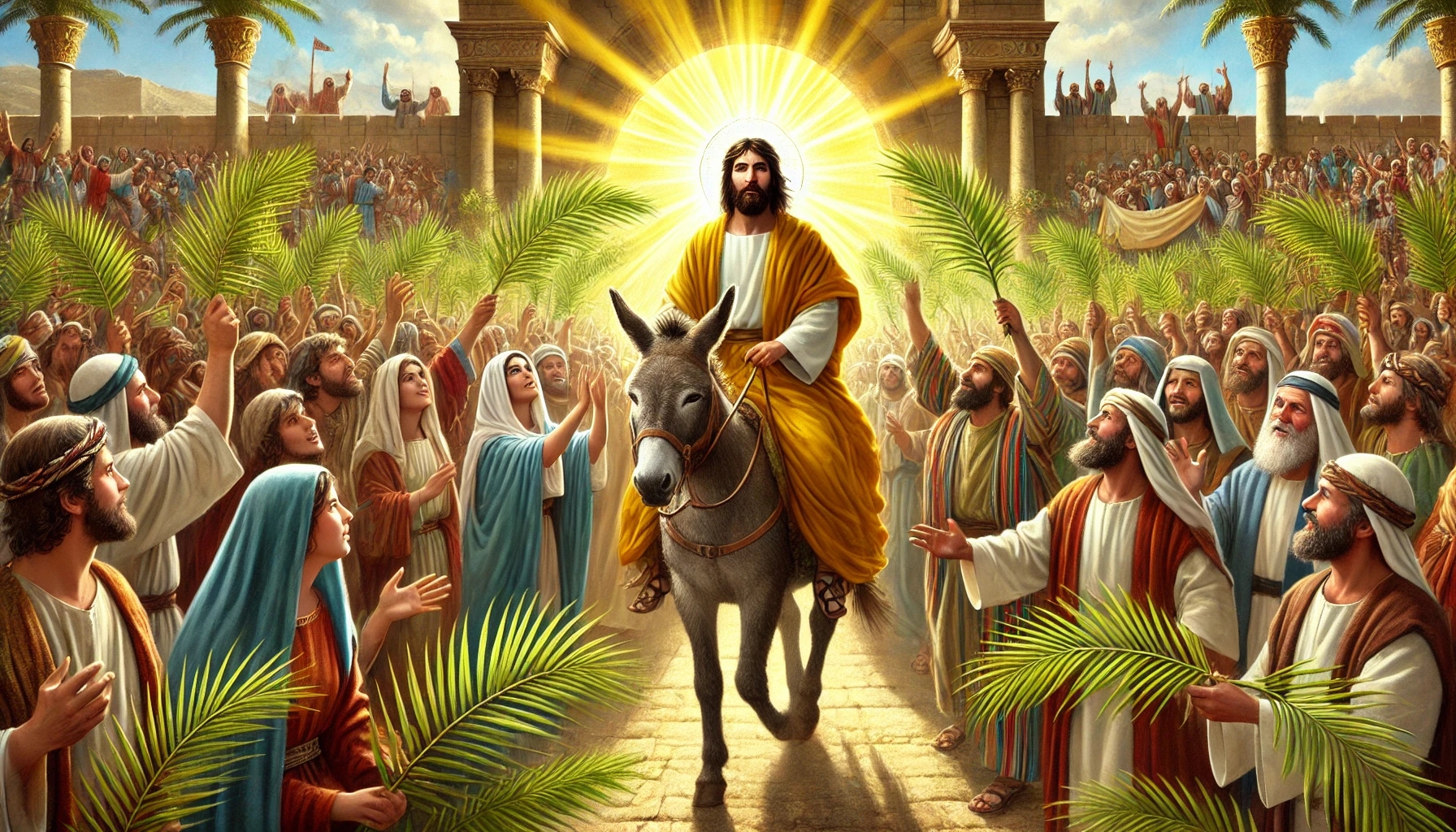
9 Rejoice greatly, O daughter of Zion; shout, O daughter of Jerusalem: behold, thy King cometh unto thee: he is just, and having salvation; lowly, and riding upon an ass, and upon a colt the foal of an ass.
10 And I will cut off the chariot from Ephraim, and the horse from Jerusalem, and the battle bow shall be cut off: and he shall speak peace unto the heathen: and his dominion shall be from sea even to sea, and from the river even to the ends of the earth.
11 As for thee also, by the blood of thy covenant I have sent forth thy prisoners out of the pit wherein is no water.
12 Turn you to the strong hold, ye prisoners of hope: even to day do I declare that I will render double unto thee;
13 When I have bent Judah for me, filled the bow with Ephraim, and raised up thy sons, O Zion, against thy sons, O Greece, and made thee as the sword of a mighty man.
14 And the Lord shall be seen over them, and his arrow shall go forth as the lightning: and the Lord God shall blow the trumpet, and shall go with whirlwinds of the south.
15 The Lord of hosts shall defend them; and they shall devour, and subdue with sling stones; and they shall drink, and make a noise as through wine; and they shall be filled like bowls, and as the corners of the altar.
16 And the Lord their God shall save them in that day as the flock of his people: for they shall be as the stones of a crown, lifted up as an ensign upon his land.
17 For how great is his goodness, and how great is his beauty! corn shall make the young men cheerful, and new wine the maids.
King James Version. Public Domain

Commentary
Zechariah Chapter 9 is divided into two main sections: the purification of Judah’s pagan neighbors (verses 1-8) and the promise of the Messianic kingdom of peace (verses 9-17). This section is rich in prophetic symbolism and contains significant predictions about the future of Israel and the surrounding nations.
Purification of Judah’s Pagan Neighbors (Verses 1-8) In the first eight verses, Zechariah describes God’s judgment on the pagan neighbors of Judah, beginning with Damascus and other cities like Tyre, Sidon, Ashkelon, Gaza, Ekron, and Ashdod. These prophecies demonstrate God’s power and judgment over the nations that have opposed Israel.
  • Verses 1-2: These verses emphasize that God watches over both people and the tribes of Israel. Hadrach and Damascus are mentioned, with a particular focus on Damascus.
  • Verses 3-4: Tyre is rebuked for its wealth and fortifications. Despite its strength, God will break its power and destroy it with fire.
  • Verses 5-7: Other cities like Ashkelon, Gaza, and Ekron will tremble with fear as their hope is destroyed. God will purify the Philistines from their abominable practices, so they may become a remnant for God.
  • Verse 8: God promises to protect His house from hostile armies so that no oppressor will ever overrun His people again.
Promise of the Messianic Kingdom of Peace (Verses 9-17) The second half of the chapter contains a remarkable prophecy about the coming Messiah and the kingdom of peace He will bring.
  • Verse 9: This well-known prophecy describes the humble king riding on a donkey. This is a clear prediction of Jesus Christ, who entered Jerusalem in this manner (Matthew 21:5).
  • Verse 10: The Messiah will end war and teach peace among the nations. His reign will extend over the entire earth.
  • Verses 11-12: Through God’s covenant, prisoners will be set free. These verses speak of a return to safety and the promise of double blessings.
  • Verses 13-15: God will use Judah and Ephraim as His weapons to defeat His enemies. He will protect and make His people victorious.
  • Verses 16-17: These verses use the imagery of a shepherd and his flock. God will save His people, and they will shine like precious stones in His land. The provision and prosperity of the people are emphasized.
Conclusion Zechariah Chapter 9 combines a strong message of judgment against Israel’s enemies with a wonderful promise of restoration and peace through the coming Messiah. The announcement of the humble, righteous king on a donkey highlights the expectation of a kingdom of peace that extends far beyond the borders of Israel. This chapter encourages believers to trust in God’s ultimate victory and the fulfillment of His promises.


WEEKLY SPIRIT OF PROPHECY READING – Ellen White | The Desire of Ages Chapter 49: At the Feast of Tabernacles
This chapter is based on John 7:1-15, 37-39.
Read online here


Commentary
The Feast of Tabernacles, as described in John 7, was a significant celebration in the Jewish calendar. Three times a year, the Jews were to gather in Jerusalem to worship the Lord, who had led them through the wilderness. After the Babylonian captivity, they were able to resume this practice, and it became very important to celebrate these memorial days. However, over time, the religious leaders had forgotten the original purpose of the festivals. Christ, who had instituted these festivals, recognized this and showed that they had lost their meaning.
The Feast of Tabernacles was the last of the annual festivals and was meant to remind Israel of God’s goodness and grace. During this time, the land was flooded with God’s blessings. The harvest had been gathered, olives had been harvested, and grapes had been pressed. For seven days, people from all parts of the land and from other countries came to Jerusalem to celebrate and thank God for His goodness. They lived in booths made of green branches to remember the tent life in the wilderness.
The festival was celebrated with spiritual songs and prayers of thanksgiving. The great Day of Atonement, which had been observed shortly before, had brought peace to the hearts and prepared the way for the joyful Feast of Tabernacles. The temple was the center of the celebrations, and the sacrificial ceremonies reached their peak. At night, artificial light illuminated the temple, and the splendor of the celebration deeply impressed those present.
A significant ritual during the festival was drawing water from the Pool of Siloam, which symbolized quenching the thirst of Israel in the wilderness. This symbolized the spiritual thirst that Christ intended to satisfy. When Jesus told his brothers that His time had not yet come, He showed that He was guided not by human expectations but by divine timing.
Jesus eventually came to Jerusalem in the middle of the feast and taught in the temple. His wisdom and knowledge of the law amazed everyone. Despite the hostility of the religious leaders, He spoke boldly and persuasively. On the last day of the feast, He cried out loudly: “If anyone thirsts, let him come to Me and drink!” This was an invitation to satisfy spiritual thirst through faith in Him.
Jesus was aware of the needs of the people and offered to quench their inner thirst. His invitation still stands today: anyone who is thirsty can come to Him and take the water of life freely. His words offer comfort, hope, and refreshment to all who recognize Him as the true Messiah.


WEEKLY SPIRIT OF PROPHECY READING – Ellen White | The Desire of Ages Chapter 50: Among Snares
This chapter is based on John 7:16-36, 40-53; John 8:1-11.
Read online here


Commentary
Based on John 7:16-36, 40-53, and John 8:1-11, this chapter describes the increasing hostility of the Jewish leaders towards Jesus. During the Feast of Tabernacles in Jerusalem, Jesus was constantly surrounded by priests and Pharisees who tried to trap him. They questioned his authority and attempted to discredit his teaching.
Jesus responded to them with the words: “My teaching is not mine, but His who sent me” (John 7:16). He made it clear that the ability to recognize the truth depends less on the mind and more on the heart. A person must be willing to submit their will to God to truly grasp the truth. The Pharisees lacked this willingness, which is why they could not understand his teaching.
Jesus revealed their evil intentions by exposing their thoughts and reminding them that they were breaking the law by plotting his death. Although they wanted to kill him, they were hindered by an invisible power. Many people began to believe in Jesus, but the religious leaders remained stubborn in their unbelief.
Nicodemus, a member of the Sanhedrin, asked the question: “Does our law judge a man without first giving him a hearing and learning what he does?” (John 7:51). This question silenced the accusers, and Jesus escaped immediate danger.
The next morning, Jesus was interrupted in the temple by scribes and Pharisees who brought a woman accused of adultery before him. They tried to trap Jesus: if he freed the woman, they could accuse him of disregarding the law; if he condemned her, they could report him to the Romans. But Jesus wisely responded by saying, “Let him who is without sin among you be the first to throw a stone at her” (John 8:7). The accusers shamefully withdrew, and Jesus freed the woman and encouraged her to sin no more.
This episode shows the deep grace and mercy of Jesus. He did not condemn the woman but gave her a new chance. This stands in stark contrast to the religious leaders, who were only focused on condemnation and punishment. Jesus demonstrated that true justice is linked with mercy and forgiveness. His words and actions reveal that he came to save, not to condemn.
The story urges us not to judge but to show mercy and give others a second chance. It highlights the difference between a superficial, self-righteous religion and a genuine faith characterized by love. Jesus invites us to be his followers by reflecting his mercy and love in our lives.

Source: https://fulfilleddesire.net/21-07-2024-zechariah-chapter-9-believe-his-prophets/

Share this:

  • Share on Facebook (Opens in new window) Facebook
  • Share on LinkedIn (Opens in new window) LinkedIn
  • Share on X (Opens in new window) X
  • Share on Pinterest (Opens in new window) Pinterest

Like this:

Like Loading...

Filed Under: Adventist Sermons & Video Clips, Fulfilled Desire

The Book of Mark – Lesson 4.Parables | Sabbath School with Pastor Mark Finley

July 20, 2024 By admin

Series THE BOOK OF MARK with Pastor Mark Finley  |
Lesson 4.Parables  |
The Revelation of the Kingdom of God through Jesus’ Parables
Lesson 4 examines Jesus’ parables in the Gospel of Mark and their deeper significance for the Kingdom of God. These vivid stories, such as the Parable of the Sower, the Lamp, the Growing Seed, and the Mustard Seed, convey central spiritual truths. They illustrate how people respond to God’s word and how the Kingdom of God is based on divine growth. Through these parables, Jesus teaches the principles of faith and the dynamics of divine action. The lesson invites us to understand Jesus’ message and be open to the transformative potential of the gospel.
Memory Text: Mark 4:24.25 – “Then He said to them, ‘Take heed what you hear. With the same measure you use, it will be measured to you; and to you who hear, more will be given. For whoever has, to him more will be given; but whoever does not have, even what he has will be taken away from him’.”
Content:
4.1 The Parable of the Sower
The Importance of Receptivity for the Success of God’s Word
The Parable of the Sower in Mark 4:1-9 describes four types of soil on which the seed falls and the respective fate of the seeds. The seed that falls on the path is immediately eaten by birds. The seed on rocky ground sprouts quickly but withers due to lack of roots. The seed among thorns is choked and cannot thrive. Finally, the seed on good soil yields a rich harvest. This parable emphasizes that the effectiveness of God’s word greatly depends on the receptivity of the hearer’s heart. It highlights the challenges and risks of following Jesus, but also the rich rewards of a fruitful life of faith.
4.2 Jesus’ Interpretation
Jesus’ Explanation of the Parable of the Sower
After telling the Parable of the Sower to a large crowd, Jesus explained it later to a smaller group (Mark 4:13-20). Jesus identifies the seed as “the word of God” and the various soils as different types of listeners. The seed on the path symbolizes people from whom Satan takes away the word before it can take root. The rocky ground represents those who joyfully receive the word but quickly fall away when difficulties arise. The soil with thorns signifies those who hear the word but are choked by worldly worries and riches. Only the good soil symbolizes those who hear, accept, and bear fruit from the word.
4.3 The Reason for the Parables
The Purpose of Jesus’ Parables
Jesus taught in parables to convey deeper spiritual truths that only those open to his message could understand (Mark 4:10-12). At first glance, it might seem that Jesus wanted to keep outsiders in the dark. However, this interpretation does not align with his compassionate and clear actions elsewhere in the Gospel of Mark. In Mark 4, Jesus references Isaiah 6 to illustrate that people often fail to understand due to their own hardness of heart and prejudices. These parables challenge listeners to engage seriously with Jesus’ teachings and to be open to God’s will. Ultimately, understanding depends on the willingness to be transformed by Jesus and his word.
4.4 Lamp and Measuring Basket
Openness and Receptivity to the Truth
In the Parable of the Lamp (Mark 4:21-23), Jesus emphasizes that a lamp is meant to give light and not to be hidden. This symbolizes the truth and the gospel, which should be brought to light and made accessible to all. The absurd questions Jesus poses highlight that it would be pointless to hide a lamp, just as it would be pointless to hide the truth about the Kingdom of God. Jesus means that his message should not remain hidden but be openly proclaimed. He also encourages listeners to pay close attention, as those who accept the light of truth will receive even more, while those who reject it will lose even what they have (Mark 4:24-25).
4.5 Parables of Growing Seed
Growth and Greatness of the Kingdom of God
In the Parable of the Growing Seed (Mark 4:26-29), Jesus emphasizes the natural growth process of the Kingdom of God, which occurs independently of human intervention. The person sows the seed and harvests, but the actual growth is God’s work. This parable underscores that the Kingdom of God has a divine dynamic and does not grow endlessly but reaches a certain climax – the harvest, symbolizing the end of the world.
In the Parable of the Mustard Seed (Mark 4:30-32), the focus is on how something very small grows into something great. The tiny mustard seed that becomes a large plant symbolizes the Kingdom of God, which starts small but grows tremendously. This metaphor shows that despite its humble beginnings, the Kingdom of God will have a significant and worldwide impact. Jesus illustrates that the Kingdom of God, like the mustard seed, possesses an overwhelming and transformative power that exceeds all expectations.
4.6 Summary
Revelation and Growth of the Kingdom of God
Lesson 4 deals with Jesus’ parables in the Gospel of Mark, which convey profound spiritual truths. In the Parable of the Sower (Mark 4:1-20), different types of listeners are represented by various soils, with only the good soil bearing fruit. The Parable of the Lamp (Mark 4:21-25) emphasizes that the truth should come to light and openness to the gospel is rewarded. In the Parable of the Growing Seed (Mark 4:26-29), Jesus shows that the Kingdom of God is based on divine growth, independent of human intervention. Finally, the Parable of the Mustard Seed (Mark 4:30-32) illustrates how the Kingdom of God grows from small beginnings into something great. These parables highlight the principles of the Kingdom of God and the necessity of being open and receptive to its message.

Source: https://fulfilleddesire.net/the-book-of-mark-lesson-4-parables-sabbath-school-with-pastor-mark-finley/

Share this:

  • Share on Facebook (Opens in new window) Facebook
  • Share on LinkedIn (Opens in new window) LinkedIn
  • Share on X (Opens in new window) X
  • Share on Pinterest (Opens in new window) Pinterest

Like this:

Like Loading...

Filed Under: Adventist Sermons & Video Clips, Fulfilled Desire, Sabbath School

Sunday: The Parable of the Sower

July 20, 2024 By admin

Daily Lesson for Sunday 21st of July 2024

Read Mark 4:1-9. What are the different soils like, and what happens to the seed that falls on them?

When reading the parables of Jesus in the Gospels, people often want to jump quickly to the interpretation. After all, is that not the point of these stories—to teach some spiritual truth for Christian life? Yes, but sometimes, other than in brief comments such as “The kingdom of God is like,” or “He who has ears to hear, let him hear,” Jesus does not explain the parable.

Farmer Sowing Seeds

Image © Lifeway Collection at Goodsalt.com

Consequently, it is good to slow down and simply analyze the story itself in order to catch the direction its various narrative characteristics point toward. Doing this with the parable of the sower yields a variety of ideas. The seed is the same in each case but falls on four different types of soil. The type of soil greatly influences the outcome for the seed. Instead of one continuous story, the parable is actually four individual stories told to completion in each setting. The length of time for completing the story lengthens with each successive story.

The seed that falls on the road is eaten immediately by the birds. “ ‘And it happened, as he sowed, that some seed fell by the wayside; and the birds of the air came and devoured it’ ” (Mark 4:4, NKJV).

The seed that falls on the rocky ground takes a few days or weeks to reach its failed outcome, which included being scorched by the sun.

The seed that falls on the weedy soil takes longer still to reach its unproductive end, choked as it was by thorns.

The seed that falls on the good soil takes the longest of all, presumably an entire growing season, as is the normal pattern for a crop.

Three of the stories are about failure; only the last is about success, a good abundant crop. The length of the stories, the longer and longer period of time for each successive story, and the fact that only one story is about success, all point to the risk of failure but the abundant outcome of success.

The parable seems to point to the cost of discipleship and the risks involved, but it also highlights the abundant reward of following Jesus.

What are some other spiritual lessons that we can learn from nature?

(1)

Source: https://ssnet.org/blog/24c-04-the-parable-of-the-sower/

Share this:

  • Share on Facebook (Opens in new window) Facebook
  • Share on LinkedIn (Opens in new window) LinkedIn
  • Share on X (Opens in new window) X
  • Share on Pinterest (Opens in new window) Pinterest

Like this:

Like Loading...

Filed Under: Adventist Sermons & Video Clips, SSNet.org

Luis Miguel: A Journey from Grief to Faith in Monterrey, Mexico

July 20, 2024 By admin


After losing his mother to cancer, Luis was consumed by grief. He contemplated her unfailing love, her consistent prayers for his well-being, and realized that no one had loved him like she had. Overwhelmed with sorrow and remorse, Luis broke down in tears. It was at this vulnerable moment that he chose to embrace faith in God
#BroadcastToBaptism #MonterreyMexico #LuisMiguel #Faith #Transformation #awr #adventistworldradio About our channel
We are Adventist World Radio, dedicated to sending the gospel to every corner of the world, even in the most remote and inaccessible locations. Through radio broadcasts, Cell Phone Evangelism, Godpods, and Digital Evangelism on various social media platforms, we're striving to reach millions across the world in their native languages. Since we started broadcasting back in 1975, we've seen and heard some truly inspirational stories of people who've experienced life-changing encounters with God. Regardless of their beliefs or professions, we have seen God reach a pagan chieftain, a witch, a professional assassin, and even rebels. Witness God’s work at AWR, from broadcast to baptism. #short Source: https://www.youtube.com/watch?v=f8k_bTOEA8k

Share this:

  • Share on Facebook (Opens in new window) Facebook
  • Share on LinkedIn (Opens in new window) LinkedIn
  • Share on X (Opens in new window) X
  • Share on Pinterest (Opens in new window) Pinterest

Like this:

Like Loading...

Filed Under: Adventist Sermons & Video Clips, Adventist World Radio

Luis Miguel: The Prodigal Son of Monterrey, Mexico

July 20, 2024 By admin


Luis, the son of missionary parents, had a different path in mind for his life. Despite his mother's devout Christianity and constant prayers, he was drawn to the temptations of the world. He ignored the pleas of his parents and, like the prodigal son, chose to live his life on his own terms. Luis admits that he was so absorbed in worldly things that he failed to notice his mother's declining health. He expresses a deep regret, wishing he had returned to his faith before she passed away
#BroadcastToBaptism #MonterreyMexico #ProdigalSon #Transformation #awr #adventistworldradio About our channel
We are Adventist World Radio, dedicated to sending the gospel to every corner of the world, even in the most remote and inaccessible locations. Through radio broadcasts, Cell Phone Evangelism, Godpods, and Digital Evangelism on various social media platforms, we're striving to reach millions across the world in their native languages. Since we started broadcasting back in 1975, we've seen and heard some truly inspirational stories of people who've experienced life-changing encounters with God. Regardless of their beliefs or professions, we have seen God reach a pagan chieftain, a witch, a professional assassin, and even rebels. Witness God’s work at AWR, from broadcast to baptism. #short Source: https://www.youtube.com/watch?v=_XpxMyBG3Is

Share this:

  • Share on Facebook (Opens in new window) Facebook
  • Share on LinkedIn (Opens in new window) LinkedIn
  • Share on X (Opens in new window) X
  • Share on Pinterest (Opens in new window) Pinterest

Like this:

Like Loading...

Filed Under: Adventist Sermons & Video Clips, Adventist World Radio

  • « Previous Page
  • 1
  • …
  • 1767
  • 1768
  • 1769
  • 1770
  • 1771
  • …
  • 8349
  • Next Page »

SkyScraper

Intercer Ministry – Since 1997!

We’re on Pinterest!

Partners


The Seven Thunders Ministry

Recent Posts

  • Vespers | Mar 20, 2026 | Be Still
  • Afternoon Seminar | Mar 21, 2026 – Mary’s Heart in a Martha’s World
  • Worship | Mar 21, 2026 – What Jesus Taught about the Scripture
  • ATSS: Malcolm Russell, “The Religious Roots of the Current Middle Eastern Wars”
  • Standing Strong with Lebanon

About Intercer

Intercer is a website with biblical materials in Romanian, English, Hungarian and other languages. We want to bring the light from God's Word to peoples homes. Intercer provides quality Christian resources...[Read More]

Lucian Web Service


Intercer is proudly sponsored by Lucian Web Service - Professional Web Services, Wordpress Websites, Marketing and Affiliate Info. Lucian worked as a subcontractor with Simpleupdates, being one of the programmers for the Adventist Church Connect software. He also presented ACC/ASC workshops... [read more]

Archives

Follow @intercer

Categories

[footer_backtotop]

Website provided by: Intercer Romania · Intercer Canada · Lucian Web Service · Privacy · Log in


%d