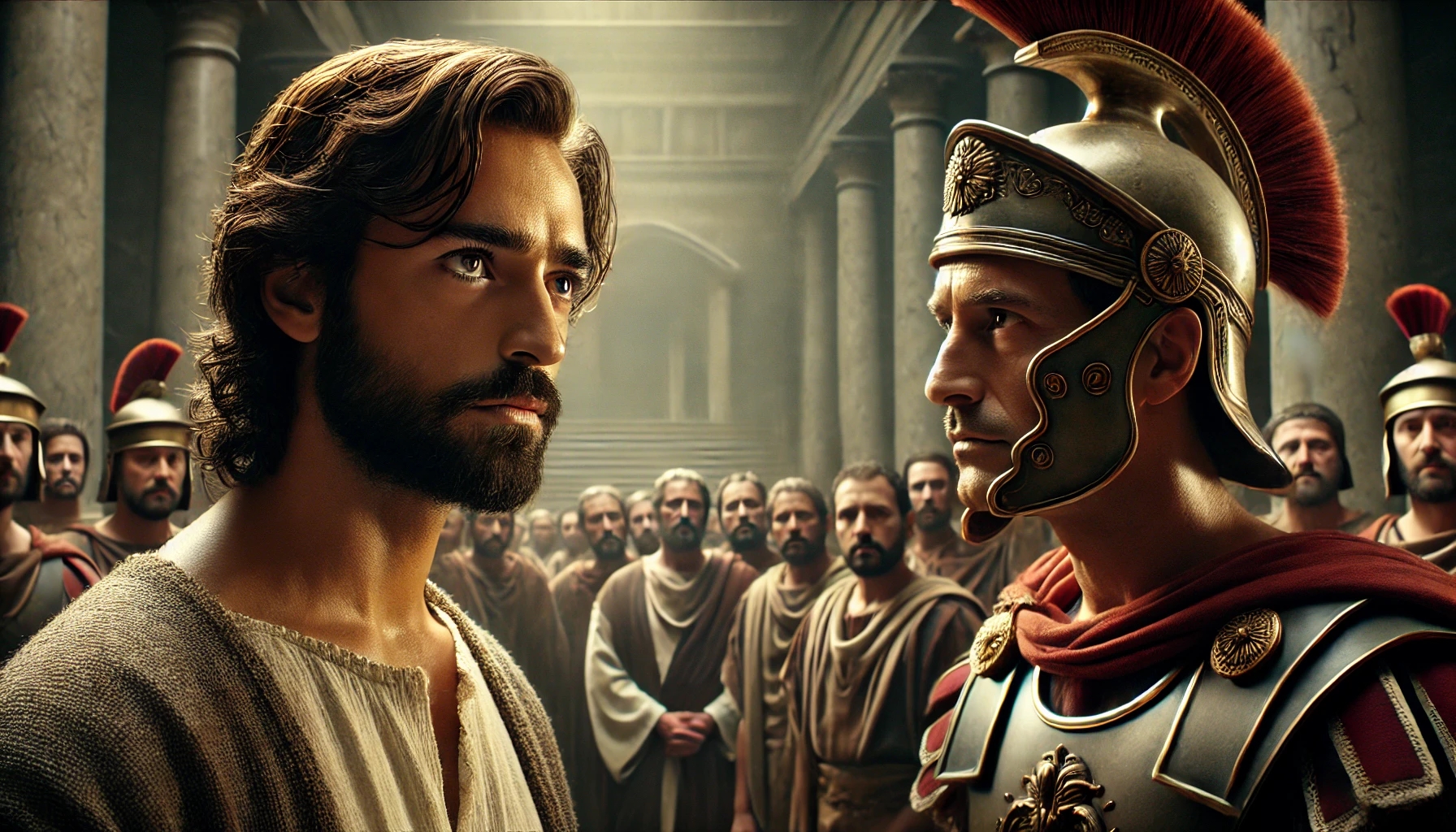
“Ma, vedendo il vento, ebbe paura e, cominciando ad affondare, gridò: 'Signore, salvami!'”. (Matteo 14:30) Meditazione giornaliera “Apri la porta del tuo cuore”. Rubrica a cura di Anna Cupertino. Speaker: Alessia Calvagno Source: https://www.youtube.com/watch?v=meoXxkeTP3s
Lesson 5.Miracles Around the Lake | 5.4 Rejection and Reception | THE BOOK OF MARK | LIVING FAITH


5.4 Rejection and Reception
Rejection in Nazareth: The Difficulty of Accepting Jesus as Teacher and Healer
Read Mark 6:1–6. Why did the people from Jesus’ hometown reject him?
In Mark 6:1–6, Jesus returns to his hometown of Nazareth, only to be rejected by the people there. This rejection is surprising because one would normally expect the people in his hometown to be proud of him. However, their reaction reveals a deeply rooted skepticism and resistance to his person and work. Here are some reasons why the people of Nazareth rejected Jesus:
-
Familiarity and Skepticism:
-
“Isn’t this the carpenter?” The people of Nazareth knew Jesus as the son of the carpenter and someone who grew up among them. This familiarity led to skepticism about his sudden transformation into a teacher and miracle worker. They could not accept that someone they knew as ordinary and commonplace should possess such extraordinary authority and power.
-
-
Envy and Hostility:
-
Success in Capernaum: Jesus had performed many of his miracles in Capernaum and other cities, which possibly sparked envy and hostility in Nazareth. They may have felt overlooked and offended that Jesus did not primarily showcase his powers and teachings in his hometown.
-
-
Conflicts with His Family:
-
Family Disagreements: There were already tensions between Jesus and his family (see Mark 3:31–35). These familial conflicts could have intensified the skepticism and rejection by the people of Nazareth, as they might have been influenced by his family or formed their own opinions about Jesus.
-
-
Lack of Understanding and Faith:
-
Unbelief: The people of Nazareth had difficulty understanding and accepting the divine origin and mission of Jesus. Their inability to see beyond the familiar and believe in the supernatural prevented them from recognizing and accepting Jesus as the Messiah. Their unbelief was so strong that it hindered Jesus’ work among them, as noted in Mark 6:5: “He could not do any miracles there, except lay his hands on a few sick people and heal them.”
-
Read Mark 6:7–30. What contrast exists between the sending out of the twelve apostles and the beheading of John the Baptist?
In Mark 6:1–6, Jesus returns to his hometown of Nazareth, only to be rejected by the people there. This rejection is surprising because one would normally expect the people in his hometown to be proud of him. However, their reaction reveals a deeply rooted skepticism and resistance to his person and work. Here are some reasons why the people of Nazareth rejected Jesus:
-
Familiarity and Skepticism:
-
“Isn’t this the carpenter?” The people of Nazareth knew Jesus as the son of the carpenter and someone who grew up among them. This familiarity led to skepticism about his sudden transformation into a teacher and miracle worker. They could not accept that someone they knew as ordinary and commonplace should possess such extraordinary authority and power.
-
-
Envy and Hostility:
-
Success in Capernaum: Jesus had performed many of his miracles in Capernaum and other cities, which possibly sparked envy and hostility in Nazareth. They may have felt overlooked and offended that Jesus did not primarily showcase his powers and teachings in his hometown.
-
-
Conflicts with His Family:
-
Family Disagreements: There were already tensions between Jesus and his family (see Mark 3:31–35). These familial conflicts could have intensified the skepticism and rejection by the people of Nazareth, as they might have been influenced by his family or formed their own opinions about Jesus.
-
-
Lack of Understanding and Faith:
-
Unbelief: The people of Nazareth had difficulty understanding and accepting the divine origin and mission of Jesus. Their inability to see beyond the familiar and believe in the supernatural prevented them from recognizing and accepting Jesus as the Messiah. Their unbelief was so strong that it hindered Jesus’ work among them, as noted in Mark 6:5: “He could not do any miracles there, except lay his hands on a few sick people and heal them.”
-
Have you ever faced rejection like Jesus or experienced a crisis that was difficult to understand? What have you learned from these experiences that might help you the next time something similar happens?
Experiencing rejection and crises is something many of us go through at various stages of life. Even Jesus himself experienced rejection, misunderstandings, and ultimately suffering on the cross. These human experiences of Jesus can teach us a lot about how to handle our own challenges.
Personal Reflection and Lessons:
-
Experiencing Rejection:
-
Jesus’ Rejection in Nazareth: Jesus was rejected in his own hometown of Nazareth (Mark 6:1–6). The people who knew him best could not recognize his true identity and mission. This rejection is particularly painful because it comes from those closest to us.
-
Personal Rejection: You may have experienced rejection or misunderstanding from friends, family, or colleagues. These situations are painful and can make us doubt our worth and calling.
-
-
Going Through Crises:
-
Jesus’ Path of Suffering: Jesus went through great suffering and ultimately death on the cross. This crisis was hard to understand, even for his closest disciples, who often struggled with fear and doubt.
-
Personal Crises: Crises can take many forms—health problems, the loss of a loved one, career setbacks, or personal failures. Such times are often hard to understand and can test our trust and faith.
-
What We Can Learn from These Experiences:
-
Patience and Trust:
-
Trust in God’s Plan: Jesus trusted in God’s plan despite rejection and crisis. Even when we don’t understand the reason for our challenges, we can trust that God has a greater plan for our lives.
-
Patience in Difficult Times: Patience is a virtue that is especially important in times of crisis. It helps us remain calm amidst difficulties and trust in God’s timing.
-
-
Identity and Calling:
-
Strength in Identity: Jesus knew who he was and what his mission was. This clarity helped him endure rejection and continue his path unperturbed. We should also be aware of our identity in God and not lose sight of our calling.
-
Living Our Calling: Even if others reject or misunderstand us, we should focus on what we are called to do. Our mission and purpose are greater than the opinions of others.
-
-
Community and Support:
-
Seeking Community: Jesus had a community of disciples who supported him, even if they didn’t always understand everything. In times of crisis, it is important to turn to a supportive community—whether family, friends, or a faith community.
-
Accepting Support: It is not a weakness to seek and accept support. Shared prayers, conversations, and shared burdens can help us through difficult times.
-
-
Faith and Hope:
-
Maintaining Faith: In the darkest times, Jesus kept his faith in the Father. Our faith can also carry us through the toughest challenges. Through prayer, meditation, and reading scripture, we can strengthen our faith.
-
Never Losing Hope: Even in seemingly hopeless situations, there is always a reason for hope. Jesus’ resurrection is the ultimate sign that after every death comes new life. We should never give up hope that after every crisis comes a new chance and a new beginning.
-
Conclusion:
The rejection and crises we experience can be painful and hard to understand. But through the experiences and example of Jesus, we can learn to remain patient and trusting in such times, keep our identity and calling, seek community and support, and maintain our faith and hope. These lessons help us emerge from every challenge strengthened and with a new perspective.

In Mark 6:1–6, Jesus returns to his hometown of Nazareth, where he encounters rejection. This passage provides valuable insights into human nature and the challenges of faith. The account shows how difficult it was for the people of Nazareth to accept Jesus as the Messiah, despite his obvious miracles and teachings. This story has important connections to our daily lives and faith.
Reasons for the Rejection of Jesus in Nazareth:
-
Familiarity and Skepticism:
-
“Isn’t this the carpenter?” The people of Nazareth knew Jesus as the son of a carpenter and someone who grew up among them. This familiarity led to skepticism about his sudden transformation into a teacher and miracle worker. They could not accept that someone they knew as ordinary and commonplace should possess such extraordinary authority and power.
-
-
Envy and Hostility:
-
Success in Capernaum: Jesus had performed many of his miracles in Capernaum and other cities, which possibly sparked envy and hostility in Nazareth. The residents may have felt overlooked and offended that Jesus did not primarily showcase his powers and teachings in his hometown.
-
-
Conflicts with His Family:
-
Family Disagreements: There were already tensions between Jesus and his family (see Mark 3:31–35). These familial conflicts could have intensified the skepticism and rejection by the people of Nazareth, as they might have been influenced by his family or formed their own opinions about Jesus.
-
-
Lack of Understanding and Faith:
-
Unbelief: The people of Nazareth had difficulty understanding and accepting the divine origin and mission of Jesus. Their inability to see beyond the familiar and believe in the supernatural prevented them from recognizing and accepting Jesus as the Messiah. Their unbelief was so strong that it hindered Jesus’ work among them, as noted in Mark 6:5: “He could not do any miracles there, except lay his hands on a few sick people and heal them.”
-
Connection to Our Daily Lives and Faith:
-
Overcoming Prejudices and Skepticism:
-
Openness to the Unexpected: Like the people of Nazareth, we tend to judge people and situations based on our previous experiences and prejudices. This story teaches us to remain open and allow for the possibility that God can work through unexpected people and ways.
-
-
Dealing with Envy and Hostility:
-
Rejoicing in Others’ Success: Instead of being envious of others’ success, we should learn to rejoice with them and acknowledge their gifts and achievements. This fosters a positive and supportive community that encourages one another.
-
-
Family Conflicts and Faith:
-
Influence of Family Opinions: Conflicts within the family can influence our faith and perspectives. It is important to nurture and strengthen our own faith, even when we face resistance or misunderstandings within the family.
-
-
Strengthening Faith and Understanding:
-
Faith Beyond the Familiar: The story reminds us that our faith should go beyond what we see and understand. We should strengthen our faith and remain open to the ways God works in our lives, even if they are unexpected or unusual.
-
Conclusion:
The rejection of Jesus by the people of Nazareth shows how deeply rooted skepticism and prejudices can hinder faith and the recognition of the divine. This story challenges us to reconsider our own prejudices, be open to God’s work, and live our faith steadfastly despite adversities. It reminds us that true understanding and acceptance often require the courage to question the familiar and recognize the divine.
Be open to the unexpected ways in which God works in your life, and trust that true understanding often requires the courage to look beyond the familiar.
31.07.2024 – Matthew Chapter 1 | BELIEVE HIS PROPHETS
The New Testament
1. The Purpose of the New Testament
The purpose of the New Testament is to proclaim God’s revelation in Jesus Christ and to convey the fundamental principles and teachings of the Christian faith. This goal is achieved through several specific objectives:
-
The Revelation of Jesus Christ The New Testament aims to present Jesus Christ as the Son of God and the Savior of humanity. It emphasizes His birth, life, teachings, miracles, death on the cross, and resurrection. Through this presentation, Jesus is revealed as the promised Messiah and the central figure of the Christian faith.
-
The Proclamation of the Gospel A central goal of the New Testament is the proclamation of the “good news” (Gospel) of salvation through Jesus Christ. This message is addressed to all people and emphasizes the possibility of reconciliation with God and eternal life through faith in Jesus Christ.
-
The Establishment and Guidance of the Church The New Testament serves to lay the foundation for the Christian church and provide guidance for its growth and organization. It describes the beginnings of the church in the Acts of the Apostles and offers practical and theological instructions for community life, leadership, and the spread of faith in the letters of Paul and other apostles.
-
The Transmission of Ethical and Moral Teachings The writings of the New Testament contain comprehensive ethical and moral teachings intended to influence the behavior and lifestyle of believers. These teachings emphasize values such as love, justice, mercy, forgiveness, and humility.
-
Strengthening Faith and Hope The New Testament aims to strengthen the faith and hope of believers. It offers comfort and encouragement in difficult times and assures believers of God’s faithfulness and promises. Particularly, the letters of Paul and the Revelation of John offer an eschatological hope for the return of Christ and eternal life.
-
Guidance for Personal Spiritual Growth Another objective is the guidance and promotion of personal spiritual growth of believers. Through teachings, exhortations, and encouragements, believers are called to grow in their relationship with God, live a life of sanctification, and produce the fruit of the Spirit.
Summary: The purpose of the New Testament is to proclaim the central message of the Christian faith, which is that Jesus Christ is the Son of God and the Savior of humanity. It serves to establish and guide the church, transmit ethical and moral teachings, strengthen the faith and hope of believers, and promote personal spiritual growth. Through these objectives, the New Testament becomes a fundamental text for Christian theology, community life, and individual discipleship.
2. The Message of the New Testament
The New Testament, consisting of 27 books, is the heart of the Christian faith and conveys a multitude of profound and meaningful messages. These messages are organized into several central themes and teachings that shape the understanding and practice of the Christian faith. Here are the key aspects detailed:
-
Jesus Christ as Savior and Messiah The New Testament begins with the four Gospels (Matthew, Mark, Luke, and John), which describe the life, ministry, death, and resurrection of Jesus Christ. These books show that Jesus is the long-awaited Messiah who fulfills Old Testament prophecies. His sacrifice on the cross is the central act of redemption, atoning for the sins of humanity. Jesus’ resurrection confirms His divine nature and power over death, giving believers hope for their own resurrection and eternal life.
-
The Kingdom of God Jesus often speaks about the Kingdom of God, a central theme in His teachings. This kingdom is both a present reality and a future hope. It manifests in God’s reign over the hearts and lives of believers and will be fully established at Christ’s return. Jesus’ parables, such as the Parable of the Prodigal Son and the Parable of the Good Samaritan, illustrate the principles and values of this kingdom—grace, mercy, and unconditional love.
-
Love and Mercy One of Jesus’ most important teachings is love—for both God and neighbor. Jesus summarizes the law and the prophets in two commandments: “You shall love the Lord your God with all your heart, with all your soul, and with all your mind” and “You shall love your neighbor as yourself” (Matthew 22:37-39). This teaching emphasizes the necessity of neighborly love, forgiveness, and mercy, urging believers to emulate Jesus’ behavior.
-
Faith and Grace The New Testament teaches that salvation is attained not by works but by faith in Jesus Christ. Paul, especially in his letters, emphasizes that salvation is a gift of God’s grace, accepted through faith (Ephesians 2:8-9). This grace allows believers to enter into a relationship with God based not on merit but on God’s unmerited favor.
-
The Role of the Holy Spirit After Jesus’ ascension, the Holy Spirit is sent as a helper and comforter (John 14:16-17). The Holy Spirit plays a crucial role in the lives of believers by guiding, comforting, and empowering them to live according to God’s will. The Spirit bestows gifts and fruits that enable believers to effectively serve in the community and ministry.
-
The Mission of the Church The “Great Commission” in Matthew 28:19-20 is a central mandate to Jesus’ disciples and the entire Christian church. Jesus commissions His followers to go into all the world, make disciples of all nations, baptize them, and teach them to observe all He has commanded. This mission emphasizes the global scope and universal significance of the Christian message.
-
Hope of Eternal Life The New Testament offers believers a strong hope of eternal life with God. Jesus’ resurrection is the seal of this hope, assuring believers that death is not the end. The Revelation of John provides a vision of the coming Kingdom of God, where there will be no more pain, tears, or death (Revelation 21:4).
-
Ethics and Morality The teachings of the New Testament also include ethical instructions for daily life. The Sermon on the Mount (Matthew 5-7) is an outstanding example that contains ethical principles such as the Beatitudes, the command to love enemies, and the golden rule. Paul’s letters contain numerous moral exhortations that urge believers to live lives of holiness and integrity.
-
The Importance of Community The New Testament emphasizes the importance of the community of believers, described as the body of Christ. This community is characterized by mutual love, encouragement, and support. Believers are called to serve one another, encourage each other in love, and live in unity.
Conclusion: The New Testament is a rich collection of writings that form the foundation of Christian faith and life. It proclaims the good news of Jesus Christ and shows the way to a personal relationship with God. The messages of love, grace, redemption, the role of the Holy Spirit, the mission of the church, hope of eternal life, ethical and moral guidance, and the importance of community are central themes that shape the lives and faith of Christians.
3. The Structure of the New Testament
The New Testament is structured into 27 books, divided into different categories. This structure helps to understand the various types of writings and their specific themes and purposes. Here is an overview of the structure of the New Testament:
-
The Gospels The first four books of the New Testament are the Gospels, which depict the life, ministry, death, and resurrection of Jesus Christ. They offer different perspectives on the same central figure of the Christian faith.
-
Matthew
-
Mark
-
Luke
-
John
-
-
The Acts of the Apostles
-
Acts: This book, written by Luke, describes the history of the early Christian church after Jesus’ ascension. It focuses on the work of the Holy Spirit, the preaching of the apostles, particularly Peter and Paul, and the spread of the Gospel from Jerusalem to Rome.
-
-
The Pauline Epistles (Letters)
-
The letters of Paul make up the largest part of the New Testament. They are addressed to various Christian communities and individuals, dealing with a variety of theological, ethical, and practical topics.
-
Romans
-
1 Corinthians
-
2 Corinthians
-
Galatians
-
Ephesians
-
Philippians
-
Colossians
-
1 Thessalonians
-
2 Thessalonians
-
1 Timothy
-
2 Timothy
-
Titus
-
Philemon
-
-
The General Epistles
-
These letters are addressed to the general Christian community and cover various themes of Christian life and faith.
-
Hebrews
-
James
-
1 Peter
-
2 Peter
-
1 John
-
2 John
-
3 John
-
Jude
-
-
The Apocalypse (Revelation)
-
Revelation: This book, written by John, is a prophetic and apocalyptic writing that contains visions about the end times, the final judgment, and the coming Kingdom of God. It uses symbolic and figurative language to describe the last things and the ultimate fulfillment of God’s plans.
-
The Message of the Book of Matthew
The Book of Matthew in the New Testament is one of the four Gospels and holds a central significance for Christianity. The main messages of the Gospel of Matthew can be summarized in several key points:
-
The Fulfillment of Prophecies: Matthew emphasizes showing that Jesus is the Messiah prophesied by the Old Testament prophets. He frequently quotes the Old Testament to demonstrate that Jesus’ life and work fulfill these prophecies.
-
The Kingdom of God: The Gospel of Matthew emphasizes the “Kingdom of God” or “Kingdom of Heaven” as Jesus’ central message. Jesus announces that the Kingdom of God is near and calls people to repentance and faith. The Kingdom of God is presented as both a present reality and a future hope.
-
The Teachings of Jesus: Matthew contains many of Jesus’ important teachings, including the Sermon on the Mount (chapters 5-7), which encompasses ethical instructions and principles for life in the Kingdom of God. This includes the Beatitudes, the Lord’s Prayer, and the Golden Rule (“So in everything, do to others what you would have them do to you”).
-
The Importance of Faith and Discipleship: In Matthew, Jesus emphasizes the importance of faith in Him and the willingness to follow Him. He calls His disciples to take up their crosses and follow Him, which implies dedication and a willingness to sacrifice.
-
The Suffering, Death, and Resurrection of Jesus: Matthew provides detailed accounts of Jesus’ suffering and death, His crucifixion, and His resurrection. These events are central to Christian theology as they highlight Jesus’ sacrifice for humanity’s sins and His triumphant resurrection as a victory over death.
-
The Mission of the Disciples: At the end of the Gospel, Jesus commissions His disciples to go into all the world, make disciples of all nations, baptize them, and teach them to observe everything He has commanded (Matthew 28:19-20). This “Great Commission” is a call for the global proclamation of the Gospel.
-
Emphasis on Justice and Mercy: Jesus frequently criticizes the religious leaders of His time for their hypocrisy and emphasis on external rituals while neglecting the inner values of justice, mercy, and faithfulness. He emphasizes the importance of a pure heart and a sincere relationship with God.
These messages make the Gospel of Matthew a central text for understanding the life, teachings, and significance of Jesus Christ in the Christian faith.
July 31, 2024
DAILY BIBLE READING – Matthew Chapter 1
1 The book of the generation of Jesus Christ, the son of David, the son of Abraham.
2 Abraham begat Isaac; and Isaac begat Jacob; and Jacob begat Judas and his brethren;
3 And Judas begat Phares and Zara of Thamar; and Phares begat Esrom; and Esrom begat Aram;
4 And Aram begat Aminadab; and Aminadab begat Naasson; and Naasson begat Salmon;
5 And Salmon begat Booz of Rachab; and Booz begat Obed of Ruth; and Obed begat Jesse;
6 And Jesse begat David the king; and David the king begat Solomon of her that had been the wife of Urias;
7 And Solomon begat Roboam; and Roboam begat Abia; and Abia begat Asa;
8 And Asa begat Josaphat; and Josaphat begat Joram; and Joram begat Ozias;
9 And Ozias begat Joatham; and Joatham begat Achaz; and Achaz begat Ezekias;
10 And Ezekias begat Manasses; and Manasses begat Amon; and Amon begat Josias;
11 And Josias begat Jechonias and his brethren, about the time they were carried away to Babylon:
12 And after they were brought to Babylon, Jechonias begat Salathiel; and Salathiel begat Zorobabel;
13 And Zorobabel begat Abiud; and Abiud begat Eliakim; and Eliakim begat Azor;
14 And Azor begat Sadoc; and Sadoc begat Achim; and Achim begat Eliud;
15 And Eliud begat Eleazar; and Eleazar begat Matthan; and Matthan begat Jacob;
16 And Jacob begat Joseph the husband of Mary, of whom was born Jesus, who is called Christ.
17 So all the generations from Abraham to David are fourteen generations; and from David until the carrying away into Babylon are fourteen generations; and from the carrying away into Babylon unto Christ are fourteen generations.
18 Now the birth of Jesus Christ was on this wise: When as his mother Mary was espoused to Joseph, before they came together, she was found with child of the Holy Ghost.
19 Then Joseph her husband, being a just man, and not willing to make her a public example, was minded to put her away privily.
20 But while he thought on these things, behold, the angel of the Lord appeared unto him in a dream, saying, Joseph, thou son of David, fear not to take unto thee Mary thy wife: for that which is conceived in her is of the Holy Ghost.
21 And she shall bring forth a son, and thou shalt call his name Jesus: for he shall save his people from their sins.
22 Now all this was done, that it might be fulfilled which was spoken of the Lord by the prophet, saying,
23 Behold, a virgin shall be with child, and shall bring forth a son, and they shall call his name Emmanuel, which being interpreted is, God with us.
24 Then Joseph being raised from sleep did as the angel of the Lord had bidden him, and took unto him his wife:
25 And knew her not till she had brought forth her firstborn son: and he called his name Jesus.
King James Version. Public Domain

Commentary
Introduction
The Gospel of Matthew begins with a detailed account of the genealogy of Jesus Christ and a narrative of His miraculous birth. These opening verses of the Gospel lay the foundation for the theological and historical anchoring of Jesus as the long-awaited Messiah, who stands in the line of David and Abraham. Matthew emphasizes the fulfillment of Old Testament prophecies and the divine nature of Jesus to convince his readers of the significance and uniqueness of Christ.
Commentary on Matthew Chapter 1
The Genealogy of Jesus (Verses 1-17)
Verses 1-2: Matthew begins with the genealogy of Jesus to identify Him as the “son of David, the son of Abraham.” These titles are crucial as they place Jesus in the lineage of Israel’s most significant king and the father of the Jewish people. Abraham and David are central figures in the Old Testament, and their mention underscores the messianic hope and divine promise.
Verses 3-6: The genealogy traces through significant figures in Israelite history, including the mention of women like Tamar, Rahab, and Ruth. These women are notable for their roles and stories, which testify to God’s grace and the inclusion of outsiders in the salvation history. David is highlighted as king, emphasizing the royal line from which Jesus descends.
Verses 7-11: The genealogy includes the kings of Judah, including Solomon, and extends to the Babylonian exile. This period of history shows both the highs and lows of the people of Israel and underscores the continuity of the divine promise despite the exile.
Verses 12-16: After the return from the Babylonian exile, the line continues to Joseph, the husband of Mary. This demonstrates that the messianic line was preserved despite dispersion and return. Joseph’s role as Mary’s husband, not Jesus’ biological father, emphasizes Jesus’ divine origin.
Verse 17: Matthew divides the genealogy into three sections of fourteen generations each: from Abraham to David, from David to the Babylonian exile, and from the exile to Christ. This structure may symbolize completeness and divine order.
The Birth of Jesus (Verses 18-25)
Verse 18: The birth of Jesus is described as a miraculous and unique event. Mary, the mother of Jesus, becomes pregnant through the Holy Spirit, emphasizing the divine nature and the virgin birth.
Verse 19: Joseph, being a righteous man, plans to quietly divorce Mary to avoid public disgrace. This demonstrates his righteousness and mercy.
Verse 20: An angel appears to Joseph in a dream and explains the divine origin of the child. Joseph is encouraged to take Mary as his wife and not to be afraid.
Verse 21: The angel announces that the child should be named “Jesus,” which means “God saves.” This underscores Jesus’ mission to save His people from their sins.
Verses 22-23: These events fulfill the prophecy from Isaiah 7:14, that a virgin will bear a son and call him Immanuel, meaning “God with us.” This shows the fulfillment of Scripture and the divine presence through Jesus.
Verses 24-25: Joseph obeys the angel and takes Mary as his wife. He does not consummate the marriage until Jesus is born, highlighting the purity and the miracle of Jesus’ birth. The name “Jesus” is given as commanded by the angel.
Summary
Matthew Chapter 1 presents Jesus as the long-awaited Messiah, who stands in the line of David and Abraham and fulfills Old Testament prophecies. The genealogy and the narrative of His miraculous birth highlight His divine origin and the historical continuity of the salvation history. Joseph’s obedience and the fulfillment of Isaiah’s prophecy emphasize God’s sovereignty and grace. This chapter lays the foundation for understanding the person and mission of Jesus Christ in the Gospel of Matthew.
![]()

WEEKLY SPIRIT OF PROPHECY READING – Ellen White | The Desire of Ages Chapter 51: The Light of Life
This chapter is based on John 8:12-59; John 9.
Read online here
Commentary
Introduction: Jesus as the Light of the World (John 8:12)
Jesus declares in the temple that He is the light of the world and promises that those who follow Him will not walk in darkness but will have the light of life. This statement is made during the Feast of Tabernacles, where large lamps in the temple courtyard illuminate Jerusalem and remind the people of the pillar of fire that guided Israel in the wilderness. Jesus uses this symbol to highlight His mission as a spiritual light meant to illuminate the darkness of the world.
The Significance of Light in the Bible
Light is a recurring symbol in the Bible for God’s presence and revelation. From the light of creation to the pillar of fire that guided Israel in the wilderness and the light that accompanied the dedication of Solomon’s temple, light stands for God’s guidance and proximity. Jesus, as the light of the world, embodies God’s essence and His relationship with humanity. He is the true light that enlightens every person (John 1:9).
Jesus and Abraham (John 8:56-58)
Jesus emphasizes His eternal existence and His relationship with Abraham, which the Pharisees perceive as presumptuous. He explains that Abraham rejoiced at the prospect of Jesus’ day. By saying, “Before Abraham was, I am,” Jesus claims divine existence and identity, which the Pharisees see as blasphemy and therefore want to stone Him.
The Healing of the Man Born Blind (John 9)
In John 9, Jesus heals a man who was born blind. This healing demonstrates that God’s works are revealed through Jesus. The disciples and the Pharisees inquire about the cause of the blindness, but Jesus shifts the focus to the outcome: the revelation of God’s power and grace. This healing occurs on the Sabbath, prompting the Pharisees to again condemn Jesus as a lawbreaker.
The Pharisees’ Reaction
The Pharisees attempt to deny the miracle and intimidate the healed man and his parents. However, the formerly blind man bravely defends Jesus and points to the obvious divine origin of his healing. This defense leads to his expulsion from the synagogue. Jesus seeks him out and fully reveals Himself to him, whereupon the man worships Jesus as the Son of Man.
Spiritual Blindness of the Pharisees
Jesus uses the healing of the man born blind to highlight the spiritual blindness of the Pharisees. They claim to see, but they reject the true light that Jesus offers. Their self-righteousness and pride prevent them from recognizing the truth, thus their sin remains.
Summary
Chapter 51 underscores the profound significance of Jesus’ declaration, “I am the light of the world.” Jesus brings not only physical but also spiritual light into the world, revealing God’s truth and saving people from the darkness of sin. The healing of the man born blind serves as a practical example of Jesus’ mission and the necessity of accepting spiritual light. The Pharisees, however, remain trapped in their self-righteousness and reject the life-changing light that Jesus offers.
Source: https://fulfilleddesire.net/31-07-2024-matthew-chapter-1-believe-his-prophets/
This Is How AWR Changed My Life
How can a radio program change your life? Follow this inspiring story of how AWR helped one listener grow in faith, learn new skills, and find a life of freedom. Hit that like button, leave a comment, and subscribe for more incredible journeys!
#FaithJourney #AWR360 #LifeChanged #awr #adventistworldradio About our channel
We are Adventist World Radio, dedicated to sending the gospel to every corner of the world, even in the most remote and inaccessible locations. Through radio broadcasts, Cell Phone Evangelism, Godpods, and Digital Evangelism on various social media platforms, we're striving to reach millions across the world in their native languages. Since we started broadcasting back in 1975, we've seen and heard some truly inspirational stories of people who've experienced life-changing encounters with God. Regardless of their beliefs or professions, we have seen God reach a pagan chieftain, a witch, a professional assassin, and even rebels. Witness God’s work at AWR, from broadcast to baptism. Source: https://www.youtube.com/watch?v=DMeqPpQOnJ4
Hope in Redemption: Christ’s Victory Over Sin
The essence of our hope in salvation lies in the pivotal events of Christ's life on Earth, His sacrificial death on the cross, and His triumphant resurrection. This narrative of redemption began at the dawn of creation when Adam and Eve, initially perfect, fell into sin, bringing sorrow and decay into the world. Join us as we reflect on the profound implications of Christ's victory and how it offers us the ultimate hope of salvation, transforming our lives and guiding us toward eternal life. To watch the full video and journey through the story of redemption and victory, paste this link into your browser: https://youtu.be/CSxmbdTQu-o Source: https://www.youtube.com/watch?v=53ggO5Yi2-w