Adventist World Radio's latest documentary is a testament to answering a call to deliver AWR's Godpods deep into a warzone. Front Lines of Hope documents the journey of Greg, Brock and Dylan, ordinary fathers from the US who are bringing hope to the war-torn Ukrainian front line. This inspiring film explores the connection between fatherhood, creating change and the power of prayer in times of crisis. Source: https://www.youtube.com/watch?v=u_wxbnYOrX4
Marco 1:41 – Lunedì 14 ottobre 2024
“Gesù, impietositosi, stese la mano, lo toccò e gli disse: “Lo voglio; sii purificato!”. (Marco 1:41) Meditazione giornaliera “Apri la porta del tuo cuore”. Rubrica a cura di Anna Cupertino. Speaker: Alessio Caratelli Source: https://www.youtube.com/watch?v=lT55ekCgDMU
14.10.2024 – John Chapter 8 | BELIEVE HIS PROPHETS
October 14, 2024
DAILY BIBLE READING – John Chapter 8
1 Jesus went unto the mount of Olives.
2 And early in the morning he came again into the temple, and all the people came unto him; and he sat down, and taught them.
3 And the scribes and Pharisees brought unto him a woman taken in adultery; and when they had set her in the midst,
4 They say unto him, Master, this woman was taken in adultery, in the very act.
5 Now Moses in the law commanded us, that such should be stoned: but what sayest thou?
6 This they said, tempting him, that they might have to accuse him. But Jesus stooped down, and with his finger wrote on the ground, as though he heard them not.
7 So when they continued asking him, he lifted up himself, and said unto them, He that is without sin among you, let him first cast a stone at her.
8 And again he stooped down, and wrote on the ground.
9 And they which heard it, being convicted by their own conscience, went out one by one, beginning at the eldest, even unto the last: and Jesus was left alone, and the woman standing in the midst.
10 When Jesus had lifted up himself, and saw none but the woman, he said unto her, Woman, where are those thine accusers? hath no man condemned thee?
11 She said, No man, Lord. And Jesus said unto her, Neither do I condemn thee: go, and sin no more.
12 Then spake Jesus again unto them, saying, I am the light of the world: he that followeth me shall not walk in darkness, but shall have the light of life.
13 The Pharisees therefore said unto him, Thou bearest record of thyself; thy record is not true.
14 Jesus answered and said unto them, Though I bear record of myself, yet my record is true: for I know whence I came, and whither I go; but ye cannot tell whence I come, and whither I go.
15 Ye judge after the flesh; I judge no man.
16 And yet if I judge, my judgment is true: for I am not alone, but I and the Father that sent me.
17 It is also written in your law, that the testimony of two men is true.
18 I am one that bear witness of myself, and the Father that sent me beareth witness of me.
19 Then said they unto him, Where is thy Father? Jesus answered, Ye neither know me, nor my Father: if ye had known me, ye should have known my Father also.
20 These words spake Jesus in the treasury, as he taught in the temple: and no man laid hands on him; for his hour was not yet come.
21 Then said Jesus again unto them, I go my way, and ye shall seek me, and shall die in your sins: whither I go, ye cannot come.
22 Then said the Jews, Will he kill himself? because he saith, Whither I go, ye cannot come.
23 And he said unto them, Ye are from beneath; I am from above: ye are of this world; I am not of this world.
24 I said therefore unto you, that ye shall die in your sins: for if ye believe not that I am he, ye shall die in your sins.
25 Then said they unto him, Who art thou? And Jesus saith unto them, Even the same that I said unto you from the beginning.
26 I have many things to say and to judge of you: but he that sent me is true; and I speak to the world those things which I have heard of him.
27 They understood not that he spake to them of the Father.
28 Then said Jesus unto them, When ye have lifted up the Son of man, then shall ye know that I am he, and that I do nothing of myself; but as my Father hath taught me, I speak these things.
29 And he that sent me is with me: the Father hath not left me alone; for I do always those things that please him.
30 As he spake these words, many believed on him.
31 Then said Jesus to those Jews which believed on him, If ye continue in my word, then are ye my disciples indeed;
32 And ye shall know the truth, and the truth shall make you free.
33 They answered him, We be Abraham’s seed, and were never in bondage to any man: how sayest thou, Ye shall be made free?
34 Jesus answered them, Verily, verily, I say unto you, Whosoever committeth sin is the servant of sin.
35 And the servant abideth not in the house for ever: but the Son abideth ever.
36 If the Son therefore shall make you free, ye shall be free indeed.
37 I know that ye are Abraham’s seed; but ye seek to kill me, because my word hath no place in you.
38 I speak that which I have seen with my Father: and ye do that which ye have seen with your father.
39 They answered and said unto him, Abraham is our father. Jesus saith unto them, If ye were Abraham’s children, ye would do the works of Abraham.
40 But now ye seek to kill me, a man that hath told you the truth, which I have heard of God: this did not Abraham.
41 Ye do the deeds of your father. Then said they to him, We be not born of fornication; we have one Father, even God.
42 Jesus said unto them, If God were your Father, ye would love me: for I proceeded forth and came from God; neither came I of myself, but he sent me.
43 Why do ye not understand my speech? even because ye cannot hear my word.
44 Ye are of your father the devil, and the lusts of your father ye will do. He was a murderer from the beginning, and abode not in the truth, because there is no truth in him. When he speaketh a lie, he speaketh of his own: for he is a liar, and the father of it.
45 And because I tell you the truth, ye believe me not.
46 Which of you convinceth me of sin? And if I say the truth, why do ye not believe me?
47 He that is of God heareth God’s words: ye therefore hear them not, because ye are not of God.
48 Then answered the Jews, and said unto him, Say we not well that thou art a Samaritan, and hast a devil?
49 Jesus answered, I have not a devil; but I honour my Father, and ye do dishonour me.
50 And I seek not mine own glory: there is one that seeketh and judgeth.
51 Verily, verily, I say unto you, If a man keep my saying, he shall never see death.
52 Then said the Jews unto him, Now we know that thou hast a devil. Abraham is dead, and the prophets; and thou sayest, If a man keep my saying, he shall never taste of death.
53 Art thou greater than our father Abraham, which is dead? and the prophets are dead: whom makest thou thyself?
54 Jesus answered, If I honour myself, my honour is nothing: it is my Father that honoureth me; of whom ye say, that he is your God:
55 Yet ye have not known him; but I know him: and if I should say, I know him not, I shall be a liar like unto you: but I know him, and keep his saying.
56 Your father Abraham rejoiced to see my day: and he saw it, and was glad.
57 Then said the Jews unto him, Thou art not yet fifty years old, and hast thou seen Abraham?
58 Jesus said unto them, Verily, verily, I say unto you, Before Abraham was, I am.
59 Then took they up stones to cast at him: but Jesus hid himself, and went out of the temple, going through the midst of them, and so passed by.
King James Version. Public Domain
Commentary
Introduction
John Chapter 8 is a powerful chapter that encompasses important events and teachings of Jesus. It begins with the story of the woman caught in adultery, showcasing Jesus’ mercy and justice. As the chapter progresses, Jesus reveals Himself as the “Light of the World” and emphasizes the true freedom that comes through faith in Him. The confrontations between Jesus and the religious leaders become more intense, particularly in the discussion about His divine origin and His unity with God the Father.
Commentary
The Woman Caught in Adultery (John 8:1-11)
The story of the adulterous woman is often viewed as an example of Jesus’ mercy and the necessity of inner cleansing. The Pharisees and scribes brought the woman to Jesus to trap Him. If He had agreed to the stoning, He would have appeared unmerciful; if not, He would have broken Moses’ law. However, Jesus responded with profound wisdom: “Let him who is without sin among you be the first to throw a stone” (v.7). This statement caused the accusers to depart in shame, and Jesus forgave the woman and instructed her not to sin anymore. This demonstrates the balance between grace and justice that is evident in Jesus’ actions.
Jesus as the Light of the World (John 8:12-20)
In this passage, Jesus declares Himself to be “the light of the world,” guiding the way to salvation and true knowledge. The Pharisees doubted Jesus’ statement because He spoke of Himself. However, Jesus referred to His unity with the Father, who also testifies about Him. This revelation of Jesus as the light points to His role as the one who shows people the way to God and to the truth.
True Freedom (John 8:31-36)
Jesus teaches that true freedom can only be attained through the recognition of the truth He proclaims. When the Jews argue that they have never been slaves, Jesus explains that everyone who sins is a slave to sin. Only the Son, Jesus, can truly set people free. This passage shows that freedom is not achieved through external circumstances but through liberation from sin and the acceptance of Jesus as Savior.
Conflict Over Jesus’ Descent and Unity with God (John 8:37-59)
In this section, the controversy over Jesus’ true origin and identity intensifies. The religious leaders reject Jesus’ teaching and claim that they are children of Abraham. However, Jesus explains that true descendants of Abraham would do Abraham’s works, namely to love God and His truth. He points out that their rejection and hatred toward Him indicate that their father is the devil, who from the beginning was the father of lies and murder. The climax of this section is Jesus’ statement: “Before Abraham was, I am” (v.58), which is a clear revelation of His divine pre-existence. This leads to an attempt to stone Him, but Jesus escapes unharmed.
Summary
John Chapter 8 emphasizes several central teachings of Jesus. The encounter with the adulterous woman demonstrates His mercy and the principle of forgiveness. As the “Light of the World,” Jesus reveals that He brings truth and life. True freedom lies in liberation from sin, which is only possible through Him. In the intense confrontation with the religious leaders, Jesus declares His divine unity with the Father, which angers the religious elites and leads to an attempted attack on Him. This chapter highlights Jesus’ central role as Redeemer and divine Son of God, who brings grace, truth, and liberation.

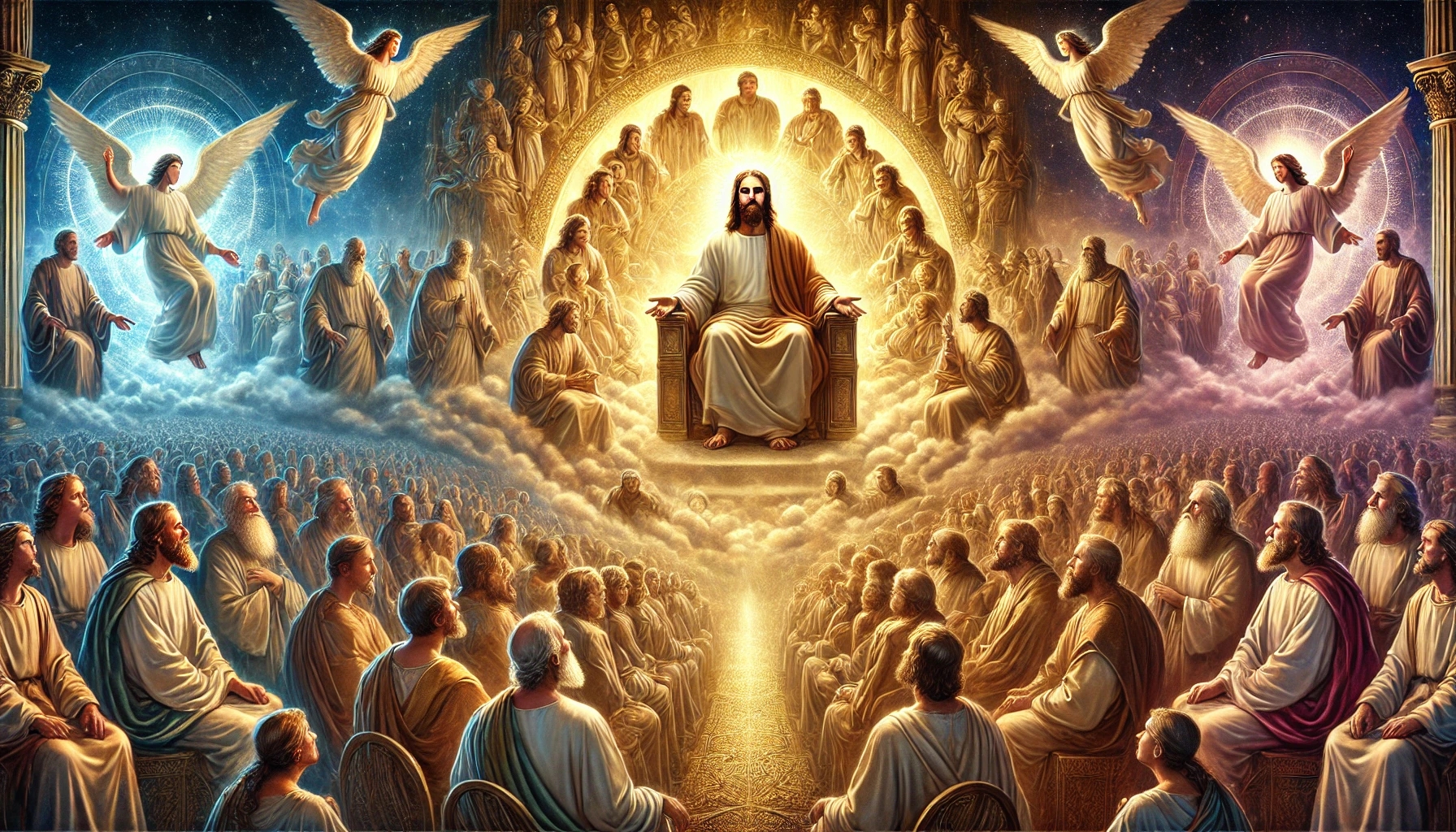
WEEKLY SPIRIT OF PROPHECY READING – Ellen White | The Desire of Ages
Chapter 70—In the Outer Court
This chapter is based on John 12:20-42.
Read online here
Commentary
Introduction
Chapter 70 deals with the Parable of the Great Judgment, in which Jesus describes how He will separate people into two groups at His second coming: the “sheep” on the right and the “goats” on the left. Each person’s eternal destiny is not judged based on the size or significance of their actions, but rather on the mercy they have shown toward the “least brothers”—the needy. It is about practical love that serves Christ Himself in the service of fellow human beings.
Commentary
This parable illustrates a central message of Jesus: that the true signs of faith lie in practical mercy and care for those in need. Jesus makes it clear that people will be judged by their actions toward the weakest and most needy. He identifies Himself with the hungry, thirsty, strangers, sick, and imprisoned, explaining that every act of kindness given to these individuals is considered a service to Himself.
It becomes evident that theological knowledge or status is not the primary focus, but rather the heart of service and humanity. Those who act spontaneously and lovingly will be rewarded, while those who live selfishly and ignore the plight of others will be condemned. The surprising reaction of the righteous, who did not even know that they were serving Jesus, demonstrates that genuine neighborly love comes from the heart and does not seek recognition.
The parable also serves as a challenge to those who live in prosperity. Jesus points out that wealth brings responsibility and that God expects the rich to care for the needy. Yet all too often, the wealthy remain selfish and isolate themselves from the suffering of the poor.
Summary
Chapter 70, based on Matthew 25:31-46, shows that people’s eternal fate depends on their practical love and mercy toward the needy. Jesus identifies Himself with the weakest and explains that every service to them is a service to Himself. This parable calls Christians to live out Christ’s love in their daily lives by helping the needy and demonstrating true discipleship through their mercy. Love for one’s neighbor is presented here as the most important sign of a living faith.
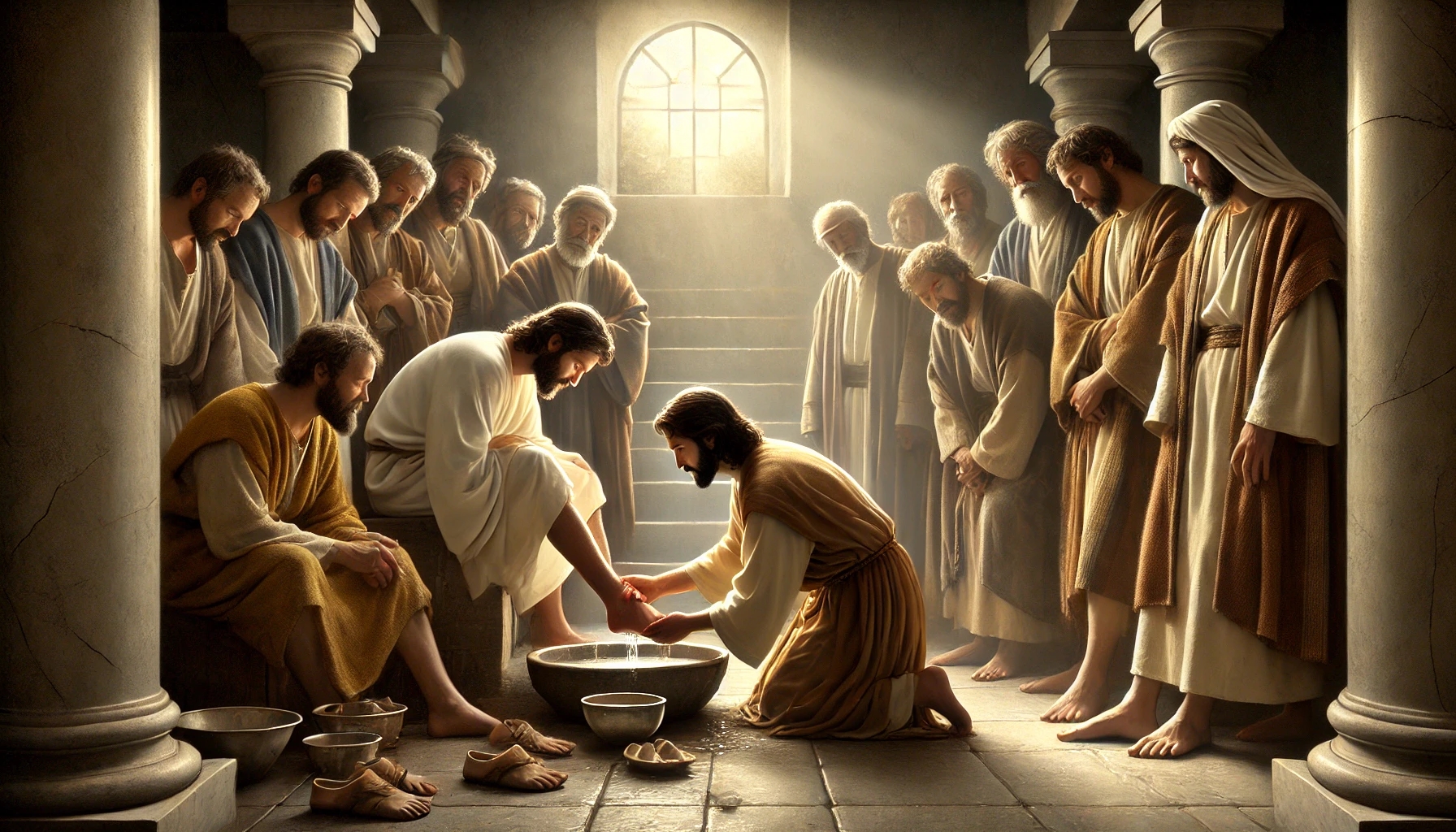
WEEKLY SPIRIT OF PROPHECY READING – Ellen White | The Desire of Ages
Chapter 71—A Servant of Servants
This chapter is based on Luke 22:7-18, 24; John 13:1-17.
Read online here
Commentary
Introduction
Chapter 71 describes the last evening of Jesus with His disciples before His death. During the final Passover meal, Jesus reveals to His disciples through a humble act what true greatness in serving others entails. The chapter focuses on the foot washing as an example of humility and selfless service that Jesus has left to His followers. The scene unfolds in an atmosphere of sorrow, as Jesus is aware of His impending sacrifice.
Commentary
The Last Supper and the Foot Washing (Chapter 71)
In the upper room of a house in Jerusalem, Jesus prepared to celebrate the Passover with His disciples. He knew that His time had come and that He would be the true sacrificial lamb. On this pivotal night, He wanted to teach His disciples what true greatness and discipleship mean. While the disciples continued to argue about their own positions and superiority, Jesus decided to provide them with a powerful example of humility and love. Instead of preaching about their faults, He washed their feet, a task typically reserved for a servant. This act demonstrated that true leadership and greatness lie not in being served but in serving others.
The foot washing became a symbol of the cleansing of the heart. Although the disciples were physically cleansed, they still needed spiritual purification from pride, jealousy, and discord. Peter, who was initially horrified when Jesus attempted to wash his feet, later understood the deeper meaning of this act: it was about the inner cleansing that only Jesus can provide.
Jesus used this moment to make it clear to the disciples that true discipleship involves serving others, just as He did. Through His service, He set an example for them to follow: “I have set you an example that you should do as I have done for you” (John 13:15). Jesus taught that humility, love, and selflessness are the keys to true fellowship and discipleship.
Summary
Chapter 71 deals with the last evening of Jesus with His disciples, during which He provides them with a lasting example of humility and service through the foot washing. Jesus demonstrates that true greatness does not lie in power or position but in selfless service to others. This lesson, conveyed through His act of foot washing, becomes a fundamental teaching of Christian life: “By love, serve one another.” Jesus’ example encourages us to open our hearts to His cleansing grace and to serve our fellow human beings with love and humility.
Source: https://fulfilleddesire.net/14-10-2024-john-chapter-8-believe-his-prophets/
Ordenación histórica de Ancianas en la Universidad Adventista del Plata, Argentina
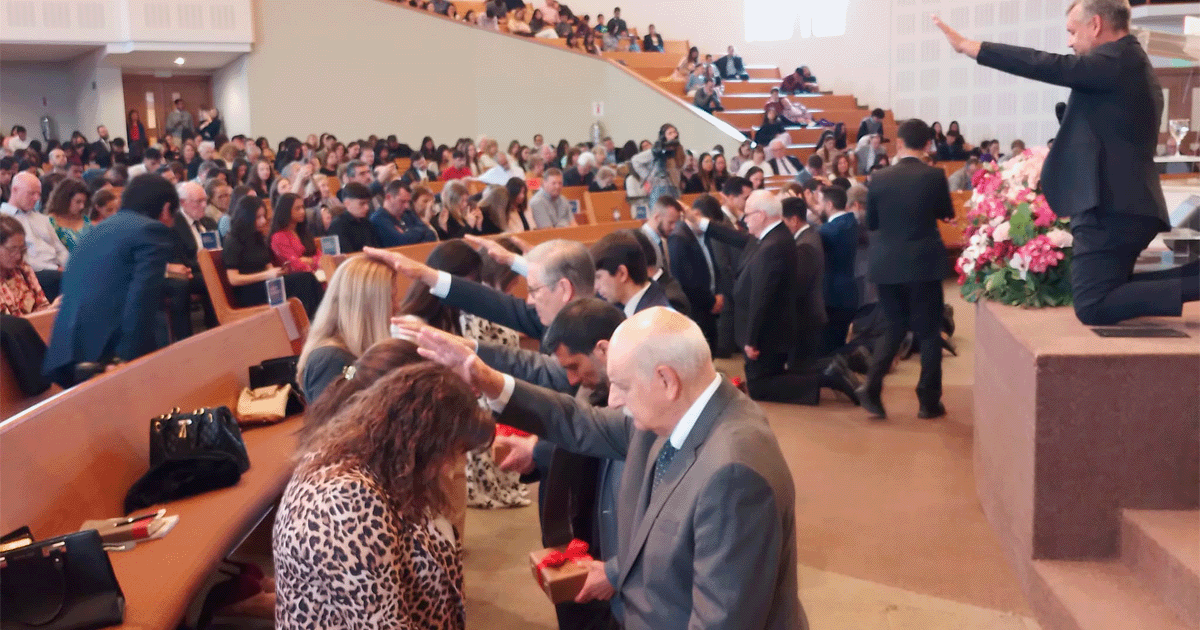
El sábado 12 de octubre de 2024, la Iglesia de la Universidad Adventista del Plata en Argentina, por primera vez en sus 126 años de fundación, ordenó como Ancianas: Gabriela Rossi de Garces, Mary Vejar de Goncalvez, Sonia Krumm de Nikolaus, Sol Araujo, Raquel Bouvet de Korniejczuk. La División Sudamericana, aprobó incorporar el voto de la Asociación […] Source: https://atoday.org/ordenacion-historica-de-ancianas-en-la-universidad-adventista-del-plata-argentina/
Monday: The Word Made Flesh
Daily Lesson for Monday 14th of October 2024
Read John 1:1-3,14. What are these verses telling us that Jesus, God Himself, did—and why is this truth the most important truth that we could ever know?
John starts his Gospel not with the name “Jesus” or His role as Messiah/Christ but with the term logos. Around the time John wrote, various philosophies used the term logos to refer to the rational structure of the universe, or to refer to the idea of logic and reason themselves.
Also, the teaching of the influential ancient philosopher Plato had divided reality into two realms. One is the heavenly and immutable realm, where absolute perfection exists. The other is the realm here—perishable, changing, a very imperfect representation of the perfect realm above, wherever it supposedly existed. (Plato never answered that question.) Some philosophies identified the logos as some abstract intermediary between the eternal forms and the perishable, earthly forms here.
Image © Darrel Tank at Goodsalt.com
John uses the term in a completely different manner. He maintains that the truth, the logos, is not some ethereal and abstract concept floating between heaven and earth. The logos is a person: Jesus Christ, who became flesh and dwelt among us (John 1:14).
For John, the logos is the Word of God. More important, God communicated; that is, He revealed Himself to humanity in the most radical way: God became one of us.
In the Gospel of John, the logos represents the eternal God, who enters time and space, who speaks, acts, and interrelates with humans on a personal level. The eternal God became a human being, one of us.
In John 1:14 the apostle indicates that the logos “became flesh and dwelt among us” (NKJV). The underlying Greek word, translated dwelt, means to pitch a tent. John is alluding to Exodus 25:8, where God told the Israelites to make a sanctuary, a tent structure, so that He could dwell in their midst. In the same way, in the Incarnation, Jesus, the divine Son of God, stepped into human flesh, veiling His glory so that people could come in contact with Him.
|
Dwell on the implications of what John has written here. God Himself, the Creator, became a human being, one of us, and lived here among us. (We haven’t even gotten to His dying for us yet!) What does this tell us about the reality of God’s love for humanity? Why should we draw so much comfort from this amazing truth? |
 (0)
(0)
