
5.2 Passing on God’s Word
Unwavering faith and sacrifice: The legacy of spreading God’s Word
Read 2 Corinthians 4:1–6 and 2:14. What do these verses tell us about the confidence Paul had despite the problems he encountered in preaching the Word of God?
Reading 2 Corinthians 4:1–6 and 2:14 reveals the impressive confidence and determination of the Apostle Paul regarding the spread of the Word of God, despite the numerous challenges and resistance he faced. Paul’s conviction that the light of the gospel would penetrate and triumph over darkness reflects his deep connection to his mission and his unwavering trust in God’s plan.
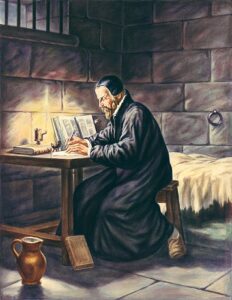
The story of William Tyndale is another powerful example of the courage and dedication required to spread the Word of God in a hostile and often antagonistic environment. Despite looming dangers and ultimately tragic consequences, Tyndale remained true to his vision, dedicating his life to the goal of making the Bible accessible to the English population. His unyielding faith and sacrifice not only paved the way for future English translations of the Bible but also influenced the spiritual heritage of countless people worldwide.
Tyndale’s story reminds us that the spread of the Word of God is often accompanied by personal sacrifices and great challenges. Yet, it also demonstrates that God’s Word has immeasurable power and is capable of changing hearts, shaping nations, and influencing eternity. Tyndale’s steadfastness and his faith in God’s sovereign plan serve as an inspiring example of how a single life surrendered to God’s hands can have a lasting impact.
In our modern times, where access to the Bible is widespread and easily available, we should not forget the sacrifices and courage of those who came before us. Their stories remind us to cherish the Holy Scripture, trust in it, and commit ourselves with determination and dedication to its dissemination, so that future generations may experience the transformative power of the Word of God.
Read Daniel 12:3 and Revelation 14:13. How do these texts powerfully apply to Tyndale’s life? Now, think about your life and your influence on others. What encouragement do these verses give you regarding your ability to influence others for eternity?
Daniel 12:3 states: “Those who are wise shall shine like the brightness of the firmament, and those who turn many to righteousness like the stars forever and ever.” Revelation 14:13 reads: “And I heard a voice from heaven saying, ‘Write this: Blessed are the dead who die in the Lord from now on.’ ‘Blessed indeed,’ says the Spirit, ‘that they may rest from their labors, for their deeds follow them!’”
These two verses reflect the eternal significance and lasting impact of those who lead others to truth and righteousness. William Tyndale’s life and his tireless efforts to spread the Word of God powerfully reflect these Scriptures. Although his life ended tragically, his work influenced generations and remains alive and relevant today.
As we reflect on our own lives and influence on others, these verses offer us deep encouragement and perspective. They remind us that our efforts to influence others for eternity are invaluable and can endure beyond our physical death. Every good deed, every word of encouragement, every lived truth can be like a shining star breaking through the darkness and showing others the way to righteousness and eternal life.
Our lives have potential and significance far beyond what we often imagine. Each of us has the opportunity to exert a lasting influence through our lives, decisions, and relationships. It is encouraging to know that our efforts to serve God and our fellow human beings are not in vain. Even if we may not immediately see the fruits of our labor or our influence on others, we can trust that “our deeds follow us,” as stated in Revelation.
In light of this, we should be encouraged to live our lives with purpose, passion, and dedication, knowing that God blesses and uses our efforts to build His kingdom on earth and to influence people for eternity.

The connection between our daily lives and faith is profound and meaningful, and it is reinforced by the insights from the mentioned Scriptures and the stories of Paul and Tyndale.
-
Confidence amidst challenges: In our daily lives, we often encounter challenges, uncertainties, and resistance. The confidence and determination of Paul and Tyndale teach us to hold onto God’s Word despite difficulties and to trust that its truth and love will ultimately triumph.
-
Sacrifice and dedication: Tyndale’s willingness to sacrifice his life for the spread of the Word of God challenges us to reconsider our own priorities and convictions. In our daily lives, we can make sacrifices to serve others, share God’s love, and live out the gospel in our families, communities, and workplaces.
-
Influencing others for eternity: Each of us has a unique opportunity to exert a lasting influence on others through our lives and relationships. By sharing the message of love, hope, and redemption and living out our faith by example, we can help people develop a deeper relationship with God and be influenced for eternity.
-
Encouragement through Scripture: The Scriptures from Daniel and Revelation remind us that our service and efforts are not in vain. They offer us encouragement and hope that our good deeds, faith, and dedication have eternal value and can have a lasting impact on those we touch.
In summary, the connection between our daily lives and faith shows us that every moment, every decision, and every relationship offers an opportunity to reflect God’s love and truth and to influence others for eternity. We are called to live our lives with purpose, passion, and dedication, knowing that God blesses and uses our efforts to build His kingdom on earth and to influence people for eternity.

Despite all obstacles and dangers, the message of the Word of God remains unshakable and triumphs through the faith and sacrifice of those who spread it.
Source: https://fulfilleddesire.net/lesson-5-faith-against-all-odds-5-2-passing-on-gods-word/

 (
(