The Papua New Guinea Union Mission (PNGUM) has launched a 100 days’ prayer journey ahead of the PNG for Christ evangelistic initiative. The call for prayer follows recent civil unrest and violence in…… Source: https://adventist.news/en/news/100-days-of-prayer-journey-launched-in-papua-new-guinea
Lesson 11.Longing for God in Zion | 11.4 Safety and Peace of Zion

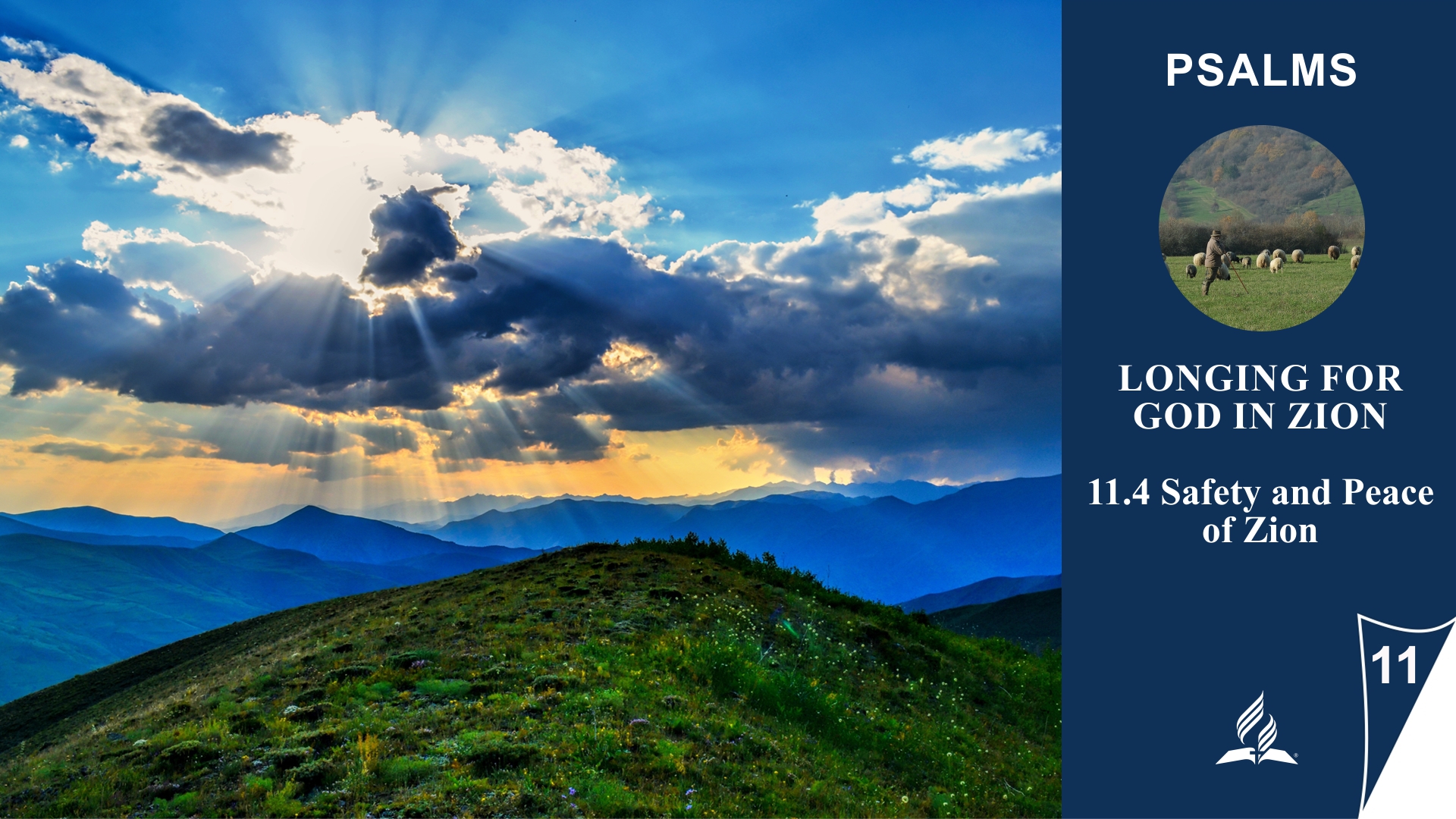
11.4 Safety and Peace of Zion
Peace and Security amid the Storms: God’s Assurance for Zion
Read Psalm 46:2–8. How is the world depicted poetically here?
The poetic depiction of the world in Psalm 46:2–8 portrays a world in turmoil, marked by natural disasters and the raging of warring nations. It is a world characterized by godlessness and rebellion, where people and nations go their own ways and pursue their own plans without regard for God’s wisdom and sovereignty.
Despite the turbulence and chaos in the world, however, God’s presence among His people is also emphasized. Zion, symbolizing God’s community, is depicted as a place of peace and security where God Himself dwells and holds His protective hand over His people. This notion conveys the hope that even amidst the storms of life and world problems, God’s presence and protection are an unwavering source of peace and security for the faithful.
The question of whether God will forever leave the world to its destructive decisions remains open in Psalm 46. Nevertheless, by emphasizing God’s presence and His power over nature and nations, confidence is expressed that ultimately, God will bring dominion and peace, even if the world temporarily descends into chaos.
In our daily lives and faith, we can draw assurance from this Psalm that despite the challenges and uncertainties we face, God is always with us, offering security and peace amidst the storm. Our calling is to place our trust in God and stand firm on His promise of lasting peace and eternal security granted to His people.
Read Psalm 46:7–12. What is God’s response to violence and destruction in the world?
Psalm 46:7–12 vividly depicts God’s response to violence and destruction in the world. God reacts to the attacks and turmoil in the world with His fierce wrath, so powerful that His word shakes the earth and melts the foundations of nations. This portrayal demonstrates God’s power and authority over all creation and emphasizes His ability to thwart the rule of the wicked and restore order.
However, God’s response to violence and destruction is not merely destruction but also renewal. His aim is to bring about peace and establish justice on earth. God extends His peace from Zion, the symbol of His presence and rule, to the ends of the earth. He ends wars and destroys the instruments of destruction with which the evil nations have oppressed the world.
The hope of Christians lies in the fulfillment of this promise of God at the return of Jesus Christ. On that day, God will establish His reign on earth and peace and justice will reign forever. This promise gives believers comfort and confidence, even amidst the turbulence and chaos of this world, knowing that God ultimately triumphs and all things will lead to good.

In a world actually in turmoil, we can learn to have peace and trust in God by following these steps:
-
Trust in God’s Sovereignty: We can learn that God is above all and His rule over the world is unwavering. By realizing that God is in control, we can find peace amidst uncertainties.
-
Prayer and Meditation: Through regular prayer and meditation on God’s Word, we can deepen our relationship with Him and experience His peace in our hearts. Dwelling in God’s presence allows us to cast our worries and fears upon Him and receive His promise of care and protection.
-
Fellowship with other believers: Fellowship with other believers can be a source of comfort and encouragement. By supporting and strengthening each other, we can learn to strengthen our faith and focus on God, even in difficult times.
-
Practicing gratitude: By focusing on the blessings we have already received from God and being grateful for His faithfulness and goodness, we can shift our focus away from the world’s problems and find peace in our hearts.
-
Acting in faith: Instead of being led by fear and worry, we can act in faith and do what we know God requires of us. This may mean serving others, standing up for justice, or proclaiming the gospel, while trusting that God will bless our efforts and fulfill His purpose.
-
Preserving hope: Despite the world’s turbulence, we can place our hope in God and trust that He will fulfill His promises. By clinging to God’s promises and remembering that His plans for us are good, we can maintain peace and confidence amidst the storms of life.
By practicing these steps and strengthening our faith in God, we can learn to have peace and trust in God in a world of turmoil.
Source: https://fulfilleddesire.net/lesson-11-longing-for-god-in-zion-11-4-safety-and-peace-of-zion/
11: Longing for God in Zion – It is Written – Discussions with the Author

Join It Is Written Sabbath School host Eric Flickinger and this quarter’s author, Dragoslava Santrac, as they provide additional insights into this week’s Sabbath School lesson, “The Lord Reigns.”
 (0)
(0)The post 11: Longing for God in Zion – It is Written – Discussions with the Author appeared first on Sabbath School Net.
Source: https://ssnet.org/blog/11-longing-for-god-in-zion-it-is-written-discussions-with-the-author/
“Make Adventism Great Again!” Mark Johnson announces his candidacy for GC President

by Mark B. Johnson | 12 March 2024 | “I am officially running for president of the General Conference of Seventh-day Adventists, and we are going to make our church great again. It can happen. Our church has tremendous potential. We have tremendous people. “And they’ll be proud, and they’ll love it…they’ll be doing so […] Source: https://atoday.org/make-adventism-great-again-mark-johnson-announces-his-candidacy-for-gc-president/
11: Longing for God in Zion – HopeSS Video Discussion
View an in-depth discussion of Longing for God in Zion in the Hope Sabbath School class led by Pastor Derek Morris.
Click on the image below to view the video:
With thanks to Hope Channel – Television that will change your life.
(0)The post 11: Longing for God in Zion – HopeSS Video Discussion appeared first on Sabbath School Net.
Source: https://ssnet.org/blog/11-longing-for-god-in-zion-hopess-video-discussion/

