• Home
  • Devotionals
  • BiblePhone
  • Blogs
  • TV
  • Prayer
    • Submit Prayer Request
    • Prayer Requests List
  • Contact us
  • Romanian

Intercer Adventist News

Closer To Heaven

  • About us
    • About Adventist Church
    • About Intercer Adventist News
    • About Intercer
    • About Lucian Web Service
    • Latest News
    • Romanian Church News
  • News and Feeds
    • Intercer Adventist News
    • 60 Second SlideShows
    • “Adventist Tweets” Paper
    • Adventists on Twitter
    • Adventists on Google Plus
    • Bible Resources
      • Adventist Universities Daily Bible
      • Answers For Me
        • Dear God
        • Healthy Living
        • Life Notes
        • Spiritual applications
        • Vegetarian recipes
      • Better Sermons
        • Spirit Renew Quotes
      • Daily Bible Promise
      • E-GraceNotes
        • Bible Says
        • City Lights
        • Family First
        • Staying Young
      • Story Harvest
        • Personal Stories
      • SSNet.org
    • Churches & Organizations
      • Adventist News Network
      • Adventist Review
      • Adventist World Radio
      • Avondale College
      • Babcock University Nigeria
      • BC Alive
      • British Union Conference
      • Canadian Adventist Messenger
      • Canadian Union
      • North American Division News
      • Outlook Magazine
      • PM Church – Pastor’s Blog
      • Potomac Conference
      • Record Magazine – Australia
      • Review and Herald
      • Trans-European Division
      • Washington Conference
    • Health
      • Dr.Gily.com
      • Vegetarian-Nutrition.info
    • Ministries
      • 7 Miracle (Youth)
      • A Sabbath Blog
      • Adventist Blogs
      • Adventist Today
      • ADvindicate
      • Creative Ministry
      • Grace Roots
      • Romanian Church News
      • Rose’s Devotional
      • UNashamed
    • Personal
      • Alexandra Yeboah
      • Iasmin Balaj
      • Jennifer LaMountain
      • McQue’s View
      • Refresh with Tia
      • Shawn Boonstra
  • Sermons & Video Clips
    • Churches
      • Downey Adventist Church
      • Fresno Central SDA Church
      • Hillsboro Adventist Church
      • Mississauga SDA Church
      • New Perceptions Television (PM Church)
      • Normandie Ave SDA Church
      • Remnant Adventist Church
    • Organizations
      • Adventist News Network (ANN)
      • ADRA Canada
      • Adventists About Life
      • Adventist Education
      • Adventist Mission
      • Amazing Facts
      • Adventist Church Connect
      • BC Adventist
      • Church Support Services
      • In Focus (South Pacific)
      • IIW Canada
      • NAD Adventist
      • NAD Church Resource Center (Vervent)
      • NARLA
      • Newbold
      • Review & Herald
      • SECMedia
      • Video Avventista (Italy)
    • Ministries
      • 3AngelsTube.com
      • Answered.TV
      • AudioVerse.org
      • AYO Connect
      • Christian Documentaries
      • GAiN #AdventistGeeks
      • GYC
      • Intercer Websites
      • Josue Sanchez
      • LightChannel
      • Pan de Vida
      • Revival and Reformation
      • Stories of Faith
      • SAU Journalism/Communication
      • Spirit Flash
      • The Preaching Place (UK)
      • Toronto East Youth Nation
    • Personal
      • Esther-Marie Hartwell
      • McQuesView
      • Pastor Manny Cruz
    • Sabbath School
      • Ecole du Sabbat Adventiste
      • Sabbath School Audio Podast
      • Sabbath School daily
  • Resources
    • Bible and Bible Studies
    • Health
    • Music
  • All articles
  • G+ News & Marketplace
    • G+ News & Marketplace Group
    • G+ Page
You are here: Home / Archives for News and Feeds / Canadian Adventist Messenger

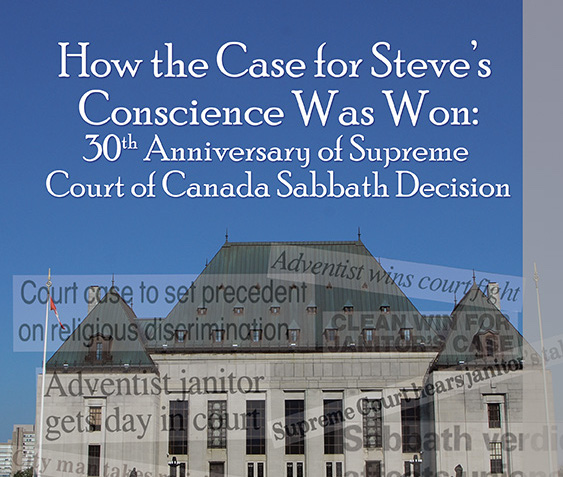
How the Case for Steve’s Conscience Was Won:

February 2, 2024 By admin

30th Anniversary of Supreme Court of Canada Sabbath Decision

Thirty years ago, the Supreme Court of Canada (SCC) ruled in favour of Larry Steve Renaud’s conscientious stand not to work on Sabbath.[1] The court held both the employer and labour union had to negotiate an accommodation, while acknowledging the employee’s duty of reasonableness in seeking an accommodation. It was a ground-breaking case.

“I learned through this experience that it isn’t easy to stand up for your beliefs,” Steve recalls, “but you need to be able to follow your conscience because that is ultimately where you find peace. Knowing you are obeying God’s law, though maybe difficult, is comforting.”

Originally from Haiti, Steve immigrated to Canada in 1972. In 1980, School District #23 in Kelowna, B.C., hired him as a custodian. Convicted about Sabbath in 1985, a crisis of conscience arose. His beliefs meant he could no longer work Friday evenings after sunset.

Approaching his employer for Sabbaths off, he was told to use up his holiday time. This temporary solution worked for only a few months. The employer suggested contacting the union as any accommodation required changing the collective agreement. The union was displeased he had spoken to the school district first. The union also reasoned changing the agreement for Steve would open the door to similar requests from others.

“I had a difficult time with this,” remembers Steve, “because [the union] made allowances for a co-worker to play music with his band in a bar on multiple Friday nights and that was OK.” So why not allow him to have Sabbath off? He was willing to work Saturday evenings and Sundays to ensure the school was clean for Monday classes, but his suggestion was rejected, in part because the collective agreement required overtime pay for evening and Sunday shifts. Steve was willing to work for regular pay but this accommodation along with other accommodations were rejected by the union that did not want to change its collective agreement. The union threatened a grievance if the school district accommodated him.

With a young family to care for, it was difficult to lose his job. Friends chastised him over his choice. His first duty, they exhorted, was to his family, and he must remain at work until God led him elsewhere. Steve chose to lose his job and honour God.

The intake person at the unemployment office informed him that his dismissal from the school district was wrong. As Steve explains, “One thing led to another as this situation took on a life of its own, as I didn’t plan for this to happen. I was directed to file a complaint with the human rights authorities, and that is where the legal challenge began.”

During the various stages of the legal proceedings, Steve continued to trust God. He admits, “The experience was a bit like a roller coaster ride—ups when the ruling was in my favour and downs when a higher court ruled against me. The case became a part of everyday life, but it didn’t consume me, because I trusted God and knew that He was in control. I was able to enjoy life. My business ventures were pleasurable for me because my little boy accompanied me with my yard maintenance and was often with me selling ice cream. I had the support of my whole family delivering flyers.” No doubt, the ice cream business was a big hit with his family!

Steve retained a legal aid lawyer. The B.C. Council of Human Rights ruled in his favour, but on appeal, the B.C. Supreme Court (BCSC) ruled against him. At that point the legal aid lawyer said he did not have the expertise or financial support to continue the case.

That was when lawyer Karen Scott was retained. Steve had been impressed when he heard Karen speak at Camp Hope about a religious liberty case she had worked on, so he contacted her for assistance. She was in private, solo practice and only six months in after being called to the bar. In other words, she was at the very beginning of her legal career!

She immediately recognized that this case would eventually go to the country’s highest court after the B.C. Court of Appeal (BCCA) hearing. Karen explains, “The SCC had already ruled employers have a duty to accommodate employees’ needs but what is an employer’s duty to accommodate when there’s a collective agreement in place? This was the first time in Canadian legal history this question was before the courts.”

She suggested Steve and his wife, Siegrid, get a more experienced lawyer. Steve recalls, “When I first asked her to take on my case, she felt that she didn’t have the needed experience to properly represent me. My answer to her was that I would rather have a lawyer with faith and trust in God and little experience than a lawyer with much experience but no faith and trust in God.” He remembers she “worked hard and prayed harder, and she was a solid support all the way through. She shared in my disappointments, hopes, and ultimate victory as a friend and not just a lawyer representing my case.”

Karnik Doukmetzian, the Public Affairs and Religious Liberty director of the Seventh-day Adventist Church in Canada (SDACC), agrees: “Karen single-handedly carried the load of this case on Steve’s behalf. A valiant battle to correct a wrong.” Karnik’s office provided Karen with the financial resources she needed to get the job done.

The seven-year legal journey had its difficult moments. Steve struggled with misrepresentations made in court by the employer and union, and his “eyes were opened” when reporters misquoted him. “The first time that happened was such a shock!” he recalls. Then there were natural letdowns when he lost, followed by jubilation when he won. Looking back, he saw it as a net gain for God’s kingdom because he was able to witness to the importance of keeping Sabbath.

When strangers on the street would sometimes recognize him from newspaper articles and call him “Larry,” as the media referred to him, his family and friends teased him endlessly because they all knew him as Steve, which is his middle name and the one he goes by.

At every level he was present to hear the arguments live. From the questions the judges asked, he gained clues as to what the outcome would be. At the BCSC, he noted the derision toward the decision of the B.C. Council of Human Rights. Again at the BCCA the three judges were very sympathetic toward the employer and union. At the SCC, he observed a different demeanour. The judges asked direct and intense questions of the lawyers for the school district and union. “This time they were on the defensive,” says Steve, “and it was very obvious that the judges were leaning in our favour. That was such a wonderful feeling.”

While Steve trusted God, so did Karen. She was acutely aware of the magnitude of the case, recalling “that I had not just the fate of Steve’s future in my hands but the fate of every Sabbathkeeper in the nation. That’s when I prayed even more for God’s guidance and direction as well as asking that He prepare the hearts of the judges to decide in Steve’s favour.”

The night before appearing before the SCC, Karen prayed for wisdom. “I didn’t just want to read my submitted written argument,” she recalls, “but nothing seemed to work. So once again I cried out to God about how important this case was and how I was unable to do anything myself. As I had previously advised clients seeking exemption from union membership, I now claimed His promise in Luke 21:14–15 for the words needed. I am still amazed how God answered that prayer. Suddenly the words just flowed onto my paper. After weeks of struggle, I finally had the oral argument to present to the court.”

Because of the importance of the case, three entities—the Ontario Human Rights Commission, Disabled People for Employment Equality and Persons United for Self-Help in Ontario, as well as the SDACC—were granted permission by the SCC to argue before the court.

Karnik, arguing on behalf of the SDACC, remembers the day of the hearing: “We were all very nervous to be before the highest court in the land, not only to support Steve but the church and our beliefs. It was a privilege for us, as Adventist lawyers, to be before the court.” The victory now stands as the foundation not only for employment accommodation to all religions but also for the rights of accommodation for disabled persons and others.

The Renaud case continues aiding not just those needing Sabbath accommodation but those needing accommodation for other needs such as disability. Unions nationwide now support the case. Some scholars believe the Renaud decision is one reason Canada leads the world in providing positive work environments. God continues, 30 years later, blessing many as a result of Steve’s commitment to honour and obey Him.

Barry W. Bussey is the President and CEO of First Freedoms Foundation (www.firstfreedoms.ca).


[1] Central Okanagan School District No. 23 v. Renaud, 1992 CanLII 81 (SCC), [1992] 2 SCR 970, https://canlii.ca/t/1fs7w

Source: https://adventistmessenger.ca/news/how-the-case-for-steves-conscience-was-won
Share this:

  • Share on Facebook (Opens in new window) Facebook
  • Share on LinkedIn (Opens in new window) LinkedIn
  • Share on X (Opens in new window) X
  • Share on Pinterest (Opens in new window) Pinterest

Like this:

Like Loading...

Filed Under: Adventist Sermons & Video Clips, Canadian Adventist Messenger, News and Feeds

For the Sake of God’s Mission

January 18, 2024 By admin

For the Sake of God’s Mission

Despite unfavourable circumstances, a 28-year-old young man was adamant about starting to publish a little paper. Unable to walk properly because of a foot injury, he trudged 13 kilometres back and forth between Rocky Hill and Middletown, Conn., in search of someone who’d be willing to produce an eight-page publication and get paid once the money was raised.

How would that become a reality? And why would a gifted speaker who experienced toil on the farm want to use the printing press in the first place? Why go through such challenges? Where did such determination come from? The short answer is God’s mission!

This young man embraced his responsibility as a follower of Christ, the potential of mass communication, and that “the hope of success was in God.”[1] The outcome of such determination was that in July 1849, that young man—James White—held 1,000 copies of the first edition of The Present Truth.

What propelled James White on his bold endeavour has prompted many followers of Jesus to step out in faith to explore current means of mass communication to introduce people to Jesus. In this article, we will focus on some champions in Canada who embodied the words of Ellen White: “God will have men who will venture anything and everything to save souls.”[2]

After going on air for the first time in the late fall of 1929, Pastor Herald N. Williams reported with great excitement, “125 people called me on the telephone during and right after the broadcast.”[3] In the early days of radio, a few visionary workers in Newfoundland recognized its immense potential for spreading the gospel. Through a clear divine intervention, the drawings and the scarce parts of a small transmitter made their way to the living room of Pastor Williams in St. Johns, N.L. Fortunately, the Minister of Import intervened personally and ensured that no duty was charged on the transmitter components coming from the United States into Canada, which made the Bible Study League (BSL) a reality. Later it became the Voice of Adventist Radio (VOAR), which still operates in Canada today and is now known as Lighthouse FM.

            Pastor Williams and many others, such as H.M.S. Richards, who founded the Voice of Prophecy in 1929, as well, explored the medium of radio to reach as many people as possible for Christ. The reality is that going after the lost sheep is not just a church activity; it has deep roots in God Himself and His mission. Christopher J. H. Wright expands this truth in the following way:

It is not so much the case that God has a mission for His church in the world, as that God has a church for His mission in the world. Mission was not made for the church; the church was made for mission—God’s mission.[4]

It is a paradigm shift to realize that the mission does not originate with the church but emerges from the very nature of God. In other words, mission exists because God is a missionary (John 20:21, 22). God the Father sent His Son and the Spirit into the world, and the Father, Son, and Spirit sent the church into the world for the sake of God’s mission, “to seek and to save that which was lost” (Luke 19:10), reconciling human beings to Him (2 Cor. 5:18–20).

Therefore, joining God in His mission is the ultimate goal of the church, and whatever the church may do, it must be for the sake of God’s mission. Corroborating with this heavenly purpose for the body of Christ, Ellen White wrote: “The church is God’s appointed agency for the salvation of men. It was organized for service, and its mission is to carry the gospel to the world.”[5]

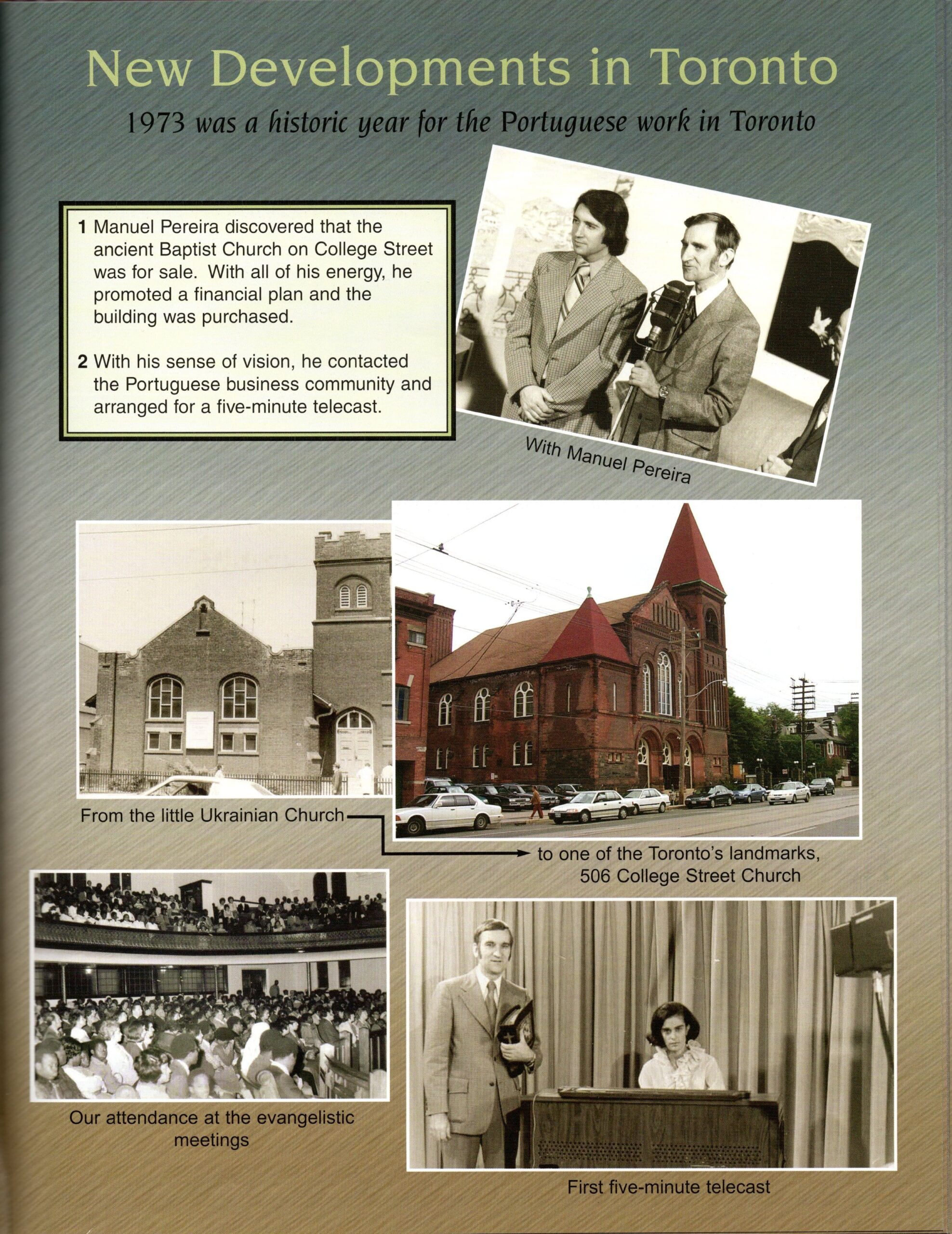
In the early ’70s, Pastor Henry Feyerabend’s radio show, A Voz da Profecia (The Voice of Prophecy), successfully introduced Jesus to the growing Portuguese community in Toronto. Nevertheless, as he visited one of his listeners, a divine insight emerged into how to reach more people for Christ: through a telecast. The Dream-Giver, the owner of the mission, planted a seed in His faithful servant’s heart, and this servant would not let it go until it came to fruition.

Through countless miracles, in fall 1973, the first five-minute episode aired, which led to 29 calls requesting a Bible. “Never again in the time I worked for the Portuguese community in Toronto,” wrote Feyerabend, “was there a lack of interest asking for studies. Never again did we have any trouble attracting new people to evangelistic meetings.”[6] Later on, Feyerabend launched the Destiny telecast in English that eventually merged into It Is Written Canada, which is still a blessing today to the Great White North.

For the sake of God’s mission, Feyerabend made use of and explored another medium for mass communication: television. In a sense, God’s mission has embraced and taken ownership of communication and its wide variety of media as one of the main instruments to accomplish its purpose. Since Jesus commissioned His followers to carry His mission to the four corners of the earth (Matt. 28:18–20; Mark 16:14–18; Luke 24:46–49; John 20:30, 31; Acts 1:8), Christianity has been primarily a religion of communication that places a strong emphasis on (1) the biblical God, who is a communicator by nature and has made use of different mediums (Heb. 1:1–3); (2) the Incarnation and Sacrifice of the Word (John 1:1–14); and (3) the church’s mandate for proclaiming the good news of God’s kingdom (Matt. 28:18–20; 2 Tim. 4:1–5).

Therefore, the followers of Jesus ought to use communication and its different expressions and media as they join God in His mission. The church is responsible for communicating for a sublime reason and holy purpose. The Remnant should adopt any kind of contemporary or vintage media to collaborate with God’s mission moving forward!

What about the Christian’s personal testimony? Isn’t that enough to communicate the message of the gospel to others? The concept of preaching through actions rather than words is becoming increasingly popular. I do believe that a life’s testimony can have a crucial influence on others. However, it is important to remember that our testimony alone is not enough to communicate the gospel message. The good news is not transmitted by osmosis, where people learn about Jesus as the answer to their deepest needs only because they interact with Christians and witness their lives. Christians should use their testimony to support and enhance their proclamation.

The apostle Paul wrote, “And how shall they believe in Him of whom they have not heard? And how shall they hear without a preacher?And how shall they preach unless they are sent?” (Rom. 10:14, 15, NKJV).

In 1995, when international evangelist Pastor Mark Finley walked onto the stage in Chattanooga, Tenn., the way the Seventh-day Adventist Church accomplished God’s mission acquired a new potency. With 676 churches connected through satellite broadcast, the first NET satellite uplink opened an era of satellite evangelism, which led in 2003 to the foundation of the official global television network of the Seventh-day Adventist Church, the Hope Channel.

Passionate about God’s mission, Pastor Brad and Kandus Thorp oversaw the NET series and nurtured the birth and development of Hope Channel. In personal communication, they shared that the late Pastor Dan Jackson used to tell a story about an encounter he had while shaking hands at the door of one of our churches in Canada one Sabbath morning. Apparently, a woman paused to confront Jackson to express her disapproval of some message on one of our media broadcasts. Just then another, older woman behind them overheard the comment and interrupted the first woman by saying, “But it’s not for YOU! The programs are for non-believers!”

The Thorps categorically affirmed, “Whoever she was, that second church member had the correct perspective on our mission. Our mission is to reach every person in Canada with the three angels’ messages. We must do our part to invite everyone to prepare for Jesus’ second coming!”[7] And for the sake of God’s mission, the Seventh-day Adventist Church has a 24/7 international television network.

Propelled by the divine mission, the Seventh-day Adventist Church in Canada is launching a new phase of Hope Channel Canada on March 1, 2024, to meet Canadians where they are and proclaim with Canadian content that with Jesus, There is More to Life!

Throughout history, the followers of Jesus have used various means of communication to spread the good news. The church initially relied on oral communication, which later integrated with written communication on papyrus and parchment. Music was also incorporated as a means of communication, followed by visual media such as paintings and sculptures. The advent of printing in the mid-15th century opened doors for publishing books, pamphlets, and papers.

The early 19th century saw the rise of new technologies such as photography (1839), the telegraph (1844), the telephone (1876), and radio (1896), which assisted in mass visual reproduction. Electricity enabled moving pictures when it was linked with photography (1888), which opened the doors to cinema and television. The electronic technologies of the 1980s and 1990s laid the foundation for today’s digital era, challenging the concept of boundaries, speed, and distance and providing the context for globalization. For the sake of God’s mission, Christians have used these and other communication venues. The reality is that the church has remained vibrant by adapting the everlasting gospel message to fit media, the conduit of the day.

Audacity, determination, and vision of using mass communication and its wide variety of media for the sake of God’s mission has been evident throughout the history of the Seventh-day Adventist Church, particularly in Canada in the accounts of Harold Nathan Williams, Henry Feyerabend, and Brad and Kandus Thorp.

Accordingly, upon the shoulders of these faithful servants, and many others, we should venture into all venues of communication, and in particular, digital communication for the sake of God’s mission. In my humble opinion, the church has not explored digital communication platforms to their full capacity, especially the internet and social media. Additionally, new ways of mass communication are on the rise, and I do believe that “for such as a time as this,” when humanity finds itself on the edges of eternity, God would allow, or even inspire, new technologies with fast and wide communication reach to become a reality to finally accomplish His mission.

In this upcoming year, renew your resolution of communicating and supporting the mass media initiatives of presenting Jesus Christ to Canada for the sake of God’s mission.


[1] Arthur L. White, Ellen G. White: The Early Years, 1827–1862, Vol. 1 (Review and Herald Publishing Association, 1985), 164.

[2] Ellen G. White, Life Sketches of Ellen G. White (Pacific Press Publishing Association, 1915), 213.

[3] https://lighthousefm.org/history/

[4] Christopher J. H. Wright, The Mission of God: Unlocking the Bible’s Grand Narrative (InterVarsity Press, 2006), 62.

[5] Ellen G. White, The Acts of the Apostles (Pacific Press Publishing Association, 1911), 9.

[6] Henry Feyerabend, Born to Preach (Pacific Press Publishing Association, 2005), 140.

[7] Email communication, Nov. 1, 2023.

Source: https://adventistmessenger.ca/features/forthesakeofgodsmission

Share this:

  • Share on Facebook (Opens in new window) Facebook
  • Share on LinkedIn (Opens in new window) LinkedIn
  • Share on X (Opens in new window) X
  • Share on Pinterest (Opens in new window) Pinterest

Like this:

Like Loading...

Filed Under: Adventist Sermons & Video Clips, Canadian Adventist Messenger

The Media and the Message

January 8, 2024 By admin

Experiencing the Immersive Nature of God’s Mission.

For many people, the message and the medium used for its communication are two separate phenomena. One might even say that the message is what really matters, while the medium is only the method for delivery or the means of expression.

But that leads to several questions:  Is it possible to isolate the message from its medium? Doesn’t a message require a certain medium to travel and be well received by a specific group of people? Doesn’t the medium influence the effective reception of the message? Doesn’t the message need to be adapted for the medium that will carry it?

It appears to me that this is how God has chosen to communicate His message of salvation to human beings throughout the centuries: a suitable medium of communication for each specific time and circumstance, meeting the unique needs of the intended audience. The essence of the message has never changed, but the means of communication has.

“Long ago, at many times and in many ways, God spoke to our fathers by the prophets, but in these last days he has spoken to us by his Son” (Heb. 1:1, 2, ESV). God has spoken to us in different ways and times and ultimately by Jesus.

In 2003, Hope Channel began broadcasting in North America. Members and leaders of the Seventh-day Adventist Church across Canada played an instrumental role in the creation of Hope Channel. For more than 21 years, Pastor Brad and Kandus Thorp steered satellite evangelism in North America and oversaw the birth and development of Hope Channel. Less than 10 years later, Stan Jensen, then communication director for the British Columbia Conference—with the help of Pastor Charles Ed II Aguilar of Terrace Seventh-day Adventist Church at the time—worked diligently to get approval from the Canadian Radio-television and Telecommunications Commission (CRTC) for Hope Channel to broadcast in Canada. CRTC did approve the channel, and since 2012, it has been airing in Canada. It was a miracle, and Hope Channel became available in Canada.

Last year, the Seventh-day Adventist Church in Canada (SDACC) deemed it a priority to establish Hope Channel Canada, with a distinctive visual identity and a growing number of programs produced by Canadians, for Canadians. With the support of Hope Channel International, Hope Channel Canada became the newest member of the Seventh-day Adventist Church’s global TV network. Additionally, CRTC approved Hope Channel Canada as a TV station distinct from Hope Channel International, with full control over its programming and schedule.

Some may perceive media work as fancy or glamourous. Not so with Hope Channel Canada. The underlying motive and driving force propelling this ministry goes beyond media production itself. There must be something more. What motivates us is the desire to take part in God’s mission; the commitment to see accomplished His mission of seeking and saving that which was lost.

And what does God’s mission look like? Early in the beginning of human history on this planet, there was a day when God’s voice was heard, speaking to Adam, saying, “Where are you?” (Gen. 3:9, ESV). These words, emblematic of the plan of redemption, speak to us of God’s determined, unashamed, tireless endeavour to reconcile humanity to Himself.

That was God’s mission even before sin made its way into this formerly perfect planet. The Bible says of Jesus in 1 Peter 1:20, “He indeed was foreordained before the foundation of the world, but was manifest in these last times for you” (NKJV). It means that even though Jesus was only born of Mary in these last times, it had been agreed upon before the foundation of the world that He would become the sacrificial Lamb.

As I think of how the Bible describes God executing His mission, I can observe a pattern—a threefold pattern, indeed. Let me highlight the three aspects of that pattern, because they will nurture the way Hope Channel Canada operates, so it remains engaged and faithful to God’s intentionality in mission.

Firstly, God is always seeking out the human being, seeking out the other. He left His throne and came here in search of us. In Genesis 3, the sound of His coming was heard. Adam heard the poetic sound of His voice, “Where are you?” expressing the yearning to be with His friend. In Luke 19:10, the Bible says that “the Son of Man has come to seek and to save that which was lost” (NKJV).

In line with that pattern, instead of waiting for members of our community to come to us, Hope Channel Canada will go out to them. We will strive to be the preferred television and streaming experience for viewers from every cross-section of society looking for answers to questions about faith, healthy living, prophecy, Bible study, relationships, and community. In line with biblical values, we will be the media that brings viewers closer to God and helps them to obtain a better understanding of the Bible to find freedom, healing, and hope in Jesus through the three angels’ messages.

The second aspect of God’s mission that consistently strikes me is how God, in seeking out the other, goes as far as immersing Himself in the other’s reality. In John 1:14, we read: “And the Word became flesh and dwelt among us, and we beheld His glory, the glory as of the only begotten of the Father, full of grace and truth” (NKJV).

There is a tendency to approach truth seekers with a one-size-fits-all solution. Trying to speak to someone’s needs before immersing oneself in their universe will always sound condescending, and condescension does not reflect the beauty of Christ’s character.

William Shakespeare’s character Romeo says, “He jests at scars that never felt a wound.”[1] This line has to do with the problem of judging another person’s experience without empathy or first-hand understanding of what they’re going through. Why do I bring this up? Because until we carefully listen to the other person’s struggles; until we learn to make no assumptions and let them express their deepest needs; until we show them that they are of great worth in God’s sight; until we allow ourselves to be steeped into their reality; until we suffer, laugh, and cry along with them; until we are ready to even lay down our lives for them, we have no right to claim any association with Christ.

Ellen White warned us: “It is through the cross alone that we can estimate the worth of the human soul. … The followers of Christ should value souls as He valued them. … They should labor to save the purchase of His blood, at any sacrifice.”[2]

Following God’s pattern of entering the other’s reality, Hope Channel Canada is committed to meeting Canadians where they are, speaking to their real needs, sharing messages of hope and wholeness, addressing their current concerns. Moreover, Hope Channel Canada pledges to proclaiming truth—but to do it with grace, just as Jesus was full of both grace and truth (John 1:14).

The final point I want to emphasize is that God’s mission is such that He invites the other into His life. When two of John’s disciples started following Jesus and asked Him where He was staying, He said, “Come, and you will see.” And they followed Him to the place where He was staying and spent that day with Him.

Jesus shared meals and spent time with people of every background. Admittedly, because of that His adversaries called Him a glutton, a drunkard, and a friend of sinners. But the people loved Him. I’m sure many of them witnessed the miracles He performed, heard Him speaking to the multitudes, and saw His righteous indignation overturning tables at the temple and driving out those who bought and sold there. He was fully God and fully man. In the end, He ate with them and welcomed them into His life—everlasting life.

Considering those three aspects of God’s mission, as Hope Channel Canada launches, our commitment must be to see every individual as Jesus sees them. To seek out for them, even when it requires sacrifice; to be willing to enter their reality, feel their pain, and discover their needs; and, finally, to let them be a part of our lives. If people around you like to spend time with you, as a Christian, they will also like to spend time with Jesus, the Christ.

In the perfection of Eden, before sin entered the world, God would come down from heaven to earth to visit with Adam and Eve every day, and that did not change after the entrance of sin. But God took it to the next level when He came down from heaven to become flesh here on earth. Not only did He seek us, He entered our world and experienced our reality. He then invited us, “Come unto Me” (Matt. 11:28, KJV), an invitation that extends all the way to His original home: heaven. For He said, “In My Father’s house are many mansions. … I go to prepare a place for you” (John 14:2, NKJV). Eventually, Jesus will return from heaven to the earth renewed. But this time, the redeemed will come with Him, and His throne will be installed here. He has promised that we will be with Him forever, so “that where I am, there you may be also” (John 14:3, NKJV).

In Jesus’ incarnation we saw that the message and the media are interconnected, because Jesus was the Word, and the Word became flesh. Canadian philosopher and communication theorist Marshall McLuhan coined the expression “The medium is the message.” For McLuhan, it was not only that message and media are interdependent, but each different medium makes an impact on how the receiver relates to it. By God’s grace, Hope Channel Canada will be a comprehensive media undertaking, available on cable, on the web, through the mobile app and the Roku app, speaking to different demographics on different media.

If you would like to learn about other ways you can support this ministry, please contact us at info@nullhopetv.ca.


[1] Romeo and Juliet, 2.2.1.

[2] Testimonies for the Church, Vol. 2 (Mountain View, CA: Pacific Press Publishing Association, 1868), 634, 635, 664.


Source: https://adventistmessenger.ca/features/the-media-and-the-message

Share this:

  • Share on Facebook (Opens in new window) Facebook
  • Share on LinkedIn (Opens in new window) LinkedIn
  • Share on X (Opens in new window) X
  • Share on Pinterest (Opens in new window) Pinterest

Like this:

Like Loading...

Filed Under: Adventist Sermons & Video Clips, Canadian Adventist Messenger

Article: The Burman Effect

December 15, 2022 By admin

Here I Am, Lord. Send Me.

“Surely, if God could keep refugees’ clothes and shoes from wearing out in the desert (Deut. 29:5), He could also supply today’s needs.”

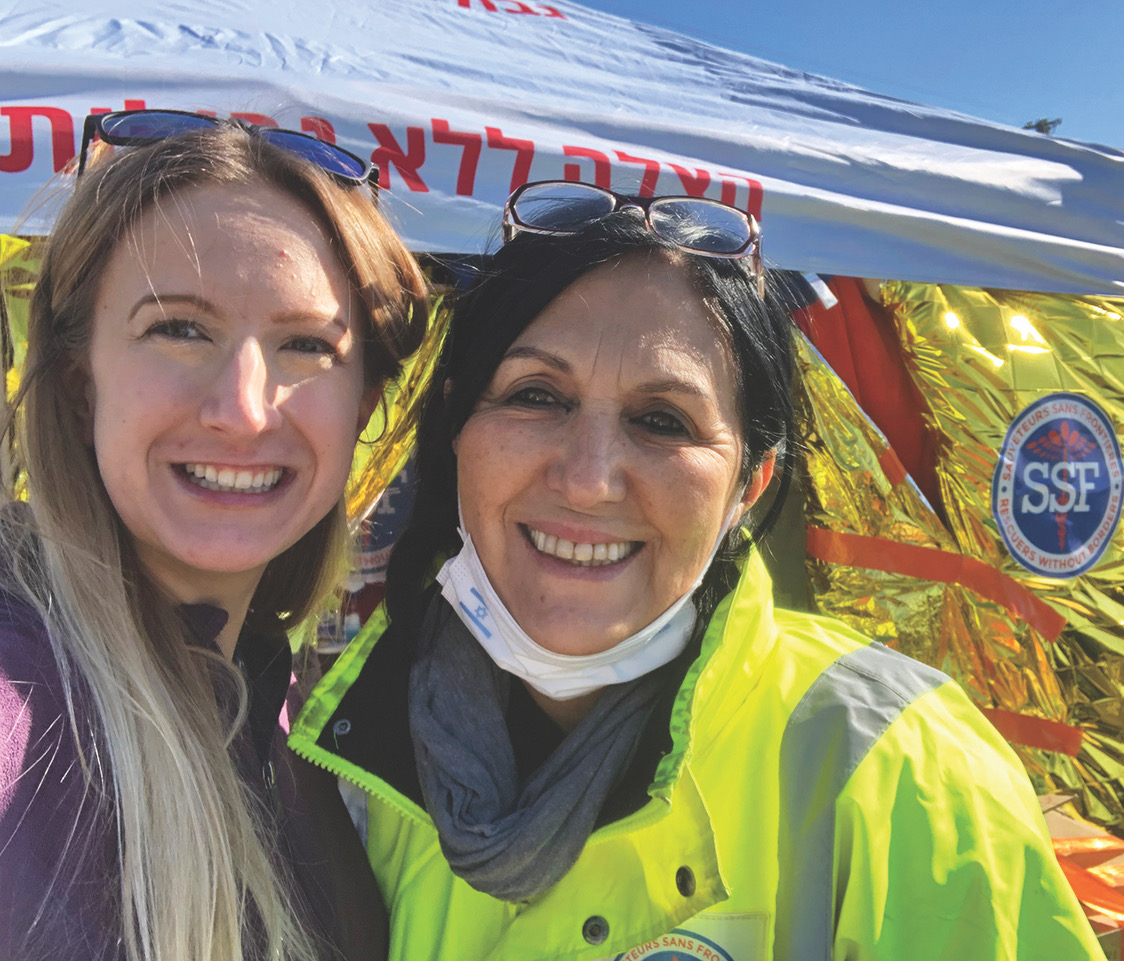
International media reports of people fleeing their homes even before Russia engaged in full-scale war galvanized Heidi I Baumbach, a farmer/musician from central Alberta, to action. 

On Feb. 24, 2022, when the first bombs fell, she was already mid-flight to Warsaw to help refugees. 

Heidi was familiar with Eastern European languages and had studied in Poland. She says, “Laws and regulations that would keep Canadian civilians from attempting any such thing at home are generally less stringent in Eastern Europe. I saw they needed help, so I went.’ 

On her own in Poland, a civilian with no western relief agency to back her, Heidi looked for a place to stay and a vehicle to rent. Miraculously, in the midst of the chaos, she found both. Then she drove the one-hour trip to the border to observe the needs.

One of Heidi’s first tasks was to drive to Ukrainian orphanages and bring children safely back. (Human trafficking was already a huge concern. She was told that one orphan could mean mortgage payments for a year!) One day, she expected five orphans waiting for her; instead, there were 14 women and children. She took them all to her apartment, a safe space to decompress and decide on next moves.

Then she turned her attention to money. Fortunately, Heidi’s work had caught the attention of a Canadian news crew. They shared her protegees’ stories, and funds started arriving. Heidi also posted on social media. She set up a GiveSendGo account. And she prayed. Surely, if God could keep refugees clothes and shoes from wearing out in the desert (Deut. 29:5), He could also supply today’s needs. And He did. People responded with open hearts and hands.

The Premysl refugee camp, a repurposed old shopping centre at the border, was overwhelmed. Supplies were being delivered, but they weren’t always what was needed. Heidi recalls, “I went into a bathroom crowded shoulder-to-shoulder like a nightclub. Outside, the line was over an hour long. Two unisex stalls for the entire refugee camp! And only one out of four sinks worked.” The bathroom became one of Heidi’s side projects. She checked it daily. 

The needs were obvious, and Heidi helped fill the gaps. When she distributed toiletries, the response was overwhelming. When she saw the plight of seniors standing in 500-metre queues for bus rides to refugee camps, she bought wheelchairs, canes, and walkers. Her apartment became a refuge for women and children. 

Although Heidi is now back in Canada, her mission isn’t complete. One of “her” refugee families chose to settle in central Alberta. Others have followed. As she continues to raise funds to assist them with transitioning, she writes, “I could have never ever anticipated our communities to be so incredibly open-hearted, and yet I don’t think their generosity surprises me for a second. We are surrounded in this country by such good people, and I am so excited for us to share this goodness with these new friends and neighbours.”


Burman Alumni – Impacting Their Communities

Source: https://adventistmessenger.ca/features/2824

Share this:

  • Share on Facebook (Opens in new window) Facebook
  • Share on LinkedIn (Opens in new window) LinkedIn
  • Share on X (Opens in new window) X
  • Share on Pinterest (Opens in new window) Pinterest

Like this:

Like Loading...

Filed Under: Adventist Sermons & Video Clips, Canadian Adventist Messenger

Seventh-day Adventist Church in Canada Elects Leadership for Next Quinquennium

September 20, 2022 By admin

Oshawa, Ont. — One hundred and fifty-nine delegates from across the country, representing the diverse membership of the Seventh-day Adventist Church in Canada (SDACC), gathered virtually on Sunday, Sept. 11, for the SDACC’s 19th Quinquennial Session. This constituency meeting is called for the purpose of receiving reports for the past term, the election of officers, the election of the Board of Directors, consideration of proposed changes in the Bylaws that may be recommended, and the transaction of such other business as may come before the meeting at that time. It was postponed from 2021 due to COVID-19 restrictions at that time.

The meeting convened at 9 a.m. EDT. Delegates were greeted in English by Mark Johnson, with translation into French by Evaldo Vicente. After the singing of the national anthem, prayers were offered in English by Rose Jacinto, SDACC undertreasurer, and in French by Paul Musafili, SDACC treasurer. The president of the North American Division of Seventh-day Adventists (NAD), G. Alexander Bryant, shared a devotional thought, after which quorum for the Session was declared and business for the day began.

The process for electing officers and the Board of Directors requires that an Organizing Committee be appointed, comprising 21 delegates selected from among those present. Bryant chaired the meeting of this committee, which in turn appointed the Nominating Committee, comprising 29 delegates also selected from among those present. It was the work of the nominating committee, whose meetings throughout the day were also chaired by Bryant, to present nominations for president, executive secretary, treasurer, and Board of Directors. While the nominating committee deliberated in private, delegates in the main meeting received reports by the president, executive secretary, and treasurer.


Paul Llewellyn, President

Early in the afternoon, Bryant returned to the main session with the first report of the nominating committee, which recommended the election of Paul Llewellyn as president of the SDACC for the next five-year term. The motion passed with a 76 percent vote. Llewellyn, who had been the SDACC executive secretary since January 2020, has a strong background of both teaching in Adventist education and working with the youth and young adults of our church. He has served as educator, pastor, camp director, conference secretary, and conference president.


Cyril Millett, Executive Secretary

To fill the position of executive secretary, the nominating committee recommended, and session delegates voted in Cyril Millett III, currently pastor and education director at the Bermuda Conference, with an 84 percent vote. Millett, former Bermuda and Ontario Conference youth director, also brings large experience in working with youth.


Paul Musafili, Treasurer

Upon recommendation of the nominating committee, delegates at the session voted the re-election of treasurer Paul Musafili, with a 95 percent vote. Musafili, who has served in that capacity since 2019, is appreciated as a faithful steward of the church’s resources and a visionary treasurer with a passion for outreach.


Both Llewellyn and Bryant expressed gratitude and appreciation to Mark Johnson, outgoing SDACC president, for his leadership and service for the church. Johnson, who has dedicated over 50 years of his life to ministry, is the SDACC’s longest-tenured president and has led with passion and unwavering commitment. We solicit your prayers as Elder Johnson and his wife, Becky, move on to a new phase of their ministry.

The meeting proceeded with the election of a new board of directors and votes on bylaw items. It was adjourned with prayer at 6 p.m., after lively discussion had taken place about creating a strategy for social media outreach in the church.

As the SDACC leadership begins a new term, we appeal for your continued prayers. We believe Jesus is the true head of the church and He keeps it under the shadow of His wings. We need to pray our leaders up, and work together as equally important members of the body of Christ, that we may see the growth of God’s kingdom and His soon return.

Evaldo Vicente

Director, Office of Communication

Seventh-day Adventist Church in Canada

Source: https://adventistmessenger.ca/news/seventh-day-adventist-church-in-canada-elects-leadership-for-next-quinquennium

Share this:

  • Share on Facebook (Opens in new window) Facebook
  • Share on LinkedIn (Opens in new window) LinkedIn
  • Share on X (Opens in new window) X
  • Share on Pinterest (Opens in new window) Pinterest

Like this:

Like Loading...

Filed Under: Adventist Sermons & Video Clips, Canadian Adventist Messenger, News and Feeds

  • « Previous Page
  • 1
  • 2
  • 3
  • 4
  • 5
  • …
  • 20
  • Next Page »

SkyScraper

Intercer Ministry – Since 1997!

We’re on Pinterest!

Partners


The Seven Thunders Ministry

Recent Posts

  • Mission Spotlight for February 21
  • Prenditi cura anche di te #drittoalcuore
  • What is baptism according to Bible?
  • Adventist Church in Portland, Maine Shot by Stray Bullet
  • Más de 2 mil adventistas fueron evacuados por las autoridades en Panamá

About Intercer

Intercer is a website with biblical materials in Romanian, English, Hungarian and other languages. We want to bring the light from God's Word to peoples homes. Intercer provides quality Christian resources...[Read More]

Lucian Web Service


Intercer is proudly sponsored by Lucian Web Service - Professional Web Services, Wordpress Websites, Marketing and Affiliate Info. Lucian worked as a subcontractor with Simpleupdates, being one of the programmers for the Adventist Church Connect software. He also presented ACC/ASC workshops... [read more]

Archives

Follow @intercer

Categories

[footer_backtotop]

Website provided by: Intercer Romania · Intercer Canada · Lucian Web Service · Privacy · Log in


%d