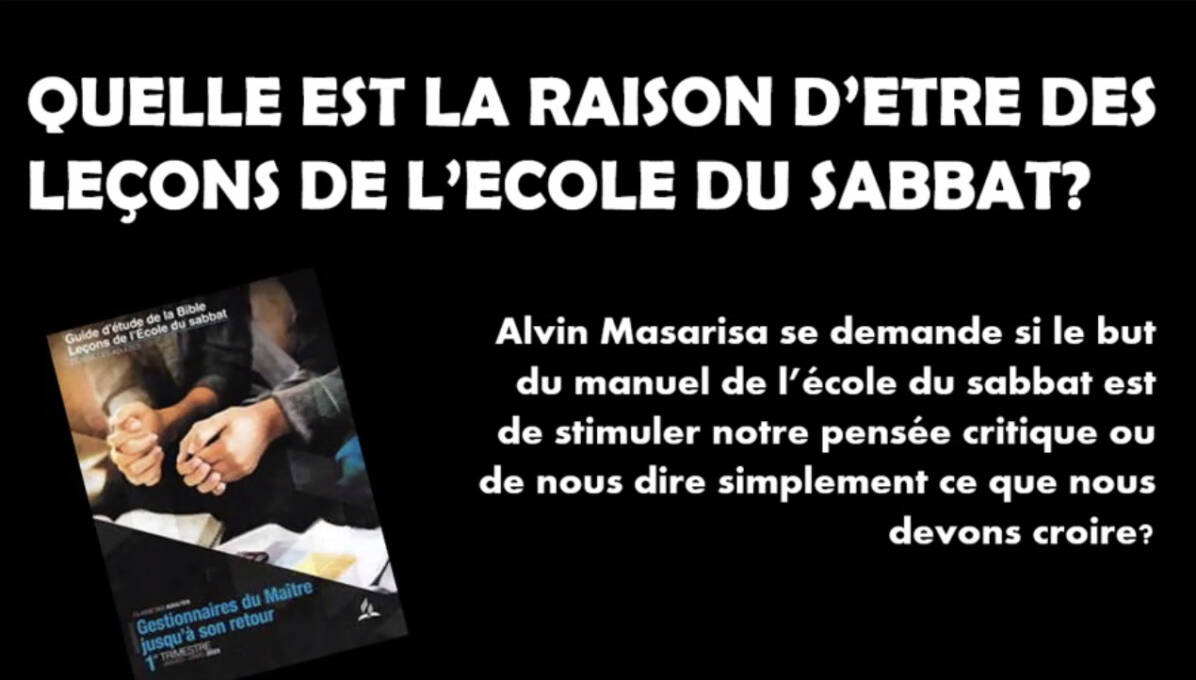
Algunas de las organizaciones más antiguas son las iglesias y los grupos religiosos. Algunas de las grandes religiones del mundo tienen miles de años, y el cristianismo existe desde hace 2.000 años. El adventismo tiene menos de doscientos años, pero tiene muchas características de una religión longeva y exitosa. Ahora, unos meses después del […] Source: https://atoday.org/por-que-la-iglesia-adventista-tiene-exito/
New course for career changers who’ve been called
A new postgraduate degree at Avondale will better prepare career changes who feel called to enter the ministry. Source: https://wp.avondale.edu.au/news/2022/10/13/new-course-for-career-changers-whove-been-called/
Thursday: Resting with the Forefathers
Read Genesis 25:8, 2 Samuel 7:12, 1 Kings 2:10, and 1 Kings 22:40. What do these texts add to your understanding of death?
The Old Testament expresses in different ways the ideas of death and burial. One is the notion of being gathered to one’s own people. For example, about Abraham, we are told that he “breathed his last and died in a good old age, an old man and full of years, and was gathered to his people” (Genesis 25:8, NKJV). Aaron and Moses were also gathered to their respective people (Deuteronomy 32:50).
What does the fact that both good and bad kings went to the same place at death teach us about the nature of death? (2 Kings 24:6, 2 Chronicles 32:33).
Another way of describing death is by stating that someone rested with the forbearers. About King David’s death, the Bible says that he “rested with his fathers, and was buried in the City of David” (1 Kings 2:10, NKJV). The same expression is used also about several other Hebrew kings, both faithful kings and unfaithful kings.
We can identify at least three meaningful aspects of resting with the forbearers. One is the idea that sooner or later the time will come when we need to rest from our own tiring labors and sufferings. Another idea is that we are not the first and only ones to follow that undesirable trail, because our forbears already went ahead of us. A third idea is that, by being buried close to them, we are not alone but remain together even during the unconsciousness of death. This might not make much sense to some modern individualist cultures, but it was very meaningful in ancient times.
Those who die in Christ can be buried close to their loved ones, but even so there is no communication between them. They will remain unconscious until that glorious day when they will be awakened from their deep sleep to rejoin their loved ones who died in Christ.
| Imagine what it would be like if the dead were actually conscious and could see what life was like down here, especially for their loved ones, who often suffer terribly after their death. Why, then, should the truth that the dead sleep be so comforting to the living? |
(0)The post Thursday: Resting with the Forefathers first appeared on Sabbath School Net.
The post Thursday: Resting with the Forefathers appeared first on Sabbath School Net.
Source: https://ssnet.org/blog/thursday-resting-with-forefathers/
Heidi Campbell, “The Re-Formation of the Magdalene”
12 October 2022 | Who do you think Mary Magdalene was? A woman with a scandalous past? The sister of Lazarus and Martha? First witness to the Resurrection? A rich heiress? An evangelist and miracle worker? Heidi Olson Campbell explores how the Reformation shifted the image of who Mary Magdalene was. Protestant reformers claimed great […] Source: https://atoday.org/heidi-campbell-the-re-formation-of-the-magdalene/
John 15:4
Remain in me, as I also remain in you. No branch can bear fruit by itself; it must remain in the vine. Neither can you bear fruit unless you remain in me.
The post John 15:4 appeared first on Daily Bible Promise.
Source: https://api.follow.it/track-rss-story-click/v3/jL28dc7E3KANRBDD7Nqk3H1d0VB8z-7c