Full episode here – https://youtu.be/ZxCDAPpShB4 Source: https://www.youtube.com/watch?v=bqqd2QbwO_U
Monday: Jacob Settles in Egypt
It’s very interesting how, despite all that Jacob had been told about Joseph’s being alive in Egypt, the Lord still gave him “visions of the night” (Genesis 46:2) and in them commanded him to leave. Jacob leaves the Land of Promise for, of all places, Egypt — which later becomes associated with the one place that God’s people do not want to go (Deuteronomy 17:16).
Read Genesis 47:1-31. What spiritual truths and principles can we find in this account?
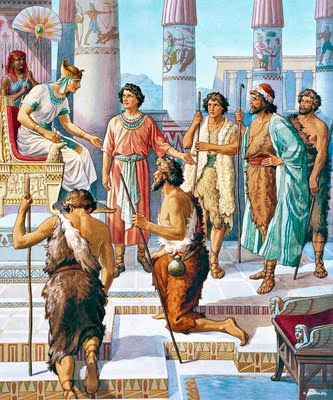
Image © The Classic Bible Art Collection – Formerly Standard Publishing at Goodsalt.com
“Joseph took five of his brothers to present to Pharaoh and receive from him the grant of land for their future home. Gratitude to his prime minister would have led the monarch to honor them with appointments to offices of state; but Joseph, true to the worship of Jehovah, sought to save his brothers from the temptations to which they would be exposed at a heathen court; therefore he counseled them, when questioned by the king, to tell him frankly their occupation. The sons of Jacob followed this counsel, being careful also to state that they had come to sojourn in the land, not to become permanent dwellers there, thus reserving the right to depart if they chose. The king assigned them a home, as offered, in ‘the best of the land,’ the country of Goshen.” — Ellen G. White, Patriarchs and Prophets, p. 233.
Wisely, too, Pharaoh does not encourage these sojourners to become beggars, living off the largess of their host. He enquires about their “occupation” (Genesis 47:3, NKJV) in order that they may adjust better in their new environment. He is also eager to use their expertise, and even suggests that they serve him as “chief herdsmen over [his] livestock” (Genesis 47:6, NKJV).
Then, although Jacob, the foreigner, is the inferior, the stranger, he stands before the leader of the land, and, as the text says, “Jacob blessed Pharaoh” (Genesis 47:7). He, the lowly stranger, is the one who blesses Pharaoh, the ruler of mighty Egypt? Why should that be?
The verb ‘amad lifney, “set … before” (Genesis 47:7), is normally used in priestly contexts (Leviticus 14:11). Considering that in ancient Egypt the pharaoh had the status of the highest priest, this means that, in a spiritual sense, Jacob stands higher than the highest priest of Egypt, higher even than Pharaoh himself.
|
Whatever our station in life, what should it mean to us, in how we treat others, that we are “a royal priesthood, a holy nation, His own special people” (1 Peter 2:9)? What obligations does our faith put on us? |
Amen! (0)
(0)
(0)The post Monday: Jacob Settles in Egypt appeared first on Sabbath School Net.
Source: https://ssnet.org/blog/monday-jacob-settles-in-egypt/
Romans 11:33

Oh, the depth of the riches of the wisdom and knowledge of God! How unsearchable his judgments, and his paths beyond tracing out!
The post Romans 11:33 appeared first on Daily Bible Promise.



Source: https://api.follow.it/track-rss-story-click/v3/jL28dc7E3KBRHrQsc5WCn0GT5aWO9DEx
AWR360° Phillipines – Ice Cream Man Radio Broadcaster (4) #shorts
Full episode here – https://youtu.be/ZxCDAPpShB4 Source: https://www.youtube.com/watch?v=VamQYHHuS6s
Sunday: Jacob Goes to Joseph
Read Genesis 46:1-34. What is the significance of Jacob’s departure from Canaan?
When Jacob leaves his place in Canaan, he is full of hope. The assurance that he will no longer be hungry and the good news that Joseph is alive must have given him the momentum that he needed to leave the Promised Land.
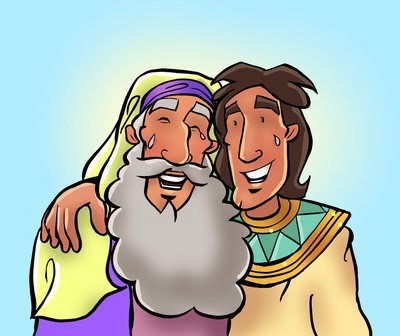
Image © Kim Justinen at Goodsalt.com
Jacob’s departure echoes the experience of Abraham, though in Abraham’s case he was heading to the Promised Land. Jacob hears the same promise Abraham heard from God, namely that He will make him “a great nation” (Genesis 46:3; compare with Genesis 12:2). God’s call here is also reminiscent of God’s covenant with Abraham; in both occasions God uses the same reassuring words “do not fear” (Genesis 46:3, NKJV; compare with Genesis 15:1), which carry the promise of a glorious future.
The comprehensive listing of the names of the children of Israel who went to Egypt, including his daughters (Genesis 46:7), recalls God’s promise of fruitfulness to Abraham even when he was still childless. The number “seventy” (including Jacob, Joseph, and his two sons) expresses the idea of totality. It is “all Israel” that goes to Egypt. It is also significant that the number 70 corresponds to the number of nations (Genesis chapter 10), suggesting that the destiny of all the nations is also at stake in Jacob’s journey.
This truth will become more evident only many years later, after the cross and the fuller revelation of the plan of salvation, which, of course, was for all humanity, everywhere, and not just for the children of Abraham.
In other words, however interesting the stories are regarding this family, the seed of Abraham, and whatever spiritual lessons we can take from them — these accounts are in the Word of God because they are part of salvation history; they are part of God’s plan to bring redemption to as many as possible on this fallen planet.
| “For there is no distinction between Jew and Greek, for the same Lord over all is rich to all who call upon Him. For ‘whoever calls on the name of the LORD shall be saved’ ” (Romans 10:12-13, , NKJV). What does Paul say here that shows the universality of the gospel? More important, what do these words say to us regarding what we as a church should be doing to help spread the gospel? |
Amen!(0)
(0)The post Sunday: Jacob Goes to Joseph appeared first on Sabbath School Net.

