By Steve Moran | 12 January 2020 | Sheila got up in front of 600 people in tuxedos and shimmering gowns to tell her story, her four children at her side. “I was homeless, living in a tent next to the river with my kids, then without them when the authorities took them away. I […] Source: https://atoday.org/the-alcohol-flowed-freely-and-the-dancing-was-intense/
Monday: The Prayer
Daniel immediately grabs his three friends for a prayer session, explaining that they will be executed if God does not reveal the dream. Whenever we face a big problem, we also should recognize that our God is great enough to resolve even the most unsolvable challenges.
Read Daniel 2:17-23. What are the two kinds of prayers prayed here?
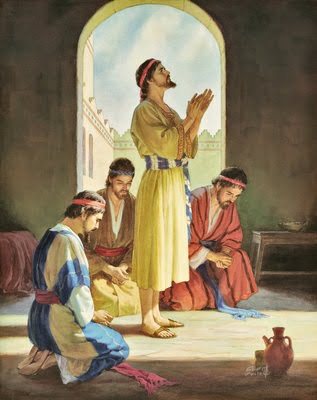
Image © Providence Collection at GoodSalt.com
Two types of prayer are mentioned in this chapter. The first is a petition prayer in which Daniel asks God to reveal the content of the dream and its interpretation (Dan. 2:17-19). The words of this prayer are not given, but we are told that Daniel and his friends “seek mercies from the God of heaven concerning this secret, so that Daniel and his companions might not perish with the rest of the wise men of Babylon” (Dan. 2:18, NKJV). As they pray, God answers their petition and reveals the content and interpretation of the king’s dream. We can rest assured that whenever we seek “mercies from the God of heaven” our prayers will be heard as well, even if not in such a dramatic manner as we see here, because the God of Daniel is our God too.
In response to God’s answering their petition, Daniel and his friends burst into a prayer of thanksgiving and praise. They praise God for being the source of wisdom and for being in control of nature and political history. There is an important lesson we can learn here. As we pray and plead with God for so many things, how often do we praise and thank Him for answering our prayers? The experience of Jesus with the ten lepers provides an apt illustration of human ingratitude. Out of ten who are healed, only one comes back “to give glory to God” (Luke 17:18). Daniel’s response not only reminds us of the importance of thanksgiving and praise, but also reveals the character of the God we pray to. When we pray to Him, we can trust Him to do what is in our best interest, and thus we should always praise and thank Him.
| Read Psalm 138:1-8. What can you take away from this prayer of thanksgiving that can help you learn to be thankful to God, regardless of your circumstances? |
Amen! (0)
(0)
(0) Source: http://feedproxy.google.com/~r/SabbathSchoolNet/~3/TnXFl45hPTI/
Psalm 112:1-2
Praise the LORD. Blessed are those who fear the LORD, who find great delight in his commands. Their children will be mighty in the land; the generation of the upright will be blessed.
http://feedproxy.google.com/~s/dailybible/main/?i=http://dailybiblepromise.com/verse/2020/01/12



 Source: http://feedproxy.google.com/~r/dailybible/main/~3/prWYeYdGzeE/12
GYC Missions: Give Me Iceland
https://vimeo.com/384283030
By God’s power, we can reach entire countries #InThisGeneration #GiveMeIceland #GYC
Find ways to serve this year and go beyond for God! gycweb.org/beyond
Cast: GYC
Tags: GYC, Iceland, Adventist, In This Generation, Generation, Youth, Christ and Missions
Source: https://vimeo.com/384283030
Sunday: The Immanence of God
Read Daniel 2:1-16. What crisis do the Hebrews face because of the dream that the Lord gives to the king?
Dreams were taken very seriously in the ancient world. When a dream seemed foreboding, it often indicated an impending disaster. Thus, it is understandable why Nebuchadnezzar becomes so anxious about a dream that, to make things even more ominous, he can no longer remember.
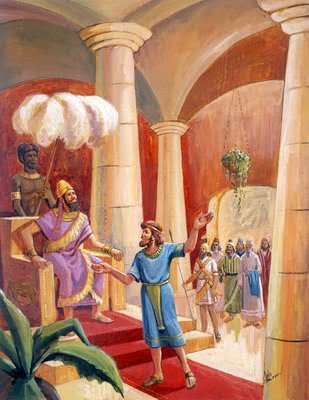
Image © Lifeway Colletion at Goodsalt.com
Babylonian experts believed that the gods could reveal the interpretation of dreams, but in the case of this dream in Daniel, there is nothing that the experts can do because the king has forgotten the dream. If the content of the dream were conveyed to them, they would come up with an interpretation to please the king. But in this unprecedented situation, when the dream experts are unable to tell the king what his dream is about, they are forced to admit that “there is no other who can tell it to the king except the gods, whose dwelling is not with flesh” (Dan. 2:11, NKJV).
Overwhelmed with frustration, the king commands that all the wise men of Babylon be killed. Such an atrocity was not unknown in the ancient world. Historical sources attest that, because of a conspiracy, Darius I had all the magi executed, and Xerxes put to death the engineers who had built a bridge that collapsed. When Nebuchadnezzar issues his decree, Daniel and his companions have just finished their training and been admitted into the circle of the king’s experts. For this reason, the death decree issued by the king applies to them as well. In fact, the original language suggests that the killing starts immediately, and Daniel and his friends will be executed next. But Daniel, with “counsel and wisdom” (Dan. 2:14), approaches Arioch, the man in charge of carrying out the executions. Eventually Daniel requests time from the king himself in order to solve the mystery of the dream. Interestingly, although the king has accused the magicians of trying to buy “time”, he promptly grants the “time” Daniel requests. Daniel certainly agrees with the magicians that no human being can solve such a mystery, but the prophet also knows of a God who can reveal both the content and the interpretation of the dream.
| Theologians talk about the “immanence” of God, that though distinct from the creation, God can still be so close to it. What does the fact that He gives King Nebuchadnezzar a dream teach us about just how immanent God can be to us? (See also Acts 17:28). |
Amen!(0)
(0) Source: http://feedproxy.google.com/~r/SabbathSchoolNet/~3/340qNoOdK6U/

