10 November 2019 | The California Department Of Health identified seven violations in a September 19 investigation of Adventist Health Tulare. According to the Visalia Times-Delta, the violations include improper handling of a powerful narcotic, improper storage of a placenta, serving out-of-date food and operating a dirty kitchen. In addition to the above, the Tulare […] Source: https://atoday.org/california-authorities-write-up-adventist-hospital-for-out-of-date-foods-unsanitary-conditions/
Psalm 107:8-9
Let them give thanks to the LORD for his unfailing love and his wonderful deeds for mankind, for he satisfies the thirsty and fills the hungry with good things.
http://feedproxy.google.com/~s/dailybible/main/?i=http://dailybiblepromise.com/verse/2019/11/11



 Source: http://feedproxy.google.com/~r/dailybible/main/~3/WIYpP9zrLzc/11
Monday: Beginning of Prayer
The response of the people to the Bible reading was a long prayer that recounted the goodness of God in contrast to the history of the Israel’s faithlessness. One can observe that the reply is more like a sermon than a prayer, because almost every verse has a parallel somewhere in the Bible.
Read Nehemiah 9:4-8. What are the main topics the prayer focused on in these beginning verses, and why?
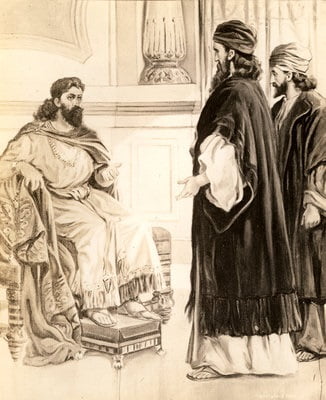
Nehemiah’s Prayer
In the first part of the prayer, the people bless God, and specifically His name. In the Hebrew culture, a name was not just what people called someone, but it gave a person his/her identity. Thus, the praise of God’s name is significant because it demonstrates to the world that this is a name worthy of praise and honor. This is the name of the Creator of the Universe. The prayer begins with worship to God as the Creator and as the One who “preserves” everything (Neh. 9:6 see also Col. 1:16-17). The word “preserves” comes from a Hebrew verb that means to “keep alive”.
The One who created everything is the One who chose Abraham, a human being, who was not in any way special other than that “his heart” was “faithful”. Abraham may seem to have lacked faith on many occasions, but when asked to give up his son, he didn’t falter (see Genesis 22:1-24). He learned to be faithful — not overnight, but over his long walk with God. In Hebrew thinking, the “heart” refers to the mind. In other words, Abraham developed faithfulness in thought and action and was acknowledged for it by God.
The first few phrases of the prayer focus on God as 1. Creator, 2. Preserver, and 3. Promise Keeper. The people first remind themselves of who God is: He is the faithful One who has created us, preserves us, and always keeps His promises to us. Having that in mind helps us to keep our own lives in perspective and to learn to trust Him even in the most difficult of situations, when it might seem that He is distant from us and unconcerned with our challenges.
| Why is the doctrine of God as our Creator so central to our faith? After all, what other teaching is so important compared to this one, in which we are commanded by God to spend one-seventh of our lives every week in remembering Him as our Creator? |
Amen! (3)
(3)
(3) Source: http://feedproxy.google.com/~r/SabbathSchoolNet/~3/H7OSNptpwSo/
When the Church Leaves You
by Mark B. Johnson | 10 November 2019 | I have always been an Adventist. When our denomination’s current president was a child playing on the banks of the Nile River in Egypt, I was born upstream in an Adventist mission hospital in Ethiopia. My family was a “real” Adventist family. Medical missions, vegetarian diets, […] Source: https://atoday.org/when-the-church-leaves-you/
Sunday: Fasting and Worship
Read Nehemiah 9:1-3. Why were the people separating themselves from all foreigners?
Although Nehemiah was eager to make sure that the people associated this time with joy, he now led the assembly to fasting. They humbled themselves before God and threw dust on their heads, while wearing sackcloth.
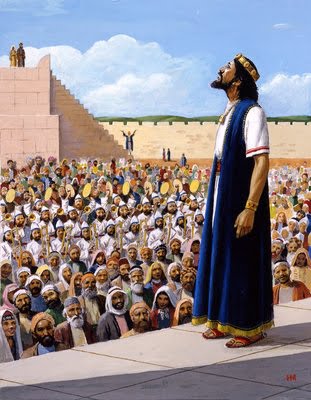
Worship
Because the foreigners didn’t have a share in the corporate sin of the people of Israel, the Israelites separated themselves from them, as the Hebrews knew that it was their sins that needed to be forgiven. They acknowledged the sins of their nation, which had led them into exile.
Their corporate prayers and confession demonstrated a deep understanding of the nature of sin. The Israelites could have been angry that their predecessors messed up and led their whole nation into exile. Or they could have spent time complaining about the choices of their leaders and the lack of godliness displayed by the previous generations, which had led them to where they were right now — just a small group of returnees. However, instead of harboring hatred and grievances, they turned to God in humility and confession.
Nehemiah 9:3 reports that the people read from the Book of the Law for a fourth of the day, and for another fourth they confessed sin and worshiped God. This is the third reading of the Torah. Reading the Torah is central to confession, which must be based on the truth, which comes from God. Through our reading of the Bible, God draws near to us, and the Holy Spirit can speak to us and teach us. The truth of His Word molds our thinking and understanding, encourages and lifts us up. The Israelites also sorrowed and wept, because spending time in God’s holy presence makes us aware of His beauty and goodness while impressing upon us how amazing it is that the Creator of the universe chooses to be with us, even despite our unworthiness. Thus, we realize that without God in our lives, we are no different from any of our spiritual ancestors in the faith. Only with God working in us can we be who we should be.
| Read Daniel 9:4-19. In what ways is His prayer applicable to ourselves today? What should the reality of this application say to us individually, and as a church? |
Amen!(0)
(0) Source: http://feedproxy.google.com/~r/SabbathSchoolNet/~3/0vMISjHspdo/

