Source: http://adventist.org.uk/news/2018/buc/bristols-community-carnival-witness
NEC Camp Meeting 2019 Ends on Spiritual High
Adventist Appointed Chaplain for University of Birmingham
Inside Story: India ~ Man With Crooked Stick
By Wilson Measapogu
Indian villagers faced constant trouble from an intruding tiger.
The wild animal crept by night into Gudem Madhavaram, a remote village with no electricity on a mountainside in India’s Andhra Pradesh state.
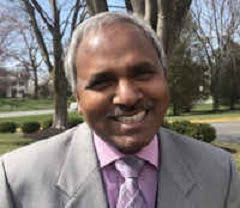
Image © Pacific Press
The villagers—dependent upon goats, cows, and bulls to produce milk and cultivate crops for their rich landowners—watched in despair as their precious animals were devoured one by one. They prayed to their gods for protection, but nothing happened.
One day, a tall white man with a crooked stick arrived on horseback. He spoke the local Telugu language, and the villagers stared at his crooked stick. When the stick coughed, animals went to sleep. Permanently.
The villagers learned that the man was an American named Dr. Theodore R. Flaiz. He had opened a small hospital in Nuzvid, 30 miles (50 kilometers) away from the village, and a training school for workers in Narsapurm, 110 miles (180 kilometers) away. When he wanted to rest from his work, he hunted for wild boar on their mountain. He donated the game to the villagers.
On Saturdays, he sat in the shade of a village tree, removed his coat, and sang songs. When the villagers asked what he was singing, he explained that he was worshiping the Creator God.
“We want to see the Creator God”, the villagers said.
The white man opened a black book and read aloud about the Creator God.
As the tiger problem grew, the villager elders won a promise from the white man to help. They tied a goat to tree trunk in the village center. In the branches, they built a platform where the white man could sleep. That night, they tied a rope to his leg and retreated to their huts to keep watch.
In the darkness of night, a large tiger approached. The watching villagers jerked the string, waking up the white man. He caused his crooked stick to cough. The tiger, however, was only wounded, and fled. Later, the tiger returned, was shot, and fled again. After several attempts, the tiger was shot dead.
After that, the friendship between Dr. Flaiz and the villagers grew greatly, and a small Seventh-day Adventist congregation was established. One of the first converts—a young man who had helped tie the goat to the tree and kept watch at night—was Sundar Rao, my father. He was baptized in 1955.
Today, Gudem Madhavaram is an Adventist village. It has produced 40 pastors and Bible workers, and many educators and health professionals. On Saturdays, the whole village comes to a halt to worship the Creator God.
Wilson Measapogu, left, is executive secretary of the Seventh-day Adventist Church’s Southern Asia Division, whose territory includes India. Dr. Theodore R. Flaiz was a medical missionary who headed the Adventist world church’s medical work from 1947 until his retirement in 1966. He died in 1977 at the age of 80.
Produced by the General Conference Office of Adventist Mission. Find more mission stories at adventistmission[dot]org
All Rights Reserved. No part of the Adult Sabbath School Bible Study Guide may be edited, altered, modified, adapted, translated, reproduced, or published by any person or entity without prior written authorization from the General Conference of Seventh-day Adventists.
Amen! (0)
(0)
(0) Source: http://feedproxy.google.com/~r/SabbathSchoolNet/~3/cOP–7fnnRw/
Friday: Further Thought ~ Blueprint for a Better World
Further Thought: Read Ellen G. White, “The Law Given to Israel”, pages 303-314; “God’s Care for the Poor”, pages 530-536, in Patriarchs and Prophets.

Image © Stan Myers from GoodSalt.com
“There is nothing, after their recognition of the claims of God, that more distinguishes the laws given by Moses than the liberal, tender, and hospitable spirit enjoined toward the poor. Although God had promised greatly to bless His people, it was not His design that poverty should be wholly unknown among them. He declared that the poor should never cease out of the land. There would ever be those among His people who would call into exercise their sympathy, tenderness, and benevolence. Then, as now, persons were subject to misfortune, sickness, and loss of property; yet so long as they followed the instruction given by God, there were no beggars among them, neither any who suffered for food”. – Ellen G. White, Patriarchs and Prophets, pages 530, 531.
“These regulations were designed to bless the rich no less than the poor. They would restrain avarice and a disposition for self-exaltation, and would cultivate a noble spirit of benevolence; and by fostering good will and confidence between all classes, they would promote social order, the stability of government. We are all woven together in the great web of humanity, and whatever we can do to benefit and uplift others will reflect in blessing upon ourselves”. – Pages 534, 535.
Discussion Questions:
|
Summary: God heard the cries of the suffering people of Israel in Egypt and intervened to rescue them. He sought to build a special covenant relationship with them and to work with them to establish a new society that would be a blessing to all, even those often forgotten, marginalized, and vulnerable.
Amen!(0)
(0) Source: http://feedproxy.google.com/~r/SabbathSchoolNet/~3/4TjAgIz3XLY/

