• Home
  • Devotionals
  • BiblePhone
  • Blogs
  • TV
  • Prayer
    • Submit Prayer Request
    • Prayer Requests List
  • Contact us
  • Romanian

Intercer Adventist News

Closer To Heaven

  • About us
    • About Adventist Church
    • About Intercer Adventist News
    • About Intercer
    • About Lucian Web Service
    • Latest News
    • Romanian Church News
  • News and Feeds
    • Intercer Adventist News
    • 60 Second SlideShows
    • “Adventist Tweets” Paper
    • Adventists on Twitter
    • Adventists on Google Plus
    • Bible Resources
      • Adventist Universities Daily Bible
      • Answers For Me
        • Dear God
        • Healthy Living
        • Life Notes
        • Spiritual applications
        • Vegetarian recipes
      • Better Sermons
        • Spirit Renew Quotes
      • Daily Bible Promise
      • E-GraceNotes
        • Bible Says
        • City Lights
        • Family First
        • Staying Young
      • Story Harvest
        • Personal Stories
      • SSNet.org
    • Churches & Organizations
      • Adventist News Network
      • Adventist Review
      • Adventist World Radio
      • Avondale College
      • Babcock University Nigeria
      • BC Alive
      • British Union Conference
      • Canadian Adventist Messenger
      • Canadian Union
      • North American Division News
      • Outlook Magazine
      • PM Church – Pastor’s Blog
      • Potomac Conference
      • Record Magazine – Australia
      • Review and Herald
      • Trans-European Division
      • Washington Conference
    • Health
      • Dr.Gily.com
      • Vegetarian-Nutrition.info
    • Ministries
      • 7 Miracle (Youth)
      • A Sabbath Blog
      • Adventist Blogs
      • Adventist Today
      • ADvindicate
      • Creative Ministry
      • Grace Roots
      • Romanian Church News
      • Rose’s Devotional
      • UNashamed
    • Personal
      • Alexandra Yeboah
      • Iasmin Balaj
      • Jennifer LaMountain
      • McQue’s View
      • Refresh with Tia
      • Shawn Boonstra
  • Sermons & Video Clips
    • Churches
      • Downey Adventist Church
      • Fresno Central SDA Church
      • Hillsboro Adventist Church
      • Mississauga SDA Church
      • New Perceptions Television (PM Church)
      • Normandie Ave SDA Church
      • Remnant Adventist Church
    • Organizations
      • Adventist News Network (ANN)
      • ADRA Canada
      • Adventists About Life
      • Adventist Education
      • Adventist Mission
      • Amazing Facts
      • Adventist Church Connect
      • BC Adventist
      • Church Support Services
      • In Focus (South Pacific)
      • IIW Canada
      • NAD Adventist
      • NAD Church Resource Center (Vervent)
      • NARLA
      • Newbold
      • Review & Herald
      • SECMedia
      • Video Avventista (Italy)
    • Ministries
      • 3AngelsTube.com
      • Answered.TV
      • AudioVerse.org
      • AYO Connect
      • Christian Documentaries
      • GAiN #AdventistGeeks
      • GYC
      • Intercer Websites
      • Josue Sanchez
      • LightChannel
      • Pan de Vida
      • Revival and Reformation
      • Stories of Faith
      • SAU Journalism/Communication
      • Spirit Flash
      • The Preaching Place (UK)
      • Toronto East Youth Nation
    • Personal
      • Esther-Marie Hartwell
      • McQuesView
      • Pastor Manny Cruz
    • Sabbath School
      • Ecole du Sabbat Adventiste
      • Sabbath School Audio Podast
      • Sabbath School daily
  • Resources
    • Bible and Bible Studies
    • Health
    • Music
  • All articles
  • G+ News & Marketplace
    • G+ News & Marketplace Group
    • G+ Page
You are here: Home / Archives for News and Feeds / SSNet.org

Wednesday: Gifts of the Exalted Jesus

August 8, 2023 By admin

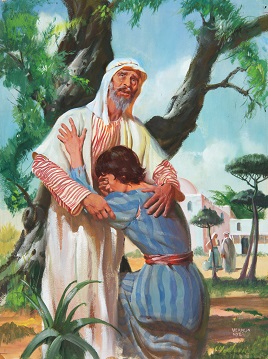
Drawing on Psalm 68:18, Paul has just described the risen, exalted, conquering Jesus as giving gifts to His people from on high. What “gifts” does the exalted Jesus give, and for what purpose? Ephesians 4:11-13.

Paul identifies four groups of “gifted” people as part of the treasure trove of the exalted Jesus that He gives to His church: (1) apostles; (2) prophets; (3) evangelists; (4) shepherds (ESV) and teachers (the structure of the Greek phrase suggests these are a single group).

The Gift

Image © Darrel Tank at Goodsalt.com

Christ gives these gifts to accomplish important work: “to equip the saints for the work of ministry, for building up the body of Christ” (Ephesians 4:12, ESV) and “until we all attain to the unity of the faith and of the knowledge of the Son of God, to mature manhood, to the measure of the stature of the fullness of Christ” (Ephesians 4:13, ESV).

This last point was of special importance to early Adventists, who were reflecting on the spiritual gifts of Ellen G. White. Does the Bible validate the functioning of the gift of prophecy in the church only during the time of the apostles? Or does the gift continue until the return of Christ? The early Adventists found their answer in Ephesians 4:13 and shared it through a story about the captain of a ship who was bound to follow the instructions provided for a voyage. As the ship neared port, the captain found that the instructions informed him that a pilot would come on board to help guide the vessel. To remain true to the original instructions, he must allow the pilot to board and obey the further guidance offered. “Who now heed that original book of directions? Those who reject the pilot, or those who receive him, as that book instructs them? Judge ye.” — Uriah Smith, “Do We Discard the Bible by Endorsing the Visions?” Review and Herald, January 13, 1863, p. 52.

We should be careful when we identify “shepherds” (or “pastors”), “teachers,” and “evangelists,” since we think of these positions within our own context and time. As far as we are able to determine, in Paul’s day these would all have been lay leaders who were serving the house churches of Ephesus (compare 1 Peter 2:9, Acts 2:46, Acts 12:12).

Read Isaiah 5:4: “What more could have been done to My vineyard that I have not done in it?” (NKJV). Think about this verse in the context of what God has given us in the ministry of Ellen G. White. How does it apply?

<–Tuesday Thursday–>

Amen!(0)

The post Wednesday: Gifts of the Exalted Jesus appeared first on Sabbath School Net.
Source: https://ssnet.org/blog/wednesday-gifts-of-exalted-jesus/

Share this:

  • Share on Facebook (Opens in new window) Facebook
  • Share on LinkedIn (Opens in new window) LinkedIn
  • Share on X (Opens in new window) X
  • Share on Pinterest (Opens in new window) Pinterest

Like this:

Like Loading...

Filed Under: Adventist Sermons & Video Clips, SSNet.org

Tuesday: The Exalted Christ, Giver of Gifts

August 7, 2023 By admin

“However, he has given each one of us a special gift through the generosity of Christ. That is why the Scriptures say,

    ‘When he ascended to the heights,
    he led a crowd of captives
    and gave gifts to his people.’”

“Notice that it says ‘he ascended.’ This clearly means that Christ also descended to our lowly world. And the same one who descended is the one who ascended higher than all the heavens, so that he might fill the entire universe with himself” (Ephesians 4:7-10, NLT). What is happening here, and what is Paul’s point in these verses?

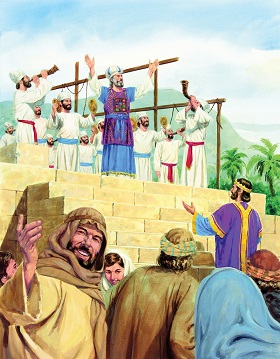
Paul here quoted Psalm 68:18, which reads: “When you ascended to the heights, you led a crowd of captives. You received gifts from the people, even from those who rebelled against you” (NLT). Psalm 68:18 portrays the Lord, Yahweh, as a conquering general who, having conquered His enemies, ascends the hill on which His capital city is built, with the captives of battle in His train (see Psalm 68:1-2).

Jesus Giving Bread

Image © Lifeway Collection at Goodsalt.com

He then receives tribute (“received gifts”) from His conquered foes (noting that Paul adjusts this imagery to the exalted Christ “giving gifts,” based on the wider context of the Psalm, see Psalm 68:35).

If we follow the order of Psalm 68:18, the ascent — Christ’s ascension to heaven (Ephesians 1:21-23) — occurs first, followed by the descent in which the risen, exalted Jesus gives gifts and fills all things. This is Paul’s way of depicting the Pentecostal outpouring of the Holy Spirit (see Acts 2:1-47). This view is confirmed by Ephesians 4:11-12, which identify the gifts provided by the exalted Jesus as gifts of the Spirit.

“Christ ascended on high, leading captivity captive, and gave gifts unto men. When, after Christ’s ascension, the Spirit came down as promised, like a rushing, mighty wind, filling the whole place where the disciples were assembled, what was the effect? Thousands were converted in a day.” — Ellen G. White, Ye Shall Receive Power, p. 158.

However deep these few verses in Ephesians may be, how can we learn to draw comfort from what they show Christ has done for us and will do, especially when He will fill “all things everywhere with himself” (Ephesians 1:23, NLT)?

<–Monday Wednesday–>

Amen!(0)

The post Tuesday: The Exalted Christ, Giver of Gifts appeared first on Sabbath School Net.
Source: https://ssnet.org/blog/tuesday-exalted-christ-giver-of-gifts/

Share this:

  • Share on Facebook (Opens in new window) Facebook
  • Share on LinkedIn (Opens in new window) LinkedIn
  • Share on X (Opens in new window) X
  • Share on Pinterest (Opens in new window) Pinterest

Like this:

Like Loading...

Filed Under: Adventist Sermons & Video Clips, SSNet.org

7: The Unified Body of Christ – Singing with Inspiration

August 6, 2023 By admin

The book of Ephesians shows us “How to Follow Jesus in Trying Times”:
Hymn 623 – I Will Follow Thee, My Saviour so that our actions will always speak louder than our words.

Paul encourages us to ask 
Come, Holy Spirit – Hymn 269 to help us
Be Like Jesus – Hymn 311, all because 
The Church Has One Foundation – Hymn 348. Paul goes on to tell us 
Hark! The Voice of Jesus Calling – Hymn 359 and 
Hymn 285 – Jesus Calls Us. May we respond with 
O Let Me Walk With Thee – Hymn 554.

As we are to be one with our Lord, Jesus Christ, in all we do and say, we reflect on the fact that He is 
Lord of Creation – Hymn 320 (Monday).

The encouragement continues throughout this week so that we 
Lift Him Up, The Risen Saviour – Hymn 371 (Tuesday).

So, dear people, be encouraged to go forward and
“Lift up the trumpet and loud let it ring, Jesus IS coming again” – Hymn 213.

To learn unknown hymns, you will find the accompaniment music for each one at: https://sdahymnals.com/Hymnal/

Another great resource is for when there is a hymn you wish to sing but can’t find it in your hymnal. Go to https://www.sdahymnal.org/Search and in the search bar type a special word in that is in the hymn. I am sure you will be amazed at the help you will be given.

 2 Timothy 2:15 KJV – “Study to shew thyself approved unto God, a workman that needeth not to be ashamed, rightly dividing the word of truth.”

Amen!(0)

The post 7: The Unified Body of Christ – Singing with Inspiration appeared first on Sabbath School Net.

Source: https://ssnet.org/blog/7-the-unified-body-of-christ-singing-with-inspiration/

Share this:

  • Share on Facebook (Opens in new window) Facebook
  • Share on LinkedIn (Opens in new window) LinkedIn
  • Share on X (Opens in new window) X
  • Share on Pinterest (Opens in new window) Pinterest

Like this:

Like Loading...

Filed Under: Adventist Sermons & Video Clips, SSNet.org

7: The Unified Body of Christ – Teaching Plan

August 6, 2023 By admin

Key Thought: One way we foster unity is by being active parts of the body and contributing to its health and growth.
August 12, 2023

1. Have a volunteer read Ephesians 4:1-10.

  1. Ask class members to share a short thought on what the most important point is in this passage.
  2. How does Paul encourage believers to nurture the unity of the church?
  3. Personal Application: Do you think the one body and one faith is the remnant church, or do you think the one body and faith consists of a multitude of bodies and faiths that unite together? Share your thoughts
  4. Case Study: One of your friends states, “How do humility, gentleness, and patience help unify your church? How do we learn to cultivate these virtues?” How would you respond to your relative?

2. Have a volunteer read Ephesians 4:11-13.

  1. Ask class members to share a thought on what the most important point in this text is.
  2. What gifts does Jesus give us and for what purpose are they given?
  3. Personal Application: What winds of doctrine are blowing in the church today? How can we protect ourselves and others from the damage these winds can cause? Share your thoughts.
  4. Case Study: One of your friends states, “Why does your church believe in a modern-day prophet? Isn’t that adding to the Scriptures? What more do we need? What is the purpose of a modern-day prophet when we have the Bible?” How would you respond to your friend?

3. Have a volunteer read Ephesians 4:14.

  1. Ask class members to share a short thought on what the most important point in this text is.
  2. What danger threatens the Christ-like maturity of the church?
  3. Personal Application: In what cases might seeking unity at all costs become counter-productive? Share your thoughts.
  4. Case Study: One of your neighbors states: “In what ways does a church function like a body? How can you tell if a church is healthy or ill?” How would you respond to your relative?

4. Have a volunteer read Ephesians 4:15,16.

  1. Ask class members to share a thought on what the most important point in this text is.
  2. What does it mean to speak the truth in love and grow up in Him in all things?
  3. Personal Application: How can we get every member to use their gifts and talents to increase the body and make it healthier? Share your thoughts.
  4. Case Study: Think of one person who needs to hear a message from this week’s lesson. Tell the class what you plan to do this week to share with them.

(Truth that is not lived, that is not imparted, loses its life-giving power, its healing virtue. Its blessings can be retained only as it is shared.”Ministry of Healing, p. 148).

Amen!(0)

The post 7: The Unified Body of Christ – Teaching Plan appeared first on Sabbath School Net.

Source: https://ssnet.org/blog/7-the-unified-body-of-christ-teaching-plan/

Share this:

  • Share on Facebook (Opens in new window) Facebook
  • Share on LinkedIn (Opens in new window) LinkedIn
  • Share on X (Opens in new window) X
  • Share on Pinterest (Opens in new window) Pinterest

Like this:

Like Loading...

Filed Under: Adventist Sermons & Video Clips, SSNet.org

Lesson Helps 7: The Unified Body of Christ

August 6, 2023 By admin

Lesson 7 *August 5-11

The Unified Body of Christ

SABBATH AFTERNOON

Read for This Week’s Study: Ephesians 4:1-16 ; Philippians 2:3 ; Psalm 68:18 ; Acts 2:1-47 ; 1 Corinthians 12:4-11 1 Corinthians 12:27-30 ; Isaiah 5:4 .
Memory Text: “And he gave the apostles, the prophets, the evangelists, the shepherds and teachers, to equip the saints for the work of ministry, for building up the body of Christ” (Ephesians 4:11-12 , ESV).
Faces Looking at a Cross

Image © Jeff Preston from GoodSalt.com

One of Aesop’s fables is called “The Belly and the Feet.” It goes like this: “The belly and the feet were arguing about their importance, and when the feet kept saying that they were so much stronger that they even carried the stomach around, the stomach replied, ‘But, my good friends, if I didn’t take in food, you wouldn’t be able to carry anything.’ ”—Lloyd W. Daly, Aesop Without Morals (New York: Thomas Yoseloff, 1961), p. 148.

Paul, however, used the human body to make a spiritual point. For Paul, the human body—and the church as the body of Christ—is composed of various parts with differing abilities, all of which must work together for the body to be healthy. In Ephesians 4:1-16 , Paul redeploys the body metaphor that he used so effectively earlier (Romans 12:3-8 , 1 Corinthians 12:12-31 ). Christ is now the Head of the body, supplying the body with “gifted” people who help unify the body, with each part—each church member—contributing its abilities to the whole.

Paul’s picture of a healthy, unified body helps us understand God’s goal for us: to be parts of a fruitful church united in Christ.

*Study this week’s lesson to prepare for Sabbath, August 12.

SUNDAY August 6

The Unity of the Spirit

Read Ephesians 4:1-16 . How does Paul encourage believers to nurture the unity of the church?

Paul begins the second half of Ephesians (chapters 4-6) with a stirring call to unity, but in two major parts. First, in Ephesians 4:1-6 he asks believers to nurture “the unity of the Spirit” by exhibiting unity-building virtues (Ephesians 4:1-3 ), a call he supports with a poetic list of seven “ones” (Ephesians 4:4-6 ). Second, in Ephesians 4:7-16 , Paul identifies the victorious, exalted Jesus as the Source of grace in people who lead in sharing the gospel (Ephesians 4:7-10 ) and describes how they, together with all church members, contribute to the health, growth, and unity of the body of Christ (Ephesians 4:11-16 ).

As the chapter begins, Paul invites Christians to “walk in a manner worthy of the calling to which you have been called” (Ephesians 4:1 , ESV). He used the verb walk in the figurative sense of to behave, or to live (see Ephesians 2:2 , Ephesians 2:10 ; Ephesians 4:17 ; Ephesians 5:2 , Ephesians 5:8 Ephesians 5:15 ). When Paul refers to their calling, he refers to the call to Christian faith (Ephesians 1:18 ; Ephesians 2:4-6; Ephesians 2:13 ). Paul urges believers to practice a unifying behavior that reflects God’s ultimate plan (Ephesians 4:9-10 ). He begins that emphasis here with his call to practice virtues that lead to unity (Ephesians 4:1-3 ), such as humility, gentleness, and patience.

Let’s look at each term.

Paul elsewhere explains the term humility, in Ephesians 4:2 (ESV; lowliness in NKJV), by adding the idea to “count others more significant than yourselves” (Philippians 2:3 , ESV). Humility, then, may be understood not as a negative virtue of self-deprecation (see Colossians 2:18 , Colossians 2:23 ) but as a positive one of appreciating and serving others.

Gentleness (Ephesians 4:2 , ESV, NKJV) may be explained as “the quality of not being overly impressed by a sense of one’s self-importance” and also means “courtesy, considerateness, meekness.”—Frederick Danker, ed., Greek-English Lexicon of the New Testament and Other Early Christian Literature, 3rd ed. (Chicago: University of Chicago Press, 2000), p. 861.

Finally, patience (ESV; compare longsuffering, NKJV) is being able to bear up under provocation or trials. These qualities, then, all gather around the theme of turning away from self-importance and, instead, focusing on the value of others.

Humility, gentleness, patience. Think about how these attributes would help unify us as a people. How do we learn to cultivate these virtues?


MONDAY August 7

Together as One in the One

What seven “ones” does Paul cite in support of his theme of the unity of the church? What point is he seeking to make with this list? (Ephesians 4:4-6 ).

Paul’s list of seven “ones” has a poetic feel to it and may echo a hymn of affirmation used in Ephesus. The list begins by mentioning two “ones” together: “There is one body” (referring to the church as the body of Christ, Ephesians 4:12 , Ephesians 4:16 ; Ephesians 1:23 ; Ephesians 5:23 , Ephesians 5:29 Ephesians 5:30 ) and “one Spirit” (Ephesians 4:4 ). The third one is the “one hope of your calling” (Ephesians 4:4 ; compare Ephesians 4:1 ).

The list then offers three more elements, “one Lord” (a reference to Christ), “one faith” (meaning the content of what Christians believe, Ephesians 4:13 ; Colossians 1:23 ; Colossians 2:7 ; Galatians 1:23 ; 1 Timothy 4:1 , 1 Timothy 4:6 ), and “one baptism” (compare Ephesians 5:26 ) before concluding with an extended description of God as “one God and Father of all, who is over all and through all, and in all” (Ephesians 4:6 , ESV).

What is Paul communicating through this poetic description of God the Father? By virtue of His being “Father of all,” God is the Creator. The rest of the sentence describes how, once the world is created, God relates to “all things,” to everything that He made. Paul is not dabbling in the heresies of pantheism (which identifies nature with God), or panentheism (which argues that the world is included in God’s being, though it does not exhaust that being). He is rather proclaiming the transcendence (“who is over all”), active rule (“who is

. . . through all”) and immanence (“who is . . . in all”) of God.

Note carefully two ideas about the unity of the church (Ephesians 4:1-6 ). First, unity is a spiritual fact, rooted in these seven “ones,” a reality to be celebrated (Ephesians 4:4-6 ). Second, this unity requires our zeal to nurture and grow it (Ephesians 4:3 ). There will often be cause to weep at our failings in actualizing this unity. However, whatever our failings, we should rejoice in the work of God-in-Christ in unifying the church, rejoicing in the theological reality of the “unity of the Spirit” (Ephesians 4:3 ). Doing so will empower us to return to the hard work of advancing this unity, but with fresh conviction that in doing so we are accomplishing God’s own work.

Read again Ephesians 4:4-6 . How does it make you feel? How should it make you feel, knowing what it says about our unity in and with God through Christ?

TUESDAY August 8

The Exalted Christ, Giver of Gifts

“However, he has given each one of us a special gift through the generosity of Christ. That is why the Scriptures say,

‘When he ascended to the heights,

he led a crowd of captives

and gave gifts to his people.’

“Notice that it says ‘he ascended.’ This clearly means that Christ also descended to our lowly world. And the same one who descended is the one who ascended higher than all the heavens, so that he might fill the entire universe with himself” (Ephesians 4:7-10 , NLT). What is happening here, and what is Paul’s point in these verses?

Paul here quoted Psalm 68:18 , which reads: “When you ascended to the heights, you led a crowd of captives. You received gifts from the people, even from those who rebelled against you” (NLT). Psalm 68:18 portrays the Lord, Yahweh, as a conquering general who, having conquered His enemies, ascends the hill on which His capital city is built, with the captives of battle in His train (see Psalm 68:1-2 ). He then receives tribute (“received gifts”) from His conquered foes (noting that Paul adjusts this imagery to the exalted Christ “giving gifts,” based on the wider context of the Psalm, see Psalm 68:35 ).

If we follow the order of Psalm 68:18 , the ascent—Christ’s ascension to heaven (Ephesians 1:21-23 )—occurs first, followed by the descent in which the risen, exalted Jesus gives gifts and fills all things. This is Paul’s way of depicting the Pentecostal outpouring of the Holy Spirit (see Acts 2:1-47 ). This view is confirmed by Ephesians 4:11-12 , which identify the gifts provided by the exalted Jesus as gifts of the Spirit.

“Christ ascended on high, leading captivity captive, and gave gifts unto men. When, after Christ’s ascension, the Spirit came down as promised, like a rushing, mighty wind, filling the whole place where the disciples were assembled, what was the effect? Thousands were converted in a day.”—Ellen G. White, Ye Shall Receive Power, p. 158.

However deep these few verses in Ephesians may be, how can we learn to draw comfort from what they show Christ has done for us and will do, especially when He will fill “all things everywhere with himself” (Ephesians 1:23 , NLT)?

WEDNESDAY August 9

Gifts of the Exalted Jesus

Drawing on Psalm 68:18 , Paul has just described the risen, exalted, conquering Jesus as giving gifts to His people from on high. What “gifts” does the exalted Jesus give, and for what purpose? Ephesians 4:11-13 .

Paul identifies four groups of “gifted” people as part of the treasure trove of the exalted Jesus that He gives to His church: (1) apostles; (2) prophets; (3) evangelists; (4) shepherds (ESV) and teachers (the structure of the Greek phrase suggests these are a single group). Christ gives these gifts to accomplish important work: “to equip the saints for the work of ministry, for building up the body of Christ” (Ephesians 4:12 , ESV) and “until we all attain to the unity of the faith and of the knowledge of the Son of God, to mature manhood, to the measure of the stature of the fullness of Christ” (Ephesians 4:13 , ESV).

This last point was of special importance to early Adventists, who were reflecting on the spiritual gifts of Ellen G. White. Does the Bible validate the functioning of the gift of prophecy in the church only during the time of the apostles? Or does the gift continue until the return of Christ? The early Adventists found their answer in Ephesians 4:13 and shared it through a story about the captain of a ship who was bound to follow the instructions provided for a voyage. As the ship neared port, the captain found that the instructions informed him that a pilot would come on board to help guide the vessel. To remain true to the original instructions, he must allow the pilot to board and obey the further guidance offered. “Who now heed that original book of directions? Those who reject the pilot, or those who receive him, as that book instructs them? Judge ye.”—Uriah Smith, “Do We Discard the Bible by Endorsing the Visions?” Review and Herald, January 13, 1863, p. 52.

We should be careful when we identify “shepherds” (or “pastors”), “teachers,” and “evangelists,” since we think of these positions within our own context and time. As far as we are able to determine, in Paul’s day these would all have been lay leaders who were serving the house churches of Ephesus (compare 1 Peter 2:9 , Acts 2:46 , Acts 12:12 ).

Read Isaiah 5:4: “What more could have been done to My vineyard that I have not done in it?” (NKJV). Think about this verse in the context of what God has given us in the ministry of Ellen G. White. How does it apply?

THURSDAY August 10

Growing Up Into Christ

What danger threatens the Christlike maturity of the church? Ephesians 4:14 .

Paul perceives an environment not unlike our own in which various ideas, such as “every wind of doctrine” and “deceitful schemes” (ESV), are thrust upon believers. He uses three sets of images to describe the dangers of wayward theology: (1) the immaturity of childhood, “so that we may no longer be children” (ESV); (2) danger on the high seas, “tossed to and fro by the waves and carried about by every wind of doctrine” (ESV); (3) being swindled by clever people who, like gamblers, practice sleight of hand. Paul uses figuratively the Greek word kubeia (“dice playing”) to mean “cunning” (ESV) or “trickery” (NKJV).

Paul believes divisiveness to be an important mark of error: That which nourishes and grows the body and helps it hold together is good while that which depletes and divides it is evil. By turning from the divisive teaching and to that of tested and trusted teachers (Ephesians 4:11 ), they will advance toward true Christian maturity and play effective roles in the body of Christ (Ephesians 4:12-13 ; compare Ephesians 4:15-16 ).

In what ways does a healthy church function like a healthy body? Ephesians 4:15-16 .

In Ephesians 4:1-16 , Paul advocates for the unity of the church and recruits the addressees to foster it actively. While unity is a theological certainty (Ephesians 4:4-6 ), it does require our hard work (Ephesians 4:3 ). One way we foster unity is by being active “parts” of the body of Christ (Ephesians 4:7-16 ). Each of us is a part of the body and should contribute to its health and growth (Ephesians 4:7 , Ephesians 4:16 ). We all should also benefit from the work of apostles, prophets, evangelists, and pastor-teachers (Ephesians 4:11 ). These, like ligaments, tendons, and “every joint” (Ephesians 4:16 , ESV), have a unifying function, helping us grow up together into Christ, who is the head of the body (Ephesians 4:13 , Ephesians 4:15 ).

What are some of the “winds of doctrine” blowing through our church today, and how can we stand firm against them? Bring your answer to class on Sabbath.

FRIDAY August 11

The Unified Body of Christ

Further Thought:

Two notes help to expand our study of Ephesians 4:7-10:

1. Translating Ephesians 4:9 . Some translations indicate that the descent occurs before the ascent (e.g., NKJV, “He also first descended”; KJV, RSV, ESV, NASB). Other translations follow the Greek text more closely, leaving the issue of the timing of the ascent and descent open (e.g., NIV, “What does ‘he ascended’ mean except that he also descended to the lower, earthly regions?” ASV, HCSB, LEB, NLT), which allows for the view, expressed in Tuesday’s study, that the narrative order of Psalm 68:18 should be followed, with Christ’s exaltation to heaven (the “ascent”) occurring first, followed by His “descent” in the Spirit.

2. Leading captivity captive. In quoting Psalm 68:18 from the Greek Old Testament, called the Septuagint (an ancient Greek translation of the Old Testament), Paul uses a phrase in Ephesians 4:8 that reads literally, “he took captive captivity” (reflected in some translations, e.g., KJV, NKJV, NRSV), but which is widely affirmed to mean, “he took as prisoners a group of captives” (reflected in the ESV, NASB, NIV, etc.). Seventh-day Adventists have often understood the phrase to refer to Christ’s act of taking back with Him to heaven, at His ascension, those raised in a special resurrection at the time of His own resurrection (Matthew 27:51-53 ). These constitute a “wave sheaf,” firstfruits of the redeemed, that He presents to the Father on His return to the courts of heaven (see The SDA Bible Commentary, vol. 6, p. 1022; The Desire of Ages, p. 834, compare The Desire of Ages, pp. 785, 786). Alternatively, in line with Colossians 2:15 , the passage could be taken, as a picture of Christ’s conquest over His foes—Satan and his evil angels—who are portrayed as defeated captives.

Discussion Questions:

1. Compare the list of “spiritual gifts” in Ephesians 4:11 with the lists in 1 Corinthians 12:4-11 1 Corinthians 12:27-30 ; Romans 12:4-8 ; and 1 Peter 4:10-11 . What differences and similarities do you observe?

2. In class, talk about some of the “winds of doctrine” blowing in the church today. Notice how Paul says that we should not be blown about by these winds. What are specific ways that we can help protect ourselves, and others in the church, from the damage that these winds can inflict upon us?

3. Paul stresses through Ephesians the theme of “unity.” But do we seek unity at all costs? In other words, at what point can the desire for unity become counterproductive? Discuss.

Amen!(0)

The post Lesson Helps 7: The Unified Body of Christ appeared first on Sabbath School Net.

Source: https://ssnet.org/blog/lesson-helps-unified-body-of-christ/

Share this:

  • Share on Facebook (Opens in new window) Facebook
  • Share on LinkedIn (Opens in new window) LinkedIn
  • Share on X (Opens in new window) X
  • Share on Pinterest (Opens in new window) Pinterest

Like this:

Like Loading...

Filed Under: Adventist Sermons & Video Clips, SSNet.org

  • « Previous Page
  • 1
  • …
  • 390
  • 391
  • 392
  • 393
  • 394
  • …
  • 1052
  • Next Page »

SkyScraper

Intercer Ministry – Since 1997!

We’re on Pinterest!

Partners


The Seven Thunders Ministry

Recent Posts

  • Mission Spotlight for February 14
  • C’è sempre una porta aperta #drittoalcuore
  • ATSS: Sigve Tonstad, “Beyond the Remnant”
  • Escaping the Angel of Death | Doug Batchelor
  • Inside Story: Becoming a Rich Adventist

About Intercer

Intercer is a website with biblical materials in Romanian, English, Hungarian and other languages. We want to bring the light from God's Word to peoples homes. Intercer provides quality Christian resources...[Read More]

Lucian Web Service


Intercer is proudly sponsored by Lucian Web Service - Professional Web Services, Wordpress Websites, Marketing and Affiliate Info. Lucian worked as a subcontractor with Simpleupdates, being one of the programmers for the Adventist Church Connect software. He also presented ACC/ASC workshops... [read more]

Archives

Follow @intercer

Categories

[footer_backtotop]

Website provided by: Intercer Romania · Intercer Canada · Lucian Web Service · Privacy · Log in


%d