• Home
  • Devotionals
  • BiblePhone
  • Blogs
  • TV
  • Prayer
    • Submit Prayer Request
    • Prayer Requests List
  • Contact us
  • Romanian

Intercer Adventist News

Closer To Heaven

  • About us
    • About Adventist Church
    • About Intercer Adventist News
    • About Intercer
    • About Lucian Web Service
    • Latest News
    • Romanian Church News
  • News and Feeds
    • Intercer Adventist News
    • 60 Second SlideShows
    • “Adventist Tweets” Paper
    • Adventists on Twitter
    • Adventists on Google Plus
    • Bible Resources
      • Adventist Universities Daily Bible
      • Answers For Me
        • Dear God
        • Healthy Living
        • Life Notes
        • Spiritual applications
        • Vegetarian recipes
      • Better Sermons
        • Spirit Renew Quotes
      • Daily Bible Promise
      • E-GraceNotes
        • Bible Says
        • City Lights
        • Family First
        • Staying Young
      • Story Harvest
        • Personal Stories
      • SSNet.org
    • Churches & Organizations
      • Adventist News Network
      • Adventist Review
      • Adventist World Radio
      • Avondale College
      • Babcock University Nigeria
      • BC Alive
      • British Union Conference
      • Canadian Adventist Messenger
      • Canadian Union
      • North American Division News
      • Outlook Magazine
      • PM Church – Pastor’s Blog
      • Potomac Conference
      • Record Magazine – Australia
      • Review and Herald
      • Trans-European Division
      • Washington Conference
    • Health
      • Dr.Gily.com
      • Vegetarian-Nutrition.info
    • Ministries
      • 7 Miracle (Youth)
      • A Sabbath Blog
      • Adventist Blogs
      • Adventist Today
      • ADvindicate
      • Creative Ministry
      • Grace Roots
      • Romanian Church News
      • Rose’s Devotional
      • UNashamed
    • Personal
      • Alexandra Yeboah
      • Iasmin Balaj
      • Jennifer LaMountain
      • McQue’s View
      • Refresh with Tia
      • Shawn Boonstra
  • Sermons & Video Clips
    • Churches
      • Downey Adventist Church
      • Fresno Central SDA Church
      • Hillsboro Adventist Church
      • Mississauga SDA Church
      • New Perceptions Television (PM Church)
      • Normandie Ave SDA Church
      • Remnant Adventist Church
    • Organizations
      • Adventist News Network (ANN)
      • ADRA Canada
      • Adventists About Life
      • Adventist Education
      • Adventist Mission
      • Amazing Facts
      • Adventist Church Connect
      • BC Adventist
      • Church Support Services
      • In Focus (South Pacific)
      • IIW Canada
      • NAD Adventist
      • NAD Church Resource Center (Vervent)
      • NARLA
      • Newbold
      • Review & Herald
      • SECMedia
      • Video Avventista (Italy)
    • Ministries
      • 3AngelsTube.com
      • Answered.TV
      • AudioVerse.org
      • AYO Connect
      • Christian Documentaries
      • GAiN #AdventistGeeks
      • GYC
      • Intercer Websites
      • Josue Sanchez
      • LightChannel
      • Pan de Vida
      • Revival and Reformation
      • Stories of Faith
      • SAU Journalism/Communication
      • Spirit Flash
      • The Preaching Place (UK)
      • Toronto East Youth Nation
    • Personal
      • Esther-Marie Hartwell
      • McQuesView
      • Pastor Manny Cruz
    • Sabbath School
      • Ecole du Sabbat Adventiste
      • Sabbath School Audio Podast
      • Sabbath School daily
  • Resources
    • Bible and Bible Studies
    • Health
    • Music
  • All articles
  • G+ News & Marketplace
    • G+ News & Marketplace Group
    • G+ Page
You are here: Home / Archives for News and Feeds / SSNet.org

Friday: Further Thought ~ From Pride to Humility

January 30, 2020 By admin

Story 296211666

Further Thought: From Pride to Humility

“The once proud monarch had become a humble child of God; the tyrannical, overbearing ruler, a wise and compassionate king. He who had defied and blasphemed the God of heaven, now acknowledged the power of the Most High and earnestly sought to promote the fear of Jehovah and the happiness of his subjects. Under the rebuke of Him who is King of kings and Lord of lords,

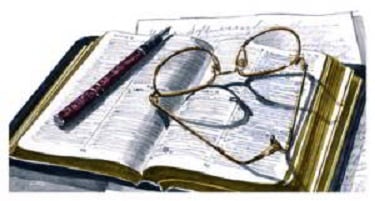
Spectacles on Bible

Image © Stan Myers from GoodSalt.com

Nebuchadnezzar had learned at last the lesson which all rulers need to learn — that true greatness consists in true goodness. He acknowledged Jehovah as the living God, saying, ‘I Nebuchadnezzar praise and extol and honor the King of heaven, all whose works are truth, and His ways judgment: and those that walk in pride He is able to abase’.

“God’s purpose that the greatest kingdom in the world should show forth His praise was now fulfilled. This public proclamation, in which Nebuchadnezzar acknowledged the mercy and goodness and authority of God, was the last act of his life recorded in sacred history”. — Ellen G. White, Prophets and Kings, p. 521.

Discussion Questions:
  1. “Pride leads to every other vice: it is the complete anti-God state of mind. Does this seem to you exaggerated? If so, think it over.  … [T]he more pride one had, the more one disliked pride in others. In fact, if you want to find out how proud you are the easiest way is to ask yourself, ‘How much do I dislike it when other people snub me, or refuse to take any notice of me, or shove their oar in, or patronise me, or show off?’ The point is that each person’s pride is in competition with everyone else’s pride. It is because I wanted to be the big noise at the party that I am so annoyed at someone else being the big noise. Two of a trade never agree”. — C. S. Lewis, Mere Christianity [New York: Touchstone, 1996], p. 110. What is Lewis saying here that could perhaps help you see pride in your own life?
  2. A theme seen in this chapter, as well as in some preceding it, is the sovereignty of God. Why is this such an important topic to understand? What role does the Sabbath play in helping us understand this crucial truth?

<–Thursday

Amen!(0)

Source: http://feedproxy.google.com/~r/SabbathSchoolNet/~3/uLjjL4HRoxM/rP2b-BGlyqUpzZG_1BCH06-weTsiwu_sBJ3puoSLfNghuyrbZW72laCFjqlV59P5aP2N0fLa1DudvVl0szUacvwsmCg6BT0zDbffjdjvtAwREWf_63ZykQ-CAoeDpD-D

Share this:

  • Share on Facebook (Opens in new window) Facebook
  • Share on LinkedIn (Opens in new window) LinkedIn
  • Share on X (Opens in new window) X
  • Share on Pinterest (Opens in new window) Pinterest

Like this:

Like Loading...

Filed Under: Adventist Sermons & Video Clips, SSNet.org

Thursday: The Stone

January 15, 2020 By admin

Read Daniel 2:34-35, Daniel 2:44-45. What do these verses teach us about the ultimate fate of our world?

The focus of the dream is on what will happen in the “latter days” (Dan. 2:28). As powerful and rich as they may have been, the metal (and clay) kingdoms are nothing but a prelude to the establishment of the stone kingdom. Whereas to some extent metals and clay can be products of human manufacture, the stone in the dream comes untouched by human hands. In other words, although each of the previous kingdoms eventually comes to an end, the kingdom represented by the stone will last forever.

The Kingdom Stone

Image © Steve Creitz at Goodsalt.com

The metaphor of the rock, then, often symbolizes God (for example, Deut. 32:4, 1 Sam. 2:2, Ps. 18:31), and the stone likewise may be a representation of the Messiah (Ps. 118:22; 1 Pet. 2:4, 1 Pet. 2:7). Thus, nothing is more appropriate than the figure of a stone to symbolize the establishment of God’s eternal kingdom.

Some argue that the stone kingdom was established during Jesus’ earthly ministry, and that the propagation of the gospel stands as an indication that the kingdom of God has taken over the entire world. Yet the stone kingdom comes into existence only after the four main kingdoms have fallen and human history has reached the time of the divided kingdoms, represented by the feet and toes of the image. This fact rules out the fulfillment during the first century, because Jesus’ earthly ministry took place during the dominion of Rome, the fourth kingdom.

But the stone gives way to a mountain. That is, “the stone that struck the image became a great mountain and filled the whole earth” (Dan. 2:35, NKJV). A mountain such as this evokes Mount Zion, the place where the temple stood, the concrete representation of God’s earthly kingdom in the Old Testament times. Interestingly, the stone cut from the mountain becomes a mountain itself. This mountain, which according to the text is already in existence, most likely points to the heavenly Zion, the heavenly sanctuary, whence Christ will come to establish His eternal kingdom. And in the Jerusalem that will come down from heaven (Rev. 21:1-22:5), this kingdom will find its ultimate fulfillment.

Daniel chapter 2 has been correct on all the kingdoms so far. Why, then, is it so logical and wise to trust its prophecy about the coming of the final kingdom, God’s eternal one? Why is it so irrational not to believe the prophecy?

<–Wednesday Friday–>

Amen!(0)

Source: http://feedproxy.google.com/~r/SabbathSchoolNet/~3/oNnP9sp4UoQ/

Share this:

  • Share on Facebook (Opens in new window) Facebook
  • Share on LinkedIn (Opens in new window) LinkedIn
  • Share on X (Opens in new window) X
  • Share on Pinterest (Opens in new window) Pinterest

Like this:

Like Loading...

Filed Under: Adventist Sermons & Video Clips, SSNet.org

Wednesday: The Image, Part Two

January 14, 2020 By admin

Read again the dream and its interpretation (Dan. 2:31-49). What does this teach us about God’s foreknowledge of world history?

The prophecy conveyed by Nebuchadnezzar’s dream provides a general prophetic outline and functions as the yardstick with which to approach the more-detailed prophecies of Daniel chapters 7, 8, and 11. Also, Daniel chapter 2 is not a conditional prophecy.

King Nebuchadnezzer's Statue Mosaic

Image © Lars Justinen at Goodsalt.com

It is an apocalyptic prophecy: a definitive prediction of what God foresaw and would actually bring to pass in the future.

  1. The head of gold represents Babylon (626-539 B.C.). Indeed, no other metal could better represent the power and wealth of the Babylonian empire than gold. The Bible calls it “the golden city” (Isa. 14:4) and “a golden cup in the LORD’s hand” (Jer. 51:7; compare with Rev. 18:16). The ancient historian Herodotus reports that an abundance of gold embellished the city.
  2. The chest and arms of silver stand for Media-Persia (539-331 B.C.). As silver is valued less than gold, the Medo-Persian empire never attained the splendor of the Babylonian. In addition, silver was also a fitting symbol for the Persians because they used silver in their taxation system.
  3. The belly and thighs of bronze symbolize Greece (331-168 B.C.). Ezekiel 27:13 portrays the Greeks as bartering bronze vessels. Greek soldiers were noted for their bronze armor. Their helmets, shields, and battle-axes consisted of brass. Herodotus tells us that Psammetichus I of Egypt saw in invading Greek pirates the fulfillment of an oracle that foretold “men of bronze coming from the sea”.
  4. The legs of iron aptly represent Rome (168 B.C.-A.D. 476). As Daniel explained, the iron represented the crushing power of the Roman Empire, which lasted longer than any of the previous kingdoms. Iron was a perfect metal to represent the empire.
  5. The feet partly of iron and partly of clay represent a divided Europe (A.D. 476-Second Coming of Christ). The mixture of iron with clay provides a fitting picture of what happened after the disintegration of the Roman Empire. Although many attempts have been made to unify Europe, ranging from marriage alliances between royal houses to the present European Union, division and disunity have prevailed and, according to this prophecy, will remain so until God establishes the eternal kingdom.

<–Tuesday Thursday–>

Amen!(0)

Source: http://feedproxy.google.com/~r/SabbathSchoolNet/~3/nSWpkZMCHqc/

Share this:

  • Share on Facebook (Opens in new window) Facebook
  • Share on LinkedIn (Opens in new window) LinkedIn
  • Share on X (Opens in new window) X
  • Share on Pinterest (Opens in new window) Pinterest

Like this:

Like Loading...

Filed Under: Adventist Sermons & Video Clips, SSNet.org

Every Word of God Proves True

January 13, 2020 By admin

Every word of God proves true…Proverbs 30:5 NLT

God’s Word said “if you eat from the tree of knowledge of good and evil you will die.” The serpent said, “You won’t die!” insinuating God is a liar. The serpent was talking so it appeared defiance to God actually gave him special powers. Eve believed in what she heard and saw from the serpent instead of believing God’s Word. Turns out God’s Word was true. She died.

Image © Pacific Press from GoodSalt.com

Image © Pacific Press from GoodSalt.com

God told us through the prophet Daniel that Europe would never be reunited into a one-world empire after Rome fell. In World War 2 Arthur Maxwell’s superiors were so afraid Hitler would take over Europe that they asked him not to publish his article claiming, according to Daniel 2, that there was no way Hitler could win and take over Europe. Maxwell published his article anyways. Good thing he did, because it turned out God’s Word was true. Hitler lost. Europe has never been reunited into a one-world empire.

In the wilderness Satan wanted to tempt Jesus and make Him doubt He was the Son of God. After all He probably did not look the best after 40 days of fasting. Jesus said He did not need any signs, like turning stones to bread to prove He was God’s Son. He had already heard God call Him “Son” at His baptism. Jesus put His faith in God’s Word instead of appearances. Turns out God’s Word is true. Even the centurion knew Jesus was God’s Son.

A boy told a story about dying and going to heaven. The Bible says when you die you remain in your grave, unconscious until Jesus comes and resurrects us. Like Eve, many people put their faith in what they saw and heard instead of God’s Word. The boy later recanted his story. Turns out the Bible is true. Those who die sleep until Jesus comes.

The moral of my story is, whenever appearances, sight, sound and feeling all contradict God’s Word, God’s Word, the Holy Scriptures will prove true every time. Trust God. Trust His Word above anything you see, feel, or hear.

Amen!(0)

Source: http://feedproxy.google.com/~r/SabbathSchoolNet/~3/Q1HpcR8i0XA/

Share this:

  • Share on Facebook (Opens in new window) Facebook
  • Share on LinkedIn (Opens in new window) LinkedIn
  • Share on X (Opens in new window) X
  • Share on Pinterest (Opens in new window) Pinterest

Like this:

Like Loading...

Filed Under: Adventist Sermons & Video Clips, SSNet.org

Tuesday: The Image – Part One

January 13, 2020 By admin

Read Daniel 2:24-30. What does Daniel say here that’s so important for us always to remember? (See also John 15:5).

In response to prayer, God reveals the content of the dream and its interpretation. And Daniel does not hesitate to tell the king that the solution for the mystery comes from the “God in heaven”. Also, prior to reporting the content of the dream and its interpretation,

Nebuchadnezzar's Vision on a Rock

Image © Lars Justinen at Goodsalt.com

Daniel mentions the unexpressed thoughts and concerns of the king as the latter lay sleepless in bed. This circumstantial information further emphasizes the credibility of the message, because such information known only to the king must have come to Daniel through a supernatural power. But as Daniel proceeds to report the content of the dream, he risks triggering another crisis, because the dream is not necessarily good news for Nebuchadnezzar.

Read Daniel 2:31-49. What does the dream say is the fate of Nebuchadnezzar’s kingdom?

The dream consists of a majestic image with its head “of fine gold, its chest and arms of silver, its belly and thighs of bronze, its legs of iron, its feet partly of iron and partly of clay” (Dan. 2:32-33, NKJV). Eventually a stone “struck the image on its feet” (Dan. 2:34, NKJV), and the whole structure was destroyed and scattered like chaff on the wind. Daniel explains that the different metals represent successive kingdoms that will replace one another throughout the course of history. For Nebuchadnezzar, the message is clear: Babylonia, with all its might and glory, will pass away and be replaced by another kingdom, which will be followed by others until a kingdom of a completely different nature will replace them all: God’s eternal kingdom, which will last forever.

Look at how fleeting and temporary all human things are. What should this fact teach us about the great hope we have in Jesus, and in Jesus alone (see John 6:54, 2 Cor. 4:18)?

<–Monday Wednesday–>

Amen!(0)

Source: http://feedproxy.google.com/~r/SabbathSchoolNet/~3/u_DtL9u3AlQ/

Share this:

  • Share on Facebook (Opens in new window) Facebook
  • Share on LinkedIn (Opens in new window) LinkedIn
  • Share on X (Opens in new window) X
  • Share on Pinterest (Opens in new window) Pinterest

Like this:

Like Loading...

Filed Under: Adventist Sermons & Video Clips, SSNet.org

  • « Previous Page
  • 1
  • …
  • 750
  • 751
  • 752
  • 753
  • 754
  • …
  • 1055
  • Next Page »

SkyScraper

Intercer Ministry – Since 1997!

We’re on Pinterest!

Partners


The Seven Thunders Ministry

Recent Posts

  • Impara ad amarti come Dio ti ama #drittoalcuore
  • Are We God’s Publicists?
  • The Sabbath reveals how intentional God is.
  • Sabbath: Reconciliation and Hope
  • Family: One Surname, Many Names – Pastor Erton Köhler

About Intercer

Intercer is a website with biblical materials in Romanian, English, Hungarian and other languages. We want to bring the light from God's Word to peoples homes. Intercer provides quality Christian resources...[Read More]

Lucian Web Service


Intercer is proudly sponsored by Lucian Web Service - Professional Web Services, Wordpress Websites, Marketing and Affiliate Info. Lucian worked as a subcontractor with Simpleupdates, being one of the programmers for the Adventist Church Connect software. He also presented ACC/ASC workshops... [read more]

Archives

Follow @intercer

Categories

[footer_backtotop]

Website provided by: Intercer Romania · Intercer Canada · Lucian Web Service · Privacy · Log in


%d