• Home
  • Devotionals
  • BiblePhone
  • Blogs
  • TV
  • Prayer
    • Submit Prayer Request
    • Prayer Requests List
  • Contact us
  • Romanian

Intercer Adventist News

Closer To Heaven

  • About us
    • About Adventist Church
    • About Intercer Adventist News
    • About Intercer
    • About Lucian Web Service
    • Latest News
    • Romanian Church News
  • News and Feeds
    • Intercer Adventist News
    • 60 Second SlideShows
    • “Adventist Tweets” Paper
    • Adventists on Twitter
    • Adventists on Google Plus
    • Bible Resources
      • Adventist Universities Daily Bible
      • Answers For Me
        • Dear God
        • Healthy Living
        • Life Notes
        • Spiritual applications
        • Vegetarian recipes
      • Better Sermons
        • Spirit Renew Quotes
      • Daily Bible Promise
      • E-GraceNotes
        • Bible Says
        • City Lights
        • Family First
        • Staying Young
      • Story Harvest
        • Personal Stories
      • SSNet.org
    • Churches & Organizations
      • Adventist News Network
      • Adventist Review
      • Adventist World Radio
      • Avondale College
      • Babcock University Nigeria
      • BC Alive
      • British Union Conference
      • Canadian Adventist Messenger
      • Canadian Union
      • North American Division News
      • Outlook Magazine
      • PM Church – Pastor’s Blog
      • Potomac Conference
      • Record Magazine – Australia
      • Review and Herald
      • Trans-European Division
      • Washington Conference
    • Health
      • Dr.Gily.com
      • Vegetarian-Nutrition.info
    • Ministries
      • 7 Miracle (Youth)
      • A Sabbath Blog
      • Adventist Blogs
      • Adventist Today
      • ADvindicate
      • Creative Ministry
      • Grace Roots
      • Romanian Church News
      • Rose’s Devotional
      • UNashamed
    • Personal
      • Alexandra Yeboah
      • Iasmin Balaj
      • Jennifer LaMountain
      • McQue’s View
      • Refresh with Tia
      • Shawn Boonstra
  • Sermons & Video Clips
    • Churches
      • Downey Adventist Church
      • Fresno Central SDA Church
      • Hillsboro Adventist Church
      • Mississauga SDA Church
      • New Perceptions Television (PM Church)
      • Normandie Ave SDA Church
      • Remnant Adventist Church
    • Organizations
      • Adventist News Network (ANN)
      • ADRA Canada
      • Adventists About Life
      • Adventist Education
      • Adventist Mission
      • Amazing Facts
      • Adventist Church Connect
      • BC Adventist
      • Church Support Services
      • In Focus (South Pacific)
      • IIW Canada
      • NAD Adventist
      • NAD Church Resource Center (Vervent)
      • NARLA
      • Newbold
      • Review & Herald
      • SECMedia
      • Video Avventista (Italy)
    • Ministries
      • 3AngelsTube.com
      • Answered.TV
      • AudioVerse.org
      • AYO Connect
      • Christian Documentaries
      • GAiN #AdventistGeeks
      • GYC
      • Intercer Websites
      • Josue Sanchez
      • LightChannel
      • Pan de Vida
      • Revival and Reformation
      • Stories of Faith
      • SAU Journalism/Communication
      • Spirit Flash
      • The Preaching Place (UK)
      • Toronto East Youth Nation
    • Personal
      • Esther-Marie Hartwell
      • McQuesView
      • Pastor Manny Cruz
    • Sabbath School
      • Ecole du Sabbat Adventiste
      • Sabbath School Audio Podast
      • Sabbath School daily
  • Resources
    • Bible and Bible Studies
    • Health
    • Music
  • All articles
  • G+ News & Marketplace
    • G+ News & Marketplace Group
    • G+ Page
You are here: Home / Archives for News and Feeds / SSNet.org

Friday: Further Thought – The Bread and Water of Life

August 14, 2025 By admin

Daily Lesson for Friday 15th of August 2025

Read Ellen G. White, “From the Red Sea to Sinai,” Pages 291–302, in Patriarchs and Prophets.

Spectacles on Bible

Image © Stan Myers from GoodSalt.com

Not long after the incident with the water, the nation faced a new danger (see Exodus 17:8-16)—a fierce and warlike tribe, the Amalekites, attacked them. “The Amalekites were not ignorant of God’s character or of His sovereignty, but instead of fearing before Him, they had set themselves to defy His power. The wonders wrought by Moses before the Egyptians were made a subject of mockery by the people of Amalek, and the fears of surrounding nations were ridiculed. They had taken oath by their gods that they would destroy the Hebrews, so that not one should escape, and they boasted that Israel’s God would be powerless to resist them. They had not been injured or threatened by the Israelites. Their assault was wholly unprovoked. It was to manifest their hatred and defiance of God that they sought to destroy His people. The Amalekites had long been high-handed sinners, and their crimes had cried to God for vengeance, yet His mercy had still called them to repentance; but when the men of Amalek fell upon the wearied and defenseless ranks of Israel, they sealed their nation’s doom.”—Ellen G. White, Patriarchs and Prophets, p. 300.

Discussion Questions

  1. Dwell more on the idea of how Jethro learned about the true God from what God did for His people. (See Exodus 18:8-10.) Why does that principle hold true today? Ask yourself and your class: What kind of witness does our church present to the world? What do we say to the world about the nature and character of our God?
  2. Read again 1 Corinthians 10:4. What should this teach us about the ancient heresy, which some believe today, that says the Old Testament God was vengeful, hateful, and unforgiving, in contrast to what we see in Jesus? How does this verse show why that belief is wrong?
  3. Read again what Ellen G. White wrote above about how the Amalekites had the opportunity to learn about the true God. Contrast their attitude to Jethro’s. What lessons can we learn about why God brought judgment upon not just them but upon many of the tribes in the ancient world that Israel came in contact with?

<–Thursday

(0)

Source: https://ssnet.org/blog/25c-07-further-thought-the-bread-and-water-of-life/

Share this:

  • Click to share on Facebook (Opens in new window) Facebook
  • Click to share on LinkedIn (Opens in new window) LinkedIn
  • Click to share on X (Opens in new window) X
  • Click to share on Pinterest (Opens in new window) Pinterest

Like this:

Like Loading...

Filed Under: Adventist Sermons & Video Clips, SSNet.org

7: The Bread and Water of Life (Exodus 15-18) – Teaching Outline

August 13, 2025 By admin

GoBible.org by Bruce CameronIntroduction: How do you feel when you are hungry or thirsty? What if getting a drink or food was not something you could easily do? The problem for most people, even poor people in the United States, is that we are “over secure” when it comes to food. For most of us, the problem is having the willpower to eat less. We die from eating too much, not from eating too little. While we might have a problem getting into the minds of the Hebrews for our study this week, let’s do our best as we turn to our study of Exodus.

I. Thirsty

A. Read Exodus 15:22. What is significant about the fact that the Hebrews were three days without finding water? (Several sources reported that humans can live between three and five days without water. It depends on the health of the individual.)

  1. What do you think is the attitude of the people? (The people were looking at dying without water. Remember that there are about two million people in this group.)

B. Read Exodus 15:23. Have you ever felt that you must go to the bathroom, but when you found a bathroom, it was locked! How did you feel? (Between the last questions and this, we see how the people could be desperate!)

C. Read Exodus 15:24-25. Notice that the verses say that the people grumbled “against” Moses, and Moses “cried out to the Lord.” Is this the proper chain of command? (Yes.)

  1. Are the people doing something different from what Moses is doing? (Yes. They were saying negative things about Moses. While Moses is turning to God for help.)
  2. It sounds like God pointed Moses’ attention to a specific piece of wood. Why would God have to find a particular wood for Moses? (Some believe this wood had properties that counteracted the bitterness of the water and made it drinkable.)

D. Read Exodus 7:20. Assume the wood actually played an important role in fixing the water. Why would God do that? Why not have Moses strike the water with his staff just like he struck the Nile to turn it to blood? (Exodus 15:25 tells us that these events were a test.)

E. Read Exodus 15:26. What do you think is the test referred to in Exodus 15:25? (They are tested on listening carefully and paying attention to God. Changing the Nile water to blood and changing this lake water from bitter to sweet are similar, but God uses a different technique involving wood.)

F. Let’s stay with Exodus 15:26. Why does God talk about future health? Why is disease a logical question to bring into this discussion? (We have two things going on. First, bitter water is changed to sweet because people need to drink. Beyond that, God promises that He will not put plagues of disease on the people if they obey Him.)

G. Read Exodus 15:27. God leads the Hebrews to a place where there is obviously good water. Is God giving the people a lesson? If so, what is it? (God is showing the people that He can do two things. He can lead them in the right direction so their needs will be met. At the same time, when there is an emergency, God can perform a miracle (or provide the means) to fix the problem.)

II. Meat Lovers Special

A. Read Exodus 16:1-3. Do you think the slaves had “all the food they wanted?”

  1. Why would they be complaining about meat when, according to Exodus 12:32, they had their “flocks and herds” with them?

B. Read Exodus 16:4-7. Is God answering the request of the people? (They complained about starving, but they dreamed of eating meat. God is sending them bread instead. Or is He?)

  1. Notice that Moses and Aaron in verse 7 tell the Hebrews that they should not be the target of criticism. Do you agree? (When I’m a leader, I think it is proper that criticism be directed to me when individuals think something is going wrong.)

C. Read Exodus 16:8. What argument do Moses and Aaron make that they should escape criticism? (They are God’s agents and therefore they should escape criticism because God is the One being criticized.)

  1. What do you think about their argument?

D. Read Exodus 16:10-14. Consider the ways God has answered the people’s complaints. Are they the same? (They are much different. Bringing quail is directing what could have been a natural occurrence. Bringing manna is an unprecedented miracle.)

III. Manna

A. Read Exodus 16:15-18. Let’s focus on verse 18. What is God teaching the people? To be Communists? To be lazy?

  1. Why would a person gather too much? (This shows a lack of trust in God. He is teaching the people to trust Him. Even if you underestimated the amount you should gather, God would make it sufficient?

a. Is there a lesson here for retirement savings? Or are the two completely unrelated?

B. Read Exodus 16:19-25. Are each of these details a separate miracle? (Yes. Manna comes six days a week. You cannot keep it overnight, except on Friday, otherwise it spoils. If you are lazy and do not gather it in the morning, it will not be available to you.)

  1. Why do we have this odd pattern of extra on Friday and none on Saturday? Notice that the Ten Commandments, requiring Sabbath rest, have not yet been given. See Exodus 20:8-11. (This shows that, as Exodus 20:11 states, the Sabbath rest was instituted at the Creation. God patterns His distribution of manna to reinforce His Sabbath rest commandment.)

C. Read Exodus 16:35. What does this teach us? (God can be trusted to help us for as long as we need it.)

IV. Rock Water

A. Read Exodus 17:1-3. Is this quarreling with Moses understandable? (No. God is giving them food to eat, and He solved their last problem with water.)

B. Read Exodus 17:4. Is Moses doing the right thing? (I vote, “yes.” He turns to God for help in this time of trouble.)

C. Read Exodus 17:5-6. At the beginning of our study, I asked why God did not have Moses strike the bitter water with his staff. But here, He has Moses strike a rock with his staff. Why the difference?

  1. Is there a lesson in this for us? (This promotes the idea that there was something special about the wood God selected to counteract the bitterness of the lake. Turning water into blood or getting water from a rock demonstrates undeniable miracles. The lesson for us is that God can deal with our needs in many ways.)

V. Working Intelligently

A. Read Exodus 18:13-14. The back story is that when Moses and the multitude came by Horeb, Jethro, Moses’ father-in-law, brought Moses’ wife and children to him. Jethro advises Moses. What is Jethro suggesting? (The situation does not seem to reflect common sense.)

B. Read Exodus 18:15-16. What does Moses say is the reason why he is the one judging all disputes? (He says the people come to him to know what God would do. Moses explains the law of God.)

C. Read Exodus 18:17. How can Jethro claim it is “not good” for Moses to resolve disputes and educate the people about God’s law? This is an obviously important task to advance the Kingdom of God!

D. Read Exodus 18:18. How can Moses’ hard work on God’s behalf be improved? (Moses needs to share the burden. Moses is doing a great thing. But sometimes you can do too much of a great thing!)

  1. Do you feel “burned out” with your church related tasks?
  2. Do some in your church who are doing important work quit because they say they are “burned out?” (From time to time we lose important people who say they must quit because of “burnout.” I’m not a good person to consult on this. I’ve been writing these weekly lessons for 29 years, and I’m starting my 50th year of litigating and teaching. I would be sad if I stopped.)

E. Read Exodus 18:19-22. Jethro gives two suggestions to make Moses’ work more efficient. What are they? (First, Jethro says that Moses should educate all the people about God’s rules. It is inefficient to do it case by case. Second, Moses should organize a group of judges and delegate all of the smaller issues to them.)

  1. Will these new judges be as good as Moses? (Not in the abstract. But they will have more time to devote to a case.)
  2. Think about Jethro’s advice and see if you can apply it to your ministry.

F. Friend, we need to trust God in times of stress and to listen to the good advice of fellow believers. That will make your life better. Why not consider this right now how to improve your ministry?

VI. Next week: Covenant at Sinai.

Copr. 2025, Bruce N. Cameron, J.D. Scripture quotations are from the ESV Bible (The Holy Bible, English Standard Version ), copyright 2001 by Crossway, a publishing ministry of Good News Publishers. Used by permission. All rights reserved. Suggested answers are found within parentheses. If you normally receive this lesson by e-mail, but it is lost one week, you can find it by clicking on this link: http://www.GoBible.org. Pray for the guidance of the Holy Spirit as you study.
(0)

Source: https://ssnet.org/blog/7-the-bread-and-water-of-life-exodus-15-18-teaching-outline/

Share this:

  • Click to share on Facebook (Opens in new window) Facebook
  • Click to share on LinkedIn (Opens in new window) LinkedIn
  • Click to share on X (Opens in new window) X
  • Click to share on Pinterest (Opens in new window) Pinterest

Like this:

Like Loading...

Filed Under: Adventist Sermons & Video Clips, SSNet.org

The Bread and Water of Life – Hit the Mark Sabbath School

August 13, 2025 By admin

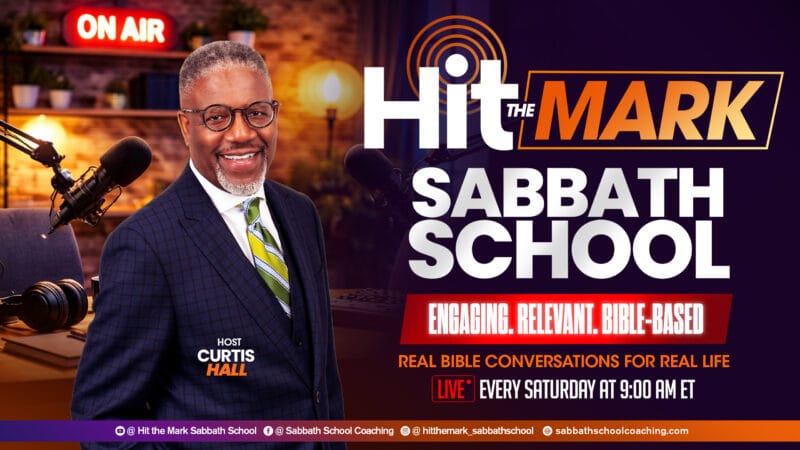
Here’s a clue for this week’s lesson keyword: “one of the attributes, or features that make up and distinguish an individual.” See if your answer matches the Hit the Mark panel as they discuss Sabbath School Lesson 7 – The Bread and Water of Life. It’s the fastest hour of the week!

(0)

Source: https://ssnet.org/blog/the-bread-and-water-of-life-hit-the-mark-sabbath-school/

Share this:

  • Click to share on Facebook (Opens in new window) Facebook
  • Click to share on LinkedIn (Opens in new window) LinkedIn
  • Click to share on X (Opens in new window) X
  • Click to share on Pinterest (Opens in new window) Pinterest

Like this:

Like Loading...

Filed Under: Adventist Sermons & Video Clips, SSNet.org

Thursday: The Bread and Water of Life

August 13, 2025 By admin

Daily Lesson for Thursday 14th of August 2025

Read 1 Corinthians 10:11. What reason does Paul give for these events to have been recorded?

Paul explains that all the things that happened to the Israelites are examples and warnings for Christ’s followers and will help them avoid the same troubles; that is, they will learn from these examples.

"Come Unto Me" by Lars Justinen at GoodSalt.com

“Come Unto Me” Image ©Lars Justinen by Lars Justinen of GoodSalt.com

This is pertinent instruction for us, we who live at “the end of the ages” (ESV). God gives His people the Holy Spirit to strengthen the believers with “power, love and self-discipline” (2 Timothy 1:7, NIV) so they can make correct decisions and follow His teaching. Jesus Christ is the Source of new life (John 14:6), and only He can turn us into “a living sacrifice, holy and acceptable to God. . . . Do not be conformed to this world, but be transformed by the renewal of your mind, that by testing you may discern what is the will of God, what is good and acceptable and perfect” (Romans 12:1-2, ESV).

Later on, in His ministry, Jesus picked up lessons from these Old Testament accounts, particularly with the manna and the water, using those images to teach truths about Himself, the One who led the Israelites through the wilderness.

Read John 4:7-15 and John 6:31-51. What truths are revealed here for us as Christians?

The Samaritan woman discovered that Christ offers something that she would not get anywhere else. The inner thirst for peace, joy, and happiness comes from God, and thus only God can satisfy it (Psalms 42:1-2).

Later, in the context of the manna, Jesus explained that it was God, not Moses, who provided it for the people. Then Jesus declared: “ ‘I am the bread of life; whoever comes to me shall not hunger’ ” (John 6:35, ESV). Jesus repeated two times that He is the Bread of Life (John 6:35,41,48).

As the manna in the wilderness was “bread from heaven” (John 6:31-32), so the water from the rock was Christ’s gift to satisfy their thirst. Besides these physical aspects, bread and water also had spiritual significance, for Jesus Christ is “the bread of life” (John 6:35,48) and “the living water” (John 4:10-11,14; John 7:37-38). Only in Him, then, can our spiritual thirst and hunger truly be satisfied.

<–Wednesday Friday–>

(0)

Source: https://ssnet.org/blog/25c-07-the-bread-and-water-of-life-2/

Share this:

  • Click to share on Facebook (Opens in new window) Facebook
  • Click to share on LinkedIn (Opens in new window) LinkedIn
  • Click to share on X (Opens in new window) X
  • Click to share on Pinterest (Opens in new window) Pinterest

Like this:

Like Loading...

Filed Under: Adventist Sermons & Video Clips, SSNet.org

How a Bitter Life is Made Sweet

August 12, 2025 By admin

And when they came to Marah, they could not drink of the waters of Marah, for they [were] bitter: therefore the name of it was called Marah. And the people murmured against Moses, saying, What shall we drink? And he cried unto the LORD; and the LORD showed him a tree, [which] when he had cast into the waters, the waters were made sweet: there he made for them a statute and an ordinance, and there he proved them, And said, If thou wilt diligently hearken to the voice of the LORD thy God, and wilt do that which is right in his sight, and wilt give ear to his commandments, and keep all his statutes, I will put none of these diseases upon thee, which I have brought upon the Egyptians: for I [am] the LORD that healeth thee. Exodus 15:23-26 KJV

What was the significance of Moses putting a tree in the water? How did a tree make the water sweet? In 1 Peter 2:24, Peter refers to the cross as a tree.

who Himself bore our sins in His own body on the tree, that we, having died to sins, might live for righteousness—by whose stripes you were healed. 1 Peter 2:24 NKJV

Photo by Maurice Ashton

In a world of hate and bitterness, Jesus died on a tree to save us from a bitter world. Sin has caused suffering and bitterness, but Jesus was lifted up on the cross to make our lives sweet again. This is a story that looks simple in itself, but like many stories of the Exodus, it points us to the cross and the salvation we have in Jesus. 

If life has made you bitter, Jesus is offering living water that can make your life sweet again.

Jesus answered and said to her, “Whoever drinks of this water will thirst again, but whoever drinks of the water that I shall give him will never thirst. But the water that I shall give him will become in him a fountain of water springing up into everlasting life.” John 14:13-14 NKJV

I would like to invite you to find the sweet life through fellowship with Jesus and other believers, by finding a Christ-centered Bible-based church in your area. You can find one here.

(0)

Source: https://ssnet.org/blog/how-a-bitter-life-is-made-sweet/

Share this:

  • Click to share on Facebook (Opens in new window) Facebook
  • Click to share on LinkedIn (Opens in new window) LinkedIn
  • Click to share on X (Opens in new window) X
  • Click to share on Pinterest (Opens in new window) Pinterest

Like this:

Like Loading...

Filed Under: Adventist Sermons & Video Clips, SSNet.org

  • « Previous Page
  • 1
  • …
  • 74
  • 75
  • 76
  • 77
  • 78
  • …
  • 1045
  • Next Page »

SkyScraper

Intercer Ministry – Since 1997!

We’re on Pinterest!

Partners


The Seven Thunders Ministry

Recent Posts

  • North American Division Re-Releases Appeal For Human Dignity on Facebook Due to ICE Escalation
  • SATIRE: Walla Walla Closes After Failing to Reach Wedding Quota
  • Living FULL POWER – S2025-18
  • God First: Your Daily Prayer Meeting #1261
  • “What We Do Every Wednesday” – January 2026 President’s Video

About Intercer

Intercer is a website with biblical materials in Romanian, English, Hungarian and other languages. We want to bring the light from God's Word to peoples homes. Intercer provides quality Christian resources...[Read More]

Lucian Web Service


Intercer is proudly sponsored by Lucian Web Service - Professional Web Services, Wordpress Websites, Marketing and Affiliate Info. Lucian worked as a subcontractor with Simpleupdates, being one of the programmers for the Adventist Church Connect software. He also presented ACC/ASC workshops... [read more]

Archives

Follow @intercer

Categories

[footer_backtotop]

Website provided by: Intercer Romania · Intercer Canada · Lucian Web Service · Privacy · Log in


%d