
We will soon face questioning from intellectuals—learn how to prepare to defend your faith. Source: https://www.youtube.com/watch?v=yslZl__Ks0I
Una guida nel cammino
Anche quando sembra non esserci via d’uscita, Dio è sempre accanto a te per guidarti. 📖 "Io t’istruirò e ti mostrerò la via da seguire". (Salmo 32:8). Affida la tua strada a Lui: non sei mai solo nel viaggio della vita. Source: https://www.youtube.com/shorts/fX2Rvlo6UDs
12: Living with Each Other — It is Written — Discussion with the Author

Join It Is Written Sabbath School host Eric Flickinger and this quarter’s author, Dr. Clinton Wahlen, as they provide additional insights into this week’s Sabbath School lesson,
12: Living with Each Other — Hope Sabbath School Video Discussion
View an in-depth discussion of Living Wuth Each Other in the Hope Sabbath School class led by Pastor Derek Morris.
Click on the image below to view the video:
With thanks to Hope Channel – Television that will change your life.
Our Greatest Need – The Holy Spirit | Pr. Sujjan John
Our Greatest Need , The Holy Spirit — Pr. Sujjan John THANK YOU for your continued financial support of our Media Ministries. Please donate by visiting "https://adventistgiving.org/#/org/ANB4RC/envelope/start" and select “Media Ministries”. Connect With Us
X: RemnantSDA
Facebook: RemnantSDAchurch.org
Instagram: RemnantSDAchurch Source: https://www.youtube.com/watch?v=WtIwDnzYQ58
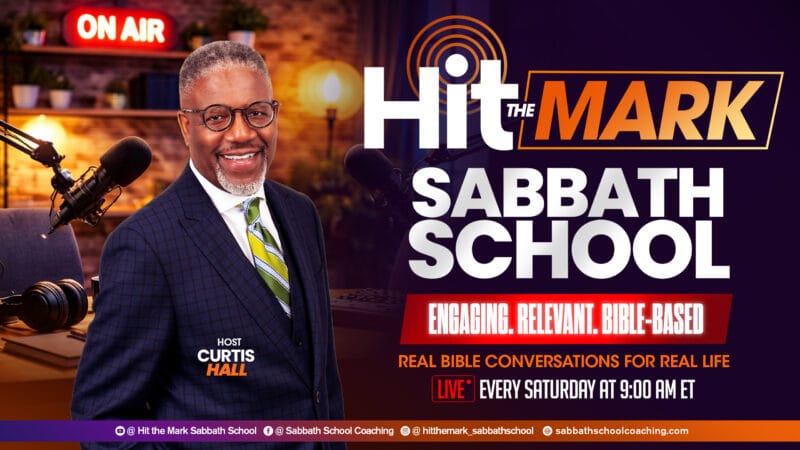
Living With Each Other – Hit the Mark Sabbath School
Is this True, Somewhat True, or False: Based on Colossians 3:18, “Wives, submit to your husbands.” A good Christian wife will be subject to her husband. Join the Hit the Mark panel as they discuss Sabbath School Lesson 12 – Living With Each Other. It’s the fastest hour of the week!
Make sure to get your copy of this week’s lesson handout. Get it HERE
Bert Beach & the Importance of the Personal Touch
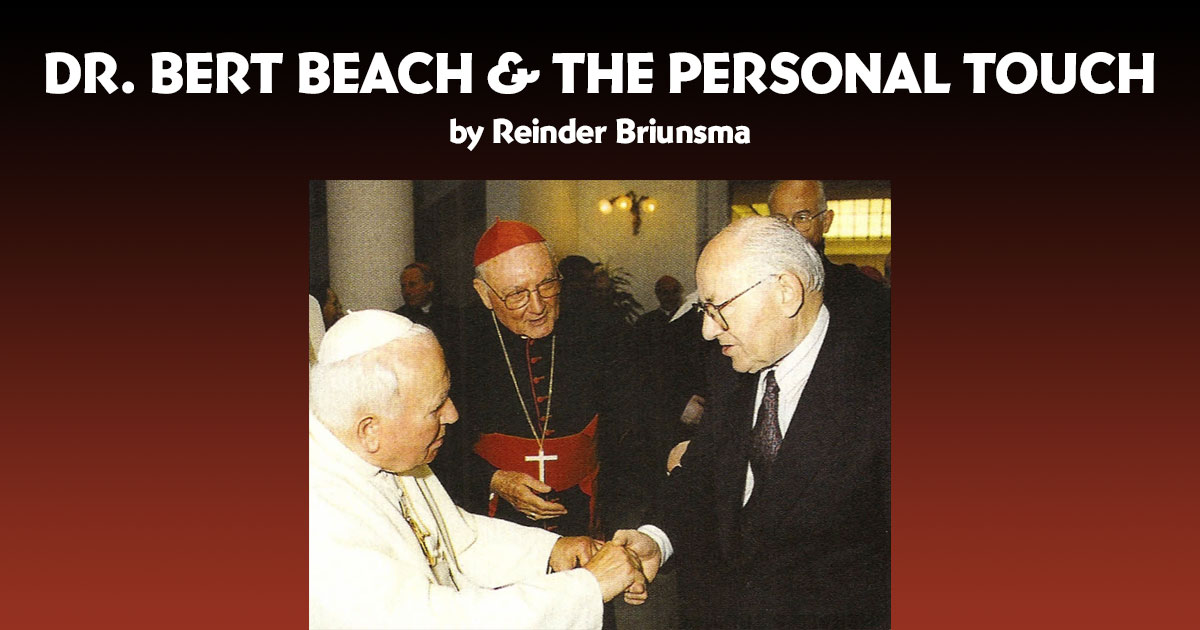
by Reinder Bruinsma | 18 March 2026 | This essay is inspired by someone I knew quite well and whom I still hold in high esteem: Dr. Bert Beverly Beach. He died in 2022, at age 94. Bert was born in 1928 in Switzerland. His father, Walter Beach, served as an administrator in the Seventh-day […] Source: https://atoday.org/bert-beach-the-importance-of-the-personal-touch/
Forest Lake Academy Student Dies in Canoe Accident on Lake Jessamine
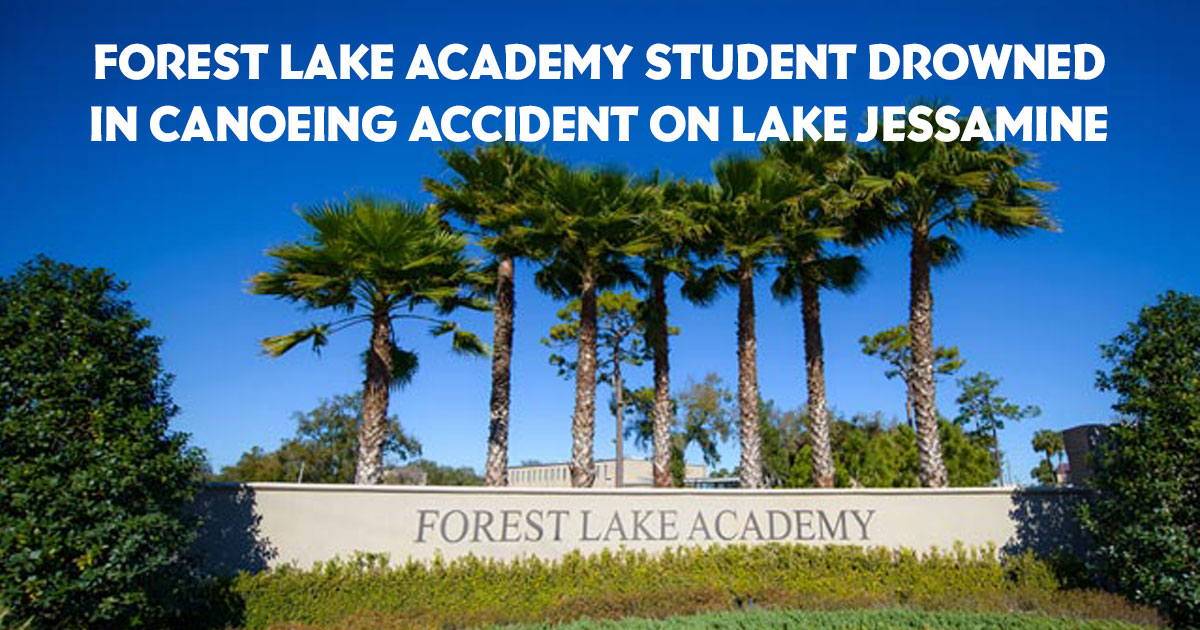
18 March 2026 | Forest Lake Academy students canoeing at Lake Jessamine, Florida, capsized on Monday. Three students were rescued, but one, Eduardo Duarte, died. His body was recovered today. “Weather conditions on Lake Jessamine contributed to the canoe capsizing on Monday afternoon, where four teens were thrown into the weather. ‘It is with heavy […] Source: https://atoday.org/forest-lake-academy-student-dies-in-canoe-accident-on-lake-jessamine/
Thursday: Walking in Wisdom
Daily Lesson for Thursday 19th of March 2026
What is the most important truth that we, as Christians, can know? Of course, it is that Jesus Christ died for our sins and that, through faith in Him, we can have eternal life. This is a truth that we could have never figured out on our own. Instead, it was a truth that had to be told, or revealed, to us. And it has been revealed to us—in the Word of God.
There’s a great deal of truth, knowledge, and wisdom that we would never have known were it not for what God has revealed to us in His Word. But this knowledge and wisdom have not been given to us just as knowledge, just as something to know. Rather, we are to live out in our own lives this truth, this knowledge, and this wisdom.
Read Colossians 4:5-6. In what situations does Paul indicate we especially need to “walk in wisdom”? Why might that be?

Image © Review & Herald Publishing at Goodsalt.com
Unfortunately, as Christians, sometimes we are anything but Christian! And, as Paul indicated (quoting Isaiah 52:5), Israel was also a stumbling block for unbelievers: “For the name of God is blasphemed among the Gentiles through you” (Romans 2:24). How we act toward others, especially those not of our faith, matters a lot (see Titus 2:5, 2 Peter 2:2). A Christian home, a gathering of youth for prayer rather than for mischief; simple kindnesses; and a calm, patient spirit speak volumes to those who are watching to see whether our profession is genuine or not.
In Colossians 4:6, Paul focuses especially on the words we speak: “Let your speech always be gracious” (ESV). More than simply kind or polite, the words we speak should be prompted and permeated by God’s grace through the influence of the Holy Spirit.
“Seasoned with salt.” Opposite to the world’s definition of “salty” speech, our words should be fitting and appealing to those we address.
“That you may know how you ought to answer each one” (NKJV). Only the Holy Spirit can give us the right words at the right time for the right purpose and prepare the minds of the hearers for the message we “must” share (here, too, dei is used—see yesterday’s comments on Colossians 4:4).
|
Think about your words, your actions, and how you walk before others. What message are you sending about your faith and what it means to be a Christian? |
Come trovare pace interiore nel caos quotidiano | BenEssere
Vivere in una centrifuga, tra lavoro, scadenze e pensieri, sembra ormai la normalità. Ma è possibile ritrovare pace anche nel mezzo del caos? In questo episodio di BenEssere, il pastore Nicolò D’Elia ci accompagna in un percorso fatto di domande, esperienze e semplici pratiche quotidiane per vivere con maggiore consapevolezza e serenità. 🔔 Iscriviti al canale per non perdere i prossimi appuntamenti: @hopemediaitalia 🎙️ Siamo anche su Spotify: https://bit.ly/spotify-benessere Source: https://www.youtube.com/watch?v=d7_c2kjxoBY
- « Previous Page
- 1
- …
- 217
- 218
- 219
- 220
- 221
- …
- 5094
- Next Page »

