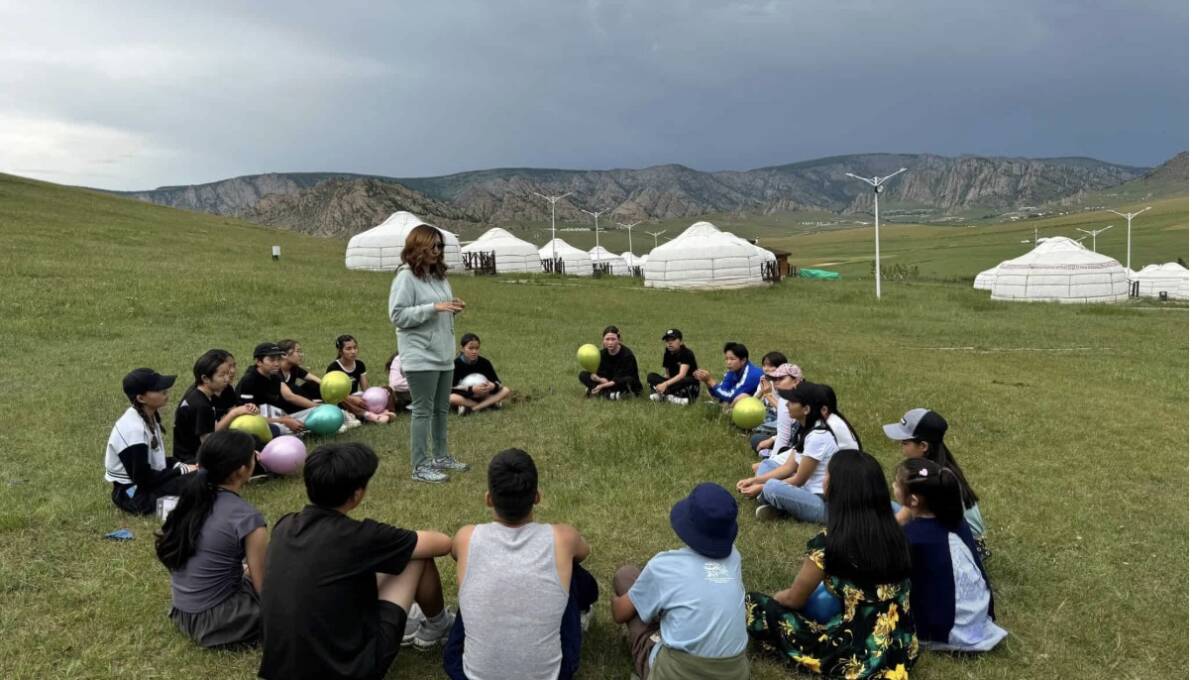
In September 2022 Pacific Union College (PUC) faculty, staff, and students began collaborating with the Upper Napa Valley Blue Zones Project, engaging in community gardening at Calistoga Junior-Senior High School. After implementing these health… Source: https://adventist.news/news/pacific-union-college-obtains-a-blue-zone-certification
Wednesday: Marching Forward by Faith
Daily Lesson for Wednesday 6th of August 2025
Read Exodus 14:13-31. Despite their lack of faith, what did God do for the children of Israel?
Because Moses wholeheartedly trusted God and His Word, he encouraged the people. He presented four crucial points on how to act in difficult situations:
-
“ ‘Do not be afraid’ ” (Exodus 14:13, NKJV). The first appeal is to trust the Lord, because only in this way can fear be overcome. Isaiah reminds us of this truth by stating that believers are in God’s hands, and He will act for them when they accept Him as their God and Lord: “ ‘So do not fear, for I am with you; do not be dismayed, for I am your God. . . . For I am the Lord your God who takes hold of your right hand and says to you, Do not fear; I will help you’ ” (Isaiah 41:10,13, NIV).
-
“ ‘Stand [firm] still’ ” (Exodus 14:13, NKJV). To “stand still” does not mean only to stop murmuring and to expect great things but also to trust God and to wait patiently for His mighty intervention, because He will act.
-
“ ‘You will see the deliverance the Lord will bring you today’ ” (Exodus 14:13, NIV). For our faith to grow, it is important to recognize God’s leadership and help and to be grateful for His promised assistance. To “see” means to open one’s eyes (because disbelief is blind). Only God can provide victory, safety, and salvation. God is always for us, caring and providing what is needed at the appropriate time.
-
“ ‘The Lord will fight for you’ ” (Exodus 14:14, NKJV). This indicates what God will do: He will personally fight for His people. Calvary is the ultimate proof of this reality, for on the cross Christ defeated Satan in order to give us eternal life (John 5:24; Hebrews 2:14; Revelation 12:10-11). Later, even the Egyptians recognized that the Lord was fighting for the Israelites (Exodus 14:25).
God’s command to Moses was clear: “Move on.” God unfolded His action plan step by step: (1) the Angel of God and the pillar of cloud moved from the front of Israel’s camp and stood behind them, protecting them from the Egyptian army; (2) by faith Moses had to stretch out his hand over the sea; (3) the Lord divided the water and dried it up with a strong wind; and (4) the result was that the Israelites went securely through the sea on dry ground to the other side. The Egyptians blindly pursued them, because they did not see that God was doing extraordinary things for His people; that is, they didn’t see until it was too late, as their confession in Exodus 14:25 revealed.
(0)Source: https://ssnet.org/blog/25c-06-marching-forward-by-faith/
Three Observations in Exodus 15
As we study this week’s Sabbath School lesson, which also covers Exodus 15:1-21, I found myself pondering three things that the lesson did not cover.
In Exodus 15:1-18, Moses and all the Israelites are singing a song of celebration about how the Egyptians were defeated. Even singing (celebrating?) how they were drowned in the sea. What would this look like today?
Years ago, a friend from church told me about a neighbor who had been molesting his daughters and beating his wife. He died of a sudden heart attack, and my friend told me that when she went to the funeral, the entire family was sitting there dry-eyed. Not a single tear was shed for this abuser. It wasn’t because they were all cried out either. The family never showed any sorrow over his demise. Should the family have been happy that they were delivered from their abuser, and that, because of his death, he will never abuse again? Should Israel have been singing songs of praise because the Egyptians drowned?
I believe this is why so many victories of good over evil have to be celebrated privately. Some think we should be “nicer than God” and judge those who are celebrating the victories God gives them over abusive situations because,
- Others don’t even have a clue about the abuse going on and may even sympathize with the abuser, and
- Some think we should never celebrate the death of anyone, no matter how wicked.
While it is true that we will not be celebrating the death of the wicked after the thousand years, but rather God will have to wipe the tears from our eyes, there is plenty of biblical support for celebrating the deliverance from evil persons. Let’s consider this passage for a moment.
O daughter of Babylon, who are to be destroyed, Happy the one who repays you as you have served us! Happy the one who takes and dashes Your little ones against the rock! Psalm 137:8-9 NKJV
Many find this passage disturbing. It is disturbing, but it has its place. What Babylon has done to Israel will finally come back on Babylon. Israel is not happy to see innocent children killed. However, their innocent women and children were raped and abused by the Babylonians, and God is showing His love by showing He has Israel’s back.
There is no need to create a theology where we are “nicer than God” to the point that we can’t celebrate justice and deliverance from evil. There is no need to create a “god” who does nothing to defend His people, but merely waits for “natural law” to work itself out. Psalm 137:8-9 is simply celebrating the justice of God. A God who takes an active role in defending His people and working out justice is a God of love. We need to know God has our back in order to feel secure in His love. Moses and all Israel could celebrate God’s justice and love when God showed that He had their back and drowned their relentless abusers in the Red Sea.
It is important for me to share this because too many abuse victims have been made to feel guilty for celebrating their deliverance from narcissistic abuse. Too many abuse victims have had to hold their peace, instead of praising God for His miraculous deliverances from evil, because others would not understand. I know Moses would much rather have seen Pharaoh repent and be converted rather than drowned in the sea. Still, Moses had to celebrate the goodness of God by delivering His people and destroying their cruel abusers once and for all.
My second observation deals with the song of Moses. In Revelation 15 we find the song of Moses, but this time it is also the song of the Lamb. Let’s take a look.
And I saw something like a sea of glass mingled with fire, and those who have the victory over the beast, over his image and [a]over his mark and over the number of his name, standing on the sea of glass, having harps of God. They sing the song of Moses, the servant of God, and the song of the Lamb, saying: “Great and marvelous are Your works, Lord God Almighty! Just and true are Your ways, O King of the [b]saints! Who shall not fear You, O Lord, and glorify Your name? For You alone are holy. For all nations shall come and worship before You, For Your judgments have been manifested.” Revelation 15:2-4 NKJV
Here we see another celebration after the victory over spiritual Babylon. God gave Israel victory over Egypt through Moses, and God gave Spiritual Israel victory over the beast through the Lamb. These songs are about experiences, and while Moses and the Lamb both experience victory, they both share another experience. Both were willing to say goodbye to life forever if that is what it took to honor God and save others. Moses did this in Exodus 32:32 when he asked God to blot His name out of the book of life if He could not forgive them. The Lamb, Jesus, experienced this at the cross when He cried out, “My God, My God, why have you forsaken me?“ Matthew 27:46. Jesus had always called God His Father. In My Father’s House are many mansions. I always do those things that please My Father. I and My Father are One. But when Jesus was on the cross being treated the way you and I deserve, so you and I can be treated the way He deserves, Jesus could not call God His Father, so He cried out, “My God, why have you forsaken me.“ Jesus was not asking why God had forsaken Him until Sunday morning. You don’t forsake someone when you leave them for half the weekend. You forsake them when you leave them forever. Obadiah 1:16 says the wicked will be as though they had never been. Jesus was not dying the death of the righteous. We die that first death ourselves. Jesus was tasting the death of the wicked, which meant experiencing being utterly forsaken by God – forever..
Amazingly, the entire 144,000 sing the song of Moses and the Lamb. That means they also have the same attitude as Moses and the Lamb. They also would rather die an eternal death than dishonor their heavenly Father.
My last observation has to do with Mirriam.
Then Miriam the prophetess, the sister of Aaron, took the timbrel in her hand; and all the women went out after her with timbrels and with dances. Exodus 15:20 KJV
There is a notion that God does not have women prophets. Yet Mirriam was a prophet, and we know there were others in Scripture as well. Yet with Mirriam, there is another observation that needs to be made. I have heard it said that the only reason God picked Ellen White as a prophet was because there were no men available. After all, God called two men who had refused before He chose Ellen. But those were not the only two men left in the world. There were countless other men God could have called before He called young Ellen Harmon. Now I also believe the Bible teaches that the man is the priest of the family, and that there is a grave spiritual responsibility that God has placed upon the man that many men seem to be ignore today. At the same time, God does not call women only when there are no men available. After all, God was already using Moses and Aaron as prophets, and He still used Miriam at the same time. God uses men and women together. After all, concerning the day of the Lord, does the prophet Joel not tell us,
And it shall come to pass afterward That I will pour out My Spirit on all flesh; Your sons and your daughters shall prophesy, Your old men shall dream dreams, Your young men shall see visions. And also on My menservants and on My maidservants I will pour out My Spirit in those days. Joel 2:28-29 NKJV
While the man is the priest of the family, God uses women just as much. A grave and solemn responsibility rests upon men that many need to wake up to. Meanwhile, God is using women, not as second-class citizens, but right along with men.
(0)Source: https://ssnet.org/blog/three-observations-in-exodus-15/
South Pacific Division Reaffirms Commitment to Child Safety
Leaders of the Seventh-day Adventist Church in the South Pacific (SPD) have reaffirmed their commitment to protecting children and vulnerable people by signing the Statement of Commitment to the Australian National Principles for Child Safe Organi… Source: https://adventist.news/news/south-pacific-division-reaffirms-commitment-to-child-safety
God First: Your Daily Prayer Meeting #1075
"If you believe, you will receive whatever you ask for in prayer" (Matthew 21:22, NIV).
Tag someone in need of prayer, and kindly share your prayer requests here:
https://wkf.ms/3DBuapQ Source: https://www.youtube.com/watch?v=JfJoPDal7ww
6: Through the Red Sea — It is Written — Discussions with the Author

Join It Is Written Sabbath School host Eric Flickinger and this quarter’s author, Dr. Jiří Moskala, as they provide additional insights into this week’s Sabbath School lesson.”
(0)Source: https://ssnet.org/blog/6-through-the-red-sea-it-is-written-discussions-with-the-author/
How Peace Came to a Once-Troubled Land
Albani Letebelu and his mother, Anita, send their greetings. Albani is one of the Ledero Morans who attended the Mara Vision Camp Meeting. During the meeting, they came together in harmony. Albani says they have seen a great spiritual transformation in their lives. They have realized how good it is when they come together. Before the seminar ended, their teachers prayed for peace in their land. Since returning home, Albani reports that they have not heard any rumors of war or conflict. #AWR360 #BroadcastToBaptism Source: https://www.youtube.com/shorts/33T-GRS5WJs
Lesson 6.Through the Red Sea | 6.3 Crossing the Red Sea | 🌊 EXODUS | 🌱 LIVING FAITH
05.08.2025 -🔥Leviticus Chapter 21 – Holiness in the Priesthood – God’s Standard for His Servants | 📜 BELIEVE HIS PROPHETS
05 August 2025
BELIEVE HIS PROPHETS
Daily Bible Reading
Leviticus 21 – Holiness in the Priesthood – God’s Standard for His Servants
Called to purity because we serve the Holy One
══════════════════════════════════════════════
Bible Text – Leviticus 21 (KJV)
1 And the Lord said unto Moses, Speak unto the priests the sons of Aaron, and say unto them, There shall none be defiled for the dead among his people:
2 But for his kin, that is near unto him, that is, for his mother, and for his father, and for his son, and for his daughter, and for his brother.
3 And for his sister a virgin, that is nigh unto him, which hath had no husband; for her may he be defiled.
4 But he shall not defile himself, being a chief man among his people, to profane himself.
5 They shall not make baldness upon their head, neither shall they shave off the corner of their beard, nor make any cuttings in their flesh.
6 They shall be holy unto their God, and not profane the name of their God: for the offerings of the Lord made by fire, and the bread of their God, they do offer: therefore they shall be holy.
7 They shall not take a wife that is a whore, or profane; neither shall they take a woman put away from her husband: for he is holy unto his God.
8 Thou shalt sanctify him therefore; for he offereth the bread of thy God: he shall be holy unto thee: for I the Lord, which sanctify you, am holy.
9 And the daughter of any priest, if she profane herself by playing the whore, she profaneth her father: she shall be burnt with fire.
10 And he that is the high priest among his brethren, upon whose head the anointing oil was poured, and that is consecrated to put on the garments, shall not uncover his head, nor rend his clothes;
11 Neither shall he go in to any dead body, nor defile himself for his father, or for his mother;
12 Neither shall he go out of the sanctuary, nor profane the sanctuary of his God; for the crown of the anointing oil of his God is upon him: I am the Lord.
13 And he shall take a wife in her virginity.
14 A widow, or a divorced woman, or profane, or an harlot, these shall he not take: but he shall take a virgin of his own people to wife.
15 Neither shall he profane his seed among his people: for I the Lord do sanctify him.
16 And the Lord spake unto Moses, saying,
17 Speak unto Aaron, saying, Whosoever he be of thy seed in their generations that hath any blemish, let him not approach to offer the bread of his God.
18 For whatsoever man he be that hath a blemish, he shall not approach: a blind man, or a lame, or he that hath a flat nose, or any thing superfluous,
19 Or a man that is brokenfooted, or brokenhanded,
20 Or crookbackt, or a dwarf, or that hath a blemish in his eye, or be scurvy, or scabbed, or hath his stones broken;
21 No man that hath a blemish of the seed of Aaron the priest shall come nigh to offer the offerings of the Lord made by fire: he hath a blemish; he shall not come nigh to offer the bread of his God.
22 He shall eat the bread of his God, both of the most holy, and of the holy.
23 Only he shall not go in unto the vail, nor come nigh unto the altar, because he hath a blemish; that he profane not my sanctuaries: for I the Lord do sanctify them.
24 And Moses told it unto Aaron, and to his sons, and unto all the children of Israel.
══════════════════════════════════════════════
Introduction
Leviticus 21 gives detailed instructions for the priests of Israel. God shows that those who serve Him must lead a special lifestyle that reflects His holiness. These regulations emphasize both outward and inward purity, because the priests represented the people before God. Holiness was not optional – it was part of their identity and calling.
══════════════════════════════════════════════
Commentary
1. The special responsibility of the priests (verses 1–6)
Priests were not to behave like the rest of the people in all situations, especially regarding death. Contact with corpses brought ceremonial impurity. Exceptions were made only for close relatives. Outward signs of mourning connected with pagan customs (e.g., shaving the head, trimming the beard, making cuts in the flesh) were forbidden. Their role—offering sacrifices—required them to embody God’s holiness.
2. Marital purity (verses 7–9)
Priests were to marry women whose lives also aligned with holiness. No prostitutes, divorced, or dishonored women. Particularly serious was the misconduct of a priest’s daughter: if she committed harlotry, the penalty was severe because she dishonored the name and ministry of her father.
3. The high priest – the highest standard of holiness (verses 10–15)
The high priest was subject to even stricter rules. He was not to uncover his head or tear his garments, not even at the death of immediate family, and was not to leave the sanctuary. His wife was to be a virgin from his own people—a sign of purity and unity.
4. Physical wholeness for priestly service (verses 16–24)
Priests with physical defects were not to take part in offering sacrifices, though they could eat from the holy offerings. This was not a judgment on their worth, but a symbol: service in the sanctuary was to portray perfection, pointing to the holiness of God.
══════════════════════════════════════════════
Summary
God required both outward and inward purity from the priests. Their conduct, family relationships, and even physical condition were to be a picture of God’s perfection and holiness. Holiness in service was not secondary, but a clear calling.
══════════════════════════════════════════════
Message for Us Today
We live in the New Covenant, and yet God still calls His children today to live in a way that reflects His character. Through Jesus, we are “a royal priesthood” (1 Peter 2:9) and bear the responsibility to let His light shine pure and clear. Holiness is not outward perfection, but an inner devotion that shapes our thoughts, words, and actions.
══════════════════════════════════════════════
Reflection Questions
If my life is “service in the sanctuary,” how can my choices, words, and relationships today make it clear that I belong to God?
~~~~~
~~~~~
August 3 – 9, 2025
BELIEVE HIS PROPHETS
Weekly Reading from the Spirit of Prophecy
Ellen White | Patriarchs and Prophets – Chapter 21
Joseph and His Brothers
Read online here
Introduction
The life story of Joseph is a powerful testimony of how God uses human evil to bring about good. Betrayed, sold, slandered, and forgotten—yet exalted, used, and blessed. In his reunion with his brothers, forgiveness, character growth, and divine providence reach a moving climax in biblical history.
══════════════════════════════════════════════
Commentary
1. Foresight and Responsibility (Genesis 41)
Joseph uses his God-given gift of dream interpretation to prepare Egypt for a coming famine. Despite his rise to power, he remains humble: “God will give Pharaoh an answer of peace.”
2. Famine Strikes Canaan (Genesis 42)
The brothers travel to Egypt, unaware they are standing before Joseph. He recognizes them—they do not recognize him. Joseph tests them, not for revenge, but to reveal the change in their hearts.
God uses trials to uncover what lies deep within us.
3. Repentance, Responsibility, and Change (Genesis 43–44)
The once hard-hearted brothers show depth of character: Judah offers himself in place of Benjamin. One of the most moving moments in Scripture—proof of genuine transformation.
4. Reconciliation and God’s Plan (Genesis 45)
Joseph reveals his identity: “I am Joseph!” He sees God’s hand in all that has happened. No bitterness—only healing.
Forgiveness is not weakness; it is the greatest evidence of divine love.
5. Jacob Moves to Egypt (Genesis 46–47)
God Himself confirms Jacob’s journey. In Goshen, the people of Israel are preserved, set apart, and provided for—a place of preparation.
6. Blessings and Prophetic Words (Genesis 48–49)
Jacob blesses his sons—prophetically, wisely, justly. Judah receives the messianic promise, Joseph the double portion.
7. The Death of Joseph – and a Look Ahead (Genesis 50)
Joseph dies, but his hope lives on: “God will surely visit you.”
He knows Egypt is not the homeland. The exodus will come.
══════════════════════════════════════════════
Summary
Joseph’s story is a bridge from Canaan to Egypt—and ultimately a picture of redemption.
It shows how God brings His plan to fulfillment, even through human failure.
It is full of transformation, reconciliation, and trust in divine providence.
══════════════════════════════════════════════
Message for Us Today
God is sovereign, even when people act unjustly.
Reconciliation heals generational wounds. Joseph could have sought revenge but chose forgiveness.
Your story does not end in pain. God continues to write—with hope, comfort, and a greater perspective.
True greatness is revealed in humility. Joseph remained a servant—even as a ruler.
Trials reveal your character. The brothers passed the test. What trials are shaping you today?
══════════════════════════════════════════════
Reflection Question
-
Have you ever experienced injustice that God later turned into something good?
-
Is there someone you need to forgive—not because they deserve it, but because God is calling you to freedom?
-
Do you live with the awareness that you are a “stranger” in this world, on a journey toward your true home?
-
What role does God’s providence play in how you view suffering, success, and the way you live your life?
Talk to God:
“Lord, I don’t always understand Your way—but I trust Your plan.”
══════════════════════════════════════════════
LuxVerbi | The light of the Word. The clarity of faith.
05.08.2025 |🌾JOSEPH – FAITH THAT CARRIES YOU THROUGH | 11.Flee from Sin – Not from God | HEART ANCHOR | Youth Devotional
August 5, 2025
Joseph – Faith That Endures
Devotions from the life of a dreamer with character
11.Flee from Sin – Not from God
Courage to Flee – When Standing Still Is Not an Option
Introduction
Sometimes strength is not in standing still but in running fast.
Joseph experienced this truth firsthand. When his master’s wife tried to seduce him day after day, he could have found countless excuses:
“I’m far from home.”
“No one will find out.”
“Maybe this is the easier way.”
But Joseph knew: sin is not just a mistake – it separates us from God.
And he decided not to flee from God, but from sin.
It was not an “honorable defeat” – it was a courageous victory.
────────────────
────────────────
Devotional
“How then could I do such a wicked thing and sin against God?”
— Genesis 39:9
Joseph faced a situation that could have destroyed his entire life – not by an accident, but by a single wrong decision. Potiphar’s wife persistently sought his company, not just once but “day after day” (Genesis 39:10). For many, that might have been a “secret delight” – far from family and friends, with no witnesses, in a position where he could easily justify himself. But Joseph thought differently. He knew it was not just about desire, status, or convenience – it was about his relationship with God. His heart did not ask, “What will I lose if I refuse?” but, “What will I lose if I sin?”
Joseph’s answer is remarkable: he does not speak of fear of being caught, nor does he justify himself with human morality. He says, “How could I … sin against God?” For him, temptation was not merely a human problem, but a spiritual matter. He saw the invisible dimension – the fact that every sin is first an attack on our relationship with God. Ellen White describes it this way: “Sin separates the soul from God. Every indulgent thought, every evil word, every act not inspired by love to God, opens the door to temptation.” (Patriarchs and Prophets, p. 213). Joseph did not want to open that door even a crack.
What he did was radical: he ran. Many would say, “Running is cowardly.” But spiritually, it was the opposite – it was the bravest decision he could make in that moment. He knew he could not withstand temptation forever if he stayed near it. So he ran, even leaving his cloak behind. He gave up honor, position, and security to keep something far more valuable – a clear conscience before God.
But this decision did not immediately put him in a better situation. On the contrary – it landed him in prison. Falsely accused, disgraced, forgotten. This makes the story so challenging: sometimes doing the right thing does not bring immediate reward, but even greater hardship. But Joseph knew that harvest time would come – and that God’s reward is worth more than any human recognition. Ellen White writes: “Better a pure conscience in prison than a stained heart in a palace.” Joseph understood both: the consequences of sin are always worse than the cost of integrity, and God’s gaze matters more than human applause.
His actions show us that fleeing from sin is not weakness but spiritual strength. He did not flee from God, as Adam and Eve did after the fall, but toward God – away from danger, into the safety of His presence. If we follow his example, we will learn not to underestimate temptation and to take the way of escape that God promises us (1 Corinthians 10:13). In the end, only one thing matters: not whether we were strong enough to stand, but whether we were wise enough to flee in time.
────────────────
────────────────
What We Can Learn from Joseph
-
Integrity is more important than short-term gain.
Joseph was willing to lose reputation, security, and even freedom to remain faithful to God. -
Temptation is not a sign of weakness – but an everyday test.
Even those who love God will be tempted. The question is not if, but how we respond. -
Fleeing is sometimes the bravest form of resistance.
It is not cowardice to remove yourself quickly from a situation – it is spiritual wisdom. -
God’s presence is more important than human recognition.
Joseph knew: sin separates from God – and that was worse to him than any human punishment. -
Character is revealed when no one is watching.
The decision in private prepared Joseph for responsibility in public. -
A clear conscience is more valuable than a flawless reputation.
Reputation can be destroyed by lies, but a pure heart before God remains. -
God rewards faithfulness – sometimes later.
Joseph’s path led through prison before he came to the palace. The reward came when God’s time was right.
────────────────
────────────────
Reflection – What Does This Mean for You?
-
Where in your life are there situations in which you should deliberately stay away from something or someone to remain faithful to God?
-
Which “small compromises” are hardest for you to refuse – and why?
-
What is harder for you: saying no, or standing by your decision afterward?
-
Do you have escape routes ready when temptation suddenly appears – or do you just hope you will be “strong enough”?
-
Who has permission to speak honestly to you when you are in danger of drifting from God?
-
Which would be worse for you: losing your good reputation or losing your purity before God?
-
How do you react when a right decision first makes you look worse?
────────────────
────────────────
Story – “The Invitation That Could Have Changed Everything”
Chapter 1 – The Dream of a Breakthrough
Noah was 19 and lived for music. As a child, he had strummed guitar strings before he could even read. Now, after finishing school, he played in a small band. They performed at cafés and town festivals – nothing big, but Noah dreamed of more.
One day he got a message from a producer who claimed to have worked with well-known artists.
“I saw your video – we should meet. I see real potential.”
Noah could hardly believe it. This was his chance.
✦ ─────────────── ✦ ─────────────── ✦
Chapter 2 – The Offer
The meeting was in a luxurious studio in another city. When he entered, it was like a movie: expensive instruments, gold records on the wall, people with headsets and laptops. The producer, a man in his 40s in an expensive suit, greeted him warmly.
“I like your style,” he said. “You’ve got talent. But if you want to make it into the charts, you’ll need to be bolder – lyrics that provoke, music that hits hard. And… we could give you a different image. You don’t have to play everything yourself – playback, autotune, no problem.”
Noah felt a tug in his gut. “Different image?” – “Yes,” the producer grinned, “you’re good – but if you sing a little about sex, perform a little more rebellious, we can get you into every playlist. In a year, you’ll be famous.”
✦ ─────────────── ✦ ─────────────── ✦
Chapter 3 – The Inner Voice
Noah drove home with a head full of thoughts.
His heart screamed: “This is your chance – take it before it’s gone!”
Another voice whispered: “At what cost? Will you still be who you are? Or will you sell your soul for the spotlight?”
He knew he wanted to write songs that gave hope – not ones that crossed lines just to get attention. But the temptation was huge. No one would condemn him – on the contrary, everyone would celebrate him.
✦ ─────────────── ✦ ─────────────── ✦
Chapter 4 – The Decision
A few days later, he was back at the studio. The producer laid a contract on the table.
“Sign, and we’ll start next week.”
Noah picked up the pen – and paused.
He remembered something his father had once told him: “Success bought with compromise will cost you more in the end than it’s worth.”
He put the pen down. “I’m sorry. I don’t think this is the path I should take.”
The producer chuckled, then shrugged. “Your loss. Opportunities like this don’t come often.”
✦ ─────────────── ✦ ─────────────── ✦
Chapter 5 – The Long Road
The next months were tough. The band kept playing on small stages, money was tight, and Noah often wondered if he had made the wrong choice. But deep inside there was peace – he hadn’t had to flee from God to find success.
A year later, he got an invitation to a benefit concert. There, another producer heard him – one who shared his values and liked his music just as it was.
It took longer, yes – but he could sing every note without shame.
✦ ─────────────── ✦ ─────────────── ✦
Chapter 6 – The Looking Back
One evening Noah saw the first producer on TV. He was caught in a scandal – breaking contracts, exploiting artists, spreading lies. Noah thought back to the day with the pen in his hand and felt only gratitude.
He hadn’t understood then why saying “no” was so important.
Now he knew: fleeing from sin is not the loss of a dream – it is the saving of your soul.
✦ ─────────────── ✦ ─────────────── ✦
Lessons from the Story
-
Temptation often disguises itself as a “once-in-a-lifetime opportunity.”
-
Compromise can lead to fame faster – but often destroys the foundation.
-
God has no shortcuts that cost you your integrity.
-
Whoever flees from sin today opens the door tomorrow for God’s better plan.
────────────────
────────────────
Application
-
Check your “escape routes”: where can you quickly withdraw from tempting situations?
-
Realize that character is often shaped not in the fight, but in the flight.
-
Ask God to give you sensitivity to recognize temptation early.
────────────────
────────────────
Prayer
Lord,
You know my weaknesses and my battles.
Help me not to play with sin, but to escape from it.
Let me be brave enough to run – and strong enough to stay with You.
Keep my heart pure, even if it costs something.
Amen.
────────────────
────────────────
Key Thought of the Day
Better to run briefly – than to regret forever.
────────────────
────────────────
Blessing to Close
May the Lord strengthen your legs when you flee from sin,
and hold you firmly in His arms so you never flee from Him.
May He give you the courage to say no, and the peace that comes when you remain faithful.
────────────────
────────────────
LumenCorde | Daily light for a living soul.
- « Previous Page
- 1
- …
- 280
- 281
- 282
- 283
- 284
- …
- 4865
- Next Page »


THE SECOND BOOK OF MOSES
Lesson 6: Through the Red Sea
6.3 Crossing the Red Sea
When Faith Is Put to the Test
Introduction
Bible Study – Historical and Spiritual Context
1. God’s Leading – Not Chance, but Plan
Question 1: Read Exodus 13:17–14:12. How did God lead the Israelites when they left Egypt? What happened afterward?
Practical Life Application
Conclusion
Thought of the Day
Illustration – “The Bridge No One Saw”