
While searching for truth, Darrin began listening to Amazing Facts, which led him to AFCOE. Through biblical training and a renewed focus on Christ, God completely transformed his life. Discover how AFCOE is equipping believers for mission and ministry.
Learn more at www.AFCOE.org Source: https://www.youtube.com/watch?v=i6wBoKPxrqQ
God First: Your Daily Prayer Meeting #1274
Bible verse of the day: Daniel 9:18 – "Give ear, our God, and hear; open your eyes and see the desolation of the city that bears your Name. We do not make requests of you because we are righteous, but because of your great mercy." Welcome to our Daily Prayer Meeting! This is a safe space where you are seen, heard, and prayed for. Start your day in God's presence—every day at 8AM ET, we share a short devotional from God's Word and lift your prayer requests to Him. You're not alone! Our prayer team is here to intercede with you and for you. Whether you need prayer, celebrate a breakthrough, or start your day with Jesus, you're in the right place. Share your prayer requests or testimonies of praise here: https://wkf.ms/3DBuapQ Engage with us in the comments:
• How can we pray for you today?
• Where are you watching from?
• What are you thankful for? How has God answered your prayers? Let’s grow together in faith, hope, and love—one prayer at a time. Don’t forget to subscribe and turn on notifications so you never miss a prayer. 🔔 Share this video with someone who needs hope or tag a loved one who needs encouragement today. Today’s Message: Pr Robert Liaw The Seventh-day Adventist Church has been an established denomination since 1863. It is a global Christian family with over 21 million members who hold the Bible as the ultimate authority. We are believers committed to helping people understand the Bible to find freedom, healing, and hope in Jesus. Want to learn more about the Seventh-day Adventist Church? Visit our website at: https://www.adventist.org/ Find us on social media by following the links below:
Facebook:
https://www.facebook.com/theadventistchurch
Instagram:
https://www.instagram.com/adventistchurch
Twitter/X: https://twitter.com/adventistchurch 👉 Want more prayer moments?
Watch our full playlist of daily prayer videos here: https://youtube.com/playlist?list=PL-k2Gb-DBYo–V8axD7iFUL6TFEckrhxv&si=vIljgfwrSZN6iJR2 God First, Daily Prayer, Prayer Meeting, Christian Prayer, Morning Devotional, Hope In Jesus, Bible Verse Of The Day, Prayer Request, Faith Community, Seventh Day Adventist Source: https://www.youtube.com/watch?v=0sVCkqwXLko
La musica non solo si ascolta. Si vive.
🎶 YESHUA
Non è solo un concerto. È un incontro.
In arrivo l'anteprima del concerto completo. 📅 Venerdì 13 febbraio
⏰ Ore 19:00
▶️ Sul canale @hopemediaitalia Source: https://www.youtube.com/shorts/Rs4IQJBL1SQ
La tua vita può testimoniare Cristo #drittoalcuore
La tecnologia può riprodurre gesti o parole, ma non il linguaggio del cuore. In 2 Corinzi 5:20, l’apostolo Paolo ci dice che siamo ambasciatori di Cristo: non dei semplici portavoce, ma dei testimoni viventi. ✨ Il tuo vissuto, le tue scelte e il modo in cui ami possono riflettere Dio in un mondo che ha sete di verità. #VangeloOggi #Testimonianza #IdentitàCristiana #Spiritualità Source: https://www.youtube.com/shorts/UCF6JwWxH8w
Training Evangelists in Kenya | Sharing the Gospel in Africa
Jesus commanded, “Go therefore and make disciples of all the nations” (Matthew 28:19). Donate: https://www.amazingfacts.org/donation/donate-online/?utm_source=dml&utm_content=donate-cta-top-nav In Kenya, evangelists are being trained to share the gospel and multiply hope across Africa—reaching communities hungry for biblical truth. When you partner with the worldwide evangelistic outreach of Amazing Facts, you help equip gospel workers who will continue sharing truth long after the meetings end. Your gifts help raise evangelists and prepare lives for Jesus’ soon return. Will you help strengthen the mission? Source: https://www.youtube.com/watch?v=55UhbNsDhlY
From Montgomery to Minneapolis: People Power, Civil Disobedience, and the Moral Imperative
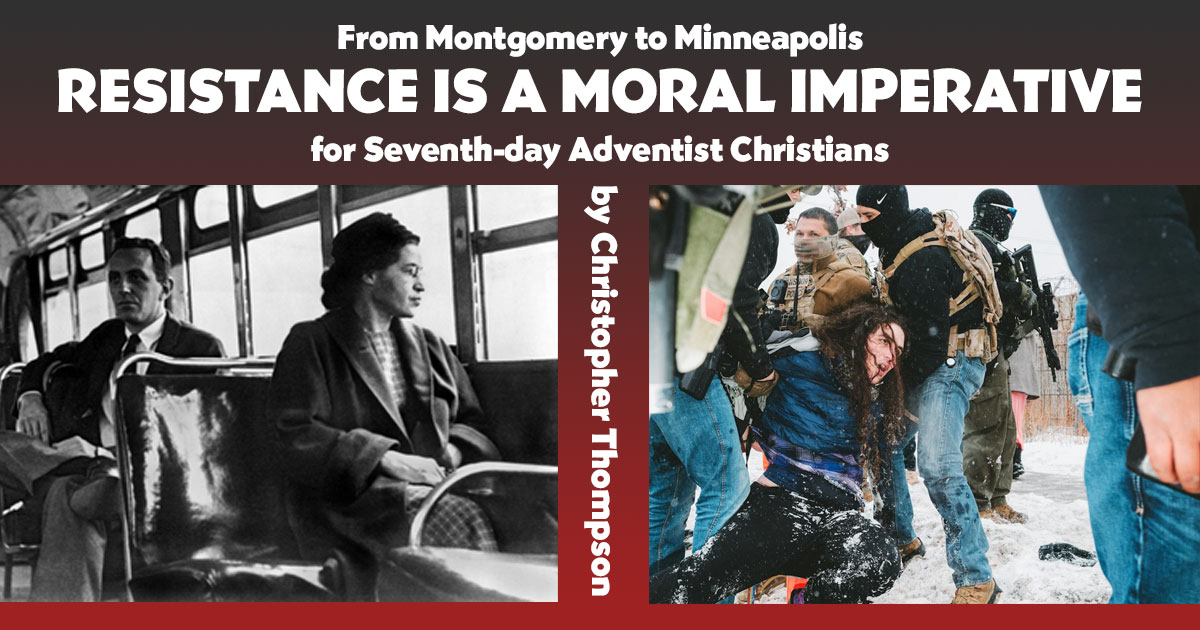
by Christopher C. Thompson | 10 February 2026 | This is a weird moment. We are being bewildered by constant reports of violent, dehumanizing, imperialistic tactics at the hands of our federal government. Meanwhile, it’s becoming all too common to see pietistic Adventists online pontificating about why “these protests” are “not the Adventist way.” To […] Source: https://atoday.org/from-montgomery-to-minneapolis-people-power-civil-disobedience-and-the-moral-imperative/
Prayer for those who were betrayed
For those who’ve been betrayed, your story is not over. Source: https://www.youtube.com/shorts/HFlC4ZRaSPo
AdventInnovate: “DC3” – Daniel Chenjerai

Meet Daniel Chenjerai, known as DC3, an 18-year-old UK-based Zimbabwean Christian rapper making waves in the music scene. Nominated for Best Newcomer and Best Gospel Act at the 2026 MOBO Awards, DC3 blends gospel roots, hip-hop, and jazz into a sound marked by faith, depth, and purpose. Raised in a Seventh-day Adventist home and inspired […] Source: https://atoday.org/adventinnovate-dc3-daniel-chenjerai/
Wednesday: Think on These Things . . .
Daily Lesson for Wednesday 11th of February 2026
The peace that surpasses understanding will also “guard your hearts and minds through Christ Jesus” (Philippians 4:7, NKJV). Our inner life needs protection. Interestingly, Philippians 4:7 uses a military metaphor in connection with God’s peace. The Greek verb (phroureō) is used to describe a garrison of soldiers guarding a city against invasion (2 Corinthians 11:32; compare Acts 9:24).
Another very important aspect of inner peace involves living in harmony with God’s will. “Great peace have they which love thy law: and nothing shall offend them” (Psalms 119:165).
Read Philippians 4:8-9. What specific actions are urged?
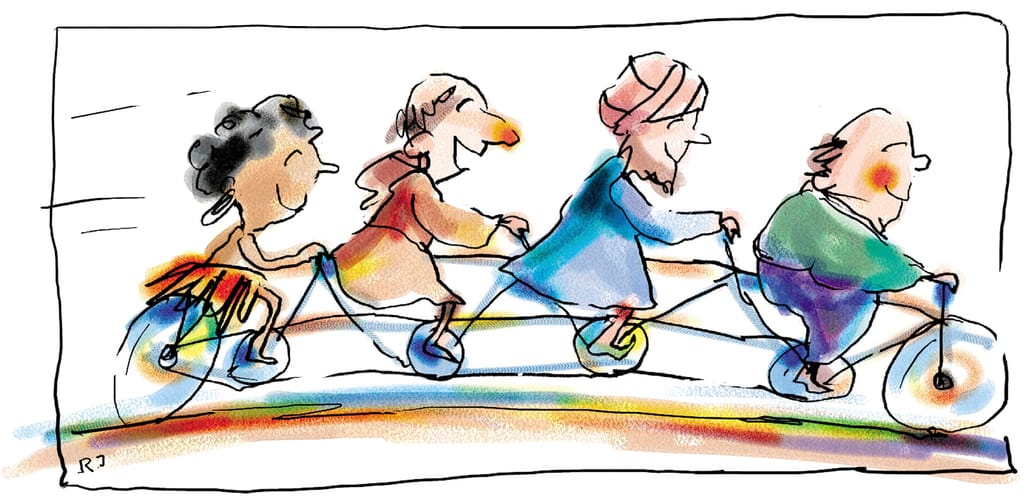
Image © Rolf Jansson at Goodsalt.com
Paul introduces Philippians 4:8-9 with “furthermore” (GNV) and a list of six virtues, followed by a succinct summary of them and encouragement to imitate Paul’s example. This closing cross-cultural exhortation fits well within the Greco-Roman setting of Philippi, with its dual emphasis on virtue and example. Interestingly, though, the focus is on biblical virtues, which is quite obvious from Paul’s omission of the four cardinal Greek virtues (prudence, justice, temperance, and courage).
-
True—not accidentally, the list begins with the cardinal biblical virtue of truth, which Jesus (“Truly, I say . . .”) and the whole New Testament frequently emphasize (see, for example, Acts 26:25, Romans 1:18, 1 Corinthians 13:6, 2 Corinthians 4:2, Ephesians 4:15, 1 Timothy 3:15, James 1:18, 1 Peter 1:22, 1 John 2:21).
-
Noble—the Greek word refers to a personal virtue (compare its other uses in 1 Timothy 3:8,11; Titus 2:2, where it is translated as “reverent” in the NKJV).
-
Right—this virtue is defined by God’s righteous character (compare its use in Philippians 1:7).
-
Pure—thought and action flowing from God’s justifying righteousness received by faith (see 1 John 3:3).
-
Lovely—aesthetic beauty, seen widely in God’s creation.
-
Admirable—“kind and winsome and gracious” (AMPC).
Paul gives two further qualifications, lest a pagan meaning be imputed to any of these virtues: “If anything is excellent or praiseworthy” (Philippians 4:8, NIV), we are to think on these heavenly virtues. Then, to remove all doubt and potential misunderstanding, Paul calls us to practice what we have learned, received, heard, and seen from his own example (Philippians 4:9).
Ci sono momenti in cui la musica non solo si ascolta. Si vive.
🎶 YESHUA
Non è solo un concerto. È un incontro.
In arrivo l'anteprima del concerto completo. 📅 Venerdì 13 febbraio
⏰ Ore 19:00
▶️ Sul canale @hopemediaitalia Source: https://www.youtube.com/shorts/Rs4IQJBL1SQ
- « Previous Page
- 1
- …
- 282
- 283
- 284
- 285
- 286
- …
- 5114
- Next Page »

