
Final Message – PART 2 — Christopher Hudson
Study: Lesson 8; The Power of Christ's Resurrection — Mohan John
—————————————————— THANK YOU for your continued financial support of our Media Ministries. To donate visit: "https://adventistgiving.org/#/org/ANB4RC/envelope/start" and select “Media Ministries”. Connect With Us
X (Twitter): remnantsda
Facebook: remnantsdachurch.org
Instagram: remnantsdachurch Source: https://www.youtube.com/watch?v=C2HCtLyN5vw
Vespers | Aug 21, 2026, | Final Message – PART 1
Final Message – PART 1 — Christopher Hudson ________________________________________________
THANK YOU for your continued financial support of our Media Ministries. To donate visit: "https://adventistgiving.org/#/org/ANB4RC/envelope/start" and select “Media Ministries”. Connect With Us
X: RemnantSDA
Facebook: RemnantSDAchurch.org
Instagram: RemnantSDAchurch Source: https://www.youtube.com/watch?v=dZywWLmgWig
Inside Story: Spirit-led Encounters
Inside Story for Friday 21st of August 2026
The names of the author, characters, and location have been withheld.
My wife and I prayed earnestly that God would help us establish a home church in the veiled country where I serve as a witness. We knew only foreigners would attend initially, but we had faith that God would send us local people whose hearts He had been working on. It took some time, but He provided!
I met Salman one day when I ordered a taxi service. As he drove me to my destination, we started a conversation that soon diverted to religious topics. He shared that he had become a Christian two years ago after searching online for answers to his spiritual questions.
Salman and I slowly formed a friendship. One time, I asked him whether he was part of a community of believers or had Christian friends. I was shocked when he said he had never met a Christian before! My wife and I felt compelled to invite him to our home worship gatherings, and he began attending regularly. We were delighted that when he married, he brought his wife, and she, too, fell in love with Jesus.
One day, Salman decided to tell his brother Faisal about his love for Christ. To his surprise, Faisal told him he was already a Christian! He explained that he also sought answers to spiritual questions online and gave his heart to Jesus.
Salman told Faisal about our home church, and Faisal joined our group. He had no doubt that God had brought us together. He had recently visited a church seeking Christian fellowship, but the leader told him not to return because it was forbidden for people of Faisal’s faith to be there. We praised God for helping us provide a place of belonging for Faisal.
After two years of silence and prayer, Salman and Faisal decided to tell their family about their newfound faith. By the grace of God, their parents accepted their decision, but other family members turned their backs on them.
Please pray that Faisal and Salman and his wife will continue to grow in their relationships with Jesus and that my wife and I will experience many more Spirit-led encounters with God’s children in this closed country.
We call a country veiled when we have withheld its name to protect the lives and ministry of frontline workers serving there. To learn about Global Mission’s church-planting ministry, visit bit.ly/GMPioneers.
Friday: Further Thought – The Power of Christ’s Resurrection
Daily Lesson for Friday 21st of August 2026
Further Thought:
Read Ellen G. White, “God’s People Delivered,” Pages 635–652, in The Great Controversy.

Image © Stan Myers from GoodSalt.com
“The divinity of Christ is the believer’s assurance of eternal life. ‘He that believeth in Me,’ said Jesus, ‘though he were dead, yet shall he live: and whosoever liveth and believeth in Me shall never die. Believest thou this?’ Christ here looks forward to the time of His second coming. Then the righteous dead shall be raised incorruptible, and the living righteous shall be translated to heaven without seeing death. The miracle which Christ was about to perform, in raising Lazarus from the dead, would represent the resurrection of all the righteous dead.”—Ellen G. White, The Desire of Ages, p. 530.
“The earth mightily shook as the voice of the Son of God called forth the sleeping saints. They responded to the call and came forth clothed with glorious immortality, crying, ‘Victory, victory, over death and the grave! O death, where is thy sting? O grave, where is thy victory?’ (See 1 Corinthians 15:55.) Then the living saints and the risen ones raised their voices in a long transporting shout of victory. Those bodies that had gone down into the grave bearing the marks of disease and death came up in immortal health and vigor. The living saints are changed in a moment, in the twinkling of an eye, and caught up with the risen ones, and together they meet their Lord in the air. Oh, what a glorious meeting! Friends whom death had separated were united, never more to part.”—Ellen G. White, The Story of Redemption, Pages 411, 412.
Discussion Questions
|
Who Receive the Seal? | Michael Pedrin | Bible Study | Aug. 19, 2026
Do you have these two essential characteristics needed to receive God’s seal? Source: https://www.youtube.com/watch?v=P76lusG5I0I
Rethinking Adventist Peace in a Changing World

by Rob York | 20 August 2026 | Way back on November 8, 2016, a few friends from church and I went to a theater in Honolulu to watch Hacksaw Ridge. As expected, the film, while taking certain cinematic liberties, told the mostly true—and truly inspiring—story of Corporal Desmond Doss’s World War II heroism. Doss, as most […] Source: https://atoday.org/rethinking-adventist-peace-in-a-changing-world/
“Canaã” by Expressão De Vida
"Canaã" (“Canaan”) is a powerful song of promise and perseverance, pointing our hearts toward the land God has prepared for His people. With passion and conviction, Expressão de Vida delivers this uplifting anthem as a reminder that beyond every wilderness, there is a promised future filled with hope. 🎶 This inspiring performance from the General Conference Session is a declaration of faith. Press play and let the message strengthen your trust in the God who leads us from promise to fulfillment. Source: https://www.youtube.com/watch?v=uoLxy2kdVnU
God First: Your Daily Prayer Meeting #1466
Bible verse of the day: "Your kingdom is an everlasting kingdom, and your dominion endures through all generations. The Lord is trustworthy in all he promises and faithful in all he does." — Psalm 145:13 (NIV) Welcome to our Daily Prayer Meeting! This is a safe space where you are seen, heard, and prayed for. Start your day in God's presence—every day at 8AM ET, we share a short devotional from God's Word and lift your prayer requests to Him. You're not alone! Our prayer team is here to intercede with you and for you. Whether you need prayer, celebrate a breakthrough, or start your day with Jesus, you're in the right place. Share your prayer requests or testimonies of praise here: https://wkf.ms/3DBuapQ Engage with us in the comments:
• How can we pray for you today?
• Where are you watching from?
• What are you thankful for? How has God answered your prayers?
Let’s grow together in faith, hope, and love—one prayer at a time. Don’t forget to subscribe and turn on notifications so you never miss a prayer. 🔔
Share this video with someone who needs hope or tag a loved one who needs encouragement today. Today’s Message: Pr Don MacLafferty The Seventh-day Adventist Church has been an established denomination since 1863. It is a global Christian family with over 21 million members who hold the Bible as the ultimate authority. We are believers committed to helping people understand the Bible to find freedom, healing, and hope in Jesus. Want to learn more about the Seventh-day Adventist Church?
Visit our website at: https://www.adventist.org/ Find us on social media by following the links below:
Facebook:https://www.facebook.com/theadventistchurch
Instagram:https://www.instagram.com/adventistchurch
Twitter/X: https://twitter.com/adventistchurch 👉 Want more prayer moments?
Watch our full playlist of daily prayer videos here: https://youtube.com/playlist?list=PL-k2Gb-DBYo–V8axD7iFUL6TFEckrhxv&si=vIljgfwrSZN6iJR2 God First, Daily Prayer, Prayer Meeting, Christian Prayer, Morning Devotional, Hope In Jesus, Bible Verse Of The Day, Prayer Request, Faith Community, Seventh-day Adventist Source: https://www.youtube.com/watch?v=UjUnucYAzRM
Discussion Starters – The Power of Christ’s Resurrection

- While numerous religious traditions express a belief in some kind of future life beyond earthly death, Christianity alone binds this belief to the witness of people who reported seeing a specific individual, Jesus Christ, alive again, after having seen him die. (When Paul wrote to the Corinthians, he specifically said that the risen Jesus had “appeared” to him and that many others who had seen the risen Jesus were also “still alive”). How important is this claim to historical, eye-witness testimony, in terms of your personal faith in the resurrection? What else supports your belief that God offers people eternal life?
- Biblical scholars believe that what is known as the kerygma—the earliest, unfiltered “proclamation” of the disciples immediately after Jesus’ death and resurrection, is found in 2 places: Peter’s brief discourse in Acts 2:22-36, wherein he appeals to all those present to “listen carefully to what I say;” and Paul’s recap of “what I received and passed on to you, as of first importance” in 1 Cor 15. Re-read those two passages. How would you summarize, in your own words, the essential “core” message that launched Christianity? Is it still the essential core message today? Explain your answer.
- Some modern people try to have it both ways, saying, “I’m a Christian in that I accept Jesus as a great moral teacher who is good for society. But I don’t believe in the resurrection or the other miracles.” Why doesn’t this work?
- The Beatitudes in Matthew 5:3-12 contain multiple promises, such as “Blessed are the meek, for they will inherit the earth,” and “Blessed are those who mourn, for they will be comforted.” Take a look at Matthew 5. Which of these 8 teachings depend on the resurrection of the dead to be true?
- What difference would it make to you, personally, in everyday life, if you did not believe in the resurrection?
- There are two stories recounted in Scripture about what happened in regard to the empty tomb: 1) Jesus rose from the dead and was seen by numerous people; or 2) The disciples came and stole Jesus’ body while the guards were asleep. (If there were a better 3rd account that could have put an end to the unwanted post-resurrection developments, surely the political and religious leaders would have produced it immediately). So, one of the two stories recounted has to be a lie, and the other one true. How would you explain to someone why you think it was the political and religious leaders who lied?
- Some philosophers/psychological theorists see belief in eternal life as a psychological defense mechanism against the fear of death. But in what way might the opposite be true, i.e., that a person might cling to simple materialism and death’s finality as a psychological defense mechanism against the fear of God’s unfathomable eternity?
- This Chapter is titled, “The Power of Christ’s Resurrection.” What examples have you witnessed of the power of Christ’s resurrection, at work in someone’s life?
Líderes adventistas evalúan las necesidades tras el terremoto de magnitud 7.7 que sacudió Indonesia
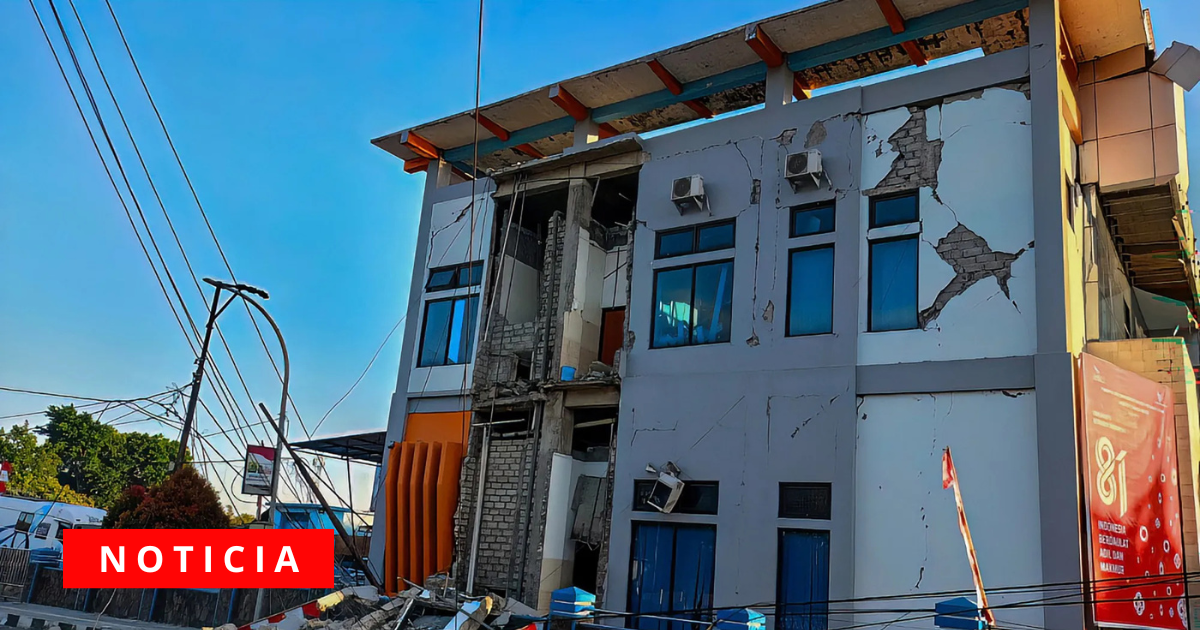
NUSA TENGGARA ORIENTAL, INDONESIA — Un sismo de magnitud 7,7 sacudió la región de Flores, en Indonesia, en la madrugada del 15 de agosto, causando la muerte de al menos 53 personas, dejando más de 130 heridos y dañando más de 1,350 viviendas. Los líderes de la Iglesia Adventista del Séptimo Día y la Agencia […] Source: https://atoday.org/lideres-adventistas-evaluan-las-necesidades-tras-el-terremoto-de-magnitud-77-que-sacudio-indonesia/
- « Previous Page
- 1
- …
- 39
- 40
- 41
- 42
- 43
- …
- 5115
- Next Page »

