
God First: Your Daily Prayer Meeting #1442
Bible verse of the day: "Let the message of Christ dwell among you richly as you teach and admonish one another with all wisdom." — Colossians 3:16 (NIV) Welcome to our Daily Prayer Meeting!
This is a safe space where you are seen, heard, and prayed for. Start your day in God's presence—every day at 8AM ET, we share a short devotional from God's Word and lift your prayer requests to Him. You're not alone! Our prayer team is here to intercede with you and for you. Whether you need prayer, celebrate a breakthrough, or start your day with Jesus, you're in the right place. Share your prayer requests or testimonies of praise here: https://wkf.ms/3DBuapQ Engage with us in the comments:
• How can we pray for you today?
• Where are you watching from?
• What are you thankful for? How has God answered your prayers? Let’s grow together in faith, hope, and love—one prayer at a time.
Share this video with someone who needs hope or tag a loved one who needs encouragement today. Source: https://www.youtube.com/watch?v=XCOoNDq5ZXg
Seven Keys for Spiritual Growth | Doug Batchelor
➤Subscribe to Doug Batchelor: http://bit.ly/2zptpvf ➤Support Amazing Facts: https://bit.ly/2D0SyyB Check out some more of my videos: ➤The Devil's Deadliest Deception: https://bit.ly/2O6DpCc
➤Spiritual Warfare: https://bit.ly/2pAWCT1
➤Hearing the Voice of God: https://bit.ly/2D4souJ Follow me on: ➤Twitter: https://twitter.com/PastorBatchelor ➤Facebook: https://www.facebook.com/dougbatchelor/
➤Instagram: https://www.instagram.com/pastorbatchelor/ Source: https://www.youtube.com/watch?v=M6wni7npia4
Can Members Leave Adventism Without Being Shunned?

We Seventh-day Adventists believe in freedom of conscience. Our Church Manual makes it plain: members may resign. Requests deserve thoughtful counsel, time for reflection, and discreet action—no public shaming, no enforced shunning. Discipline targets unrepentant sin, not personal departure. We honor conviction while calling every believer to stand firm in present truth. Yet we must […] Source: https://atoday.org/can-members-leave-adventism-without-being-shunned/
Uganda Government Assures Adventists of Freedom to Worship During National Cleaning Day
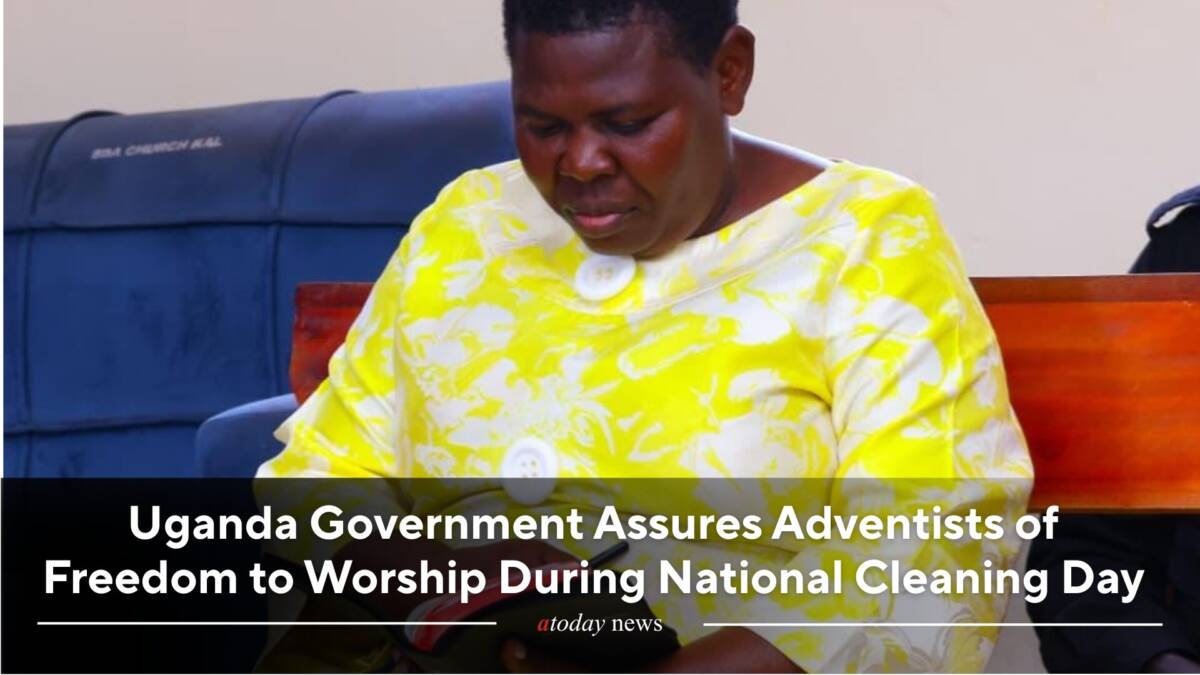
KAMPALA, UGANDA — Seventh-day Adventists in Uganda had been assured they can attend worship services on Saturday despite the government’s designation of the last Saturday of every month as National Cleaning Day. The assurance was issued by Rose Namayanja, deputy secretary general of Uganda’s ruling National Resistance Movement (NRM), following consultations with the Office of […] Source: https://atoday.org/uganda-government-assures-adventists-of-freedom-to-worship-during-national-cleaning-day/
🛤️ Viviamo in una cultura che premia ciò che è straordinario e immediato.
La Bibbia racconta invece di un re ricordato semplicemente per aver camminato con costanza nella giusta direzione. Non sono i grandi gesti a costruire una vita significativa, ma le scelte di ogni giorno. La fedeltà nel tempo vale più di un momento spettacolare. 🙏 Source: https://www.youtube.com/shorts/MCyE1dMkOPM
Who Is the Holy Spirit? | Unlocking Bible Answers – Episode 9
Who Is the Holy Spirit? In this new episode of Unlocking Bible Answers, Pastor Dean Carlisle is joined by Pastor Sam Neves to explore one of the most neglected aspects of Christian faith: the Holy Spirit. Together, they address common questions and misconceptions about who the Holy Spirit is, how He works in our lives, and how to experience His transforming power.
If you have questions, drop them in the comments below. Our team will do their best to respond.
In this video we explore key questions like: Who is the Holy Spirit? (Is the Holy Spirit a person or just a force/power?)
What is the role of the Holy Spirit?
What does it mean to be filled with the Holy Spirit?
What are the gifts and fruit of the Holy Spirit? Are they still available today?
What is the difference between speaking in tongues and other spiritual gifts?
Can the Holy Spirit leave me, or do I lose the Holy Spirit?
What is the sin against the Holy Spirit (blasphemy against the Holy Spirit)?
How do I hear the Holy Spirit's voice/leading in my daily life?
How do I receive the Holy Spirit?
Why don't I feel the Holy Spirit's presence? Want to go deeper? Watch these related videos:
Understanding Adventist Beliefs: The Holy Spirit – https://www.youtube.com/watch?v=RoGkIABSTyI "Shameless Audacity" with Dwight Nelson – https://youtu.be/QtXPFyRTouc?si=LjqXGbCgGA1CFVmr God the Holy Spirit [Who is He and What Does He Do?] – Pastor Ted Wilson – https://www.youtube.com/watch?v=TVlaqV45KCQ Source: https://www.youtube.com/watch?v=qFsON_uTics
👤 THE BIBLICAL PERSON OF THE DAY | 07.27.2026 | 👸 Queen of Sheba – The Seeker with Great Questions
 The Biblical Person of the Day
 Queen of Sheba – The Seeker with Great Questions
 Profile
- Name: Queen of Sheba
- Time of birth: approx. 10th century BC
- Place of birth: probably Sheba, in southern Arabia or in the broader region of present-day Yemen/Ethiopia
- Time of death: unknown
- Age: unknown
- Occupation: Queen, ruler of a wealthy land
 Short Story
The Queen of Sheba was a powerful and wealthy ruler. She heard about Solomon’s wisdom and the reputation he had gained through the name of the Lord.
This news did not leave her indifferent. With a large entourage, camels, spices, gold, and precious stones, she set out on the long journey to Jerusalem.
Her purpose was not merely a polite visit. She came to test Solomon with difficult questions and to discover the truth about his wisdom for herself.
When she arrived in Jerusalem, she spoke with Solomon about everything that was on her heart. Solomon answered her questions, and nothing was hidden from him that he could not explain to her.
The queen also saw Solomon’s palace, the organization of his servants, his offerings, and the wealth of his court. Everything impressed her deeply.
She confessed that not even half of it had been told to her. What she saw with her own eyes surpassed everything she had previously heard.
Her story shows that genuine seeking does not stop at rumors. Those who seek truth set out on the journey, ask questions, and allow themselves to be touched by wisdom.
 The Decisive Moment
The Queen of Sheba meets Solomon, hears his wisdom, and realizes that what she sees is greater than everything she had been told.
 7 Special Facts about the Queen of Sheba
- She was a powerful ruler
- She came from a distant and wealthy land
- She heard about Solomon’s wisdom
- She traveled to Jerusalem with a large entourage
- She brought gold, spices, and precious stones
- She asked Solomon difficult questions
- She realized that Solomon’s wisdom exceeded her expectations
 Strengths & Weaknesses
 curious
courageous
a wise seeker
willing to examine the truth for herself
 had to undertake a long and difficult journey
initially knew about God’s work only through reports
 The Mistake That Shaped Her
The Bible does not report any particular personal mistake committed by the Queen of Sheba.
 Her life is shaped above all by her search, her questions, and her willingness to discover wisdom for herself.
 Key Verse
“Indeed, not even half was told me.” (1 Kings 10:7)
 The Life Lesson
Those who truly seek wisdom do not remain satisfied with hearsay, but set out on the journey toward truth.
 Application for Today
Do not be satisfied with superficial impressions. Seek God’s wisdom personally, ask honest questions, and be willing to let the truth transform you.
 A Question for You
What question are you carrying in your heart that you should intentionally bring to God?
Context
The Queen of Sheba visited Solomon during the time of his great peace, wealth, and God-given wisdom.
 Connection
The Queen of Sheba is connected with Solomon and is later mentioned by Jesus as an example of a seeker who came from far away to hear wisdom.
Conclusion:
The Queen of Sheba shows that genuine seeking is willing to make an effort and that God’s wisdom can be greater than anything people have merely heard from afar.
See you tomorrow with the next biblical person!

The Life Story
The Life Story of the Queen of Sheba – A Journey to Wisdom
 A Ruler from a Distant Land
The Queen of Sheba lived far away from Jerusalem. Her land was wealthy, influential, and known for trading precious goods. Spices, gold, and precious stones were among the treasures that shaped her world.
She was not only a woman of high rank, but also a ruler with great responsibility. As queen, she had to make decisions, lead people, and keep the future of her country in view.
Yet despite her power and wealth, she was not indifferent toward wisdom. When she heard about Solomon, a desire arose within her to learn more.
 The News about Solomon
Solomon’s fame had spread far and wide. People spoke about his wisdom, his wealth, his court, and the special blessing that rested upon his reign.
To the Queen of Sheba, these reports were apparently so extraordinary that she did not simply want to believe them blindly. She wanted to examine for herself whether what she had heard was true.
Thus, a report became a journey. Curiosity became a search, and the search became an encounter that would leave a deep impression upon her.
 The Long Journey to Jerusalem
The queen set out with a large entourage. Her journey was long, difficult, and costly. She brought camels loaded with spices, a great amount of gold, and precious stones.
This shows how seriously she took her search. She was willing to invest time, strength, and wealth in order to hear wisdom firsthand.
True seeking does not remain comfortably at a distance. It is willing to travel, ask questions, and make sacrifices.
Questions from the Heart
When the queen arrived in Jerusalem, she asked Solomon difficult questions. She was not interested in superficial admiration, but in a genuine examination.
She spoke with him about everything that was on her heart. These words show that her questions were not only intelligent, but also deeply personal.
Solomon answered her. Nothing was hidden from him that he could not explain to her. The wisdom God had given him met the seeking queen in a convincing way.
 What Her Eyes Beheld
The queen did not merely hear Solomon’s answers. She also saw his palace, the organization of his servants, the food on his table, the clothing of his attendants, and the way by which he went up to the house of the Lord.
Everything together left a deep impression upon her. She did not see merely isolated signs of wealth, but an order that revealed wisdom, dignity, and blessing.
The queen was so overwhelmed that she was left breathless. What she saw was greater than anything she had expected.
 A Confession Filled with Wonder
Then she expressed what she had recognized. She said that the reports she had heard in her own country were true.
Yet she added that not even half of it had been told to her. Solomon’s wisdom and prosperity exceeded everything she had previously heard.
She praised the Lord, who had placed Solomon on the throne. In doing so, she recognized that there was more behind Solomon’s wisdom than human talent. She saw God’s goodness and God’s work.
 Gifts and Mutual Honor
The queen gave Solomon precious gifts: gold, spices, and precious stones. These gifts expressed respect, gratitude, and the wealth of her land.
Solomon also gave her everything she desired and asked for. Their meeting was therefore not merely a visit, but an exchange between two rulers.
Yet the most valuable gain from her journey was not gold or possessions. It was the encounter with a wisdom that exceeded her expectations.
 A Seeker Mentioned by Jesus
Many centuries later, Jesus spoke about the Queen of Sheba. He said that she had come from the ends of the earth to hear the wisdom of Solomon.
Her journey therefore became an enduring testimony. She had undertaken great effort to hear earthly wisdom, while an even greater wisdom was present in Jesus Himself.
Her story continues to call people not to treat God’s truth with indifference, but to seek it earnestly.
The Enduring Message of Her Life
The Queen of Sheba shows that true wisdom is worth seeking. Her story makes it clear that honest questions are not an obstacle to faith, but can become a path toward understanding.
She reminds us that those who truly seek often find more than they expected. God’s wisdom is greater than every rumor, greater than every imagination, and deeper than anything heard only from afar.
 Final Thought
The Queen of Sheba came to Jerusalem with questions, gifts, and great expectations. She returned filled with wonder because she had seen that reality was greater than the reports.
Her journey shows that wisdom has a price, but also brings a rich reward. Those who set out to seek truth may be surprised by God.
 Her life story shows: Those who sincerely seek God’s wisdom will discover that it is greater than anything they have ever been told.
🌱LIVING FAITH | 👑 Lesson 5: All to the Glory of God | 🤲 5.2 Selfless Love | ✉️ FIRST AND SECOND CORINTHIANS
 FIRST AND SECOND CORINTHIANS
 Lesson 5: All to the Glory of God
 5.2 Selfless Love
 Willingly giving up rights so that the gospel may advance
 1. Introduction
In 1 Corinthians 9, Paul shows through his own life what selfless love means. As an apostle, he had certain rights, including the right to receive support for his livelihood. Yet he willingly gave up that right so that no one would misunderstand his ministry or place an obstacle in the way of the gospel. What mattered most to Paul was that Christ would be made known and people would be saved. His freedom did not consist in making use of everything he was entitled to, but in willingly giving up rights out of love. In this way, Paul becomes an example for Christians who ask not only what they are free to do, but also what serves the good of others and the glory of God.
 2. The Biblical Foundation
Paul writes:
“Am I not free? Am I not an apostle? Have I not seen Jesus our Lord?” 1 Corinthians 9:1
Then he asks:
“Do we not have the right to eat and drink?” 1 Corinthians 9:4
And further:
“Do we not have the right to take along a believing wife, as do the other apostles?” 1 Corinthians 9:5
But then Paul explains his attitude:
“Nevertheless we have not used this right, but endure all things lest we hinder the gospel of Christ.” 1 Corinthians 9:12
These verses show that Paul had rights, but he placed the gospel above his personal claims.
 3. Connection to Today
We also live in a culture that places great emphasis on rights, freedom, and personal claims. People often ask: What am I entitled to? What am I allowed to do? What benefits me? Paul shows a different attitude: Christian freedom is ordered by love. Something may be permitted and still not be helpful to the witness of the gospel. Mature Christians are willing to give something up voluntarily when doing so makes Christ more clearly visible and prevents others from being hindered. Selfless love does not ask first about personal rights, but about the spiritual good of others.
 4. Central Message of the Lesson
 Selfless love is willing to give up legitimate claims when doing so advances the gospel, builds up others, and honors Christ.
 5. Theological Focus
The central idea of this lesson is voluntary self-denial motivated by love. Paul first defends his apostleship and shows that he possesses genuine apostolic rights. He is free, he has seen the risen Lord, and his ministry has borne fruit. Nevertheless, he does not make use of his rights in every situation.
Paul had the right to receive material support from the church. Those who proclaim the gospel may also live from the gospel. Paul himself confirms this principle, and it reflects God’s order. Spiritual work is valuable and should not be despised.
Yet in Corinth, Paul voluntarily gave up this right. The reason was not that receiving support would have been wrong. The reason was that he did not want to place any obstacle in the way of the gospel. In a city like Corinth, some might have misunderstood his preaching as a means of personal gain or as a religious business.
Paul therefore shows that not every right must be exercised in every situation. Christian ethics does not ask only: Do I have the right to do this? It also asks: What effect will my behavior have? Does it serve the gospel? Does it build others up? Does it help people recognize Christ?
This creates a very important connection with 1 Corinthians 8. There the subject was knowledge and love. Some Corinthians believed that their knowledge gave them the freedom to exercise certain liberties. Paul now shows through his own example that love sometimes willingly refrains, even when something is permitted or justified.
Self-denial is not a sign of weakness, but of spiritual strength. A person who can give up a right shows that he is not controlled by his ego. He is free not only to do something, but also to refrain from doing it.
Paul’s attitude is deeply shaped by the cross. Christ possessed every right and all glory, yet He humbled Himself in order to save us. Whoever follows Christ learns not to place self at the center, but to serve others in love.
The gospel therefore shapes not only our doctrine, but also the way we use freedom. Freedom without love can become destructive. Freedom shaped by the cross becomes service.
Paul wanted to “become all things to all people” so that he might save some. This does not mean that he abandoned his convictions or adjusted God’s commandments. It means that he was willing to set aside personal preferences and rights in order to reach people where they were. His goal was not self-assertion, but salvation.
The theological core is this: Christian freedom stands under the rule of love. The cross does not free us for selfish living, but for selfless service. Whoever has understood the gospel does not ask only about personal advantage, but about God’s glory and the salvation of others.
 6. Spiritual Deepening
This lesson confronts us with a very personal question: Are there things I should give up even though I am entitled to them? This is not easy, because we often defend our rights very quickly. We do not want to be disadvantaged, overlooked, or misunderstood.
Paul shows, however, that love is greater than the desire always to insist on being right. He could have demanded support, but he did not. He chose the more difficult path because he valued the gospel more highly than his own claims.
This does not mean that Christians must always tolerate everything or never establish boundaries. Paul is not speaking about self-destruction or unhealthy submission. He is speaking about voluntary sacrifice motivated by love, especially where exercising a right could become an obstacle to others or to the gospel.
In daily life, this can take many forms. Perhaps I give up a certain freedom because it would spiritually confuse someone else. Perhaps I give up my comfort in order to help someone. Perhaps I give up recognition so that Christ remains at the center. Perhaps I refrain from insisting on my rights in order to promote peace and reconciliation.
Selfless love asks: What does the other person need? What serves Christ? What helps the gospel? These questions change our attitude. We no longer live only for ourselves, but as people who are loved and sent by Christ.
Paul’s example also shows that service involves sacrifice. Sharing the gospel is not merely a beautiful assignment; it often requires giving something up. Time, energy, money, comfort, personal desires, and even legitimate claims may be affected.
Yet this sacrifice is not empty. It is made for a higher purpose. Paul wanted to win people for Christ. When a voluntary sacrifice helps someone recognize Jesus more clearly, that sacrifice is not a loss, but an act of service.
This is the logic of the cross. Christ appeared to lose everything, and through that loss He secured our salvation. In God’s kingdom, surrender is not defeat. It can become the path through which God’s love is made visible.
This lesson also warns us against a faith centered only on personal freedom. Christians sometimes say, “That is my decision. That is my right. I am allowed to do that.” Paul would ask, “Yes, but does it build up? Does it help others? Does it honor God? Does it advance the gospel?”
Christian maturity is seen in our willingness to face such questions honestly. An immature faith insists on rights. A mature faith considers how rights can be exercised in love. A Christlike faith is even willing to surrender rights voluntarily.
At the same time, we may know that God sees every hidden sacrifice. People may not notice what we give up out of love. But God knows the motives of the heart. No sacrifice made out of love for Christ is forgotten before Him.
Paul’s attitude invites us to view our lives missionally. Every decision can either become an obstacle or a help to the gospel. Our freedom, our use of money, our words, our habits, and our relationships can either reveal Christ or hide Him.
Therefore, selfless love is not merely a beautiful virtue. It is a missionary principle. Through it, people recognize that the gospel has truly transformed our hearts.
 7. Application in Daily Life
Practical Steps:
- Examine which rights or freedoms you sometimes defend too strongly.
- When making decisions, ask: Does this serve the gospel and build others up?
- Be willing to give something up voluntarily when it helps another person spiritually.
- Seek God’s glory before your own advantage.
- Learn to use freedom with love and consideration.
- Continue serving faithfully even when your efforts are not immediately recognized.
- Make sure that your behavior does not lead people away from Christ.
- Ask God for a heart that would rather serve than assert itself.
 8. Reflection Question
What could I willingly give up out of love so that my life becomes a clearer witness for Christ?
9. Closing Thought
Paul shows us that genuine Christian freedom is not selfish. Although he possessed legitimate rights as an apostle, he willingly gave them up so that he would place no obstacle in the way of the gospel. His love for Christ and for people was greater than his desire for personal advantage. In this way, he becomes an example of selfless love that asks not only what is permitted, but what saves, builds up, and honors God. The cross of Jesus shapes a freedom that becomes service. Whoever follows Christ learns to give up rights voluntarily so that the gospel may advance.
“Nevertheless we have not used this right, but endure all things lest we hinder the gospel of Christ.” 1 Corinthians 9:12 

📜BELIEVE HIS PROPHETS | 📖 Bible Study | 07.27.2026 | 🙏 Job | 🤲 Chapter 31 – A Life with a Clear Conscience
 July 27, 2026
 BELIEVE HIS PROPHETS
 Daily Bible Reading:
  Job 31
 A Life with a Clear Conscience
 Integrity Before God Is More Precious Than Human Approval
 Read online here
 Introduction
With chapter 31, Job concludes his great defense speech. In a sense, he takes an oath of innocence and carefully examines many areas of his life. He does this not because he considers himself sinless, but because he firmly rejects the serious accusations of his friends. Job chapter 31 portrays a man who lives with an honest heart before God and is willing to let Him examine every part of his life.
⋯⋯⋯⋯⋯⋯⋯⋯⋯⋯◆⋯⋯⋯⋯⋯⋯⋯⋯⋯⋯
 Commentary
Job begins with a remarkable statement: he has made a covenant with his eyes not to look at a woman with lust. In doing so, he makes it clear that true purity does not begin with outward actions, but already with the thoughts and intentions of the heart.
He then mentions many other areas of life. He explains that he has acted honestly, deceived no one, and never intentionally committed injustice. He is willing to let God examine him and to bear the consequences if his statements are not true.
His sense of justice is also evident in the way he treated his servants. Job did not ignore their rights but recognized that the same God had created both him and his servants. Before God, all people possess the same dignity.
Job also gives a powerful description of how he treated the poor, widows, and orphans. He supported those in need, fed the hungry, and did not leave suffering people to face their hardships alone. His wealth was not meant to serve only himself but also those who needed help.
Job further emphasizes that his trust was never placed in wealth or possessions. Gold was never his idol. Likewise, he neither worshiped the sun nor the moon, nor did he give himself to any form of idolatry.
Even toward his enemies, Job refused to harbor hatred. He did not rejoice over their misfortune or speak curses against them. His hospitality was widely known, and strangers found protection in his home.
Finally, Job almost challenges God to examine his life. He longs for God Himself to judge him and bring the truth into the light. With the words, “The words of Job are ended,” his defense comes to its conclusion.
Job chapter 31 shows that genuine godliness embraces every area of life: our thoughts, the way we treat other people, our possessions, our words, and our attitude before God. Job does not claim to be perfectly sinless. Yet he lives with an upright heart and a conscience willing to stand before God’s searching examination.
⋯⋯⋯⋯⋯⋯⋯⋯⋯⋯◆⋯⋯⋯⋯⋯⋯⋯⋯⋯⋯
 Summary
Job 31 concludes Job’s defense speech. He testifies to his integrity in many areas of his life and demonstrates that genuine faith is reflected in everyday conduct. His greatest desire is that God Himself would evaluate his life.
⋯⋯⋯⋯⋯⋯⋯⋯⋯⋯◆⋯⋯⋯⋯⋯⋯⋯⋯⋯⋯
 Message for Us Today
God is not looking for outward religiosity but for a sincere heart. A clear conscience is not the result of being flawless, but of living honestly before God and being willing to let His Word correct us. Whoever lives with this attitude does not need to fear human judgment.
⋯⋯⋯⋯⋯⋯⋯⋯⋯⋯◆⋯⋯⋯⋯⋯⋯⋯⋯⋯⋯
 Reflection
Could you place your life before God with the same openness as Job and ask Him to examine your heart, your thoughts, and your actions?
- « Previous Page
- 1
- …
- 42
- 43
- 44
- 45
- 46
- …
- 5080
- Next Page »

