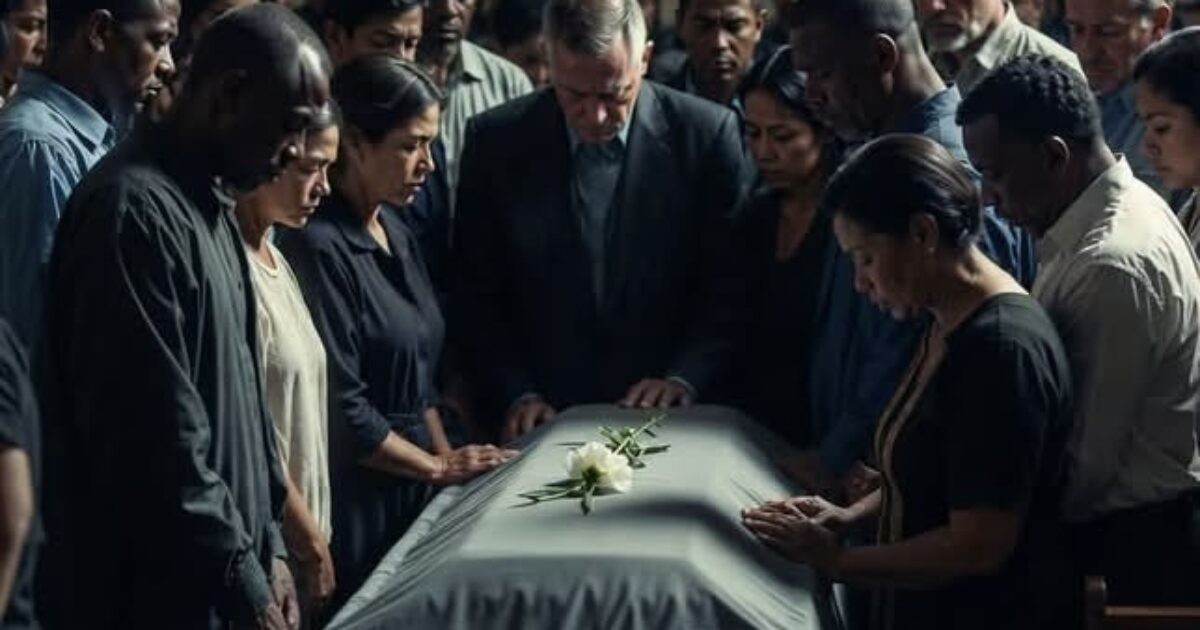
"If you believe, you will receive whatever you ask for in prayer" (Matthew 21:22, NIV).
Tag someone in need of prayer, and kindly share your prayer requests here:
https://wkf.ms/3DBuapQ Source: https://www.youtube.com/watch?v=3rUtD6uUr94
Jeffery – Call To Prayer 2025 Day 2 #prayer #faith #answeredprayer
Listen to Jeffery's answer to pray when the Lord helps him overcome his addiction. Join us for day two of our Call to Prayer series live at 7:30pm EST! Experience the power of prayer for yourself. Source: https://www.youtube.com/shorts/_M8wJO28qAQ
Ecclesiaste 5:20 – Apri la porta del tuo cuore
"Un tale uomo, infatti, non si ricorderà troppo dei giorni della sua vita, poiché Dio gli concede gioia nel cuore". 📖 Ecclesiaste 5:20
—
💌 Apri la porta del tuo cuore
🗣 Speaker: Cristina Benvissuto Una collaborazione con l'@IstitutoAvventista Source: https://www.youtube.com/watch?v=gk-Sg1f6PwE
Our Need of the Holy Spirit – Call to Prayer
Our Need of the Holy Spirit is a call to prayer and reflection, reminding us that the Spirit is essential for guidance, comfort, and strength. Drawing from Zechariah 4:6—“Not by might, nor by power, but by my Spirit, says the Lord of hosts”—this video invites you to seek renewal and peace through God’s presence. Share with others and subscribe for more uplifting content. #HolySpirit #Prayer #Faith #SpiritualGrowth #CallToPrayer Source: https://www.youtube.com/watch?v=yinMlb_tbbA
9.Heirs of the Promise, Prisoners of Hope | 9.1 Eden and Canaan | 🗺️ LESSONS OF FAITH FROM JOSHUA | 🌱 LIVING FAITH

Introduction
God’s promises to His people were always more than material blessings—they were an expression of His faithfulness, care, and plan of redemption. The promised land played a special role: it symbolized freedom, identity, and the presence of God. Yet possessing the land was not an automatic right; it was tied to the covenant with God. Israel had to learn that grace is a gift received through trust and obedience. Despite failure and exile, God’s promise remained—with a view toward final restoration. In Christ we recognize that our true inheritance goes far beyond earthly borders: it is the new earth where God will dwell with His people forever.
LESSONS OF FAITH FROM JOSHUA
Lesson 9 : Heirs of the Promise, Prisoners of Hope
9.1 Eden and Canaan
Two Gardens of Promise
Introduction
This week we turn our attention to the grand biblical storyline that leads from the Garden of Eden to the promised land of Canaan—a theme full of hope, longing, and divine assurances. Through the Fall, humanity lost its original home, but God promised that this loss would not have the final word. The promise of a new, better land runs like a red thread through the history of Israel—and through our own story. As heirs of this promise, we too live between the “already” and the “not yet,” between captivity and hope.
……………………………..
……………………………..
Bible Study
1. The Garden of Eden – The original dwelling place God created for humanity
Genesis 2:15:
“Then the Lord God took the man and put him in the garden of Eden to work it and keep it.”
The text shows that the garden was not merely a beautiful place but a divinely ordered living space in which humans were given an active role: to work (“abad” = serve, cultivate) and to keep (“shamar” = guard, protect). Eden was:
-
A place of encounter with God (Gen. 3:8),
-
A learning center where humanity was to understand God’s wisdom and order,
-
A symbol of belonging and responsibility.
Genesis 3:17–24:
After the Fall, Eden is left behind. God pronounces the curse upon the ground (not upon the human itself). People must now work by the sweat of their brow. The expulsion reveals:
-
Humanity loses access to the tree of life (cf. Rev. 22:2—restored in the New Jerusalem).
-
Paradise is not destroyed, but closed (cherubim with a flaming sword).
-
The loss of the land is a result of separation from God, not merely a geographical shift.
Eden is the prototype of the later “promised land”—a space of divine presence.
2. The Promise to the Patriarchs – Canaan as a new Eden?
Genesis 13:14–15 (Abraham):
“Lift up your eyes… for all the land that you see I will give to you and your descendants forever.”
Genesis 26:3,24 (Isaac):
“I will be with you and will bless you… for to you and your descendants I will give all these lands.”
Genesis 28:13 (Jacob):
“The land on which you lie, I will give to you and your descendants.”
The promise spans three generations: Abraham → Isaac → Jacob. None of them truly possessed the land. They lived in tents, as strangers (Hebrews 11:9). Yet:
-
They lived in trust that God would fulfill His word.
-
The land was a sign of the covenant between God and His people.
-
Possession was not earned, but a gift of grace (Deut. 9:4–6).
Canaan, like Eden, is a gift—but one to be received through faith and preserved through obedience.
3. The New Testament: The better inheritance – The heavenly Canaan
Hebrews 6:11–15
Hebrews 8:6
The author of Hebrews points back to the patriarchs and notes:
-
We too do not yet live in fulfillment but in faith toward what is coming.
-
Jesus is the Mediator of the new covenant, offering a better inheritance: not earthly but heavenly (Heb. 11:16).
-
Promises are not automatically inherited, but through faith and patience.
The “promised place” today is not geographical but spiritual: the new creation, the heavenly Jerusalem, eternal fellowship with God.
Spiritual Overview
-
Eden → Humanity loses the holy space through sin.
-
Canaan → God promises a new space—a place of blessing, accessible only by faith.
-
Heavenly Canaan → In Christ, God’s original plan is completed. The relationship broken in Eden is fully restored.
……………………………..
……………………………..
Answers to the Questions
Question 1: Read Genesis 2:15 and 3:17–24. What were the consequences of the Fall for the living space of the first human pair?
The Fall was not merely a moral misstep but a radical rupture in the relationship between God and humanity. This rupture immediately showed itself in the loss of Eden.
-
Eden was more than a garden; it was a divine space where God walked with humanity.
-
Through disobedience, humans lost not only a place but a way of life in perfect harmony with God:
-
Work became laborious,
-
Relationship between man and woman was harmed,
-
The tree of life was closed off.
-
-
The expulsion symbolized spiritual death—living outside God’s holy space.
-
Scripture ends (Revelation 22) with the complete restoration of Eden: no curse, God’s presence, access to the tree of life.
Application: Eden teaches that our greatest problem is spiritual separation—and God has always worked toward restoring us.
Question 2: How did the patriarchs perceive the promise of the land?
Abraham, Isaac, and Jacob understood the promise not as immediate possession but as God’s assured word. They lived in the promised land but not as owners, instead as strangers and pilgrims.
-
Abraham saw the land from afar—its “eternal” aspect pointing beyond geography.
-
Isaac received the same promise during a famine—demonstrating God’s faithfulness.
-
Jacob, homeless and fleeing, received the promise on the bare ground—proof that God’s promises do not depend on human strength.
Theologically:
-
The patriarchs understood the land as covenant sign.
-
They sensed that the true inheritance must be greater than physical land.
Application: God’s promises often do not fulfill immediately, but they are sure.
Question 3: What does it mean for us as Adventists to live as heirs of the promise?
For Adventists—believers in Christ’s return—it means living between the already and the not yet.
-
Hebrews 6:11–15 calls us to zealous faithfulness and endurance.
-
Hebrews 8:6 teaches that Jesus mediates a better covenant with better promises—a heavenly inheritance.
-
As Adventists we live in eschatological hope: the new earth, the New Jerusalem.
-
Like the patriarchs, we have not yet seen the “land”—but we believe.
We cannot earn the inheritance; it is grace.
Application: Being heirs means living responsibly as citizens of a future kingdom.
……………………………..
……………………………..
Spiritual Principles
-
God’s promises are certain, even if they are not immediate.
-
Humanity owns nothing by itself—everything is God’s gift.
-
Loss is not the end but may be the beginning of divine restoration.
-
Patient faith is the path to inheriting God’s promises.
……………………………..
……………………………..
Practical Application
-
Trust despite uncertainty
-
Live as strangers and pilgrims
-
Practice patience and perseverance
-
Spread hope about God’s kingdom
……………………………..
……………………………..
Conclusion
Between Eden and Canaan lies the story of humanity—a story of loss, but also of divine restoration. The promise of the land is more than geography; it represents the restoration of relationship between God and humanity. As heirs of the promise we do not live looking backward, but forward—as prisoners of hope.
……………………………..
……………………………..
Thought of the Day
“He who mourns what is lost, yet believes the promise, does not live in the past but in the expectation of heaven.”
……………………………..
……………………………..
Illustration
“Between the Andes and Heaven”
When Faith Takes Root – a Modern Parable
Chapter 1: The Ground Nobody Wanted
It was an early morning in the Bolivian Andes. The sun pushed timidly through wisps of fog that wrapped around the small village of San Pedro de Cien Aguas.
In a simple clay hut sat Matías Rivera, a man in his forties, his face weather-worn and his eyes empty.
He had lost everything.
The drought had burned his fields.
The market had collapsed.
His wife had left after the last loan could no longer be paid.
And now he stood there—without land, without family, without a plan.
Only his elderly mother, Carmen, remained.
Carmen—almost blind, yet with a faith as unshakable as the Andes themselves—said:
“Matías, maybe God is not trying to punish you—maybe He is calling you anew.”
Matías gave no reply.
He no longer believed in promises.
Especially not in those that came from the Bible.
✦ ─────────────── ✦ ─────────────── ✦
Chapter 2: A Garden Full of Thorns
On the outskirts of the village lay an abandoned plot of land.
A wind-beaten patch of soil—too rocky for farming, too remote for trade.
The villagers called it “El Campo Muerto”—the Dead Field.
But Carmen insisted:
“Go there. Start small. Perhaps it is not a dead field, but the land God wants to show you.”
Reluctantly, Matías climbed up to the place.
It was indeed hopeless.
But something—perhaps his mother’s voice, perhaps a faint thought of Eden—made him start digging.
He began clearing thorns.
Week after week.
Under the blazing midday sun.
Alone.
And he planted—not much, just potatoes and a few beans.
The soil was hard, but not infertile.
After three months, the first green sprouts appeared.
✦ ─────────────── ✦ ─────────────── ✦
Chapter 3: The Old Promise
One day, when Matías returned from the village, he found Carmen sitting on a bench outside the hut, reading with a trembling voice from her worn-out Bible:
“Lift up your eyes, Matías, and see the land before you.
God did not promise Abraham possessions only—but hope.”
“Mamá,” Matías whispered, “we are not patriarchs. We are poor.”
“And that is exactly why,” she said, “perhaps more belongs to you than you think.
Abraham had nothing either—except faith.”
Matías could not hold back—he began to weep.
✦ ─────────────── ✦ ─────────────── ✦
Chapter 4: The Arrival of Strangers
A few weeks later, an unfamiliar group arrived in San Pedro.
They were volunteers from an Adventist relief organization.
They were searching for land on which to build a small school for indigenous children.
But no one wanted to give up anything.
Except Matías.
“You can have the dead field,” he said.
“It brought me back to life.”
Surprised by his generosity, they helped him rebuild the land.
They dug wells together, built a small clay school, and planted trees.
The dead field became a garden.
Children laughed.
Thorns gave way to playgrounds.
And Matías found not only his faith again—but a purpose.
✦ ─────────────── ✦ ─────────────── ✦
Chapter 5: The Land That God Gives
A year later, Matías stood in the same place as at the beginning—but everything had changed.
The school was full.
The fields bore fruit.
And a new promise grew in his heart.
He did not have a title to the land.
Officially, it was not his.
And yet it was—through grace, through faith, through hope.
He understood:
Just as Israel did not receive Canaan because of merit, he had earned nothing—and yet had received everything.
And Carmen, now weaker, said with a gentle smile:
“You are an heir of the promise, my son.”
✦ ─────────────── ✦ ─────────────── ✦
Chapter 6: The Tree of Life
In the center of the garden, right next to the school, Matías planted a small quince tree.
He named it “Árbol de la Esperanza”—The Tree of Hope.
Every day he told the children a story under its branches.
And when the children asked:
“Why does it grow so beautifully?”
Matías answered:
“Because hope roots deeply. Even in dry soil.”
✦ ─────────────── ✦ ─────────────── ✦
Epilogue
“All these died in faith, not having received the promise,
but having seen it afar off, and greeted it.”
(Hebrews 11:13)
Matías still lives in San Pedro.
The tree blossoms every year.
And the promise—it is not yet fulfilled.
But it lives.
In every child.
In every prayer.
In every piece of bread that grows from the earth.
……………………………..
……………………………..
Closing Thought
The true heirs of the promise are not the ones who possess land—
but those who, despite loss, hold fast to God’s word.
Like Matías—between the Andes and heaven.
23.11.2025 – ⚖️ Judges Chapter 10 – When Repentance Opens the Way to Salvation | 📜 BELIEVE HIS PROPHETS
23.November 2025
BELIEVE HIS PROPHETS
Daily Bible Reading
Judges 10 – When Repentance Opens the Way to Salvation
Of Human Unfaithfulness and Divine Mercy
Bible Text – Judges 10 (KJV)
1 And after Abimelech there arose to defend Israel Tola the son of Puah, the son of Dodo, a man of Issachar; and he dwelt in Shamir in mount Ephraim.
2 And he judged Israel twenty and three years, and died, and was buried in Shamir.
3 And after him arose Jair, a Gileadite, and judged Israel twenty and two years.
4 And he had thirty sons that rode on thirty ass colts, and they had thirty cities, which are called Havothjair unto this day, which are in the land of Gilead.
5 And Jair died, and was buried in Camon.
6 And the children of Israel did evil again in the sight of the Lord, and served Baalim, and Ashtaroth, and the gods of Syria, and the gods of Zidon, and the gods of Moab, and the gods of the children of Ammon, and the gods of the Philistines, and forsook the Lord, and served not him.
7 And the anger of the Lord was hot against Israel, and he sold them into the hands of the Philistines, and into the hands of the children of Ammon.
8 And that year they vexed and oppressed the children of Israel: eighteen years, all the children of Israel that were on the other side Jordan in the land of the Amorites, which is in Gilead.
9 Moreover the children of Ammon passed over Jordan to fight also against Judah, and against Benjamin, and against the house of Ephraim; so that Israel was sore distressed.
10 And the children of Israel cried unto the Lord, saying, We have sinned against thee, both because we have forsaken our God, and also served Baalim.
11 And the Lord said unto the children of Israel, Did not I deliver you from the Egyptians, and from the Amorites, from the children of Ammon, and from the Philistines?
12 The Zidonians also, and the Amalekites, and the Maonites, did oppress you; and ye cried to me, and I delivered you out of their hand.
13 Yet ye have forsaken me, and served other gods: wherefore I will deliver you no more.
14 Go and cry unto the gods which ye have chosen; let them deliver you in the time of your tribulation.
15 And the children of Israel said unto the Lord, We have sinned: do thou unto us whatsoever seemeth good unto thee; deliver us only, we pray thee, this day.
16 And they put away the strange gods from among them, and served the Lord: and his soul was grieved for the misery of Israel.
17 Then the children of Ammon were gathered together, and encamped in Gilead. And the children of Israel assembled themselves together, and encamped in Mizpeh.
18 And the people and princes of Gilead said one to another, What man is he that will begin to fight against the children of Ammon? he shall be head over all the inhabitants of Gilead.
══════════════════════════════════════════════
Introduction
Chapter 10 of the Book of Judges shows a recurring pattern found throughout the book: Israel falls into sin, is oppressed, cries out to God, and God sends deliverance. Two judges—Tola and Jair—lead during a period of peace. After that, Israel again turns away from God and experiences oppression from the Philistines and the Ammonites. Yet once again, God’s grace is revealed when the people repent.
══════════════════════════════════════════════
Commentary
1. The Judges Tola and Jair (Verses 1–5)
-
Tola: A lesser-known judge, but his 23-year leadership suggests stability.
-
Jair: A wealthy and influential judge with 30 sons, each overseeing a city—symbolizing prosperity and order.
Outwardly it was a peaceful time, but inwardly Israel was drifting away from God.
2. Israel’s Spiritual Decline (Verse 6)
-
Israel serves many foreign gods: Baals, Ashtaroth, and the gods of Syria, Sidon, Moab, Ammon, and the Philistines.
-
The people “abandoned the Lord”—a deliberate departure from faithfulness.
A dramatic spiritual decline demonstrating how easily the people adapted to their surroundings instead of remaining faithful.
3. God’s Response: Anger and Judgment (Verses 7–9)
-
God hands His people over to their enemies.
-
Eighteen years of suffering and oppression follow—spiritual unfaithfulness has real consequences.
-
The enemies attack not only the eastern regions but also cross into western Israel.
Sin never comes without consequences. When we distance ourselves from God, we lose His protection.
4. Israel’s Repentance and God’s Answer (Verses 10–16)
-
The people acknowledge their guilt: “We have sinned.”
-
God’s first response is stern: He reminds them of past deliverances and declares He will no longer help them.
-
Still, the people persist: they remove their foreign gods and return to serving the Lord.
-
God’s heart is moved with compassion.
God responds when genuine repentance occurs. It’s not enough to ask for help—true repentance requires change.
5. Preparation for Battle (Verses 17–18)
-
The Ammonites gather for attack.
-
Israel assembles at Mizpah—a turning point is approaching.
-
The key question arises: Who will lead Israel? The stage is set for chapter 11.
══════════════════════════════════════════════
Summary
Judges 10 reveals the familiar cycle of sin, oppression, repentance, and divine help. Two judges provide peace, but the people fall again into idolatry. God’s patience seems exhausted, yet sincere repentance moves His heart. Israel gathers once more—this time with true repentance.
══════════════════════════════════════════════
Message for Today
God is faithful—even when we are not. But His faithfulness does not mean He overlooks sin. He allows consequences to bring us back to Him. True faith is not only shown in asking for help, but in action: the false “gods” must be removed. Whoever turns sincerely to God experiences His mercy—again and again.
══════════════════════════════════════════════
Reflection
What are the “idols” in my life that I may have tolerated?
Am I willing to lay them aside and serve God fully—not just with words, but with my lifestyle?
~~~~~
~~~~~

23 – 29 November 2025
BELIEVE HIS PROPHETS
Weekly Reading – Spirit of Prophecy
Ellen White | Patriarchs and Prophets – Chapter 43
The Death of Moses | Justice, grace, and hope beyond the grave
Read online here
═════════════════════════════════════════════
Introduction
23.11.2025 |🌾JOSEPH – FAITH THAT CARRIES YOU THROUGH | 26.When God Uses You for Others | ⚓ HEART ANCHOR | Youth Devotional
November 23, 2025
Joseph – Faith That Carries You Through
Devotions from the Life of a Dreamer with Character
26. When God Uses You for Others
Why your story is bigger than your pain
Daily Bible Verse
“God sent me ahead of you to preserve your life.”
Genesis 45:5
────────────────
────────────────
Introduction
We usually see our life from our own perspective.
We think about what affects us, what hurts us, what we are waiting for.
But God sees further. He sees not only you, but also the people He intends to touch through your life.
Joseph recognized this greater perspective only in hindsight — and it changed how he understood his past.
────────────────
────────────────
Devotion
Joseph’s path was marked by breaks and setbacks.
The dreams of his youth did not lead to quick fulfillment, but into situations that looked like loss and failure.
Being sold by his brothers tore him away from his family and everything familiar.
At Potiphar’s house, he tried to find his footing again and work faithfully, but a false accusation sent him to prison.
Even there he worked reliably, though he had no control over his circumstances.
These years were burdensome.
Joseph could have given up.
But he chose to be faithful in every situation and to take responsibility.
This attitude did not immediately change his circumstances — but it shaped his character.
During this time, God was working behind the scenes.
He was preparing Joseph for a task that Joseph himself could not yet see.
When Joseph later interpreted Pharaoh’s dream and was entrusted with responsibility over Egypt’s stores, it became clear that Joseph had been shaped precisely for this role.
When the famine began, people from many regions came to Egypt — among them Joseph’s brothers.
They had no idea who stood before them, but Joseph recognized them immediately.
This moment was decisive.
Joseph could have focused on his own wounds.
But he saw the bigger picture: his entire story had led him to a position from which he could help others — even those who had harmed him.
He later told his brothers that God had sent him ahead of them to preserve life.
With this, Joseph made clear that he did not judge his past only from a human point of view.
He saw God’s greater plan behind it.
His attitude shows:
The path God takes with us is sometimes difficult, but never meaningless.
Many things that hurt gain meaning only later, when we see that God used them to prepare us for others.
Joseph became a source of help for an entire nation and for his own family.
Not because he had done everything perfectly, but because God used his difficult years to prepare him for a greater task.
Thus his personal pain became part of a much larger rescue plan.
────────────────
────────────────
Thoughts for Your Heart
-
God often shapes you in times you would never have chosen yourself.
-
Your story can help others — even if you do not see it yet.
-
Hard paths do not mean that God has forgotten you.
-
God works not only in you, but also through you.
────────────────
────────────────
Practical Steps
-
Look at moments in your life in which you grew — even though they were difficult.
-
Ask God in prayer whom you could strengthen or support through your experiences.
-
Do not focus only on your own needs, but also on those of the people around you.
-
Practice faithfulness in the tasks before you today — not only in the big ones of tomorrow.
────────────────
────────────────
Questions for Reflection
-
Which difficult experiences have shaped me or made me stronger?
-
Are there people I could help today because I have lived through something similar?
-
Do I struggle to believe that God has a bigger plan for my path?
-
Where might God be “sending me ahead” of someone right now?
────────────────
────────────────
Prayer
Lord,
You know my path and every step that brought me to where I am today.
Help me to see the bigger connections I cannot yet recognize.
Give me a heart willing to serve others — even when it costs me something.
Use my experiences to bring hope and direction to others.
Let me see that my life is part of Your plan.
Amen.
────────────────
────────────────
Blessing
May the Lord who led Joseph through difficult times
also lead you and make you a blessing to others.
May He give you clarity about your calling,
strength for your journey,
and the peace that comes from knowing
that God wastes nothing.
Amen.
────────────────
────────────────
LumenCorde | Daily light for a living soul.
Faith and Obedience Balanced
Can you have faith without obedience? Yes. Can you have obedience without faith? Yes. Scripture shows us what it looks like to balance faith and obedience, together. Watch and share this video today. Source: https://www.youtube.com/shorts/yNRqxn9Al7I
Comments of the Week November 17-23

Comments of the Week November 17-23 “Hospitals absolutely need to feel safe to the community they serve!” –Steve Tatum on White Memorial Hospital Faces Community Pushback for ICE Presence in Patient Rooms Comments on Do We Have the Right to Kill People?; Why We Should Appreciate Our Pastors; 16 Things Adventist Pastors Secretly Hate About […] Source: https://atoday.org/comments-of-the-week-nov17-23/
“What Can Separate You” by Steve G. Darmody
"What Can Separate You" is a beautiful reminder that nothing, no fear, failure, or force can separate us from the love of God. With his rich, calming voice, Steve G. Darmody delivers this message straight from Scripture, wrapped in melody and anchored in hope. 🎶 This heartfelt performance from the General Conference Session is a promise. Press play and be reminded that no matter where you are or what you’re going through, God’s love will never let you go. SUBSCRIBE to the official Seventh-day Adventist Church channel: https://www.youtube.com/@AdventistOrgChurch 🌐 Visit: https://adventist.org Find us on social media by following the links below: Facebook: https://www.facebook.com/TheAdventistChurch Twitter: https://x.com/adventistchurch Instagram: https://www.instagram.com/adventistchurch Source: https://www.youtube.com/watch?v=U79zrPS2zUQ
- « Previous Page
- 1
- …
- 94
- 95
- 96
- 97
- 98
- …
- 4815
- Next Page »