Lesson 10.The Last Days | 10.6 Summary | THE BOOK OF MARK | LIVING FAITH


10.6 Summary
Prophecies About the Last Days – Warnings and Promises
Lesson 10 addresses the significant prophecies and teachings of Jesus regarding the end times, particularly concerning His Second Coming and the associated events. This lesson covers the following main themes:
-
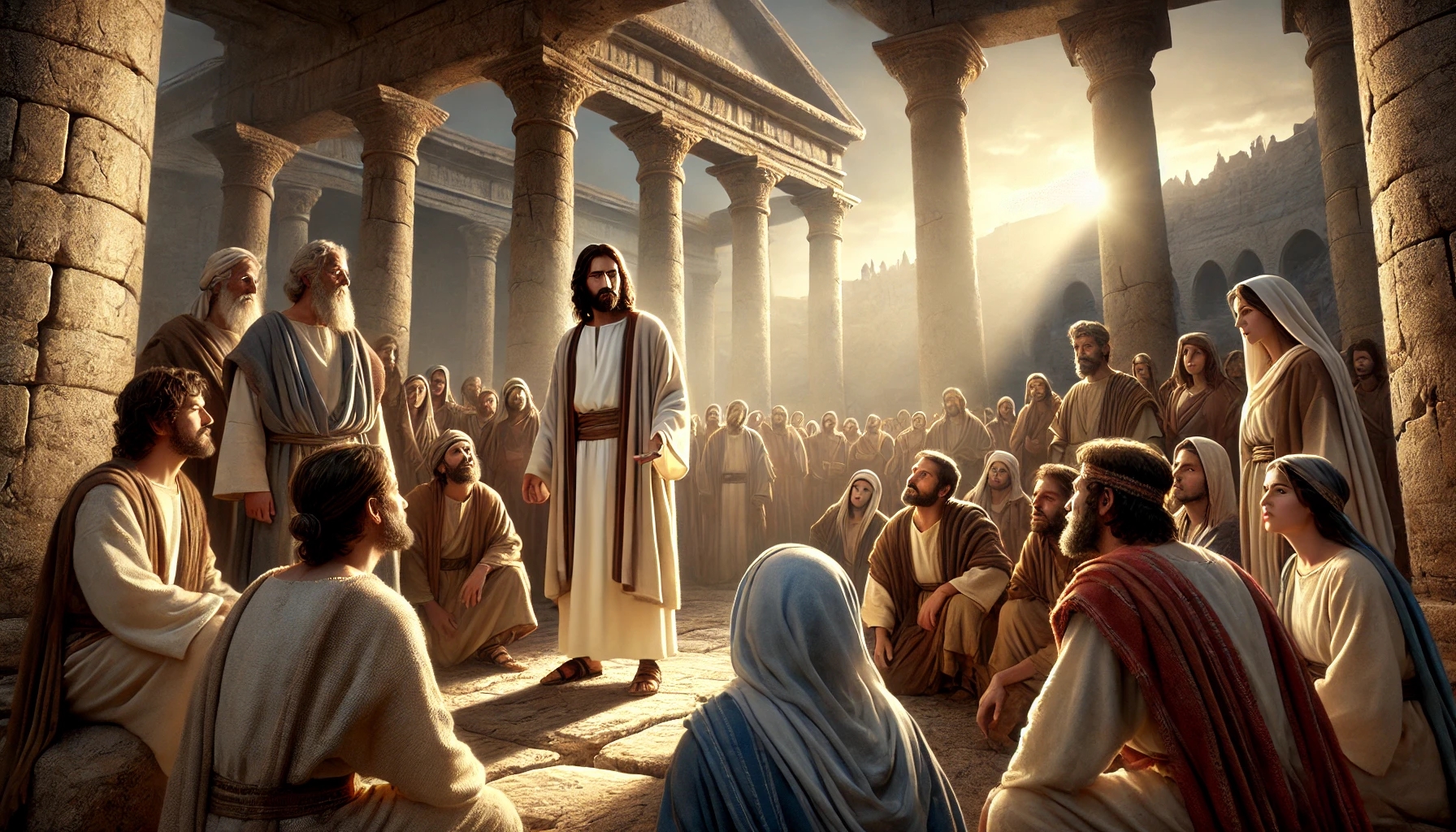
The Abomination of Desolation (Mark 13:14–18): Jesus warns of the desecration of the temple and the related sign of Jerusalem’s destruction. These events are intended to prompt believers to flee and remind us of the importance of vigilance and readiness.
-
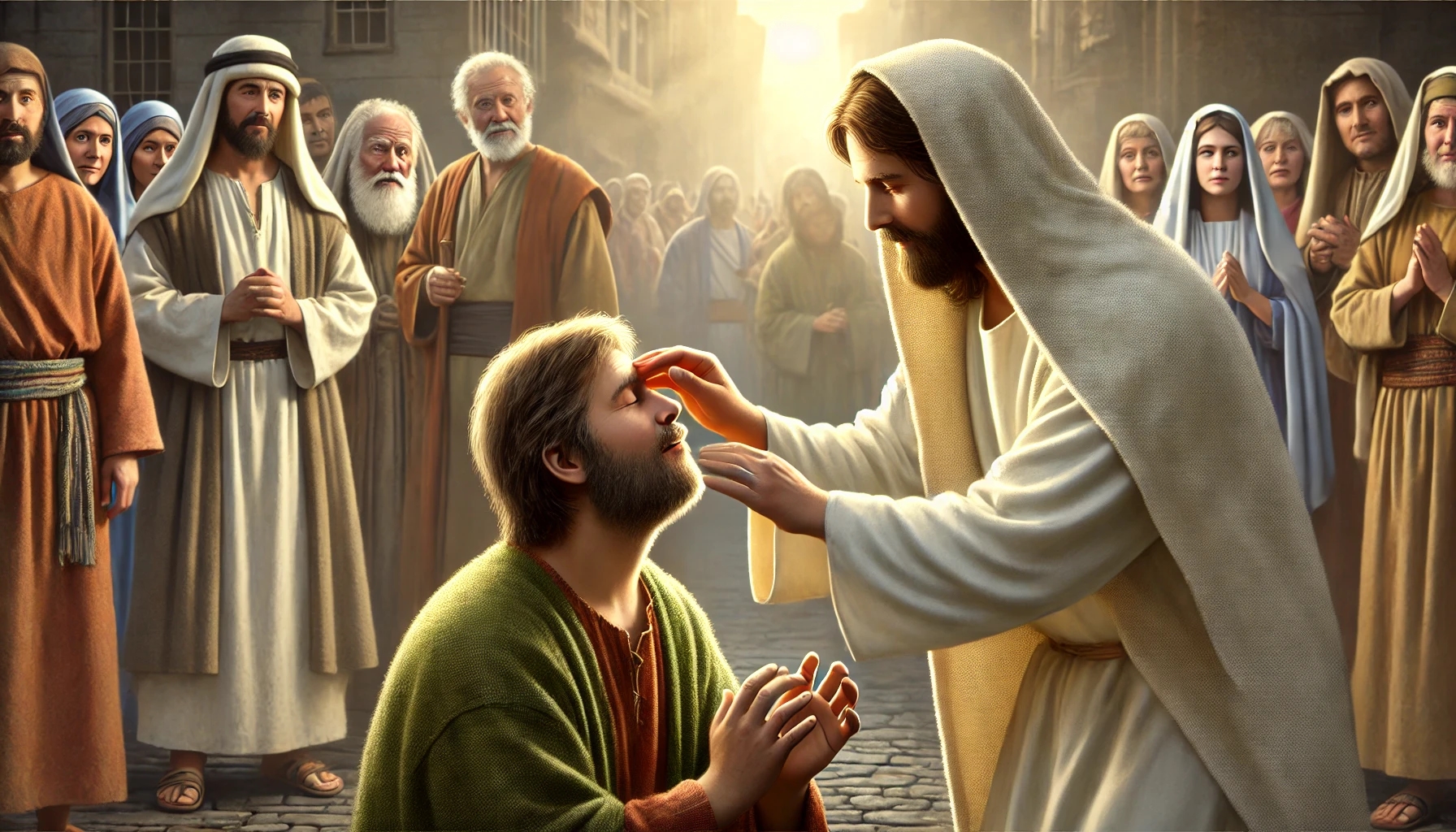
The Great Tribulation (Mark 13:19–23): Jesus speaks of a time of intense persecution and testing that will be greater than any previous tribulation. He offers hope by assuring that God will shorten the time of tribulation, but also warns of false prophets who will arise during this period.
-
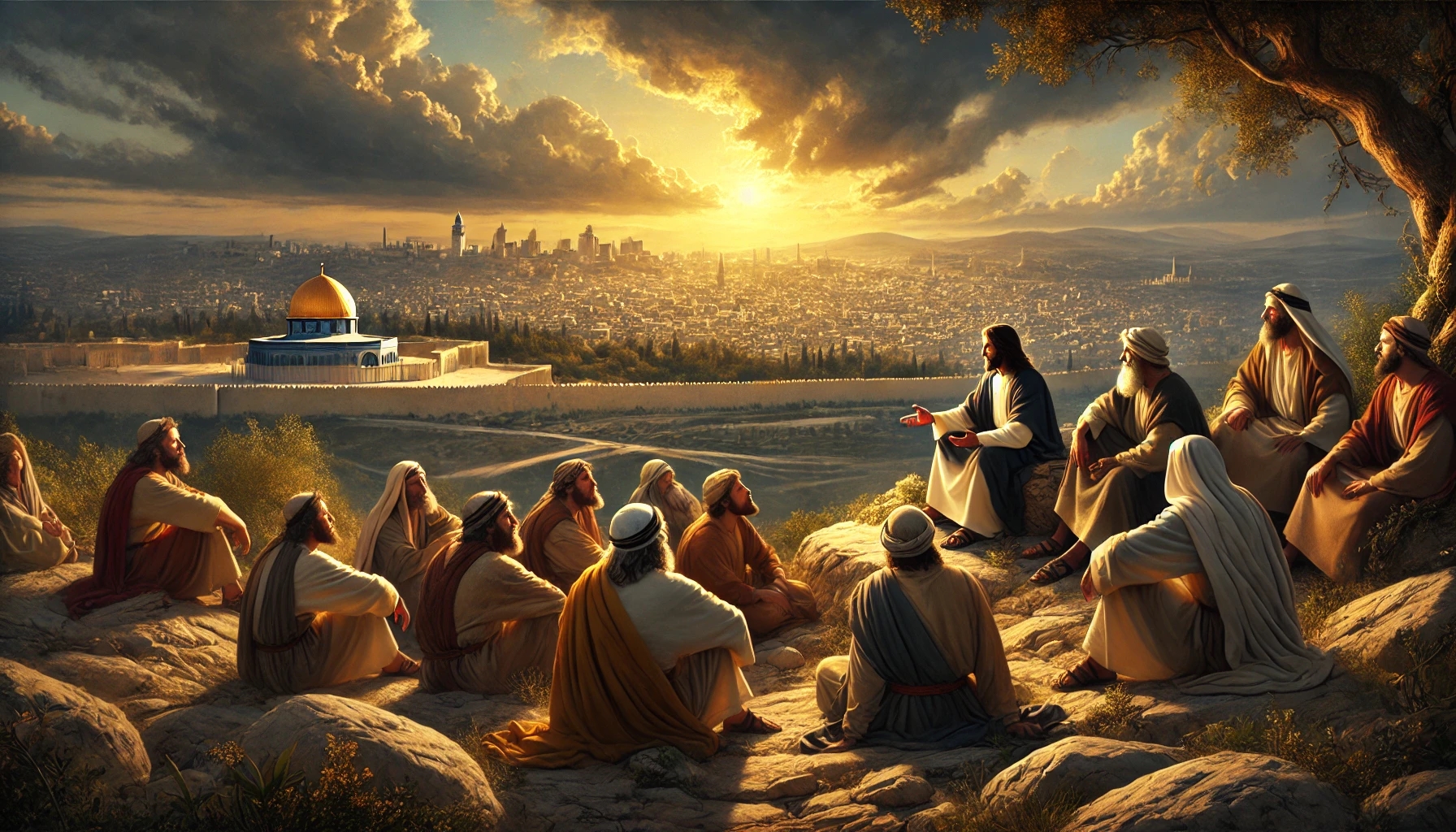
The Coming of the Son of Man (Mark 13:24–32): The lesson culminates in the description of Christ’s return. This event will be accompanied by cosmic signs and is a central theme of the New Testament. Jesus emphasizes that the exact timing is unknown, calling believers to be constantly ready and watchful.
This lesson connects biblical prophecies with practical teachings for our daily lives. It reminds us to live in expectation and hope, to remain vigilant, and to strengthen our trust in God’s plan. Jesus’ predictions about the end times urge us to stand firm in our faith and trust in the fulfillment of His promises, even amid trials and challenges.
The teachings from Lesson 10, “The Last Days,” have a profound connection to our daily life and faith:
-
Vigilance and Readiness: Jesus repeatedly emphasizes the need to be watchful and prepared in His prophecies. This vigilance translates directly into our daily lives by making us aware that we do not know when certain challenges or even Jesus’ return will occur. This mindset encourages us to remain active in our spiritual lives, to persist in prayer, and to continually seek God’s will.
-
Hope in Difficult Times: The “great tribulation” reminds us that living as a Christian is not free from trials. However, the assurance that God will shorten these times and see us through gives us hope and strength. In our daily lives, we can hold onto this hope, even when facing personal, professional, or spiritual challenges, trusting that God is always with us.
-
Developing Discernment: The warning about false prophets and false Christs highlights the importance of developing spiritual discernment. In daily life, this means not accepting everything uncritically but testing teachings and influences according to the Bible and through prayer. This discernment helps us protect our faith and avoid being misled.
-
Living in Expectation and Focusing on What Matters: The teaching about Christ’s return calls us to live our lives in anticipation of this great hope. It affects our priorities by focusing on what truly matters—our relationship with God and our love for others. It reminds us not to get caught up in the transient things of this world but to set our sights on eternal life.
-
Trust in God’s Control: Finally, this lesson strengthens our trust in God’s sovereign control over history and our lives. Even in times of uncertainty and chaos, we can find peace knowing that God’s plan is unchanging and that He will ultimately bring everything to a good end.
Overall, Lesson 10, “The Last Days,” encourages us to live our lives in light of eternity, to actively nurture our faith, and to trust in God’s guidance in all aspects of our lives.
Source: https://fulfilleddesire.net/lesson-10-the-last-days-10-6-summary-the-book-of-mark-living-faith/
6.09.2024 – Mark Chapter 10 | BELIEVE HIS PROPHETS
September 6, 2024
DAILY BIBLE READING – Mark Chapter 10
1 And he arose from thence, and cometh into the coasts of Judaea by the farther side of Jordan: and the people resort unto him again; and, as he was wont, he taught them again.
2 And the Pharisees came to him, and asked him, Is it lawful for a man to put away his wife? tempting him.
3 And he answered and said unto them, What did Moses command you?
4 And they said, Moses suffered to write a bill of divorcement, and to put her away.
5 And Jesus answered and said unto them, For the hardness of your heart he wrote you this precept.
6 But from the beginning of the creation God made them male and female.
7 For this cause shall a man leave his father and mother, and cleave to his wife;
8 And they twain shall be one flesh: so then they are no more twain, but one flesh.
9 What therefore God hath joined together, let not man put asunder.
10 And in the house his disciples asked him again of the same matter.
11 And he saith unto them, Whosoever shall put away his wife, and marry another, committeth adultery against her.
12 And if a woman shall put away her husband, and be married to another, she committeth adultery.
13 And they brought young children to him, that he should touch them: and his disciples rebuked those that brought them.
14 But when Jesus saw it, he was much displeased, and said unto them, Suffer the little children to come unto me, and forbid them not: for of such is the kingdom of God.
15 Verily I say unto you, Whosoever shall not receive the kingdom of God as a little child, he shall not enter therein.
16 And he took them up in his arms, put his hands upon them, and blessed them.
17 And when he was gone forth into the way, there came one running, and kneeled to him, and asked him, Good Master, what shall I do that I may inherit eternal life?
18 And Jesus said unto him, Why callest thou me good? there is none good but one, that is, God.
19 Thou knowest the commandments, Do not commit adultery, Do not kill, Do not steal, Do not bear false witness, Defraud not, Honour thy father and mother.
20 And he answered and said unto him, Master, all these have I observed from my youth.
21 Then Jesus beholding him loved him, and said unto him, One thing thou lackest: go thy way, sell whatsoever thou hast, and give to the poor, and thou shalt have treasure in heaven: and come, take up the cross, and follow me.
22 And he was sad at that saying, and went away grieved: for he had great possessions.
23 And Jesus looked round about, and saith unto his disciples, How hardly shall they that have riches enter into the kingdom of God!
24 And the disciples were astonished at his words. But Jesus answereth again, and saith unto them, Children, how hard is it for them that trust in riches to enter into the kingdom of God!
25 It is easier for a camel to go through the eye of a needle, than for a rich man to enter into the kingdom of God.
26 And they were astonished out of measure, saying among themselves, Who then can be saved?
27 And Jesus looking upon them saith, With men it is impossible, but not with God: for with God all things are possible.
28 Then Peter began to say unto him, Lo, we have left all, and have followed thee.
29 And Jesus answered and said, Verily I say unto you, There is no man that hath left house, or brethren, or sisters, or father, or mother, or wife, or children, or lands, for my sake, and the gospel’s,
30 But he shall receive an hundredfold now in this time, houses, and brethren, and sisters, and mothers, and children, and lands, with persecutions; and in the world to come eternal life.
31 But many that are first shall be last; and the last first.
32 And they were in the way going up to Jerusalem; and Jesus went before them: and they were amazed; and as they followed, they were afraid. And he took again the twelve, and began to tell them what things should happen unto him,
33 Saying, Behold, we go up to Jerusalem; and the Son of man shall be delivered unto the chief priests, and unto the scribes; and they shall condemn him to death, and shall deliver him to the Gentiles:
34 And they shall mock him, and shall scourge him, and shall spit upon him, and shall kill him: and the third day he shall rise again.
35 And James and John, the sons of Zebedee, come unto him, saying, Master, we would that thou shouldest do for us whatsoever we shall desire.
36 And he said unto them, What would ye that I should do for you?
37 They said unto him, Grant unto us that we may sit, one on thy right hand, and the other on thy left hand, in thy glory.
38 But Jesus said unto them, Ye know not what ye ask: can ye drink of the cup that I drink of? and be baptized with the baptism that I am baptized with?
39 And they said unto him, We can. And Jesus said unto them, Ye shall indeed drink of the cup that I drink of; and with the baptism that I am baptized withal shall ye be baptized:
40 But to sit on my right hand and on my left hand is not mine to give; but it shall be given to them for whom it is prepared.
41 And when the ten heard it, they began to be much displeased with James and John.
42 But Jesus called them to him, and saith unto them, Ye know that they which are accounted to rule over the Gentiles exercise lordship over them; and their great ones exercise authority upon them.
43 But so shall it not be among you: but whosoever will be great among you, shall be your minister:
44 And whosoever of you will be the chiefest, shall be servant of all.
45 For even the Son of man came not to be ministered unto, but to minister, and to give his life a ransom for many.
46 And they came to Jericho: and as he went out of Jericho with his disciples and a great number of people, blind Bartimaeus, the son of Timaeus, sat by the highway side begging.
47 And when he heard that it was Jesus of Nazareth, he began to cry out, and say, Jesus, thou son of David, have mercy on me.
48 And many charged him that he should hold his peace: but he cried the more a great deal, Thou son of David, have mercy on me.
49 And Jesus stood still, and commanded him to be called. And they call the blind man, saying unto him, Be of good comfort, rise; he calleth thee.
50 And he, casting away his garment, rose, and came to Jesus.
51 And Jesus answered and said unto him, What wilt thou that I should do unto thee? The blind man said unto him, Lord, that I might receive my sight.
52 And Jesus said unto him, Go thy way; thy faith hath made thee whole. And immediately he received his sight, and followed Jesus in the way.
King James Version. Public Domain
Commentary
Introduction:
Mark chapter 10 presents a collection of teachings and events that highlight the radical nature of Jesus’ message. These include not only moral principles, such as the indissolubility of marriage, but also the value of faith and humility. Particularly striking is the reversal of traditional power structures: Jesus emphasizes that true greatness lies in serving others, not in ruling over them. The healing of a blind man at the end of the chapter underscores Jesus’ compassion and his willingness to respond to people’s faith.
Commentary:
Mark chapter 10 addresses significant teachings of Jesus on various topics, including marriage, children, wealth, discipleship, and service. In the first section, the issue of divorce is discussed. Jesus makes it clear that marriage is a union ordained by God and should not be dissolved lightly. The blessing of children highlights the special relationship between children and the Kingdom of God, where trust and humility are central. Furthermore, Jesus warns about the dangers of wealth and emphasizes that eternal life can only be attained through dedication and sacrifice. Finally, the healing of the blind Bartimaeus demonstrates Jesus’ compassion and the power of faith.
Summary:
In Mark chapter 10, Jesus speaks about divorce, emphasizing that marriage is an indissoluble bond willed by God. He blesses children and urges people to receive the Kingdom of God with childlike trust. When a rich man asks about eternal life, Jesus points out that wealth can make it difficult to enter the Kingdom of God. He calls for complete devotion. Jesus explains that discipleship and sacrifice will be rewarded a hundredfold, both in this life and in eternal life. Finally, he heals the blind Bartimaeus, whose faith makes him see, demonstrating the power of faith.
![]()

WEEKLY SPIRIT OF PROPHECY READING – Ellen White | The Desire of Ages
Chapter 59—Priestly Plottings
This chapter is based on John 11:47-54.
Read online here
Commentary
Introduction:
Chapter 59 addresses the dramatic events surrounding the resurrection of Lazarus and their immediate impact on Jesus’ life and ministry. This episode, based on John 11:47-54, highlights the growing hostility of the Jewish priests and leaders toward Jesus, culminating in a determined conspiracy to kill him. The chapter illustrates how a miracle that revealed God’s power and grace not only led many hearts to faith but also intensified the hatred and rejection of Jesus by the religious authorities.
Commentary:
The resurrection of Lazarus marks a turning point in the relationship between Jesus and the Jewish religious leaders. This miracle, which undeniably testified to Jesus’ divine nature, pushed the priests and Pharisees to the brink of their patience. They were no longer merely distrustful or skeptical; they saw their power and influence seriously threatened. Particularly noteworthy is the role of the high priest Caiaphas, whose words—”It is better for you that one man die for the people than that the whole nation perish”—carry a prophetic irony. Caiaphas speaks these words out of political calculation to secure his own position, yet in reality, he unknowingly fulfills the divine prophecy about Jesus’ sacrifice for humanity.
This chapter reveals the tragedy of the blindness in which the religious leaders found themselves. Despite the clear signs and miracles that Jesus performed, they closed themselves off from the truth, seeing him only as a threat to their power and traditions. Their decision to kill Jesus was less a rational choice and more the result of pride, fear, and spiritual blindness. Instead of accepting the light revealed to them in Jesus Christ, they chose the path of darkness, which ultimately led to their own downfall.
Summary:
Chapter 59 describes the immediate reaction of the Jewish priests and leaders to the miracle of Lazarus’ resurrection. While many witnesses of this miracle were led to faith in Jesus, the priests’ hatred of him grew stronger. Pharisees and Sadducees, who had previously been divided in their stance toward Jesus, now united in their resolve to kill him. The high priest Caiaphas argued that it was better to sacrifice one man to save the nation, unknowingly affirming Jesus’ divine mission. The religious leaders, entangled in their intrigues, rejected Jesus’ divine nature and decided to kill him to secure their own power. However, Jesus, aware of his enemies’ plans, withdrew to avoid hastening the time of his ultimate sacrifice. The chapter concludes with the realization that the world could only endure the presence of its Savior for a short time, despite his life being marked by selfless service and suffering for humanity.

WEEKLY SPIRIT OF PROPHECY READING – Ellen White | The Desire of Ages
Chapter 60—The Law of the New Kingdom
This chapter is based on Matthew 20:20-28; Mark 10:32-45; Luke 18:31-34.
Read online here
Commentary
Introduction:
Chapter 60 highlights the deep spiritual lessons that Jesus taught his disciples on the way to Jerusalem, just before he experienced his suffering and death. In this section, Jesus prepares his disciples for the upcoming events and reveals to them the law of his new kingdom, which fundamentally differs from worldly kingdoms. Instead of seeking power and dominion, Jesus calls his followers to humbly serve and sacrifice themselves for others, thereby attaining true greatness in the kingdom of God.
Commentary:
This chapter offers a powerful reflection on the contrasts between worldly notions of power and the spiritual ideal of service in the kingdom of God. Jesus corrects the ambitions of his disciples, who are still influenced by earthly ideas of a messianic kingdom, by revealing to them the true nature of his reign. His response to John and James, who request privileged places in his kingdom, demonstrates that true greatness in the kingdom of God is not achieved through positions or titles, but through self-sacrifice and service to others.
The teachings Jesus imparts in this chapter are radical and challenge the prevailing societal understanding of power and authority. In a world where rank and influence are often exercised through oppression and control, Jesus shows that true authority lies in the willingness to serve others, even at the cost of one’s own life. This teaching not only shapes the disciples but also forms the foundation of Christian ethics, as practiced in the early Christian communities.
Jesus’ words remind us that the pursuit of power and influence in the worldly sense has nothing to do with the nature of his kingdom. Instead, it is humility, service, and sacrifice that matter in the kingdom of God. This is embodied in the life and death of Jesus himself, who paid the ultimate price to redeem humanity.
Summary:
Chapter 60 describes how, on the way to Jerusalem, Jesus prepares his disciples for his impending suffering and the true character of his kingdom. Despite their hopes for earthly power and honor, Jesus teaches them that true greatness in the kingdom of God is achieved through humility, service, and self-sacrifice. John and James, who seek places of honor in his kingdom, are reminded that such positions are not attained through personal ambition but through suffering and bearing the cross. In a world characterized by power and control, Jesus shows that the principles of his kingdom are based on love and selflessness. These teachings not only shape the disciples but also the early Christian community, which is characterized by a spirit of unity and mutual love.
Source: https://fulfilleddesire.net/6-09-2024-mark-chapter-10-believe-his-prophets/
Lesson 10.The Last Days | 10.5 The Coming of the Son of Man | THE BOOK OF MARK | LIVING FAITH


10.5 The Coming of the Son of Man
The Promised Coming of the Son of Man – Signs and Promises
Read Mark 13:24–32. What great event is described here?
Mark 13:24–32 describes one of the most significant events in Christian doctrine: the Second Coming of Jesus Christ in glory. This event is accompanied by signs in the sun, moon, and stars and is the climax of biblical prophecies about the end of time. The New Testament is rich with references to this magnificent event, which includes the resurrection of the dead and the gathering of believers with Christ, as described in 1 Thessalonians 4:13–18 and 1 Corinthians 15.
Peter reminds us in 2 Peter 3:3–13 that God is not delaying His promise but is patiently waiting for all people to come to repentance. The Revelation of John depicts Christ’s return in powerful imagery, showing that this event will be personal, literal, visible, and audible—an event that all of humanity will witness.
Jesus’ words about “this generation” and “that day” in Mark 13 have raised many questions. It seems that Jesus is addressing two different events: On one hand, He refers to the generation that will experience the destruction of Jerusalem in the first century, and on the other hand, He refers to a future, distant event—His Second Coming. While “this generation” refers to the people of the first century who will witness the signs and the fall of Jerusalem, “that day” refers to the yet-to-come return of Christ.
This passage teaches us that we should be vigilant and prepared. Although we do not know the exact timing of the Second Coming, we are called to live in anticipation and hope, aware that Jesus will return one day. This prophecy should strengthen our trust in God’s plan and encourage us to anchor our faith firmly in the assurance of Christ’s return.
The doctrine of the Second Coming of Jesus Christ, as described in Mark 13:24–32, has a profound and significant connection to our everyday life and faith:
-
Live in Expectation and Hope: The Second Coming of Christ reminds us that our life here on earth is not the end. This hope of Jesus’ return should shape our daily lives. It encourages us to reconsider our priorities and focus on what truly matters: our relationship with God and the way we live our faith. Amid challenges and uncertainties, this hope provides a firm anchor, helping us to live with confidence and perspective.
-
Vigilance and Preparation: Jesus encourages us to be watchful, for we do not know the day or hour of His return. This vigilance should motivate us to take our spiritual lives seriously, to be regular in prayer, to study the Bible, and to live in accordance with God’s will. It’s about being ready when the Lord comes by leading a life that reflects our faith.
-
Urgency of Mission: The prophecy of Christ’s return gives our lives a sense of urgency to share the gospel with others. Knowing that Jesus will return should drive us to actively spread the message of God’s love and grace. Our time is limited, and this awareness should motivate us to be a light in our surroundings and encourage others to also be prepared for Christ’s return.
-
Trust in God’s Plan: In a world that often appears uncertain and chaotic, the prophecy reminds us of God’s sovereignty. He controls history and the destiny of humanity. This trust in God’s plan gives us peace and security, even when facing difficult circumstances. It encourages us to entrust our worries and fears to God, knowing that He will bring everything to a good end.
-
A Life of Holiness and Faithfulness: The prospect of Jesus’ return should spur us to lead a life that honors God. It is an invitation to live in holiness and faithfulness, to be steadfast in following Jesus, and to stay away from worldly temptations. The expectation of His coming motivates us to make decisions in our daily lives that reflect our devotion to God.
Overall, the doctrine of Christ’s return closely connects our daily conduct with our faith. It encourages us to live in expectation, hope, and faithfulness, to be vigilant, and to shape our lives in a way that pleases God and reflects His glory.

Live each day as if Jesus could return today—with hope in your heart, vigilance in your spirit, and love in your actions.
5.09.2024 – Mark Chapter 9 | BELIEVE HIS PROPHETS
September 5, 2024
DAILY BIBLE READING – Mark Chapter 9
1 And he said unto them, Verily I say unto you, That there be some of them that stand here, which shall not taste of death, till they have seen the kingdom of God come with power.
2 And after six days Jesus taketh with him Peter, and James, and John, and leadeth them up into an high mountain apart by themselves: and he was transfigured before them.
3 And his raiment became shining, exceeding white as snow; so as no fuller on earth can white them.
4 And there appeared unto them Elias with Moses: and they were talking with Jesus.
5 And Peter answered and said to Jesus, Master, it is good for us to be here: and let us make three tabernacles; one for thee, and one for Moses, and one for Elias.
6 For he wist not what to say; for they were sore afraid.
7 And there was a cloud that overshadowed them: and a voice came out of the cloud, saying, This is my beloved Son: hear him.
8 And suddenly, when they had looked round about, they saw no man any more, save Jesus only with themselves.
9 And as they came down from the mountain, he charged them that they should tell no man what things they had seen, till the Son of man were risen from the dead.
10 And they kept that saying with themselves, questioning one with another what the rising from the dead should mean.
11 And they asked him, saying, Why say the scribes that Elias must first come?
12 And he answered and told them, Elias verily cometh first, and restoreth all things; and how it is written of the Son of man, that he must suffer many things, and be set at nought.
13 But I say unto you, That Elias is indeed come, and they have done unto him whatsoever they listed, as it is written of him.
14 And when he came to his disciples, he saw a great multitude about them, and the scribes questioning with them.
15 And straightway all the people, when they beheld him, were greatly amazed, and running to him saluted him.
16 And he asked the scribes, What question ye with them?
17 And one of the multitude answered and said, Master, I have brought unto thee my son, which hath a dumb spirit;
18 And wheresoever he taketh him, he teareth him: and he foameth, and gnasheth with his teeth, and pineth away: and I spake to thy disciples that they should cast him out; and they could not.
19 He answereth him, and saith, O faithless generation, how long shall I be with you? how long shall I suffer you? bring him unto me.
20 And they brought him unto him: and when he saw him, straightway the spirit tare him; and he fell on the ground, and wallowed foaming.
21 And he asked his father, How long is it ago since this came unto him? And he said, Of a child.
22 And ofttimes it hath cast him into the fire, and into the waters, to destroy him: but if thou canst do any thing, have compassion on us, and help us.
23 Jesus said unto him, If thou canst believe, all things are possible to him that believeth.
24 And straightway the father of the child cried out, and said with tears, Lord, I believe; help thou mine unbelief.
25 When Jesus saw that the people came running together, he rebuked the foul spirit, saying unto him, Thou dumb and deaf spirit, I charge thee, come out of him, and enter no more into him.
26 And the spirit cried, and rent him sore, and came out of him: and he was as one dead; insomuch that many said, He is dead.
27 But Jesus took him by the hand, and lifted him up; and he arose.
28 And when he was come into the house, his disciples asked him privately, Why could not we cast him out?
29 And he said unto them, This kind can come forth by nothing, but by prayer and fasting.
30 And they departed thence, and passed through Galilee; and he would not that any man should know it.
31 For he taught his disciples, and said unto them, The Son of man is delivered into the hands of men, and they shall kill him; and after that he is killed, he shall rise the third day.
32 But they understood not that saying, and were afraid to ask him.
33 And he came to Capernaum: and being in the house he asked them, What was it that ye disputed among yourselves by the way?
34 But they held their peace: for by the way they had disputed among themselves, who should be the greatest.
35 And he sat down, and called the twelve, and saith unto them, If any man desire to be first, the same shall be last of all, and servant of all.
36 And he took a child, and set him in the midst of them: and when he had taken him in his arms, he said unto them,
37 Whosoever shall receive one of such children in my name, receiveth me: and whosoever shall receive me, receiveth not me, but him that sent me.
38 And John answered him, saying, Master, we saw one casting out devils in thy name, and he followeth not us: and we forbad him, because he followeth not us.
39 But Jesus said, Forbid him not: for there is no man which shall do a miracle in my name, that can lightly speak evil of me.
40 For he that is not against us is on our part.
41 For whosoever shall give you a cup of water to drink in my name, because ye belong to Christ, verily I say unto you, he shall not lose his reward.
42 And whosoever shall offend one of these little ones that believe in me, it is better for him that a millstone were hanged about his neck, and he were cast into the sea.
43 And if thy hand offend thee, cut it off: it is better for thee to enter into life maimed, than having two hands to go into hell, into the fire that never shall be quenched:
44 Where their worm dieth not, and the fire is not quenched.
45 And if thy foot offend thee, cut it off: it is better for thee to enter halt into life, than having two feet to be cast into hell, into the fire that never shall be quenched:
46 Where their worm dieth not, and the fire is not quenched.
47 And if thine eye offend thee, pluck it out: it is better for thee to enter into the kingdom of God with one eye, than having two eyes to be cast into hell fire:
48 Where their worm dieth not, and the fire is not quenched.
49 For every one shall be salted with fire, and every sacrifice shall be salted with salt.
50 Salt is good: but if the salt have lost his saltness, wherewith will ye season it? Have salt in yourselves, and have peace one with another.
King James Version. Public Domain
Commentary
Introduction:
Mark chapter 9 describes several important events in the life of Jesus that are crucial for understanding his mission and his relationship with his disciples. This chapter highlights the divine nature of Jesus, his power over evil, his teachings on humility and service, and the serious warnings about sin and temptation. Particularly significant is the Transfiguration of Jesus, which reveals his glory, as well as his second prediction of his suffering and resurrection.
Commentary:
In the opening verses of Mark 9, the Transfiguration of Jesus on a high mountain is described. Jesus takes Peter, James, and John with him, and in a supernatural moment, they witness his heavenly glory. Moses and Elijah appear and speak with Jesus, showing that he stands in the tradition of the prophets, but also that he is the fulfillment of the Scriptures. The voice of God from the cloud confirms Jesus’ divinity and commands the disciples to listen to him. This event is a revelation of the future Kingdom of God and prepares the disciples for Jesus’ upcoming suffering.
In the second section, we see the healing of a demon-possessed boy. The disciples are unable to cast out the demon, revealing their lack of faith. Jesus emphasizes that faith is crucial and that some miracles can only happen through prayer and fasting. This underscores the need for deep spiritual trust in God’s power.
Finally, in this chapter, Jesus teaches humility and service by using a child as an example. The disciples argue about who among them is the greatest, but Jesus makes it clear that true greatness lies in the willingness to serve others. Moreover, he gives serious warnings against leading others into sin, addressing the consequences of sin and judgment.
Summary:
Mark 9 presents several key themes in the life and ministry of Jesus. The Transfiguration reveals his divine nature and prepares the disciples for his upcoming suffering. The healing of the demon-possessed boy demonstrates the power of faith and the necessity of prayer. Finally, Jesus teaches his disciples about humility and serving others. The chapter ends with stern warnings about sin and its consequences for one’s own life and that of others.
![]()

WEEKLY SPIRIT OF PROPHECY READING – Ellen White | The Desire of Ages
Chapter 59—Priestly Plottings
This chapter is based on John 11:47-54.
Read online here
Commentary
Introduction:
Chapter 59 addresses the dramatic events surrounding the resurrection of Lazarus and their immediate impact on Jesus’ life and ministry. This episode, based on John 11:47-54, highlights the growing hostility of the Jewish priests and leaders toward Jesus, culminating in a determined conspiracy to kill him. The chapter illustrates how a miracle that revealed God’s power and grace not only led many hearts to faith but also intensified the hatred and rejection of Jesus by the religious authorities.
Commentary:
The resurrection of Lazarus marks a turning point in the relationship between Jesus and the Jewish religious leaders. This miracle, which undeniably testified to Jesus’ divine nature, pushed the priests and Pharisees to the brink of their patience. They were no longer merely distrustful or skeptical; they saw their power and influence seriously threatened. Particularly noteworthy is the role of the high priest Caiaphas, whose words—”It is better for you that one man die for the people than that the whole nation perish”—carry a prophetic irony. Caiaphas speaks these words out of political calculation to secure his own position, yet in reality, he unknowingly fulfills the divine prophecy about Jesus’ sacrifice for humanity.
This chapter reveals the tragedy of the blindness in which the religious leaders found themselves. Despite the clear signs and miracles that Jesus performed, they closed themselves off from the truth, seeing him only as a threat to their power and traditions. Their decision to kill Jesus was less a rational choice and more the result of pride, fear, and spiritual blindness. Instead of accepting the light revealed to them in Jesus Christ, they chose the path of darkness, which ultimately led to their own downfall.
Summary:
Chapter 59 describes the immediate reaction of the Jewish priests and leaders to the miracle of Lazarus’ resurrection. While many witnesses of this miracle were led to faith in Jesus, the priests’ hatred of him grew stronger. Pharisees and Sadducees, who had previously been divided in their stance toward Jesus, now united in their resolve to kill him. The high priest Caiaphas argued that it was better to sacrifice one man to save the nation, unknowingly affirming Jesus’ divine mission. The religious leaders, entangled in their intrigues, rejected Jesus’ divine nature and decided to kill him to secure their own power. However, Jesus, aware of his enemies’ plans, withdrew to avoid hastening the time of his ultimate sacrifice. The chapter concludes with the realization that the world could only endure the presence of its Savior for a short time, despite his life being marked by selfless service and suffering for humanity.

WEEKLY SPIRIT OF PROPHECY READING – Ellen White | The Desire of Ages
Chapter 60—The Law of the New Kingdom
This chapter is based on Matthew 20:20-28; Mark 10:32-45; Luke 18:31-34.
Read online here
Commentary
Introduction:
Chapter 60 highlights the deep spiritual lessons that Jesus taught his disciples on the way to Jerusalem, just before he experienced his suffering and death. In this section, Jesus prepares his disciples for the upcoming events and reveals to them the law of his new kingdom, which fundamentally differs from worldly kingdoms. Instead of seeking power and dominion, Jesus calls his followers to humbly serve and sacrifice themselves for others, thereby attaining true greatness in the kingdom of God.
Commentary:
This chapter offers a powerful reflection on the contrasts between worldly notions of power and the spiritual ideal of service in the kingdom of God. Jesus corrects the ambitions of his disciples, who are still influenced by earthly ideas of a messianic kingdom, by revealing to them the true nature of his reign. His response to John and James, who request privileged places in his kingdom, demonstrates that true greatness in the kingdom of God is not achieved through positions or titles, but through self-sacrifice and service to others.
The teachings Jesus imparts in this chapter are radical and challenge the prevailing societal understanding of power and authority. In a world where rank and influence are often exercised through oppression and control, Jesus shows that true authority lies in the willingness to serve others, even at the cost of one’s own life. This teaching not only shapes the disciples but also forms the foundation of Christian ethics, as practiced in the early Christian communities.
Jesus’ words remind us that the pursuit of power and influence in the worldly sense has nothing to do with the nature of his kingdom. Instead, it is humility, service, and sacrifice that matter in the kingdom of God. This is embodied in the life and death of Jesus himself, who paid the ultimate price to redeem humanity.
Summary:
Chapter 60 describes how, on the way to Jerusalem, Jesus prepares his disciples for his impending suffering and the true character of his kingdom. Despite their hopes for earthly power and honor, Jesus teaches them that true greatness in the kingdom of God is achieved through humility, service, and self-sacrifice. John and James, who seek places of honor in his kingdom, are reminded that such positions are not attained through personal ambition but through suffering and bearing the cross. In a world characterized by power and control, Jesus shows that the principles of his kingdom are based on love and selflessness. These teachings not only shape the disciples but also the early Christian community, which is characterized by a spirit of unity and mutual love.
Source: https://fulfilleddesire.net/5-09-2024-mark-chapter-9-believe-his-prophets/
- « Previous Page
- 1
- …
- 206
- 207
- 208
- 209
- 210
- …
- 733
- Next Page »