• Home
  • Devotionals
  • BiblePhone
  • Blogs
  • TV
  • Prayer
    • Submit Prayer Request
    • Prayer Requests List
  • Contact us
  • Romanian

Intercer Adventist News

Closer To Heaven

  • About us
    • About Adventist Church
    • About Intercer Adventist News
    • About Intercer
    • About Lucian Web Service
    • Latest News
    • Romanian Church News
  • News and Feeds
    • Intercer Adventist News
    • 60 Second SlideShows
    • “Adventist Tweets” Paper
    • Adventists on Twitter
    • Adventists on Google Plus
    • Bible Resources
      • Adventist Universities Daily Bible
      • Answers For Me
        • Dear God
        • Healthy Living
        • Life Notes
        • Spiritual applications
        • Vegetarian recipes
      • Better Sermons
        • Spirit Renew Quotes
      • Daily Bible Promise
      • E-GraceNotes
        • Bible Says
        • City Lights
        • Family First
        • Staying Young
      • Story Harvest
        • Personal Stories
      • SSNet.org
    • Churches & Organizations
      • Adventist News Network
      • Adventist Review
      • Adventist World Radio
      • Avondale College
      • Babcock University Nigeria
      • BC Alive
      • British Union Conference
      • Canadian Adventist Messenger
      • Canadian Union
      • North American Division News
      • Outlook Magazine
      • PM Church – Pastor’s Blog
      • Potomac Conference
      • Record Magazine – Australia
      • Review and Herald
      • Trans-European Division
      • Washington Conference
    • Health
      • Dr.Gily.com
      • Vegetarian-Nutrition.info
    • Ministries
      • 7 Miracle (Youth)
      • A Sabbath Blog
      • Adventist Blogs
      • Adventist Today
      • ADvindicate
      • Creative Ministry
      • Grace Roots
      • Romanian Church News
      • Rose’s Devotional
      • UNashamed
    • Personal
      • Alexandra Yeboah
      • Iasmin Balaj
      • Jennifer LaMountain
      • McQue’s View
      • Refresh with Tia
      • Shawn Boonstra
  • Sermons & Video Clips
    • Churches
      • Downey Adventist Church
      • Fresno Central SDA Church
      • Hillsboro Adventist Church
      • Mississauga SDA Church
      • New Perceptions Television (PM Church)
      • Normandie Ave SDA Church
      • Remnant Adventist Church
    • Organizations
      • Adventist News Network (ANN)
      • ADRA Canada
      • Adventists About Life
      • Adventist Education
      • Adventist Mission
      • Amazing Facts
      • Adventist Church Connect
      • BC Adventist
      • Church Support Services
      • In Focus (South Pacific)
      • IIW Canada
      • NAD Adventist
      • NAD Church Resource Center (Vervent)
      • NARLA
      • Newbold
      • Review & Herald
      • SECMedia
      • Video Avventista (Italy)
    • Ministries
      • 3AngelsTube.com
      • Answered.TV
      • AudioVerse.org
      • AYO Connect
      • Christian Documentaries
      • GAiN #AdventistGeeks
      • GYC
      • Intercer Websites
      • Josue Sanchez
      • LightChannel
      • Pan de Vida
      • Revival and Reformation
      • Stories of Faith
      • SAU Journalism/Communication
      • Spirit Flash
      • The Preaching Place (UK)
      • Toronto East Youth Nation
    • Personal
      • Esther-Marie Hartwell
      • McQuesView
      • Pastor Manny Cruz
    • Sabbath School
      • Ecole du Sabbat Adventiste
      • Sabbath School Audio Podast
      • Sabbath School daily
  • Resources
    • Bible and Bible Studies
    • Health
    • Music
  • All articles
  • G+ News & Marketplace
    • G+ News & Marketplace Group
    • G+ Page
You are here: Home / Archives for Adventist Sermons & Video Clips

Friday: Further Thought – Rough Start

July 17, 2025 By admin

Daily Lesson for Friday 18th of July 2025

Further Thought:
Read Ellen G. White, β€œThe Plagues of Egypt,” Pages 257–265, in Patriarchs and Prophets.
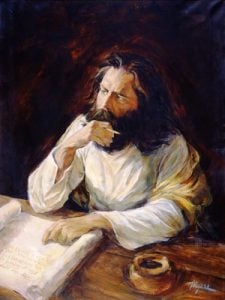
Spectacles on Bible

Image Β© Stan Myers from GoodSalt.com

Look at how badly things started off for Moses and his people after Moses first approached Pharaoh.

β€œThe king, thoroughly roused, suspected the Israelites of a design to revolt from his service. Disaffection was the result of idleness; he would see that no time was left them for dangerous scheming. And he at once adopted measures to tighten their bonds and crush out their independent spirit. The same day orders were issued that rendered their labor still more cruel and oppressive. The most common building material of that country was sun-dried brick; the walls of the finest edifices were made of this, and then faced with stone; and the manufacture of brick employed great numbers of the bondmen. Cut straw being intermixed with the clay, to hold it together, large quantities of straw were required for the work; the king now directed that no more straw be furnished; the laborers must find it for themselves, while the same amount of brick should be exacted.

β€œThis order produced great distress among the Israelites throughout the land. The Egyptian taskmasters had appointed Hebrew officers to oversee the work of the people, and these officers were responsible for the labor performed by those under their charge. When the requirement of the king was put in force, the people scattered themselves throughout the land, to gather stubble instead of straw; but they found it impossible to accomplish the usual amount of labor. For this failure the Hebrew officers were cruelly beaten.”—Ellen G. White, Patriarchs and Prophets, p. 258.

Discussion Questions

  1. Think of a time that, as you heeded God’s call in your life, things did not go well, or certainly did not start off well. What lessons have you learned over time from that experience?
  2. Tell others how God intervened in your life when you prayed for His help or when you did not expect it. How can we believe in God’s goodness when bad things happen, even to those who trust the Lord?
  3. What would you say to someone who declares, β€œI do not know the Lord”? However, suppose the person said it, not in a way of defiance, but as a simple fact about his or her life? What could you do to help him or her know the Lord and explain to the person why it’s important that he or she do so?

<–Thursday

(0)

Source: https://ssnet.org/blog/25c-03-further-thought-rough-start/

Share this:

  • Share on Facebook (Opens in new window) Facebook
  • Share on LinkedIn (Opens in new window) LinkedIn
  • Share on X (Opens in new window) X
  • Share on Pinterest (Opens in new window) Pinterest

Like this:

Like Loading...

Filed Under: Adventist Sermons & Video Clips, SSNet.org

God First: Your Daily Prayer Meeting #1056

July 17, 2025 By admin


"If you believe, you will receive whatever you ask for in prayer" (Matthew 21:22, NIV). 
Tag someone in need of prayer, and kindly share your prayer requests here:
https://wkf.ms/3DBuapQ Source: https://www.youtube.com/watch?v=yJeKccF0vyQ

Share this:

  • Share on Facebook (Opens in new window) Facebook
  • Share on LinkedIn (Opens in new window) LinkedIn
  • Share on X (Opens in new window) X
  • Share on Pinterest (Opens in new window) Pinterest

Like this:

Like Loading...

Filed Under: Adventist Sermons & Video Clips, Adventists About Life

Lesson 3.Rough Start | 3.5 Like God to Pharaoh | EXODUS | LIVING FAITH

July 16, 2025 By admin

β›ͺ Lesson 3: Rough Start
πŸ“˜ 3.5 Like God to Pharaoh
✨ God equips those He calls – even in spite of excuses

………………………………………………………………….

1.🟦 Introduction

The story of Moses in Exodus 6:28–7:7 is deeply human and at the same time divinely inspired. It shows us a man called by God who wrestles with his own weaknesses, his fear of failure, and his uncertainty about whether he is truly up to the task. Moses, the great leader of Israel, was not always bold. On the contrary – he was a man full of doubts. But God didn’t respond with anger, but with grace, patience, and clear guidance.

This story challenges us to ask: Where do we avoid what God is asking of us? What excuses do we use to ignore His voice?

………………………………………………………………….

2.πŸ“– Bible Study on Exodus 6:28–7:7

Theme: Called Despite Weakness – When God Speaks, Excuses Don’t Count

πŸ”Ή Context and Background

This passage marks the beginning of the great liberation drama in Exodus. Israel is in bondage under Pharaoh. Moses has been called as the liberator but is filled with doubt and resistance. Even though his calling was already addressed in chapters 3 and 4, Moses continues to resist.

Verses 6:28–30 repeat what has already been said: Moses points to his β€œuncircumcised lips” – a Hebrew expression symbolizing inadequacy or impurity. This repetition underlines his continued insecurity.

πŸ”Ή Verse-by-Verse Explanation

πŸ“ Verses 6:28–30
These verses reiterate Moses’ protest: β€œI have uncircumcised lips.” He implies: If even Israel doesn’t listen, why would Pharaoh?

πŸ“ Exodus 7:1
God replies with authority: β€œI have made you like God to Pharaoh, and your brother Aaron shall be your prophet.” This highlights the structure of divine communication:

β†’ God β†’ Moses β†’ Aaron β†’ Pharaoh.

This defines biblical prophecy: speaking God’s message, not one’s own.

πŸ“ Verses 2–3
God commands Moses to speak and Aaron to deliver the message. Then comes the theological tension: God will harden Pharaoh’s heart. This appears frequently in Exodus – God hardens it, and Pharaoh also hardens it himself. Both divine sovereignty and human responsibility are at play.

πŸ“ Verses 4–5
God’s goal is not just liberation but revelation: β€œThen the Egyptians will know that I am the LORD.” The ten plagues will not only be judgments but signs revealing God’s supremacy over Egypt’s false gods.

πŸ“ Verses 6–7
Despite all doubts, Moses and Aaron obey. Their age (Moses 80, Aaron 83) reminds us: There is no expiration date on God’s calling.


✨ Theological Insights

  • God calls despite weaknesses. Our flaws are not disqualifiers but often the space where God’s power is displayed.

  • God works through teamwork. Moses had Aaron. God rarely sends us out alone.

  • God desires obedience, not perfection. Faith is revealed in obedience, even when afraid.

  • Resistance is part of the journey. Pharaoh’s stubbornness was expected. Even opposition can serve God’s greater purpose.

  • God’s aim is His glory. Even in judgment, His name is made known.

πŸ“– Read also 2 Corinthians 4:7: β€œWe have this treasure in jars of clay…” – a New Testament mirror to Moses’ calling.

………………………………………………………………….

3.πŸ“– Answers to the Questions

πŸ”Ή Question 1: How does God respond to Moses’ objection?

God responds with patience and help. Instead of rebuking Moses for saying, β€œI have uncircumcised lips,” He reaffirms the mission and appoints Aaron to assist. God works with our weaknesses – not to ignore them, but to transform them. By making Moses β€œlike God” to Pharaoh and Aaron his prophet, God institutes a prophetic model of representation and communication.

He also warns that Pharaoh won’t immediately listen – the journey will be hard, but it will glorify God and reveal His power to Egypt.

Summary:

  • God does not rebuke but supports.

  • He works through community (Aaron).

  • He uses even resistance for His glory.

πŸ”Ή Question 2: What excuses do we use today to avoid God’s calling?

Moses’ excuses are strikingly familiar:

  1. β€œI’m not good enough.”
    God responds: β€œMy power is made perfect in weakness.” (2 Cor 12:9)

  2. β€œThey won’t listen.”
    God responds: β€œMy word will not return empty.” (Isa 55:11)

  3. β€œI’m too busy.”
    God responds: β€œSeek first the kingdom of God…” (Matt 6:33)

  4. β€œLet someone else do it.”
    God responds: β€œGo – I am sending you.” (Judges 6:14)

  5. β€œI’m too hurt or broken.”
    God responds: β€œA broken heart I will not despise.” (Psalm 51:17)

Conclusion:
Like Moses, we may run out of excuses – but never out of God’s patience.

………………………………………………………………….

4.✨ Spiritual Principles

  • God calls us with our weaknesses – to display His strength.

  • God calls us into community – never alone.

  • Obedience is what God desires – not perfection.

  • Resistance is expected – but God remains sovereign.

  • God seeks glory – even through our doubts and trials.

………………………………………………………………….

5.🧩 Practical Application

Are you avoiding something God is asking of you?
Maybe it’s sharing your faith, serving in church, or starting something new.

Like Moses, you don’t have to be ready – you just have to be willing.
Who is your β€œAaron”? Who can encourage and support you?

………………………………………………………………….

6.βœ… Conclusion

Moses’ story shows us: God uses those who doubt and struggle – as long as they are willing to obey.
Our calling today is no less important.
God seeks willing hearts – not perfect vessels.
His strength is revealed in our weakness.

………………………………………………………………….

7.πŸ’­ Thought of the Day

God doesn’t need perfect tools – He needs willing hearts.
Your weakness is not the problem. It’s where His grace shines.

………………………………………………………………….

8. Illustration – β€œThe Call on the Platform”

πŸ“– Chapter 1 – Restlessness in the Morning

The morning sun was already shining through the glass roof of Chengdu’s train station as Wei, a quiet and reserved math teacher in his mid-thirties, waited for his train like every day. In his hand, a steaming cup of green tea. It was a normal day. And yet, it wasn’t.

For weeks, he had felt a pull in his heart – a stirring he couldn’t shake. Again and again, the thought came:
β€œSpeak to Jian.”

He had ignored it. Reasoned it away. Pushed it aside.
But the thought returned – stronger than before. And worse: A dream had been haunting him.
In it, he stood alone on a vast steppe, and a voice said:
β€œYou shall speak to Jian. I want to send him.”


πŸ“– Chapter 2 – The Excuses

Wei had many arguments against this mission.
He lived in a country where Christian faith wasn’t forbidden, but was practiced very cautiously. He didn’t want to draw attention – and certainly not risk losing his job.

He told himself:

  • β€œI’m not the right person.”

  • β€œI’m not brave.”

  • β€œI’m not eloquent.”

  • β€œJian doesn’t need me – he’s younger, stronger, bolder.”

But like Moses in Exodus 6, his excuses eventually ran out.
The thought wouldn’t leave.
And every time he told God, β€œI can’t,” the answer seemed to whisper, β€œI am with you.”


πŸ“– Chapter 3 – The Decision on Platform 3

One Thursday morning, Wei stood on Platform 3, as usual.
As the train pulled in, he stepped forward almost mechanically.
Then, at the far end of the platform – Jian.

Wei froze.
The moment had come.

The doors beeped.
People pressed in.
Wei stood on the threshold – between his safe, familiar life and a step of obedience.

He stepped back.
The train left – without him.

With a trembling heart, he walked over to Jian.
β€œGood morning,” he said softly.
β€œI… I know this sounds strange. But I believe I’m supposed to tell you something.”


πŸ“– Chapter 4 – Words at the Right Time

Wei struggled for words, but they came:

β€œI believe God wants you to do something. To take a step. And He wants me to tell you: You are ready.”

Jian fell silent. Tears welled in his eyes. After a long pause, he said:

β€œLast night, I prayed. I said, β€˜God, I know I should speak for you – in front of my students, in front of my family. But I’m so afraid. Please send me a sign.’
And now you’re here.”

Wei was overwhelmed.
He had simply obeyed. No great speech. No miracle. Just a quiet word in faith.
And it was exactly what was needed.


πŸ“– Chapter 5 – Small Steps, Big Impact

In the weeks that followed, Jian began to change.
He became more open, spoke boldly about his faith.
Soon, he was asked to lead a student group – and he said yes.

What began small grew: the group became a small house church.
Young people came to faith. Bibles were shared. Hearts were touched.

And Jian often said:

β€œI was like Moses – full of doubt.
But God sent me an Aaron: a quiet math teacher with the courage to obey.”


πŸ“– Chapter 6 – The Burning Everyday

Wei returned to his everyday life.
He didn’t become an evangelist or preacher – he remained a teacher.
But something had changed.

He now knew:
God uses quiet people. Doubters. The hesitant.
Sometimes, there is no grand plan.
Just obedience at the right moment.


πŸ“– Chapter 7 – What Remains

Years later, Wei saw a post from Jian on a Christian network:

β€œFive years ago, a quiet man spoke God’s word to me on a platform in Chengdu. Today, I lead a small church by God’s grace. It all began with one sentence.
Whoever you are – thank you.”

Wei smiled quietly.
He remembered the voice, the dream, the station.
And he knew:
God still speaks.
And if we listen – we may walk.


πŸ“ Story Conclusion

Just as God used Moses despite his weakness, He used Wei – a quiet teacher in Asia.
This story reminds us that God works in every culture, every land, and every daily life.
He doesn’t need perfect people – He seeks listening hearts and obedient steps.

Source: https://fulfilleddesire.net/lesson-3-rough-start-3-5-like-god-to-pharaoh-exodus-living-faith/

Share this:

  • Share on Facebook (Opens in new window) Facebook
  • Share on LinkedIn (Opens in new window) LinkedIn
  • Share on X (Opens in new window) X
  • Share on Pinterest (Opens in new window) Pinterest

Like this:

Like Loading...

Filed Under: Adventist Sermons & Video Clips, Fulfilled Desire

17.07.2025 – Leviticus Chapter 2 | BELIEVE HIS PROPHETS

July 16, 2025 By admin

πŸ“… July 17, 2025
πŸ“– DAILY BIBLE READING
✨ Leviticus 2 – The Grain Offering – Worship Through the Everyday
πŸ”₯ God’s holiness meets us in the simple things

══════════════════════════════════════════════

πŸ“œ Bible Text – Leviticus 2 (KJV)

1 And when any will offer a meat offering unto theΒ Lord, his offering shall be of fine flour; and he shall pour oil upon it, and put frankincense thereon:

2Β And he shall bring it to Aaron’s sons the priests: and he shall take thereout his handful of the flour thereof, and of the oil thereof, with all the frankincense thereof; and the priest shall burn the memorial of it upon the altar, to be an offering made by fire, of a sweet savour unto theΒ Lord:

3Β And the remnant of the meat offering shall be Aaron’s and his sons’: it is a thing most holy of the offerings of theΒ LordΒ made by fire.

4Β And if thou bring an oblation of a meat offering baken in the oven, it shall be unleavened cakes of fine flour mingled with oil, or unleavened wafers anointed with oil.

5Β And if thy oblation be a meat offering baken in a pan, it shall be of fine flour unleavened, mingled with oil.

6Β Thou shalt part it in pieces, and pour oil thereon: it is a meat offering.

7Β And if thy oblation be a meat offering baken in the fryingpan, it shall be made of fine flour with oil.

8Β And thou shalt bring the meat offering that is made of these things unto theΒ Lord: and when it is presented unto the priest, he shall bring it unto the altar.

9Β And the priest shall take from the meat offering a memorial thereof, and shall burn it upon the altar: it is an offering made by fire, of a sweet savour unto theΒ Lord.

10Β And that which is left of the meat offering shall be Aaron’s and his sons’: it is a thing most holy of the offerings of theΒ LordΒ made by fire.

11Β No meat offering, which ye shall bring unto theΒ Lord, shall be made with leaven: for ye shall burn no leaven, nor any honey, in any offering of theΒ LordΒ made by fire.

12Β As for the oblation of the firstfruits, ye shall offer them unto theΒ Lord: but they shall not be burnt on the altar for a sweet savour.

13Β And every oblation of thy meat offering shalt thou season with salt; neither shalt thou suffer the salt of the covenant of thy God to be lacking from thy meat offering: with all thine offerings thou shalt offer salt.

14Β And if thou offer a meat offering of thy firstfruits unto theΒ Lord, thou shalt offer for the meat offering of thy firstfruits green ears of corn dried by the fire, even corn beaten out of full ears.

15Β And thou shalt put oil upon it, and lay frankincense thereon: it is a meat offering.

16Β And the priest shall burn the memorial of it, part of the beaten corn thereof, and part of the oil thereof, with all the frankincense thereof: it is an offering made by fire unto theΒ Lord.

══════════════════════════════════════════════

πŸ”΅ Introduction

Sacrifices in the Old Testament often feel foreign to us todayβ€”almost archaic. Yet they were a central part of Israel’s relationship with God. In chapter 2 of the third book of Mosesβ€”also called Leviticusβ€”we don’t read about animal sacrifices but about the grain offering. Here we find a fascinating truth: even flour, oil, salt, and incenseβ€”simple, everyday thingsβ€”can become holy when offered from the heart. God desires not only the offering of blood, but also the offering of breadβ€”what sustains us daily.

══════════════════════════════════════════════

🟑 Commentary

1⃣ What is a grain offering? (vv. 1–3)
The grain offering was a voluntary gift. It consisted of fine flour, mixed with oil and incense. The priest burned part of it on the altarβ€”as a memorial and a pleasing aroma to the Lord. The rest belonged to the priest. It was “most holy”β€”something consecrated to God. It showed that even the work of our hands and harvest could become worship.

2⃣ Variety of preparation (vv. 4–10)
Whether baked, fried, or roastedβ€”the grain offering could be prepared in various forms. Yet one rule remained constant: it had to be unleavened and mixed with oil. Oil often symbolizes the Holy Spirit. Leaven (yeast), in contrast, is symbolic of sin, fermentation, and corruption. The sacrificial system reflected purity and holiness.

3⃣ What is excluded? (vv. 11–12)
No leaven or honey was to be burned. Why? Leaven symbolizes sin; honey represents worldly sweetness that spoils easily. God desires pure, enduring offeringsβ€”not things that taste β€œsweet” but spoil quickly. Firstfruits could be brought to God, but not burned on the altarβ€”a subtle distinction between recognition and worship.

4⃣ Salt of the covenant (v. 13)
A key verse: β€œWith all your offerings you shall offer salt.” Salt preserves, seasons, and protects. It symbolizes endurance, loyalty, purity, and God’s covenant faithfulness. Every grain offeringβ€”every act of worshipβ€”was to remind the people: our relationship with God is holy and everlasting.

5⃣ Offering of the firstfruits (vv. 14–16)
The first ears of grain, dried and crushed, mixed with oil and incense, could be offered as a grain sacrifice. This shows: the first and the best belong to God. Even if the offering was not fully processed, it was precious to Godβ€”if it came from a faithful heart.

══════════════════════════════════════════════

🟒 Summary

The grain offering teaches us that worship doesn’t just take place in the extraordinary, but in the ordinaryβ€”in our daily bread, our harvest, our oil. God desires not only blood sacrifices but also signs of gratitude and devotion from daily life. Purity (no leaven), faithfulness (salt), and a willingness to give God the best (firstfruits) are core principles.

══════════════════════════════════════════════

πŸ“’ Message for Us Today

You don’t have to be a priest, missionary, or preacher to bring something valuable to God. Your daily lifeβ€”your work, your service, your bread, your laborβ€”can be a grain offering.
Ask yourself: Do I only offer God the “special” momentsβ€”or also the “ordinary” ones with a grateful heart?
God honors the small, faithful offeringβ€”when it comes from the heart.

══════════════════════════════════════════════

πŸ’‘ Reflection Questions

What is my β€œgrain offering” today?

➀ My time?
➀ My everyday work at home or on the job?
➀ My talents used with love?

Bring something ordinary to God todayβ€”consciously, purely, faithfully, with salt.
Holiness doesn’t begin in the templeβ€”it begins in the kitchen, the field, everyday life.

~~~~~ πŸ”₯ ~~~~~

πŸ“† July 13 – 19, 2025
πŸ“† WEEKLY SPIRIT OF PROPHECY READING
πŸ“– Ellen G. White β”‚ Patriarchs and Prophets – Chapter 17
✨ Jacob’s Flight and Exile
πŸ“– Read online here

══════════════════════════════════════════════

πŸ”΅ Introduction

Jacob does not leave his home as a hero, but as a fugitiveβ€”not because of external enemies, but because of inner guilt. And yet, on this very pathβ€”full of fear, uncertainty, and self-doubtβ€”God’s faithfulness is revealed in a remarkable way. Chapter 17 of Patriarchs and Prophets vividly describes how God, despite guilt and flight, not only forgives His servant but uses him to fulfill His promises.

══════════════════════════════════════════════

🟑 Commentary

πŸ“Œ 1. Jacob flees – alone, afraid, and broken

Jacob leaves his parents’ home out of fear of Esau’s wrath.
He is filled with guilt and remorse, feeling abandonedβ€”by his family and perhaps even by God.
In this solitude, he begins to pray honestly. His prayer is not prideful, but marked by humility and desperation.

πŸ“Œ 2. Heaven opens – the ladder from heaven (Genesis 28)

In a dream, Jacob sees a ladder connecting heaven and earth.
Angels ascend and descendβ€”a picture of God’s service to us.
God Himself stands above the ladder and repeats the promise made to Abrahamβ€”now it applies to Jacob!
Jacob not only receives assurance but also a promise: “I am with you… I will not leave you.”

πŸ“Œ 3. Jacob awakens – from sinner to worshiper

Jacob realizes: β€œSurely the Lord is in this place, and I did not know it!”
He sets up a stone pillar, names the place Bethel (β€œHouse of God”), and makes a vowβ€”not as a bargain, but out of gratitude.
He vows to remain faithful, to give a tenth, and to follow God.

πŸ“Œ 4. Jacob in Haran – faithful despite disappointment

In Haran, Jacob meets his future wife Rachel.
He serves seven yearsβ€”out of love, faithfully and patiently.
But Laban deceives him. Instead of Rachel, he is given Leah.
Jacob is betrayedβ€”yet he stays.
In total, he serves 20 years, is cheated multiple times, but God blesses him despite all human injustice.

πŸ“Œ 5. The return – decision in distress

Jacob realizes it’s time to return home.
He prays againβ€”remembering God’s promise at Bethel.
God answers: β€œReturn… I am with you.”
Laban pursues himβ€”but God protects Jacob.
A peace covenant is made, marked with the name Mizpah – β€œThe Lord watch between you and me.”

══════════════════════════════════════════════

🟒 Summary

Jacob begins his journey as a fugitive burdened by guilt, fear, and uncertainty. But God meets himβ€”not with punishment, but with grace. On the difficult road into exile, Jacob grows spiritually, is shaped through trials, and ultimately remains faithful to God. A deceiver becomes a shepherd, a father, and a bearer of the promise.

══════════════════════════════════════════════

πŸ“’ Message for Us Today

We too experience times of guilt, loneliness, and uncertainty. We may feel like failures, misunderstood, or taken advantage of. But God does not abandon us.
It is often in the deepest valleys that He reveals His faithfulness.

Jacob’s story shows us:

  • God starts new journeys with broken people.

  • Your past does not determine your calling.

  • God is faithful to His promisesβ€”even when we fail.

══════════════════════════════════════════════

πŸ’¬ Reflection Question

  • Have I ever encountered God like Jacobβ€”in the midst of crisis?

  • What is my β€œBethel”? Where has God shown me His presence?

  • Am I ready, like Jacob, to entrust God with my life, my gifts, and my tithe?

  • What do I need to let go of today in order to follow God’s call to return?

Source: https://fulfilleddesire.net/17-07-2025-leviticus-chapter-2-believe-his-prophets/

Share this:

  • Share on Facebook (Opens in new window) Facebook
  • Share on LinkedIn (Opens in new window) LinkedIn
  • Share on X (Opens in new window) X
  • Share on Pinterest (Opens in new window) Pinterest

Like this:

Like Loading...

Filed Under: Adventist Sermons & Video Clips, Fulfilled Desire

17.07.2025 | The Discipline of the Tongue | HEART ANCHOR | Youth Devotional

July 16, 2025 By admin

πŸ“† July 17, 2025
🌟 The Discipline of the Tongue
🧭 Speak so that life grows – not fades

──────────────── πŸ”¦ ────────────────

πŸ“œ Bible Verse

“Let no corrupt communication proceed out of your mouth, but that which is good to the use of edifying, that it may minister grace unto the hearers.” – Ephesians 4:29 (KJV)

──────────────── πŸ”¦ ────────────────

πŸ”‘ Introduction

Do you know the feeling when a single sentence can hurt more than a slap in the face? A careless or angry word can cut deeper than any sword. At the same time, a loving word can heal, build up, and give hope. In Ephesians 4:29, Paul calls us to think about our words – not superficially, but deeply: β€œLet no corrupt word”, he says – nothing that tears down, wounds, or is empty. Instead, we are to speak β€œwhat is good for edification.”

Today’s topic: The Discipline of the Tongue. Words are not just sounds. They have power. They can bring life – or destruction.

──────────────── πŸ”¦ ────────────────

🎯 Devotional 

Our language – our tongue – is like a tool. And like every tool, it depends on how we use it.

Ellen White writes:

β€œWords possess a power that can reach from time into eternity. They can bring blessing or curse, life or death.”
(Christ’s Object Lessons, p. 337)

What does this mean in practice? Paul urges us to speak only words that build up, encourage, and bring grace. It’s not just about being polite. It’s about a heart attitude that is mindful of how we treat people – especially through our speech.

Because our tongue reveals what is in our heart:

β€œOut of the abundance of the heart the mouth speaks.” – Luke 6:45

If our heart is full of bitterness, anger, or pride – our words will reflect that. But if it’s filled with God’s love, mercy, and truth – our words will heal, strengthen, and give life.

Ellen White adds:

β€œWe should speak in such a way that our words reflect what Christ has worked in us. The world should taste the love of heaven through our tongue.”
(The Adventist Home, p. 435)

So the discipline of the tongue begins in the heart – in prayer, in self-reflection, and in the desire to reflect God’s grace.

──────────────── πŸ”¦ ────────────────

πŸ“ Story: β€œThe Feathers in the Wind”

In a small Romanian village lived a boy named Alex, who loved to talk – loudly, quickly, sometimes carelessly. One day he spread a rumor about his classmate Raul. It wasn’t completely false, but it wasn’t true either. Raul was laughed at, shunned, and didn’t come to school for days.

When Alex saw what his words had caused, he felt guilty. He went to the village priest and asked for advice. The priest listened silently, then brought an old pillow, cut it open, and said:
“Go up the hill and scatter these feathers into the wind. Then come back.”

Alex did it. When he returned, the priest said:
“Good. Now – go gather them all back.”

“That’s impossible!”, cried Alex.
The priest nodded: “So it is with your words. Once they are spoken, you can’t take them back.”

Alex understood. From that day on, he began to think before he spoke. He tried to choose words that healed – not harmed.

──────────────── πŸ”¦ ────────────────

πŸ’­ Reflection – What does Ephesians 4:29 mean to you?

  • What β€œfeathers” have you perhaps already thrown into the wind?

  • What words have deeply hurt – or deeply built you up?

  • If people spoke about your words today – would they say: β€œGrace flows from their lips”?

Ephesians 4:29 is not just a language course. It is an invitation to speak healing language – the language of the Kingdom of God.

──────────────── πŸ”¦ ────────────────

πŸ’‘ Today’s Reflections

  • πŸ—£ Say at least one encouraging sentence to someone who doesn’t expect it.

  • βœ‹ Pause before speaking. Ask yourself: Will what I say build up or tear down?

  • πŸ“– Memorize Ephesians 4:29. Let it become your inner filter.

  • πŸ““ Keep a β€œspeech journal” for one week: Note when you consciously spoke positively – or when you should have.

──────────────── πŸ”¦ ────────────────

πŸ™ Prayer

Father in heaven,
You gave us the ability to speak – help us to use it for Your glory.
Forgive us where our words have hurt instead of healed.
Give us a pure heart so that our tongue also gives grace.
Discipline our speech through Your Holy Spirit – and teach us to speak as Jesus spoke.
Amen.

──────────────── πŸ”¦ ────────────────

πŸ§ƒ TakeawayΒ 

“My words are either windows of grace – or walls of pride. I decide.”

Source: https://fulfilleddesire.net/17-07-2025-the-discipline-of-the-tongue-heart-anchor-youth-devotional/

Share this:

  • Share on Facebook (Opens in new window) Facebook
  • Share on LinkedIn (Opens in new window) LinkedIn
  • Share on X (Opens in new window) X
  • Share on Pinterest (Opens in new window) Pinterest

Like this:

Like Loading...

Filed Under: Adventist Sermons & Video Clips, Fulfilled Desire

  • « Previous Page
  • 1
  • …
  • 563
  • 564
  • 565
  • 566
  • 567
  • …
  • 8257
  • Next Page »

SkyScraper

Intercer Ministry – Since 1997!

We’re on Pinterest!

Partners


The Seven Thunders Ministry

Recent Posts

  • La musica non solo si ascolta. Si vive.
  • La tua vita puΓ² testimoniare Cristo #drittoalcuore
  • From Montgomery to Minneapolis: People Power, Civil Disobedience, and the Moral Imperative
  • Prayer for those who were betrayed
  • AdventInnovate: β€œDC3” – Daniel Chenjerai

About Intercer

Intercer is a website with biblical materials in Romanian, English, Hungarian and other languages. We want to bring the light from God's Word to peoples homes. Intercer provides quality Christian resources...[Read More]

Lucian Web Service


Intercer is proudly sponsored by Lucian Web Service - Professional Web Services, Wordpress Websites, Marketing and Affiliate Info. Lucian worked as a subcontractor with Simpleupdates, being one of the programmers for the Adventist Church Connect software. He also presented ACC/ASC workshops... [read more]

Archives

Follow @intercer

Categories

[footer_backtotop]

Website provided by: Intercer Romania Β· Intercer Canada Β· Lucian Web Service Β· Privacy Β· Log in


%d