$2.5 million will be distributed for use in 2022. Money can be used to build a school, to pay a salary, to fund evangelism—anything, according to PGTS Director Dennis R. Carlson. Deadline for submitting a project proposal to the GC’s PGTS Department is August 1, 2022. 03 May 2022 | From the Adventist News Network: Local […] Source: https://atoday.org/in-the-money-millions-of-dollars-available-for-grassroots-ministry-projects/
Wednesday: The Babel Coalition
Read Genesis 14:1-17. What is significant about this war taking place just after the gift of the Promised Land? What does this story teach us about Abram?
This is the first war narrated in the Scriptures (Genesis 14:2). The coalition of four armies from Mesopotamia and Persia against the other coalition of five Canaanite armies, including the kings of Sodom and Gomorrah (Genesis 14:8), suggest a large conflict (Genesis 14:9).
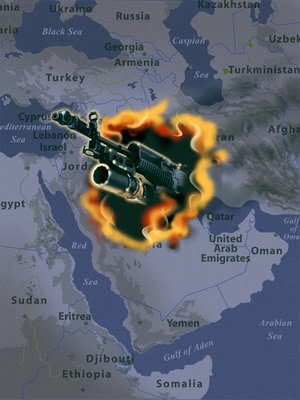
Image © Ron Bell at Goodsalt.com
The reason for this military operation has to do with the fact that the Canaanite peoples had rebelled against their Babylonian suzerains (Genesis 14:4-5). Although this story refers to a specific historical conflict, the timing of this “global” war, just after God’s gift of the Promised Land to Abram, gives this event a particular spiritual significance.
The involvement of so many peoples from the country of Canaan suggests that the issue at stake in this conflict was about sovereignty over the land. Ironically, the camp of Abram, the truly interested party, because he is the only true owner of the land, is the only force that remains outside of the conflict, at least at first.
The reason for Abram’s neutrality is that for Abram, the Promised Land was not acquired through the force of arms or through the wisdom of political strategies. Abram’s kingdom was God’s gift. The only reason Abram will intervene is the fate of his nephew Lot, who was taken prisoner in the course of the battles (Genesis 14:12-13).
“Abraham, dwelling in peace in the oak groves at Mamre, learned from one of the fugitives the story of the battle and the calamity that had befallen his nephew. He had cherished no unkind memory of Lot’s ingratitude. All his affection for him was awakened, and he determined that he should be rescued. Seeking, first of all, divine counsel, Abraham prepared for war.” — Ellen G. White, Patriarchs and Prophets, p. 135.
But Abram does not confront the whole coalition. In what must have been a quick and nocturnal commando operation, he attacks only the camp where Lot was held prisoner. Lot is saved. Thus, this faithful man of God also showed great courage and fortitude. No doubt his influence in the region grew, and people saw the kind of man he was and learned something more of the God whom he served.
| What kind of influence do our actions have on others? What kind of message are we sending about our faith by our actions? |
Amen! (0)
(0)
(0)The post Wednesday: The Babel Coalition appeared first on Sabbath School Net.
ADVENTISMO, FUNDAMENTALISMO Y EL KU KLUX KLAN – PARTE 2
Continuación de la parte 1. Por Michael Campbell, PhD. La relación de los Adventistas del Séptimo Día con KKK Las relaciones del adventismo con la segunda oleada del Ku Klux Klan fueron variadas. Si bien existe una amplia documentación sobre la actividad abolicionista en los inicios del adventismo y sobre las fuertes reacciones contra la […] Source: https://atoday.org/adventismo-fundamentalismo-y-el-ku-klux-klan-parte-2/
Surrounded by a Divine Shield
And call upon me in the day of trouble: I will deliver thee, and thou shalt glorify me. Psalm 50:15.
When trials arise that seem unexplainable, we should not allow our peace to be spoiled. However unjustly we may be treated, let not passion arise. By indulging a spirit of retaliation we injure ourselves. We destroy our own confidence in God, and grieve the Holy Spirit. There is by our side a Witness, a heavenly Messenger, who will lift up for us a standard against the enemy. He will shut us in with the bright beams of the Sun of Righteousness. Beyond this Satan cannot penetrate. He cannot pass this shield of holy light.
While the world is progressing in wickedness, none of us need flatter ourselves that we shall have no difficulties. But it is these very difficulties that bring us into the audience chamber of the Most High. We may seek counsel of One who is infinite in wisdom.
The Lord says, “Call upon me in the day of trouble” (Psalm 50:15). He invites us to present to Him our perplexities and necessities, and our need of divine help. He bids us be instant in prayer. As soon as difficulties arise, we are to offer to Him our sincere, earnest petitions. By our importunate prayers we give evidence of our strong confidence in God. The sense of our need leads us to pray earnestly, and our heavenly Father is moved by our supplications.
Often those who suffer reproach or persecution for their faith are tempted to think themselves forsaken by God. In the eyes of men they are in the minority. To all appearance their enemies triumph over them. But let them not violate their conscience. He who has suffered in their behalf, and has borne their sorrows and afflictions, has not forsaken them.
The children of God are not left alone and defenseless. Prayer moves the arm of Omnipotence. Prayer has “subdued kingdoms, wrought righteousness, obtained promises, stopped the mouths of lions, quenched the violence of fire”—we shall know what it means when we hear the reports of the martyrs who died for their faith—“turned to flight the armies of the aliens” (Hebrews 11:33, 34).—Christ’s Object Lessons, 171, 172.
Ye Shall Receive Power p. 132
~~~~~~~~~~~~~~~~~~~~~~~~~~~~~~~~~~~~~
Prayer Requests
—- The death toll among Adventist Church members in Ukraine has risen to seven, with 25 wounded among the baptized and non-baptized churchgoers. Keep them all in prayer. as well as those being persecuted for accepting Christ. M
—-E’s meeting was postponed until the tenth. Please pray earnestly. R
—-Prayer request for my great neighbor she fell off the ladder an had emergency surgery this afternoon for a brain bleed she is in iCU now pray for her healing she is a super good neighbor. her name is Marsha. thank you ,M.
—-Please pray for Bill whose wife died yesterday. Rose
~~~~~~~~~~~~~~~~~~~~~~~~~~~~~~~~~~~~~~~
Dear Friends,
Words cannot express our Great Creator’s Love and Mercy toward us! He “so loved the world, that he gave his only begotten Son, that whosoever believeth in him should not perish, but have everlasting life. For God sent not his Son into the world to condemn the world; but that the world through him might be saved.” John 3:16 Think of it! Since God loves us so much that He has given His Greatest Gift to redeem us from the enemy, since He has sacrificed His All for us, He is interested in every aspect of our life. Indeed, He longs to shower us with all of His good blessings. He wants us to ask Him for the things that we need. He bids us “Ask, and it shall be given you; seek, and ye shall find; knock, and it shall be opened unto you. For every one that asketh receiveth; and he that seeketh findeth; and to him that knocketh it shall be opened.” Luke 11:9, 10 Sometimes the answer is immediate and spectacular. Often the answer comes more slowly and in a different form, yet it is still God’s answer. We can have the assurance that He hears and answers each prayer, even if He does not always give us the exact thing for which we ask. Just as a loving parent must often tell their child “no,” “wait awhile,” or “here is something better suited to your needs” so does our Loving Heavenly Father for He knows the future and what would happen if He granted our request. Sometimes we think that He does not answer because we do not get just what we have asked for, but our Loving King weighs each prayer and gives us what is best for us. He is our Great Shepherd, our Guide, our constant Companion, our Heavenly Father. We can safely trust in Him!
Indeed, He loves us so much that He grants the request of even the most feeble and stammering prayer of one reaching out to Him with but a tiny spark of faith. “For thus saith the high and lofty One that inhabiteth eternity, whose name is Holy; I dwell in the high and holy place, with him also that is of a contrite and humble spirit, to revive the spirit of the humble, and to revive the heart of the contrite ones.” “For I the LORD thy God will hold thy right hand, saying unto thee, Fear not; I will help thee.” Isa 57:15;41:13
The Great King of the Universe loves us more than anything! How He yearns to hear from us. We are so dear to His Great Heart of Love. He Who made the worlds is listening for our call, waiting for the contact He so greatly desires. With inexpressible longing, He desires to dwell within us, to comfort and strengthen us, to bring us into harmony with Him. Jesus speaks of His tender care for us, “Are not five sparrows sold for two farthings, and not one of them is forgotten before God? But even the very hairs of your head are all numbered. Fear not therefore: ye are of more value than many sparrows. . . . Consider the lilies how they grow: they toil not, they spin not; and yet I say unto you, that Solomon in all his glory was not arrayed like one of these. If then God so clothe the grass, which is to day in the field, and to morrow is cast into the oven; how much more will he clothe you, O ye of little faith? And seek not ye what ye shall eat, or what ye shall drink, neither be ye of doubtful mind. For all these things do the nations of the world seek after: and your Father knoweth that ye have need of these things. But rather seek ye the kingdom of God; and all these things shall be added unto you. Fear not, little flock; for it is your Father’s good pleasure to give you the kingdom.” Luke 12:7,27-32
May we daily come to Him for guidance, for protection, for everything that we need telling Him all of our joys, all of our hopes, all of our troubles, all of our worries, casting all our care upon Him; for we have the assurance that He cares for us. (I Peter 5:7) May we “watch unto prayer” keeping contact with the One Who loves us with an everlasting love. (Jer 31:3) May we “pray without ceasing and in every thing give thanks: for this is the will of God in Christ Jesus concerning you.” 1 Thes 5:17, 18
Rose
Source: https://rosesdevotional.org/surrounded-by-a-divine-shield.html
6: The Roots of Abraham – SPD Discipleship Video
This video is produced by the South Pacific Division Discipleship team.
Amen!(0)
(0)The post 6: The Roots of Abraham – SPD Discipleship Video appeared first on Sabbath School Net.
Source: https://ssnet.org/blog/6-the-roots-of-abraham-spd-discipleship-video/

