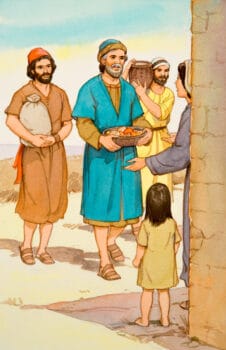
In the heart of Maasai country, a group of Morans celebrates receiving “Godpods”—special solar-powered radios filled with the Word of God. For the first time, they can listen to Bible messages and teachings in their own language, bringing hope, faith and joy to their community. Learn more at awr.org. #AWR360 #BroadcastToBaptism Source: https://www.youtube.com/shorts/5b93lgqTXXA
Wednesday: Different Functions of God’s Law
Daily Lesson for Wednesday 20th of August 2025
The law of God reveals God’s character, who He is. As God is holy, righteous, and good, so also is His law. Paul confirms: “So the law is holy, and the commandment is holy and righteous and good” (Romans 7:12, ESV).
In the Bible, the law of God is seen in a very positive light (Matthew 5:17-18; John 14:15; 1 Corinthians 7:19). One may create poems on the law (see Psalms 119:1-176), sing about the law (Psalms 19:1-14), and meditate on it day and night (Psalms 1:2, Joshua 1:8). The law helps keep one from evil and gives wisdom, understanding, health, prosperity, and peace (Deuteronomy 4:1-6; Proverbs 2:1-22; Proverbs 3:1-35).
-
God’s law is like a fence that creates a large free space for life and warns that—beyond a specific point—danger, problems, complications, and even death await (Genesis 2:16-17; James 2:12).
-
The law is also a signpost pointing to Jesus, who forgives our sins and changes our lives (2 Corinthians 5:17, 1 John 1:7-9). In this way, it leads us as a paidagogos, a custodian/guardian, to Christ (Galatians 3:24).
Read James 1:23-25. What is he saying, and how do these words help us realize what the function and importance of the law is, even though it cannot save us?
A mirror can reveal your defects, yes. But there is nothing in the mirror that can cure them. The mirror points to the problems but offers no solution to the problems. It’s the same with God’s law. Trying to be justified before God by keeping the law would be like staring at the mirror in hopes that, sooner or later, the mirror will make your defects go away.
Because salvation is by faith and not by works—including works of the law—some Christians claim that the law is done away with and that we no longer have to keep it. Of course, considering that the law itself is what defines sin—“I would not have known sin except through the law” (Romans 7:7, NKJV)—this claim is a gross misinterpretation of the relationship of the law to the gospel. The existence of the law is precisely why we need the gospel.
|
How successful have you been in your attempts to obey God’s law? Well enough to base your salvation on it? If not, why do you need the gospel? |
(1)Source: https://ssnet.org/blog/25c-08-different-functions-of-gods-law/
How a Prison Baptism Changed Lives in Zimbabwe
From prison walls to life-changing baptisms, #AWR360° witnessed the gospel’s impact in Bulawayo, Zimbabwe, where even a man once on death row found hope. Learn more at awr.org. Source: https://www.youtube.com/shorts/BeQVq7HMrtU
From Addiction to Hope: His Journey Is Not Over
From addiction and divorce to faith and freedom—Jorge’s story in Argentina will move you. Find the full video here: https://youtube.com/watch?v=I6kZIKwuIMg #AWR360 #BroadcastToBaptism Source: https://www.youtube.com/shorts/GDyJxz4RQhA
Tuesday: The Gift of the Decalogue
Daily Lesson for Tuesday 19th of August 2025
Read Exodus 20:1-17. What are the principles of the Decalogue, and how is it organized?
Note that the Decalogue does not begin with the commands but with God’s gracious action for His people:
“ ‘I am the Lord your God, who brought you out of Egypt, out of the land of slavery’ ” (Exodus 20:2, NIV). The Lord first shows His grace by giving freedom and salvation to Israel, and only then does He reveal His will. These commandments were to be observed out of love and gratitude for what God did for them.
God’s key summation word for the Decalogue is “love” (Romans 13:10). The greatest commandment is the commandment of love, which is expressed in two ways: love to God (Deuteronomy 6:5) and love to our neighbor (Leviticus 19:18).
In the first four commandments, the Decalogue interprets what it means to love God; in the following six commandments, the law interprets what it means to love your neighbor. The Decalogue begins with honoring God above all (vertical love) and continues with respecting others (horizontal love):
-
Honoring and revering God by giving Him the first and the highest place in every situation of our life (the first commandment);
-
Honoring and preserving God’s unique position and not replacing Him by an idol in any form, either physical, symbolic, or spiritual. Our purest affections belong to the Lord (the second commandment);
-
Revering God’s name—His reputation and character (the third commandment);
-
Honoring His day of rest and worship—the Sabbath (the fourth commandment);
-
Respecting parents (the fifth commandment);
-
Respecting life (the sixth commandment);
-
Respecting marriage (the seventh commandment);
-
Respecting people’s property (the eighth commandment);
-
Respecting the reputation of others (the ninth commandment); and
-
Respecting self so that no selfish desires will mar our character (the tenth commandment).
As Jesus Himself said: “ ‘If you love me, you will keep my commandments’ ” (John 14:15, ESV; see also 1 John 4:20-21). Thus, true obedience is simply an expression of love and gratitude toward Jesus, a love expressed most powerfully in how we treat our neighbors.
(0)Source: https://ssnet.org/blog/25c-08-the-gift-of-the-decalogue/
- « Previous Page
- 1
- …
- 213
- 214
- 215
- 216
- 217
- …
- 4384
- Next Page »