Join the Hit the Mark panel as they discuss Sabbath School Lesson 8 – Fulfilling Old Testament Prophecies.

 (0)
(0)Source: https://ssnet.org/blog/fulfilling-old-testament-prophecies-hit-the-mark-sabbath-school/
Closer To Heaven
|
|
|
Join the Hit the Mark panel as they discuss Sabbath School Lesson 8 – Fulfilling Old Testament Prophecies.
(0)Source: https://ssnet.org/blog/fulfilling-old-testament-prophecies-hit-the-mark-sabbath-school/
Daily Lesson for Thursday 21st of November 2024
In our study of John so far, we’ve seen that John shows how Jesus, indeed, is the promised Messiah, the great hope that the Jewish people had been longing for.
And yet, many of the religious leaders, the spiritual guides of the people, were His biggest enemies instead.
Why?
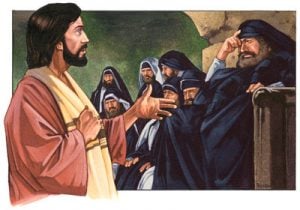
Image © Jeff Preston Goodsalt.com
Jesus says that they know neither Him nor the Father (John 8:19). They should have known both, but these men were self-deceived. They were so caught up in their own traditions and philosophies that even with Jesus right before them, doing all the things that He did and saying the things that He said—all powerful revelations of the Father—they still rejected Him.
Second, Jesus says to them, “ ‘You are from beneath’ ” (John 8:23, NKJV). In other words, however religious they might be, these were not spiritual, godly men. They had a “form of godliness” (2 Timothy 3:5), but that was all. They had outward piety but inward disbelief.
This was nothing new: “ ‘Inasmuch as these people draw near with their mouths and honor Me with their lips, but have removed their hearts far from Me, and their fear toward Me is taught by the commandment of men’ ” (Isaiah 29:13, NKJV). This very concept is echoed by Jesus centuries later, when He said, “ ‘And in vain they worship Me, teaching as doctrines the commandments of men’ ” (Mark 7:7, NKJV). Their human teachings, their human commandments, were “of this world” (John 8:23) and, as Jesus then said, “I am not of this world” (John 8:23). It was bad enough that these men had been deceiving themselves; the tragedy was made worse because they also led others astray, even though, interestingly enough, John wrote that as a result of the exchange depicted in these verses, “many believed in Him” (John 8:30, NKJV).
Thus, even despite bad leadership, many Jews were able to get beyond it and see, for themselves, who Jesus was.
|
What lessons do you draw from Jesus’ exchange with the religious leaders? How can we be “from above” and not “from beneath”—and how can we know the difference? |
(0)Daily Lesson for Wednesday 20th of November 2024
Jesus said to the religious leaders: “ ‘You search the Scriptures, for in them you think you have eternal life; and these are they which testify of Me’ ” (John 5:39, NKJV). What an incredible claim to make about Himself!
Estimates vary, but some scholars argue that Jesus of Nazareth fulfilled hundreds of Old Testament prophecies. Whatever the amount, the odds against one man’s fulfilling even a few of them, much less them all, are staggering. Every now and then someone will use an image like this: imagine filling an area the size of Texas with coins two feet high and painting one coin pink and then mixing them all up.

Image © Lars Justinen at Goodsalt.com
Then give a blindfolded person one chance to pick the pink coin. What are the odds that, with one pick, he or she would get the pink one?
No question—Christ’s birth, life, and death were predicted by the Old Testament, stunning evidence of His identity as the expected Messiah. John points to these Old Testament texts again and again to make that very point about who Jesus was, and also, why we should believe in Him and accept the salvation He offers.
John 12:13, Psalms 118:26
John 12:14-15; Zechariah 9:9
John 13:18, Psalms 41:9
John 19:37, Zechariah 12:10, Zechariah 13:6
How firmly grounded are you in what you believe? If someone were to challenge you on why you believe in Jesus as the Messiah, what answers could you give? Where would you go, and why, to help defend that faith?
(0)Source: https://ssnet.org/blog/24d-08-old-testament-prophecies-of-jesus-part-ii/

Join It Is Written Sabbath School host Eric Flickinger and one of this quarter’s authors, Dr. Thomas R. Shepherd, as they provide additional insights into this week’s Sabbath School lesson, “The Beginning of the Gospel.”
(0)View an in-depth discussion of Fulfilling Old Testament Prophecies in the Hope Sabbath School class led by Pastor Derek Morris.
Click on the image below to view the video:
With thanks to Hope Channel – Television that will change your life.
(0)Source: https://ssnet.org/blog/8-fulfilling-old-testament-prophecies-hope-sabbath-school-video-discussion/
 Intercer is a website with biblical materials in Romanian, English, Hungarian and other languages. We want to bring the light from God's Word to peoples homes. Intercer provides quality Christian resources...[Read More]
