• Home
  • Devotionals
  • BiblePhone
  • Blogs
  • TV
  • Prayer
    • Submit Prayer Request
    • Prayer Requests List
  • Contact us
  • Romanian

Intercer Adventist News

Closer To Heaven

  • About us
    • About Adventist Church
    • About Intercer Adventist News
    • About Intercer
    • About Lucian Web Service
    • Latest News
    • Romanian Church News
  • News and Feeds
    • Intercer Adventist News
    • 60 Second SlideShows
    • “Adventist Tweets” Paper
    • Adventists on Twitter
    • Adventists on Google Plus
    • Bible Resources
      • Adventist Universities Daily Bible
      • Answers For Me
        • Dear God
        • Healthy Living
        • Life Notes
        • Spiritual applications
        • Vegetarian recipes
      • Better Sermons
        • Spirit Renew Quotes
      • Daily Bible Promise
      • E-GraceNotes
        • Bible Says
        • City Lights
        • Family First
        • Staying Young
      • Story Harvest
        • Personal Stories
      • SSNet.org
    • Churches & Organizations
      • Adventist News Network
      • Adventist Review
      • Adventist World Radio
      • Avondale College
      • Babcock University Nigeria
      • BC Alive
      • British Union Conference
      • Canadian Adventist Messenger
      • Canadian Union
      • North American Division News
      • Outlook Magazine
      • PM Church – Pastor’s Blog
      • Potomac Conference
      • Record Magazine – Australia
      • Review and Herald
      • Trans-European Division
      • Washington Conference
    • Health
      • Dr.Gily.com
      • Vegetarian-Nutrition.info
    • Ministries
      • 7 Miracle (Youth)
      • A Sabbath Blog
      • Adventist Blogs
      • Adventist Today
      • ADvindicate
      • Creative Ministry
      • Grace Roots
      • Romanian Church News
      • Rose’s Devotional
      • UNashamed
    • Personal
      • Alexandra Yeboah
      • Iasmin Balaj
      • Jennifer LaMountain
      • McQue’s View
      • Refresh with Tia
      • Shawn Boonstra
  • Sermons & Video Clips
    • Churches
      • Downey Adventist Church
      • Fresno Central SDA Church
      • Hillsboro Adventist Church
      • Mississauga SDA Church
      • New Perceptions Television (PM Church)
      • Normandie Ave SDA Church
      • Remnant Adventist Church
    • Organizations
      • Adventist News Network (ANN)
      • ADRA Canada
      • Adventists About Life
      • Adventist Education
      • Adventist Mission
      • Amazing Facts
      • Adventist Church Connect
      • BC Adventist
      • Church Support Services
      • In Focus (South Pacific)
      • IIW Canada
      • NAD Adventist
      • NAD Church Resource Center (Vervent)
      • NARLA
      • Newbold
      • Review & Herald
      • SECMedia
      • Video Avventista (Italy)
    • Ministries
      • 3AngelsTube.com
      • Answered.TV
      • AudioVerse.org
      • AYO Connect
      • Christian Documentaries
      • GAiN #AdventistGeeks
      • GYC
      • Intercer Websites
      • Josue Sanchez
      • LightChannel
      • Pan de Vida
      • Revival and Reformation
      • Stories of Faith
      • SAU Journalism/Communication
      • Spirit Flash
      • The Preaching Place (UK)
      • Toronto East Youth Nation
    • Personal
      • Esther-Marie Hartwell
      • McQuesView
      • Pastor Manny Cruz
    • Sabbath School
      • Ecole du Sabbat Adventiste
      • Sabbath School Audio Podast
      • Sabbath School daily
  • Resources
    • Bible and Bible Studies
    • Health
    • Music
  • All articles
  • G+ News & Marketplace
    • G+ News & Marketplace Group
    • G+ Page
You are here: Home / Archives for News and Feeds / SSNet.org

Tuesday: Who Said You Could Do That?

August 26, 2024 By admin

Daily Lesson for Tuesday 27th of August 2024

Read Mark 11:27-33. What challenge did the religious leaders bring to Jesus, and how did He respond?

The day after Jesus cleanses the temple, the religious leaders confront Him in the temple courts, asking by what authority He acted the day before. They are not seeking truth but seeking to trap Him. If He says that His authority is from God, they will deny that a simple country carpenter could have such authority. If He admits that His authority is human, they will dismiss Him as a fool.

But Jesus sees through their trap and says He will answer their question if they will answer one He asks. What He asks is whether John the Baptist’s baptism was from God or from men. Instantly, the leaders see that they are the ones trapped. If they say from God, Jesus will say, “Why did you not believe him?” If they say from men, they fear the people. So, they lie and say they do not know. This gives Jesus the opportunity to refuse to answer their question.

Read Mark 12:1-12. How did Jesus follow up His refusal to answer, and what effect did it have?

Jesus tells a parable about a vineyard, an owner, and tenants to whom he rents it. The story Jesus tells has great similarities to the parable of the vineyard found in Isaiah 5:1-30, where God brings a charge against unfaithful Israel. Everyone would recognize the parallel, especially the religious leaders.

The story unfolds in a most unusual way as the tenants refuse to give any of the fruits of the field to the owner. Instead, they mistreat and kill his servants. Finally, the owner sends his beloved son, whom he expects them to respect. But not so. They strangely reason that if they kill the son, the vineyard will be theirs. Their illogic is striking, and the judgment to be meted out on them is justified.

In this story, Jesus is giving the religious leaders a solemn warning as to where their steps are heading. Seen in this light, His parable is a loving forewarning. It is not too late for them to change and avoid certain judgment. Some will repent, change, and accept Jesus. Others will not.

(0)

Source: https://ssnet.org/blog/24c-09-who-said-you-could-do-that/

Share this:

  • Share on Facebook (Opens in new window) Facebook
  • Share on LinkedIn (Opens in new window) LinkedIn
  • Share on X (Opens in new window) X
  • Share on Pinterest (Opens in new window) Pinterest

Like this:

Like Loading…

Filed Under: Adventist Sermons & Video Clips, SSNet.org

Why Did Jesus Curse the Fig Tree?

August 26, 2024 By admin

Jesus looks for figsComing from Bethany towards Jerusalem, Jesus saw a fig tree in full leaf, and approached it, hoping to find some figs. Finding none, He cursed the tree, and by the next day, it had withered and died! (See Mark 11:12-26.) What a strange story this appears to be – a contrast to the loving acts of Jesus throughout the gospels. 

Now let’s take a closer look. First of all, it helps to understand the nature of fig trees grown in the Mediterranean area. Unlike many fig trees grown in areas of the US that experience significant winter crops, most, if not all fig trees grown in areas such as the vicinity of Jerusalem bear a spring crop that grows on last year’s wood and starts developing before the leaves break out.Note  By the time the tree is in full leaf, it is reasonable to expect ripe figs, and that’s exactly what Jesus expected, even though it was not yet the season for ripe figs, as Mark 11:13 tells us. This tree in full leaf, gave promise of an earlier crop than the rest of the trees that were not yet leafed out. 

The cursed fig tree

pppas0308-JM-305F

But still, why did Jesus curse the fig tree? This is the only instance in the gospels where Jesus actively “cursed” something. But why?

I believe that this was an acted parable in conjunction with his parable of the fig tree found in Mark 13:6-8. In this story parable, we see the owner of a vineyard wanting to cut down an unfruitful fig tree, but he is deterred by the keeper of the vineyard who offers to dig around it and fertilize it, “And if it bears fruit, well. But if not, after that you can cut it down.’ ” (Mark 13:9) The implication is clear – if there is no fruit the following year, the tree will be cut down. 

When we consider the fig tree in full leaf contrasted with the other fig trees not yet leafed out, we can see a picture of the nation of Israel at the time of Christ. They professed to be God’s people, and it was reasonable to expect good “fruit” in their lives – fruit of goodness, righteousness and truth. (cf. Eph. 5:9). By contrast, the other trees did not raise such expectations, because they were not in full leaf – just like the Gentiles did not raise the expectation of demonstrating the fruit of the Spirit of God. God expects fruit in accordance with  our profession and our privilege. (See also Luke 12:47-48)

In this instance of cursing the fig tree, and a number of parables, Jesus made clear that the judgment of God will fall on those professing to be God’s people while they do not demonstrate the fruit of the Spirit in their lives. (See particularly the parable of the sheep and the goats in Matthew 25:31-36.) God is a God of justice as well as mercy. 

The lesson is for us as well. Do we bear the fruit of the Spirit (Galatians 5:22, Ephesians 5:9), or do we only have the appearance of fruit?

Jesus has promised to give His Spirit in full measure to all who ask in sincerity.  (See Luke 11:11- 13) And the Holy Spirit will produce fruit in our lives – the fruit of love, joy, peace, longsuffering, kindness, goodness, righteousness, truth, faithfulness, gentleness, self-control. But we need to ask!


You may also read about this in more detail in The Desire of Ages, page 581  and Christ’s Object Lessons, page 214. 


Note: In the US, we call the spring crop a “breba” crop, and only certain varieties of figs have it. We planted a fig tree that was supposed to bear a breba crop, but that crop is not reliable in our area. Our fig tree is about to be cut down, because we seldom get a few figs in the summer, and the fall crop comes too late. It was when I realized that Jesus was looking for this early crop that the incident of the cursed fig tree started making sense to me.

(0)

Source: https://ssnet.org/blog/why-did-jesus-curse-the-fig-tree/

Share this:

  • Share on Facebook (Opens in new window) Facebook
  • Share on LinkedIn (Opens in new window) LinkedIn
  • Share on X (Opens in new window) X
  • Share on Pinterest (Opens in new window) Pinterest

Like this:

Like Loading…

Filed Under: Adventist Sermons & Video Clips, SSNet.org

Monday: A Cursed Tree and a Cleansed Temple

August 25, 2024 By admin

Daily Lesson for Monday 26th of August 2024

Read Mark 11:12-26. What is the significance of the events depicted here?

In the morning, coming from Bethany, only about two miles (a little more than three kilometers) from Jerusalem, Jesus was hungry. Seeing a fig tree in leaf, He went to it to find perhaps some early fruit. This action would not be considered stealing since according to Old Testament law, one could eat food from a neighbor’s field or orchard to assuage hunger (Leviticus 19:9, Leviticus 23:22, Deuteronomy 23:25). But He found no fruit and said to the tree, “ ‘May no one ever eat fruit from you again’ ” (Mark 11:14, ESV). It was a very strange and atypical action for Jesus, but what follows right after becomes even more striking.

What happens next likely occurs in the Court of the Gentiles, where selling of sacrifices took place (recently begun by Caiaphas). Jesus clears away the sellers from the courts so that quiet worship may return. His action is a direct affront to those in charge of the temple system.

Jesus links two Old Testament passages as a scathing rebuke of the unholy traffic. He insists the temple is to be a house of prayer for all people (Isaiah 56:7), emphatically including the Gentiles. Then He says the leaders have made the temple a den of robbers (Jeremiah 7:11). Then, at the end of this amazing day, Jesus leaves the city with His disciples (Mark 11:19).

The next morning, going back to the city (see Mark 11:20-26), the disciples are astonished to see the fig tree withered from the roots. Jesus makes a lesson about prayer and forgiveness in His explanation of what has happened. What does all this mean?

These two stories are the fourth sandwich story in Mark (see lesson 3). In such stories, dramatized irony occurs with parallel characters doing opposite actions or opposite characters doing parallel actions. In this story the fig tree and the temple stand in parallel. Jesus curses the tree but cleanses the temple, opposite actions. But the irony is that the religious leaders will now plot to kill Jesus, and that action will spell the end of the significance of the temple services, which were fulfilled in Jesus.

What things in your life do you need Jesus to clean? How does this happen?

(0)

Source: https://ssnet.org/blog/24c-09-a-cursed-tree-and-a-cleansed-temple/

Share this:

  • Share on Facebook (Opens in new window) Facebook
  • Share on LinkedIn (Opens in new window) LinkedIn
  • Share on X (Opens in new window) X
  • Share on Pinterest (Opens in new window) Pinterest

Like this:

Like Loading…

Filed Under: Adventist Sermons & Video Clips, SSNet.org

Sunday: The Triumphal Entry

August 24, 2024 By admin

Daily Lesson for Sunday 25th of August 2024

Read Mark 11:1-11 and Zechariah 9:9-10. What’s happening here?

Half of this story involves Jesus sending two disciples to a nearby village to retrieve a donkey for Him to ride on into Jerusalem. Why is so much time spent on this account?

Jesus Triumphal Entry into Jerusalem

Image © Review & Herald Publishing at Goodsalt.com

The answer is twofold. First, it demonstrates Jesus’ prophetic powers, enhancing the dignity of His arrival and linking it to the will of God. Second, this aspect of the story links to Zechariah 9:9-10, which speaks of the king as riding into Jerusalem on a donkey. It is reminiscent of the entry of Solomon into Jerusalem on a donkey (1 Kings 1:32-48), when Adonijah tried to usurp the throne, and David commanded that Solomon be immediately crowned.

“Five hundred years before the birth of Christ, the prophet Zechariah thus foretold the coming of the King to Israel. This prophecy is now to be fulfilled. He who has so long refused royal honors now comes to Jerusalem as the promised heir to David’s throne.”—Ellen G. White, The Desire of Ages, p. 569.

Jerusalem is located in a hilly region at an elevation of about 2,400 feet (about 740 meters). In Jesus’ day its population was perhaps 40,000–50,000, but this swelled at Passover. The city covered only about 250 acres, but the temple mount covered about 37 of those acres. The beautiful temple complex dominated the city.

Jesus entered from the east, descending the Mount of Olives and likely entering through the Golden Gate onto the Temple Mount (a gate now bricked shut). The entire city was stirred by His entry, everyone recognizing the significance of His symbolic action. The crowd that accompanied Jesus shouted “hosanna,” a term originally meaning “save now” but eventually coming to mean “praise to God.”

The time for secrecy, which Jesus had insisted throughout most of Mark, has passed. Now Jesus openly enters Jerusalem using a well-known royal symbolic action. He enters the temple, but because it is late in the day, He simply looks around and then retires with the twelve disciples to Bethany. What could have turned into a riot or revolt instead ends with Him quietly retiring. But the next day will be different.

The idea of riding on the donkey invokes the idea of humility. Why is that such an important trait, especially for Christians? What have we, in light of the Cross, to be proud about?

(0)

Source: https://ssnet.org/blog/24c-09-the-triumphal-entry/

Share this:

  • Share on Facebook (Opens in new window) Facebook
  • Share on LinkedIn (Opens in new window) LinkedIn
  • Share on X (Opens in new window) X
  • Share on Pinterest (Opens in new window) Pinterest

Like this:

Like Loading…

Filed Under: Adventist Sermons & Video Clips, SSNet.org

Sabbath: Jerusalem Controversies

August 23, 2024 By admin

Daily Lesson for Sabbath Afternoon 24th of August 2024

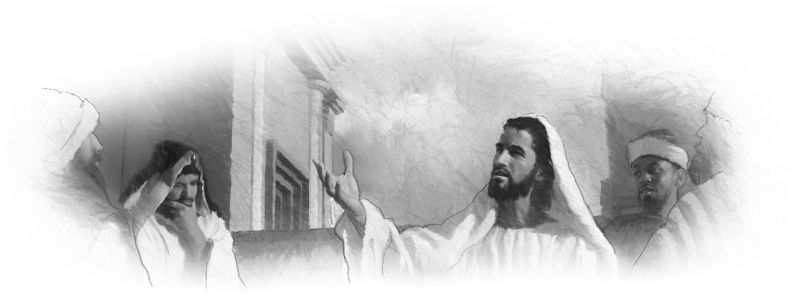
Group of Men Debating

Image © Pacific Press

Read for This Week’s Study

Mark 11:1-33; 1 Kings 1:32-48; Zechariah 9:9-10; Isaiah 56:7; Jeremiah 7:11; Mark 12:1-34.

Memory Text:

“ ‘And whenever you stand praying, if you have anything against anyone, forgive him, that your Father in heaven may also forgive you your trespasses’ ” (Mark 11:25, NKJV).

A series of five controversies between Jesus and the religious leaders are recorded in Mark 2:1-28 and 3 (see lesson 3). In this week’s lesson, when Jesus arrives in Jerusalem, He has a series of six controversies with the religious leaders. The two sets of controversies are like bookends of His earthly ministry. Each set deals with important issues in the Christian life. Jesus’ instructions, even in these polemical situations, help guide believers both in fundamental issues of faith and in practical issues of everyday experience.

The religious leaders come to confront, confound, and defeat Jesus, but they never succeed. Part of this week’s lesson will include analyzing just what it is that brings people into opposition to God and considering what Christians can do to break through prejudice and speak to the hearts of those resisting the Spirit’s call.

In Mark 11:1-33, Jesus’ ministry will be in Jerusalem for Passover (March to April). Mark 11:1-33; Mark 12:1-44; Mark 13:1-37; Mark 14:1-72; Mark 15:1-47; Mark 16:1-20 covers little more than one week; the narrative time has slowed down markedly. The first 10 chapters cover approximately three and a half years. This slowdown points to the importance of these closing scenes.

*Study this week’s lesson to prepare for Sabbath, August 31.

(0)

Source: https://ssnet.org/blog/24c-09-jerusalem-controversies/

Share this:

  • Share on Facebook (Opens in new window) Facebook
  • Share on LinkedIn (Opens in new window) LinkedIn
  • Share on X (Opens in new window) X
  • Share on Pinterest (Opens in new window) Pinterest

Like this:

Like Loading…

Filed Under: Adventist Sermons & Video Clips, SSNet.org

  • « Previous Page
  • 1
  • …
  • 286
  • 287
  • 288
  • 289
  • 290
  • …
  • 1110
  • Next Page »

SkyScraper

Intercer Ministry – Since 1997!

We’re on Pinterest!

Partners


The Seven Thunders Ministry

Recent Posts

  • God First: Your Daily Prayer Meeting #1406
  • Ministry In Music | Aaron Paul
  • 13: Into Eternity-Sabbath School Lesson Teaching Plan
  • Lavorare bene è già una forma di preghiera. 🙏
  • La perdida de miembros obliga a la Iglesia Adventista en Argentina al cierre de sedes administrativas  

About Intercer

Intercer is a website with biblical materials in Romanian, English, Hungarian and other languages. We want to bring the light from God's Word to peoples homes. Intercer provides quality Christian resources...[Read More]

Lucian Web Service


Intercer is proudly sponsored by Lucian Web Service - Professional Web Services, Wordpress Websites, Marketing and Affiliate Info. Lucian worked as a subcontractor with Simpleupdates, being one of the programmers for the Adventist Church Connect software. He also presented ACC/ASC workshops... [read more]

Archives

Follow @intercer

Categories

[footer_backtotop]

Website provided by: Intercer Romania · Intercer Canada · Lucian Web Service · Privacy · Log in


%d