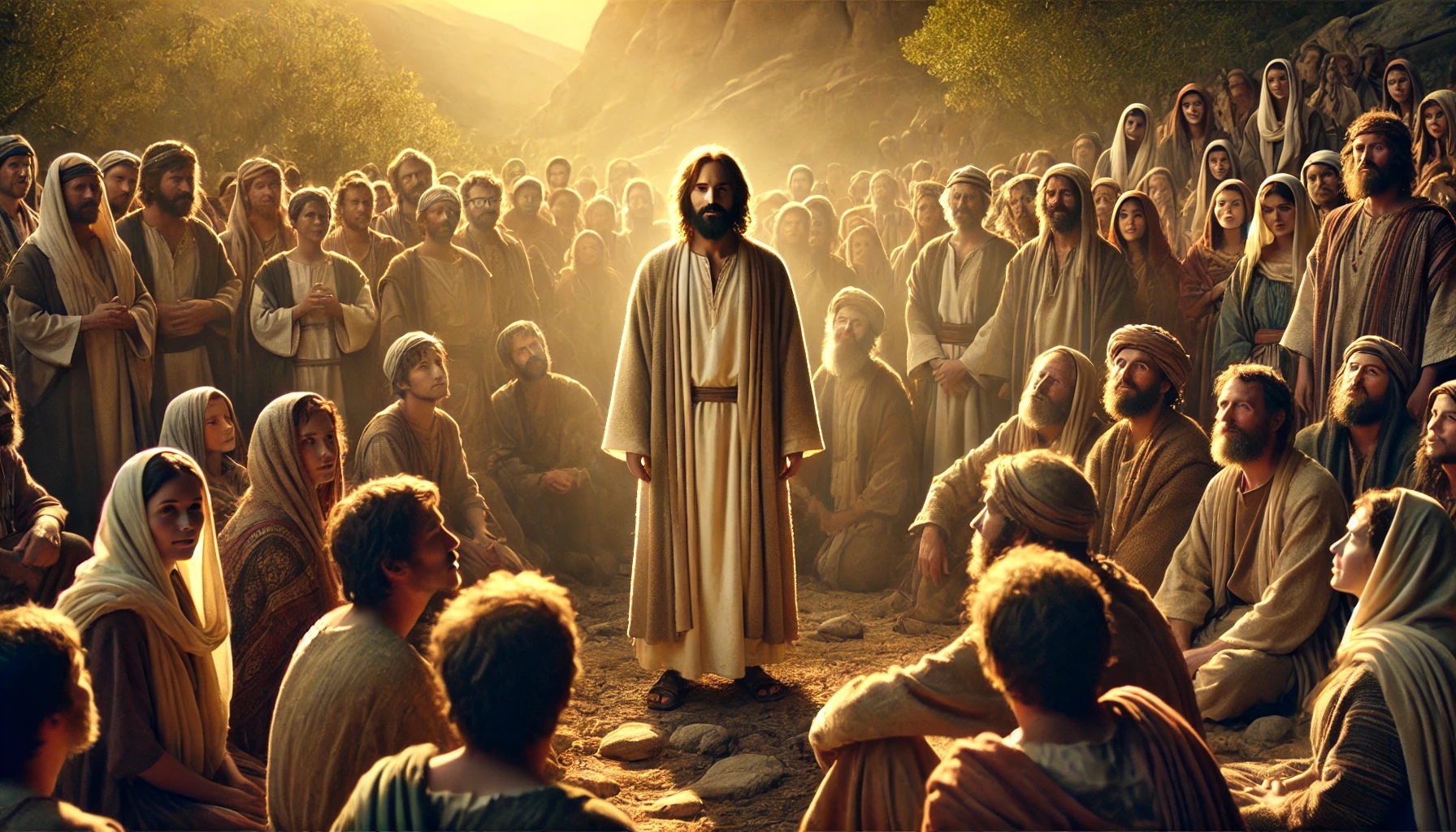
Lesson 4.Parables | 4.6 Summary | THE BOOK OF MARK | LIVING FAITH


4.6 Summary
Revelation and Growth of the Kingdom of God
4.1 The Parable of the Sower (Mark 4:1–9)
Main Points:
-
Different Soils: Jesus describes four types of soil on which the seed falls: the path, rocky soil, thorny soil, and good soil.
-
Symbolism: The soils represent different responses to the word of God.
-
Path: Those who hear the word of God, but Satan immediately takes it away.
-
Rocky Soil: Those who receive the word with joy but do not develop deep faith and fall away in difficult times.
-
Thorny Soil: Those who hear the word, but life’s worries and riches choke it.
-
Good Soil: Those who hear and accept the word, resulting in fruitfulness.
-
Teaching: The receptiveness of the heart determines the fruitfulness of God’s word.
4.2 Jesus’ Interpretation (Mark 4:13–20)
Main Points:
-
Explanation of the Soils: Jesus explains the meaning of the parable to his disciples.
-
Spiritual Lessons: Understanding and accepting God’s word depend on one’s inner readiness and depth of faith.
Teaching: Spiritual maturity and growth are the results of an open and receptive heart.
4.3 The Purpose of the Parables (Mark 4:10–12)
Main Points:
-
Intent of the Parables: Jesus uses parables to convey spiritual truths while testing the listeners’ hearts.
-
Spiritual Blindness: Many people remain spiritually blind and deaf despite hearing the truth due to their prejudices and hardness of heart.
Teaching: Parables reveal the truth to those who are willing to hear and understand, while they remain hidden from those with closed hearts.
4.4 Lamp and Measure (Mark 4:21–25)
Main Points:
-
Parable of the Lamp: A lamp is not placed under a bowl or bed but on a stand to provide light.
-
Parable of the Measure: With the measure you use, it will be measured to you. Whoever has will be given more; whoever does not have, even what they have will be taken away.
Teaching: We should not hide the light of truth but let it shine. Generosity and openness in giving and receiving lead to abundant blessings.
4.5 Parables of the Growing Seed and Mustard Seed (Mark 4:26–32)
Main Points:
-
Parable of the Growing Seed: The Kingdom of God grows mysteriously through God’s hand, often hidden and without human intervention.
-
Parable of the Mustard Seed: A tiny mustard seed grows into a large plant, symbolizing the astonishing transformation and growth of the Kingdom of God.
Teaching: The Kingdom of God starts small but grows into something great and mighty through God’s work. Our faith and contributions, no matter how small they seem, have the potential to achieve great things.
Conclusion
The parables of Jesus teach us important spiritual truths about the receptiveness of the heart, the hidden yet powerful workings of God’s kingdom, and the importance of generosity and openness. They challenge us to examine our hearts, spread the gospel, and trust in God’s wonderful workings.

Connection to Our Daily Life and Faith
-
Learning in Stages:
-
Daily Life: We often learn in stages, similar to the listeners of Jesus. New concepts and ideas are introduced and deepened gradually to achieve comprehensive understanding.
-
Patience and Perseverance: Patience is necessary to understand complex topics. It requires perseverance and continuous effort to deepen knowledge and skills.
-
Faith:
-
Spiritual Growth: Our spiritual life also progresses in stages. We grow in faith by continuously learning and engaging deeper with Jesus’ teachings.
-
Openness to Teaching: Like the disciples, we must be open and ready to learn from Jesus. Gradual revelation of spiritual truths helps us better understand and integrate them into our lives.
-
Importance of Community:
-
Daily Life: Community and interaction with others enhance learning. Discussions and joint studies deepen our understanding and provide new perspectives.
-
Support and Encouragement: In a community, we receive support and encouragement that helps us overcome challenges and continue growing.
-
Faith:
-
Church Life: In faith, the community of believers is very important. In the church, we can learn, grow, and encourage each other.
-
Discipleship: As Jesus taught his disciples, we are called to practice discipleship. This means helping others grow in faith while learning ourselves.
-
Application of Jesus’ Teachings:
-
Daily Life: Knowledge and teachings are valuable only when we put them into practice. Daily life offers numerous opportunities to apply what we have learned and deepen our understanding.
-
Reflection and Adaptation: Regular reflection helps us review our actions and decisions and improve ourselves.
-
Faith:
-
Living by the Word: Jesus’ teachings are meant to transform our lives. By living according to His word, we become witnesses of His love and truth.
-
Growth through Application: Our faith grows when we apply Jesus’ teachings in our daily lives. This is evident in our actions, decisions, and interactions with others.
-
The Role of the Holy Spirit:
-
Daily Life: In everyday learning and growth, we can understand inner convictions and intuition as guidance that helps us make the right decisions.
-
Faith:
-
Spiritual Guidance: The Holy Spirit plays a crucial role in our spiritual growth. He teaches, reminds, and leads us into the truth.
-
Fulfillment and Power: Through the Holy Spirit, we receive the power and wisdom to understand Jesus’ teachings and implement them in our lives.
Conclusion
Jesus’ method of teaching through parables highlights the importance of gradual learning, community, and practical application of spiritual truths. In our daily life and faith, we can adopt these principles to continuously grow and deepen our understanding. Openness, patience, and the willingness to apply what we learn are essential to realizing Jesus’ teachings in our lives.
Just as Jesus taught His disciples gradually, our understanding of faith grows step by step. Remain open and patient, and trust that God will deepen your understanding and life through His Spirit.
Source: https://fulfilleddesire.net/lesson-4-parables-4-6-summary-the-book-of-mark-living-faith/
26.07.2024 – Zechariah Chapter 14 | BELIEVE HIS PROPHETS
July 26, 2024
DAILY BIBLE READING – Zechariah Chapter 14
1 Behold, the day of the Lord cometh, and thy spoil shall be divided in the midst of thee.
2 For I will gather all nations against Jerusalem to battle; and the city shall be taken, and the houses rifled, and the women ravished; and half of the city shall go forth into captivity, and the residue of the people shall not be cut off from the city.
3 Then shall the Lord go forth, and fight against those nations, as when he fought in the day of battle.
4 And his feet shall stand in that day upon the mount of Olives, which is before Jerusalem on the east, and the mount of Olives shall cleave in the midst thereof toward the east and toward the west, and there shall be a very great valley; and half of the mountain shall remove toward the north, and half of it toward the south.
5 And ye shall flee to the valley of the mountains; for the valley of the mountains shall reach unto Azal: yea, ye shall flee, like as ye fled from before the earthquake in the days of Uzziah king of Judah: and the Lord my God shall come, and all the saints with thee.
6 And it shall come to pass in that day, that the light shall not be clear, nor dark:
7 But it shall be one day which shall be known to the Lord, not day, nor night: but it shall come to pass, that at evening time it shall be light.
8 And it shall be in that day, that living waters shall go out from Jerusalem; half of them toward the former sea, and half of them toward the hinder sea: in summer and in winter shall it be.
9 And the Lord shall be king over all the earth: in that day shall there be one Lord, and his name one.
10 All the land shall be turned as a plain from Geba to Rimmon south of Jerusalem: and it shall be lifted up, and inhabited in her place, from Benjamin’s gate unto the place of the first gate, unto the corner gate, and from the tower of Hananeel unto the king’s winepresses.
11 And men shall dwell in it, and there shall be no more utter destruction; but Jerusalem shall be safely inhabited.
12 And this shall be the plague wherewith the Lord will smite all the people that have fought against Jerusalem; Their flesh shall consume away while they stand upon their feet, and their eyes shall consume away in their holes, and their tongue shall consume away in their mouth.
13 And it shall come to pass in that day, that a great tumult from the Lord shall be among them; and they shall lay hold every one on the hand of his neighbour, and his hand shall rise up against the hand of his neighbour.
14 And Judah also shall fight at Jerusalem; and the wealth of all the heathen round about shall be gathered together, gold, and silver, and apparel, in great abundance.
15 And so shall be the plague of the horse, of the mule, of the camel, and of the ass, and of all the beasts that shall be in these tents, as this plague.
16 And it shall come to pass, that every one that is left of all the nations which came against Jerusalem shall even go up from year to year to worship the King, the Lord of hosts, and to keep the feast of tabernacles.
17 And it shall be, that whoso will not come up of all the families of the earth unto Jerusalem to worship the King, the Lord of hosts, even upon them shall be no rain.
18 And if the family of Egypt go not up, and come not, that have no rain; there shall be the plague, wherewith the Lord will smite the heathen that come not up to keep the feast of tabernacles.
19 This shall be the punishment of Egypt, and the punishment of all nations that come not up to keep the feast of tabernacles.
20 In that day shall there be upon the bells of the horses, Holiness Unto The Lord; and the pots in the Lord‘s house shall be like the bowls before the altar.
21 Yea, every pot in Jerusalem and in Judah shall be holiness unto the Lord of hosts: and all they that sacrifice shall come and take of them, and seethe therein: and in that day there shall be no more the Canaanite in the house of the Lord of hosts.
Commentary

Commentary
Zechariah 14 describes an impressive and often frightening picture of the “Day of the Lord,” a future day when God intervenes in history to save His people and eliminate injustice in the world. This prophecy speaks of both destruction and renewal, carrying significant theological and eschatological meaning.
Siege and Plundering of Jerusalem (Verses 1-2): The chapter begins with the announcement of an attack on Jerusalem, during which the city will be plundered, and many of its inhabitants will be taken captive. This could be interpreted as a symbolic depiction of the trials and sufferings that God’s people must endure.
The Lord’s Intervention (Verses 3-5): The Lord Himself will intervene in the battle, and His feet will stand on the Mount of Olives, which will split into two parts. This dramatic change in the landscape symbolizes God’s powerful intervention in human history and His ability to alter creation.
The Unique Day of the Lord (Verses 6-7): It will be a day that is neither day nor night, but in the evening, there will be light. This symbolizes a time when God’s presence and dominion surpass all previous orders and expectations.
Living Water and Universal Reign (Verses 8-9): Living waters will flow from Jerusalem, indicating a source of life and healing. The Lord will be king over the whole earth, emphasizing God’s universal rule and the unity of His name.
Renewal and Security of Jerusalem (Verses 10-11): Jerusalem will be elevated and stabilized, and people will live securely within it. This vision provides a picture of future peace and security for God’s people.
Plagues upon the Nations (Verses 12-15): The nations that fought against Jerusalem will be struck with terrible plagues. This represents God’s just retribution against the enemies of His people.
Worship and Celebration (Verses 16-19): All surviving nations will come annually to Jerusalem to celebrate the Feast of Tabernacles and worship the Lord. This emphasizes the universal worship of God and the fulfillment of the prophetic vision of a united and sanctified people.
Holiness and Purity (Verses 20-21): Everything in Jerusalem, even everyday items, will be holy and belong to the Lord. This underscores the comprehensive holiness and purity that God’s presence brings.
Conclusion: Zechariah 14 paints a picture of the end-time salvation and restoration of Jerusalem through God’s intervention. It underscores themes of judgment, redemption, God’s universal rule, and holiness. This vision offers both comfort and a solemn warning, emphasizing God’s power and holiness and the necessity of faithfulness and worship.
![]()

WEEKLY SPIRIT OF PROPHECY READING – Ellen White | The Desire of Ages Chapter 49: At the Feast of Tabernacles
This chapter is based on John 7:1-15, 37-39.
Read online here
Commentary
The Feast of Tabernacles, as described in John 7, was a significant celebration in the Jewish calendar. Three times a year, the Jews were to gather in Jerusalem to worship the Lord, who had led them through the wilderness. After the Babylonian captivity, they were able to resume this practice, and it became very important to celebrate these memorial days. However, over time, the religious leaders had forgotten the original purpose of the festivals. Christ, who had instituted these festivals, recognized this and showed that they had lost their meaning.
The Feast of Tabernacles was the last of the annual festivals and was meant to remind Israel of God’s goodness and grace. During this time, the land was flooded with God’s blessings. The harvest had been gathered, olives had been harvested, and grapes had been pressed. For seven days, people from all parts of the land and from other countries came to Jerusalem to celebrate and thank God for His goodness. They lived in booths made of green branches to remember the tent life in the wilderness.
The festival was celebrated with spiritual songs and prayers of thanksgiving. The great Day of Atonement, which had been observed shortly before, had brought peace to the hearts and prepared the way for the joyful Feast of Tabernacles. The temple was the center of the celebrations, and the sacrificial ceremonies reached their peak. At night, artificial light illuminated the temple, and the splendor of the celebration deeply impressed those present.
A significant ritual during the festival was drawing water from the Pool of Siloam, which symbolized quenching the thirst of Israel in the wilderness. This symbolized the spiritual thirst that Christ intended to satisfy. When Jesus told his brothers that His time had not yet come, He showed that He was guided not by human expectations but by divine timing.
Jesus eventually came to Jerusalem in the middle of the feast and taught in the temple. His wisdom and knowledge of the law amazed everyone. Despite the hostility of the religious leaders, He spoke boldly and persuasively. On the last day of the feast, He cried out loudly: “If anyone thirsts, let him come to Me and drink!” This was an invitation to satisfy spiritual thirst through faith in Him.
Jesus was aware of the needs of the people and offered to quench their inner thirst. His invitation still stands today: anyone who is thirsty can come to Him and take the water of life freely. His words offer comfort, hope, and refreshment to all who recognize Him as the true Messiah.

WEEKLY SPIRIT OF PROPHECY READING – Ellen White | The Desire of Ages Chapter 50: Among Snares
This chapter is based on John 7:16-36, 40-53; John 8:1-11.
Read online here
Commentary
Based on John 7:16-36, 40-53, and John 8:1-11, this chapter describes the increasing hostility of the Jewish leaders towards Jesus. During the Feast of Tabernacles in Jerusalem, Jesus was constantly surrounded by priests and Pharisees who tried to trap him. They questioned his authority and attempted to discredit his teaching.
Jesus responded to them with the words: “My teaching is not mine, but His who sent me” (John 7:16). He made it clear that the ability to recognize the truth depends less on the mind and more on the heart. A person must be willing to submit their will to God to truly grasp the truth. The Pharisees lacked this willingness, which is why they could not understand his teaching.
Jesus revealed their evil intentions by exposing their thoughts and reminding them that they were breaking the law by plotting his death. Although they wanted to kill him, they were hindered by an invisible power. Many people began to believe in Jesus, but the religious leaders remained stubborn in their unbelief.
Nicodemus, a member of the Sanhedrin, asked the question: “Does our law judge a man without first giving him a hearing and learning what he does?” (John 7:51). This question silenced the accusers, and Jesus escaped immediate danger.
The next morning, Jesus was interrupted in the temple by scribes and Pharisees who brought a woman accused of adultery before him. They tried to trap Jesus: if he freed the woman, they could accuse him of disregarding the law; if he condemned her, they could report him to the Romans. But Jesus wisely responded by saying, “Let him who is without sin among you be the first to throw a stone at her” (John 8:7). The accusers shamefully withdrew, and Jesus freed the woman and encouraged her to sin no more.
This episode shows the deep grace and mercy of Jesus. He did not condemn the woman but gave her a new chance. This stands in stark contrast to the religious leaders, who were only focused on condemnation and punishment. Jesus demonstrated that true justice is linked with mercy and forgiveness. His words and actions reveal that he came to save, not to condemn.
The story urges us not to judge but to show mercy and give others a second chance. It highlights the difference between a superficial, self-righteous religion and a genuine faith characterized by love. Jesus invites us to be his followers by reflecting his mercy and love in our lives.
Source: https://fulfilleddesire.net/26-07-2024-zechariah-chapter-14-believe-his-prophets/
Lesson 4.Parables | 4.5 Parables of Growing Seed | THE BOOK OF MARK | LIVING FAITH


4.5 Parables of Growing Seed
Growth and Greatness of the Kingdom of God
Read Mark 4:26–29. What is the focus of this parable?
Focus of the Parable:
The parable of the growing seed highlights the growth process of the Kingdom of God. Jesus uses this parable, which appears only in the Gospel of Mark, to illustrate the dynamics and mystery of divine workings. There are several central points in this parable:
-
The Growth Process
-
Description of Growth:
-
Jesus speaks of a man who scatters seed on the ground and then goes about his daily work without constantly monitoring the growth process. The seed sprouts and grows “by itself” while the man sleeps and rises.
-
The growth process occurs in stages: first the stalk, then the head, and finally the full kernel in the head. This natural and continuous growth process shows that the Kingdom of God grows in a similar way.
-
-
God’s Work:
-
Although humans play a role in sowing, the actual growth is the work of God. It is a process that often takes place in secret, invisible and imperceptible, yet continuous and inevitable.
-
This growth is mysterious and independent of human intervention. Humans do not fully understand how it happens, but they can see the result.
-
-
-
The Role of Humans
-
Human Participation:
-
Humans play a role in the Kingdom of God by sowing the seed, meaning by proclaiming the gospel and spreading God’s word.
-
After sowing, humans leave the growth to God. It is not their task to control or accelerate the process.
-
-
-
The End of the Growth Process
-
Harvest Time:
-
The parable ends abruptly with the ripening of the grain and the immediate harvest. This symbolizes the sudden and inevitable coming of the end times, the return of Christ.
-
The harvest represents the completion of the Kingdom of God when Christ returns to judge the world and establish his kingdom fully.
-
-
Read Mark 4:30–32. What is the special emphasis in the Parable of the Mustard Seed?
Special Emphasis in the Parable of the Mustard Seed:
In this parable, Jesus emphasizes the amazing transformation and growth of the Kingdom of God. A tiny mustard seed, one of the smallest seeds, grows into a large plant where birds can nest in its branches. This metaphor underscores several important aspects of the Kingdom of God:
-
Small Beginning, Great Growth
-
Tiny Seed, Huge Plant:
-
The mustard seed is only one to two millimeters in diameter and is extremely small. Despite its size, it grows into an impressive plant that can reach up to three meters in height.
-
This drastic growth symbolizes how the Kingdom of God, from seemingly insignificant beginnings, grows into something great and mighty.
-
-
Significance of the Beginning:
-
The Kingdom of God began small and humble, with Jesus and a handful of disciples. Yet this small, humble seed has the potential to become a global movement reaching millions of people.
-
-
-
Metaphorical Meaning
-
Birds in the Branches:
-
Jesus mentions that birds nest in the branches of the mustard plant. This is an allusion to Psalm 104:12 and Daniel 4:10–12, where trees provide shelter and nourishment.
-
This metaphor emphasizes that the Kingdom of God will be a refuge and a source of life for many. It will be large and expansive, providing shelter and home for many.
-
-
Divine Power and Creation:
-
Psalm 104 speaks of God’s power in creating the world. Jesus uses this symbolism to show that the growth of the Kingdom of God is also based on divine power and action.
-
Like the great tree in Nebuchadnezzar’s dream in Daniel 4, which provides shade and nourishment to the whole world, the Kingdom of God will be comprehensive and life-giving.
-
-
“And this gospel of the kingdom will be preached in the whole world as a testimony to all nations, and then the end will come” (Matthew 24:14). Consider what the community looked like when Jesus made this prediction. Why is this a remarkable and faith-strengthening prediction for us?
Small Beginnings, Great Promise:
-
Small Core: The first community consisted of a small group of disciples and followers of Jesus. These people had little influence and were politically and socially marginalized.
-
Great Vision: Jesus prophesied that the gospel would be carried to the whole world. This vision was enormous, considering the humble beginnings of the Christian movement.
Contrary Circumstances:
-
Roman Empire: Christianity arose in a time and region dominated by the Roman Empire, which encompassed numerous religions and philosophies. The spread of a new religious movement seemed unlikely.
-
Persecution and Resistance: The first Christians faced numerous persecutions and resistances. Despite these challenges, Jesus promised that their message would be spread worldwide.
Divine Action:
-
Divine Power: The spread of the gospel from a small, insignificant beginning to a worldwide movement shows the working of God. This strengthens faith as it proves that God’s plans are fulfilled despite all human obstacles.
-
Testimony of Faith: The fulfillment of this prophecy serves as a powerful testimony to the truth and reliability of Jesus’ words. It shows that God is in control of history and faithfully fulfills His promises.
Missionary Mandate:
-
Inspiration for Believers: Jesus’ prediction motivates believers to continue spreading the gospel. It reminds us that every believer plays a role in carrying the message of God’s kingdom into the world.
-
Universal Reach: This prophecy emphasizes the universal nature of the gospel. It is meant not only for a specific group or nation but for all peoples.

Connection to Our Daily Life and Faith
-
Patience and Trust in the Growth Process:
-
Daily Life: This parable teaches us that even small beginnings can lead to great successes. In our daily lives, we should be patient and trust in small steps and humble beginnings.
-
Faith: Spiritually, the parable encourages us to trust in God’s plan. Even if the Kingdom of God starts small, it will grow and flourish through God’s power.
-
-
Importance of Each Individual’s Contribution:
-
Daily Life: Every small contribution counts. Our daily actions and decisions, no matter how small they may seem, can have long-term significant impacts.
-
Faith: Every believer has a role in the Kingdom of God. Our prayers, acts of charity, and dedication to the gospel contribute to the growth of God’s kingdom.
-
-
Hope for Completion:
-
Daily Life: The idea of harvest time reminds us that all processes, even long and arduous ones, will eventually come to an end. This gives us hope and motivation to keep going.
-
Faith: The harvest time symbolizes the return of Christ and the completion of the Kingdom of God. This hope for the ultimate kingdom of God gives us strength and endurance in our faith journey.
-
These parables teach us patience, trust, and the importance of our small contributions in God’s grand plan. They encourage us to trust that God will accomplish His work and remind us of the great hope we have in the Kingdom of God.

Even small beginnings can grow into something great through God’s work – trust that every small contribution counts and that God ensures the growth.
25.07.2024 – Zechariah Chapter 13 | BELIEVE HIS PROPHETS
July 25, 2024
DAILY BIBLE READING – Zechariah Chapter 13
In that day there shall be a fountain opened to the house of David and to the inhabitants of Jerusalem for sin and for uncleanness.
2 And it shall come to pass in that day, saith the Lord of hosts, that I will cut off the names of the idols out of the land, and they shall no more be remembered: and also I will cause the prophets and the unclean spirit to pass out of the land.
3 And it shall come to pass, that when any shall yet prophesy, then his father and his mother that begat him shall say unto him, Thou shalt not live; for thou speakest lies in the name of the Lord: and his father and his mother that begat him shall thrust him through when he prophesieth.
4 And it shall come to pass in that day, that the prophets shall be ashamed every one of his vision, when he hath prophesied; neither shall they wear a rough garment to deceive:
5 But he shall say, I am no prophet, I am an husbandman; for man taught me to keep cattle from my youth.
6 And one shall say unto him, What are these wounds in thine hands? Then he shall answer, Those with which I was wounded in the house of my friends.
7 Awake, O sword, against my shepherd, and against the man that is my fellow, saith the Lord of hosts: smite the shepherd, and the sheep shall be scattered: and I will turn mine hand upon the little ones.
8 And it shall come to pass, that in all the land, saith the Lord, two parts therein shall be cut off and die; but the third shall be left therein.
9 And I will bring the third part through the fire, and will refine them as silver is refined, and will try them as gold is tried: they shall call on my name, and I will hear them: I will say, It is my people: and they shall say, The Lord is my God.
Commentary

Commentary
Eradication of Idolatry and False Prophets:
Verses 1-2: The chapter begins with the promise of an open fountain for the house of David and the citizens of Jerusalem, which will cleanse them from sin and impurity. This symbolizes the purification and forgiveness that God offers His people. The Lord of Hosts announces that He will remove the names of the idols from the land and expel the false prophets and unclean spirits. This emphasizes the complete renewal and cleansing of the land from everything that stands against God’s will.
Verses 3-6: In these verses, it becomes clear that false prophets will no longer be tolerated. Even parents will act against their children if they prophesy falsely in the name of the Lord. The prophets will be ashamed and abandon their deceitful practices. Instead, they will present themselves as ordinary people who have spent their lives as farmers or laborers. Verse 6, which speaks of the wounds in the hands, might indicate the painful consequences of false prophecy, with the speaker explaining that these injuries were sustained in the house of his friends.
The Purified Remnant:
Verses 7-9: The Lord of Hosts calls upon the sword to strike the shepherd, leading to the scattering of the flock. This is often interpreted as a prophecy concerning the Passion of Jesus Christ, the “shepherd,” whose death results in the scattering of His disciples (the flock). God will turn His hand to the little ones, meaning He will attend to the weak and forsaken.
The Lord prophesies that two-thirds of the land will be cut off and die, while one-third will remain. This remaining part will be refined through fire, much like silver and gold are purified. This purification symbolizes the testing and cleansing of the people to produce a faithful remnant that will call on God’s name. God will acknowledge them as His people, and they will acknowledge Him as their Lord and God.
Summary: Zechariah chapter 13 depicts a time of cleansing and renewal for Israel. God will eradicate idolatry and false prophecy, purging the land of all evil. The true prophetic voice will be suppressed, and the people will be called to repentance and conversion. The chapter concludes with the promise of a purified, faithful community, refined through trials and recognized as God’s people. This chapter emphasizes themes of purification, refinement, and the restoration of the covenant between God and His people.
![]()

WEEKLY SPIRIT OF PROPHECY READING – Ellen White | The Desire of Ages Chapter 49: At the Feast of Tabernacles
This chapter is based on John 7:1-15, 37-39.
Read online here
Commentary
The Feast of Tabernacles, as described in John 7, was a significant celebration in the Jewish calendar. Three times a year, the Jews were to gather in Jerusalem to worship the Lord, who had led them through the wilderness. After the Babylonian captivity, they were able to resume this practice, and it became very important to celebrate these memorial days. However, over time, the religious leaders had forgotten the original purpose of the festivals. Christ, who had instituted these festivals, recognized this and showed that they had lost their meaning.
The Feast of Tabernacles was the last of the annual festivals and was meant to remind Israel of God’s goodness and grace. During this time, the land was flooded with God’s blessings. The harvest had been gathered, olives had been harvested, and grapes had been pressed. For seven days, people from all parts of the land and from other countries came to Jerusalem to celebrate and thank God for His goodness. They lived in booths made of green branches to remember the tent life in the wilderness.
The festival was celebrated with spiritual songs and prayers of thanksgiving. The great Day of Atonement, which had been observed shortly before, had brought peace to the hearts and prepared the way for the joyful Feast of Tabernacles. The temple was the center of the celebrations, and the sacrificial ceremonies reached their peak. At night, artificial light illuminated the temple, and the splendor of the celebration deeply impressed those present.
A significant ritual during the festival was drawing water from the Pool of Siloam, which symbolized quenching the thirst of Israel in the wilderness. This symbolized the spiritual thirst that Christ intended to satisfy. When Jesus told his brothers that His time had not yet come, He showed that He was guided not by human expectations but by divine timing.
Jesus eventually came to Jerusalem in the middle of the feast and taught in the temple. His wisdom and knowledge of the law amazed everyone. Despite the hostility of the religious leaders, He spoke boldly and persuasively. On the last day of the feast, He cried out loudly: “If anyone thirsts, let him come to Me and drink!” This was an invitation to satisfy spiritual thirst through faith in Him.
Jesus was aware of the needs of the people and offered to quench their inner thirst. His invitation still stands today: anyone who is thirsty can come to Him and take the water of life freely. His words offer comfort, hope, and refreshment to all who recognize Him as the true Messiah.

WEEKLY SPIRIT OF PROPHECY READING – Ellen White | The Desire of Ages Chapter 50: Among Snares
This chapter is based on John 7:16-36, 40-53; John 8:1-11.
Read online here
Commentary
Based on John 7:16-36, 40-53, and John 8:1-11, this chapter describes the increasing hostility of the Jewish leaders towards Jesus. During the Feast of Tabernacles in Jerusalem, Jesus was constantly surrounded by priests and Pharisees who tried to trap him. They questioned his authority and attempted to discredit his teaching.
Jesus responded to them with the words: “My teaching is not mine, but His who sent me” (John 7:16). He made it clear that the ability to recognize the truth depends less on the mind and more on the heart. A person must be willing to submit their will to God to truly grasp the truth. The Pharisees lacked this willingness, which is why they could not understand his teaching.
Jesus revealed their evil intentions by exposing their thoughts and reminding them that they were breaking the law by plotting his death. Although they wanted to kill him, they were hindered by an invisible power. Many people began to believe in Jesus, but the religious leaders remained stubborn in their unbelief.
Nicodemus, a member of the Sanhedrin, asked the question: “Does our law judge a man without first giving him a hearing and learning what he does?” (John 7:51). This question silenced the accusers, and Jesus escaped immediate danger.
The next morning, Jesus was interrupted in the temple by scribes and Pharisees who brought a woman accused of adultery before him. They tried to trap Jesus: if he freed the woman, they could accuse him of disregarding the law; if he condemned her, they could report him to the Romans. But Jesus wisely responded by saying, “Let him who is without sin among you be the first to throw a stone at her” (John 8:7). The accusers shamefully withdrew, and Jesus freed the woman and encouraged her to sin no more.
This episode shows the deep grace and mercy of Jesus. He did not condemn the woman but gave her a new chance. This stands in stark contrast to the religious leaders, who were only focused on condemnation and punishment. Jesus demonstrated that true justice is linked with mercy and forgiveness. His words and actions reveal that he came to save, not to condemn.
The story urges us not to judge but to show mercy and give others a second chance. It highlights the difference between a superficial, self-righteous religion and a genuine faith characterized by love. Jesus invites us to be his followers by reflecting his mercy and love in our lives.
Source: https://fulfilleddesire.net/25-07-2024-zechariah-chapter-13-believe-his-prophets/
- « Previous Page
- 1
- …
- 193
- 194
- 195
- 196
- 197
- …
- 700
- Next Page »